Support

Akamon

About

The majestic Akamon gate (literally "Red Gate") is not just an entrance to the University of Tokyo; it is one of the most significant symbols of higher education and cultural heritage in Tokyo. Built in 1827, it originally served as the grand entrance to the Maeda family estate and was intended to welcome a prince's bride.

\n\n

Today, Akamon is recognized as an Important Cultural Property of Japan. In the Japanese language, the name of the gate itself has become a synonym for the country's most prestigious university — such is its strong association with the intellectual elite and the history of Todai (the University of Tokyo). The structure is a rare and beautifully preserved example of wooden architecture from the late Edo period.

\n\n
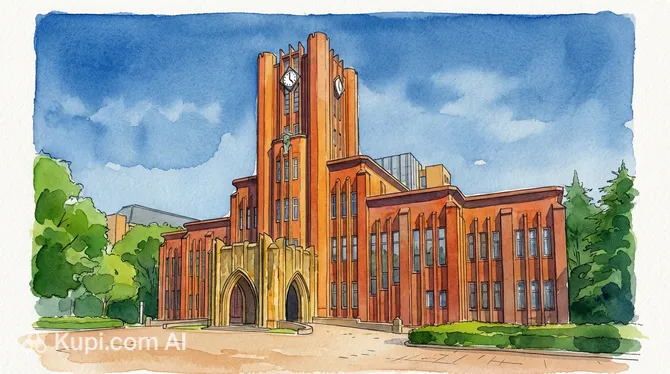
Akamon. Illustration.
Source: Kupi.com AI

Traveler photos:

\n\n

The design stands out for its massiveness and its characteristic bright red color, which was traditionally used for the gates of high-ranking officials' residences. Special attention should be paid to the roof details and the complex system of wooden brackets, which demonstrate the craftsmanship of Japanese carpenters from centuries past. This is a place where history meets the future of science, creating a unique atmosphere of serenity in the heart of a bustling metropolis.

Contacts

To make your visit as smooth as possible, we recommend checking the current access regulations for the campus territory in advance. Although the Akamon gate itself is an external structure, the rules for visiting the university campus in Tokyo may vary depending on internal events.

How to contactContact
Address7 Chome-3 Hongo, Bunkyo City, Tokyo 113-0033, Япония
Phone+81 3-3812-2111
Websitetreasure.adm.u-tokyo.ac.jp

What to Do

Visiting Akamon is the first step in a fascinating journey through the Hongo campus, which itself resembles an open-air museum. The main activity for visitors here is a leisurely stroll along the shaded university alleys. You will be able to see the famous red-brick Yasuda Auditorium, another architectural landmark of this Tokyo district.

\n\n

Architecture enthusiasts will find it interesting to compare different styles: from the classical Neo-Gothic of the older buildings to the futuristic faculty of information studies building designed by the famous architect Kengo Kuma. The campus is filled with a special academic atmosphere conducive to contemplation and quiet reflection.

\n\n

If your trip to Japan falls in autumn, be sure to stop by to admire the golden leaves of the ginkgo trees, which are the symbol of the university. At this time of year, the grounds turn into a perfect spot for photo shoots. Additionally, there are cozy cafes and student canteens on campus where you can grab a bite and feel like a part of Japan's university life.

Getting There

The Akamon gate is located at 7 Chome-3 Hongo, Bunkyo City, Tokyo 113-0033. This landmark in Tokyo is very easy to find, as its vibrant red color serves as an excellent reference point against the backdrop of modern urban development.

\n\n

The most convenient way to reach the site is by metro. You need to get to Hongo-sanchome Station, which is served by the Marunouchi Line and the Oedo Line. After exiting the station, walk north along the busy Hongo-dori street, and within a few minutes, you will see the famous entrance to the University of Tokyo campus.

\n\n

If you prefer a taxi, simply tell the driver Akamon or Todai (the university's abbreviated name), and they will take you directly to this historic portal in the Bunkyo district. The campus grounds are fully open to pedestrians, making for a very pleasant and safe walk.

Nearest city: Tokyo

History & Facts

The history of Akamon is inextricably linked to the Edo period. The gate was erected in 1827 as the grand entrance to the residence of the influential Maeda clan. The occasion for its construction was a celebratory event — the wedding of Shogun Tokugawa Ienari's daughter to the head of the Maeda family. According to the customs of that time, gates built to welcome a bride from a high-ranking family were traditionally painted red.

\n\n

One of the most remarkable chapters in the structure's history is its resilience. During the devastating Great Kanto Earthquake of 1923, when many campus and city buildings were reduced to ruins or destroyed by fires, Akamon miraculously survived. These wooden gates withstood the powerful tremors, preserving their original appearance and becoming a symbol of longevity and reliability in Japan.

\n\n

Today, the university carefully protects this architectural monument. Regular scientific research and structural reinforcement work are carried out to protect it from future seismic threats. Experts strive to preserve the original materials and the unique aesthetic of the Edo period, which is highly valued by historians and tourists alike.

\n\n

The University of Tokyo, for which this gate serves as an entrance, is associated with the names of many prominent figures. Nobel Prize winner Kenzaburo Oe, as well as legendary writers Ryunosuke Akutagawa and Yukio Mishima, studied here. Passing under the arches of Akamon, you are literally following in the footsteps of those who shaped modern Japanese culture and science.

Time Needed

For a brief introduction to Akamon, taking commemorative photos, and examining the architectural details, you will need about 30–40 minutes. This is enough time to appreciate the scale of the structure and feel the atmosphere of academic tranquility at the university entrance.

\n\n

However, we strongly recommend setting aside 2 to 3 hours to fully explore the Hongo campus. A walk to the Yasuda Auditorium, visiting the local groves, and viewing buildings of various architectural styles — from Gothic to Modernism — will make your visit much more rewarding and interesting.

Working Hours

One of the main advantages of Akamon is its accessibility. The gate is open for viewing 24 hours a day, seven days a week. This allows tourists to plan their visit at any convenient time — whether it's early morning, when there are few students around, or in the evening, when the lighting gives the structure a special mystique.

\n\n

Since the gate is effectively part of the urban environment and the main entrance to the open territory of the University of Tokyo campus, no tickets are required, and you don't need to align your visit with museum schedules. However, remember that academic buildings and libraries have their own strict visiting regulations, intended primarily for students and staff.

Open 24 hours

Nearby

A visit to Akamon is an excellent opportunity to explore the historical and cultural Bunkyo district. A walk through the university grounds transitions seamlessly into an exploration of the surrounding area, where modern entertainment sits alongside ancient shrines, creating the unique contrast characteristic of Tokyo.

\n\n

Just a ten to fifteen-minute walk from here is the famous Tokyo Dome City complex, offering entertainment for every taste. If you wish to continue your immersion into the traditions of Japan, be sure to visit the Kanda Myojin Shrine or stroll along the vibrant Ameyoko Shopping Street to feel the true rhythm of the metropolis.

NameDistance
The National Museum of Western Art1.5 km
National Museum of Nature and Science1.6 km
Tokyo National Museum1.7 km
Tokyo Imperial Palace2.9 km
Kaminarimon3.2 km
Nijubashi Bridge3.4 km
Suga Shrine4.4 km

Reached the end of the page?

That means the route is fully explored