Support

Nijubashi Bridge

About

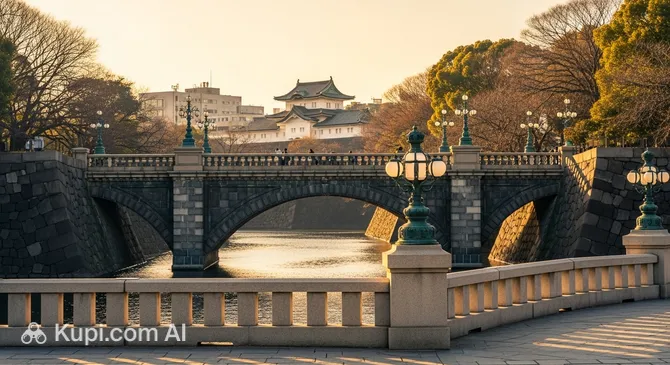
Nijubashi Bridge is the grand ceremonial entrance to the Imperial Palace in Tokyo, becoming one of the most recognizable architectural symbols of Japan. Its name literally translates as "Double Bridge," referring to the historic 17th-century wooden structure that consisted of two levels of beams.
\n
Nijubashi Bridge. Illustration.
Source: Kupi.com AI

Traveler photos:

\n

The modern structure, made of iron, is decorated with elegant ornate railings and decorative lanterns. The bridge connects the outer grounds with the main gates of the imperial residence and blends harmoniously into the landscape with its deep moats and evergreen gardens. It is one of the most photographed spots in the Japanese capital, attracting travelers with its austere beauty and atmosphere of imperial grandeur.

\n

As a historical_place, the bridge serves as an important reminder of the history of Edo Castle. Although public access to the bridge itself is limited, the view of it from Kokyo Gaien Park is considered a classic and a must-see for every visitor to the city.

Contacts

When planning a walk to Nijubashi Bridge in Tokyo, it is recommended to check for the latest information before your visit. While the park grounds are open to the public, the access schedule for certain areas in Japan may change due to official state events or holidays.

How to contactContact
Address1-1 Chiyoda, Chiyoda City, Tokyo 100-0001, Япония
Phone+81 3-3213-1111
Websitewww.env.go.jp

What to Do

The main activity at Nijubashi Bridge is contemplating the classic view, often called the "calling card" of Tokyo. Tourists come here to capture the elegant iron structure against the backdrop of the massive palace walls and the ancient watchtower. It is an ideal spot for landscape photography, especially in the morning hours or during the cherry blossom season in Japan.

\n

You can take a leisurely stroll through the extensive Kokyo Gaien National Garden surrounding the bridge. A walk along the outer moats allows you to appreciate the scale and craftsmanship of ancient builders, as well as enjoy the silence, which seems surprising for the very center of the metropolis. Examining the details of the bridge—its cast lanterns and lattice railings—one can feel the connection of times and the unique style of the Meiji era.

\n

Although the bridge itself opens to pedestrians only twice a year (on the Emperor's birthday and January 2nd), viewing it from the outside is just as impressive. It is recommended to combine your visit with a trip to the East Gardens to see the remains of the foundations of the Edo Castle main tower and relax among traditional landscape compositions.

Getting There

The most convenient way to reach Nijubashi Bridge is by public transport. The nearest stations are Tokyo Station (JR, Marunouchi, and Chiyoda lines) and Otemachi Station. The walk from the metro exits to the bridge itself takes about 5–10 minutes at a leisurely pace through the park area, following the signs to the Imperial Palace.

\n

For those who prefer taxis or walking from central districts, the journey from the Ginza or Nihonbashi neighborhoods will take 10 to 20 minutes. If you are using a navigator, you can use Google Maps for precise routing to 1-1 Chiyoda.

\n

Drivers should keep in mind that parking near the Imperial Palace is very limited. It is recommended to leave your car in the garages near Tokyo Station, as public transport in this part of the city is considered a better option due to heavy traffic and extensive pedestrian zones.

Nearest city: Tokyo

History & Facts

The history of Nijubashi Bridge dates back to 1614, when it was built of wood as part of the defensive structures of Edo Castle. Its name, which translates as "Double Bridge," comes from its unique two-tier construction: due to the great depth of the moat, the wooden supports were reinforced with a second level of beams, creating the effect of a double bridge span.

\n

In 1888, during a large-scale reconstruction of the Imperial Palace, the historic wooden structure was replaced with an iron bridge. The new construction, officially named the "Main Gate Steel Bridge," retained its elegant proportions but became much more reliable. The appearance we see today was achieved after another restoration in 1964.

\n

For centuries, this site served as the ceremonial entrance to the residence of Japan's rulers, symbolizing the power and stability of the state. The ancient Fushimi-yagura watchtower standing behind the bridge, built back in the 17th century, completes the architectural ensemble, recalling the days of the great shoguns of the Edo period.

Time Needed

A visit to Nijubashi Bridge and a walk through the surrounding area usually takes from 30 to 60 minutes. This is quite enough time to admire the architecture, take memorable photos against the backdrop of the palace moats, and enjoy the atmosphere of tranquility in the heart of Tokyo.

\n

If you decide to combine your visit with a detailed exploration of the Kokyo Gaien gardens or a tour of other gates of the imperial complex, it is worth setting aside about 1–2 hours. The duration of the visit largely depends on your desire to linger in the picturesque corners of the park, especially during the cherry blossom season or autumn foliage.

Working Hours

For external viewing and photography, Nijubashi Bridge is available to residents and guests of Tokyo 24/7. You can visit the Kokyo Gaien Park area at any convenient time, as it is open 24 hours a day, seven days a week.

\n

It is worth considering that at night, the architectural lighting gives the bridge a special charm; however, access to the inner territory beyond the gates is usually closed, except for rare holidays when the imperial complex opens its doors to everyone.

Open 24 hours

Nearby

Exploring the surroundings of Nijubashi Bridge can significantly enrich your trip to Tokyo. Since the bridge is part of the palace complex, key historical monuments are within walking distance, allowing you to dive deeper into the culture of Japan.

\n

Just a few minutes' walk away are the majestic Sakurada Gate and the Kokyo Gaien National Garden, where you can relax in the shade of ancient pine trees. You should also not miss the opportunity to visit the East Gardens of the Palace or the modern shopping centers of the Hibiya district, which create a unique contrast between the past and the future.

NameDistance
Tokyo Imperial Palace0.6 km
teamLab Borderless2.2 km
Rokusan Angel (Burlesque Tokyo)2.6 km
Suga Shrine2.8 km
Nezu Museum3.8 km
Blue Note Tokyo4 km
Kidzania Tokyo4.3 km

Reached the end of the page?

That means the route is fully explored