In the heart of the Peruvian city of Arequipa lies a true gem of the colonial era—the Santa Catalina Monastery. It is not just a religious building but an entire "city within a city," founded in 1579. For centuries, it was home to nuns from noble families, and today it stands as a unique historical complex listed as a UNESCO World Heritage site. Visiting this place is an opportunity to travel back in time and immerse yourself in the atmosphere of centuries past.
Traveller photos:
The monastery's architecture is striking in its originality. The building walls are constructed from "sillar," a volcanic stone that gives them a characteristic white and pinkish hue. This material, quarried from the ash of the Chachani and Misti volcanoes, is not only durable but also creates a unique play of light and shadow in the complex's narrow streets. As you walk through the grounds, you will see cells, chapels, kitchens, and laundry rooms that have preserved their original appearance.
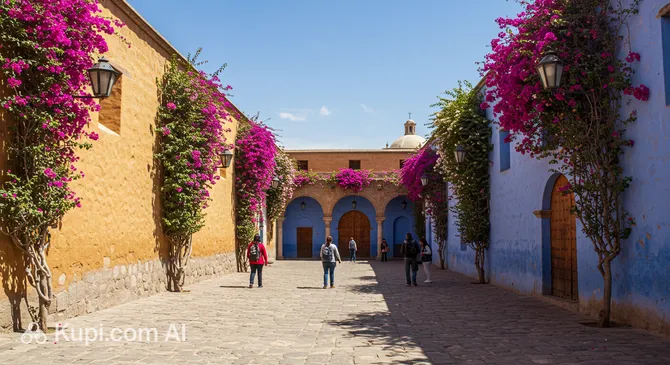
The main highlight of the Santa Catalina Monastery is its bright, colorful streets named after Spanish cities such as Seville, Granada, and Toledo. The walls, painted in rich shades of blue, red, and orange, combined with lush greenery and flowers, create incredibly photogenic and picturesque landscapes. This is a place where every corner tells a story and provides unforgettable impressions, making it a must-see on any itinerary through Peru.