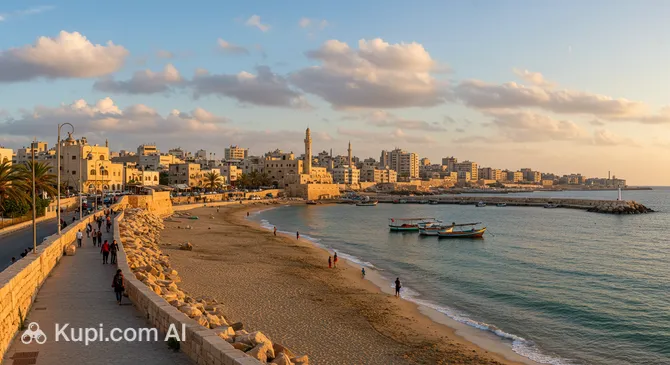
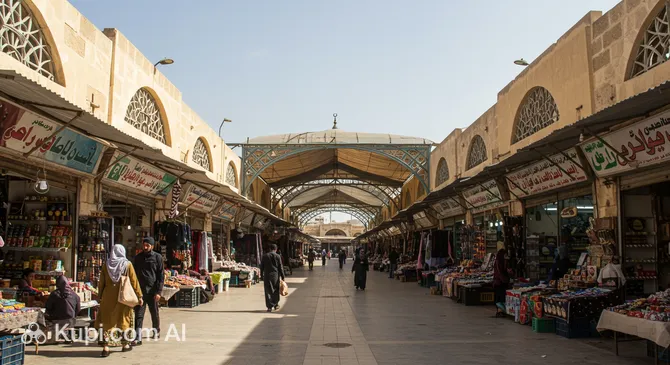
Gaza is the largest and oldest city in the Gaza Strip, situated on the picturesque eastern coast of the Mediterranean Sea. For millennia, this metropolis has served as a vital cultural and economic hub for the region. Today, the city is a dynamic blend of dense modern development, bustling oriental markets, and deep historical layers that stretch back to antiquity.
Gaza. Illustration.
Source: Kupi.com AI
Geographically, the city sprawls across a coastal plain, which has largely defined its mild climate and historical significance as a trading port. With a population of approximately 590,000, Gaza serves as the territory's de facto administrative center. Travelers and professionals coming here are drawn by the unique atmosphere of this Middle Eastern "enclave capital," where daily life thrives amidst ancient mosques and universities.
Gaza's rich historical heritage can be felt in every block of the old center. The city attracts explorers with its noisy bazaars selling spices and handicrafts, as well as the opportunity to experience the authentic lifestyle of the Eastern Mediterranean. Visiting this city is a chance to see a place where the paths of great past civilizations once crossed.
Weather Overview
The climate of Gaza is characterized as typically Mediterranean, with mild wet winters and dry hot summers. The proximity to the sea tempers temperature fluctuations, making the weather in Gaza pleasant for visiting during the spring and autumn months, before the heat reaches its peak.
In summer, especially in July and August, the average daytime temperature stays around +30–31°C, and rain is virtually non-existent. Winter brings cool weather: in January and February, the thermometer drops to +11–17°C, which is when most of the annual precipitation falls. Due to the proximity of the coast, humidity remains quite high throughout the year.
Average monthly temperature
Average monthly precipitation
Interesting Facts
Gaza claims to be one of the oldest continuously inhabited cities on the planet; archaeologists have found traces of settlements here dating back thousands of years.
In antiquity, the city was a key stop on the legendary Via Maris ("The Way of the Sea") trade route, which connected Egypt with Syria and Mesopotamia.
Historically, the region was famous for its fertile lands, where olives and citrus trees, renowned throughout the Middle East, were cultivated.
The architecture of Gaza's old city is a layered chronicle, featuring Egyptian, Roman, Byzantine, and Ottoman styles.
The city is a major educational hub, hosting several significant universities that educate students from across the territory.
How to Get There
Transport accessibility to Gaza has its own specifics due to the city's geographical and political position. Currently, there is no regular civilian air service directly to the city, so travelers usually arrive through land border crossings. We recommend researching all the ways to get to Gaza in advance, taking into account the need for special entry permits.
Since there are currently no active airports within the city itself, the primary transport hubs are airports in neighboring territories, from which the journey continues by road. The trip to the city can take a significant amount of time due to checks at control points, so you should plan your trip with plenty of time to spare.
Within the region, rail service also does not function in the way tourists might expect. The main burden falls on the road network, which connects Gaza with the southern and northern districts of the enclave. Movement between settlements is carried out mainly by minibuses and private cars.
Station
Passenger traffic
Distance
Sderot
5
11 km
Ashkelon Railway Station
11
23 km
Kiryat Gat Railway Station
8
32 km
Lehavim – Rahat Railway Station
9
35 km
Ashdod Ad Halom Metropol railway station
10
36 km
Main Attractions
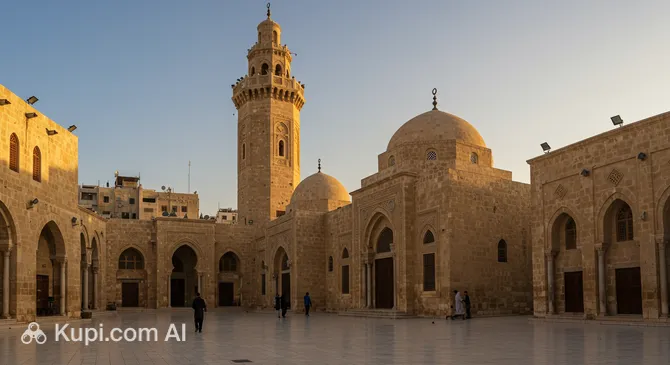
Despite not being a classic tourist destination, Gaza is home to unique historical and architectural monuments. The spiritual heart and main pride of the city is the Great Omari Mosque. This majestic structure, built on the site of an ancient temple, impresses with its centuries-old architecture and is considered one of the oldest mosques in the region.
Great Omari Mosque. Illustration.
Source: Kupi.com AI
Traveller photos:
While strolling through the old city, be sure to visit the traditional oriental markets (souks). Here, among the narrow streets, life never stops for a moment: traders offer the finest spices, fabrics, and products from local artisans. These bazaars are more than just shopping areas; they are true cultural landmarks that allow you to feel the rhythm of a modern Eastern city.
The coastal area of Gaza also draws visitors. The promenade and adjacent stretches of the shore serve as primary spots for relaxation and socializing. Here, you can see how ancient fishing traditions coexist with everyday urban bustle, creating the unique flavor of a seaside metropolis.
Local Cuisine
Gaza's culinary traditions are a vibrant part of Levantine cuisine with a strong emphasis on seafood. Thanks to its coastal location, you can try unique fish dishes seasoned with local spices and olive oil. The general character of the city's gastro scene is marked by simplicity, generosity, and the use of only the freshest ingredients.
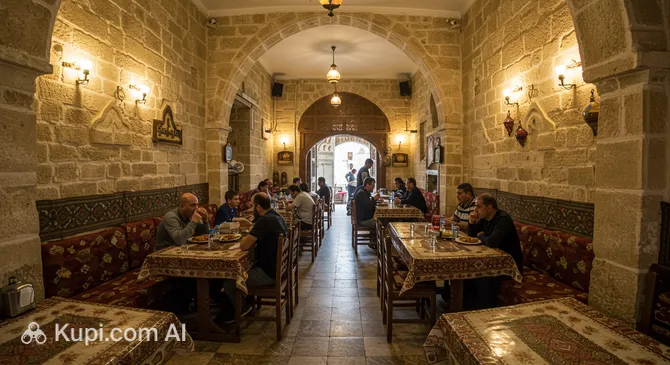
Among the must-try dishes are classic hummus, crispy falafel, and fragrant kebabs. For a quick and tasty snack, Fahd Shawarma is an excellent choice, while for a more substantial traditional meal, it's worth visiting Al-Taboon Restaurant, which serves dishes prepared in a traditional oven.
Al-Taboon Restaurant. Illustration.
Source: Kupi.com AI
Traveller photos:
Sweets like knafeh and baklava hold a special place in the culture, as does strong Arabic coffee with cardamom, which is enjoyed at any time of day. Alcohol is virtually non-existent in the city, so the focus is on a variety of teas and fresh juices that perfectly complement the local spicy dishes.
Travel Tips
Planning a visit to Gaza requires careful attention to detail and respect for local traditions. These tips will help make your stay in the city more comfortable and safe.
Clothing and Dress Code: It is recommended to choose conservative and modest clothing, especially when visiting religious sites and traditional areas. Comfortable shoes are a must, as you will be doing a lot of walking.
Transport: The best way to get around is by shared taxis (service) or private taxis. Agree on the fare in advance to avoid misunderstandings.
Finances: The primary currency is the New Israeli Shekel (ILS). It is recommended to always carry a sufficient supply of cash, as ATMs and card payments may be unavailable.
Health and Safety: Always carry your documents and the contact information of your organization or host. Pharmacies are concentrated in the center, but it is better to bring specific medications with you.
Communication: The main language is Arabic. English is spoken in hotels and universities. Learning a few basic phrases in Arabic is highly appreciated by the locals.
Local Etiquette: Greet people politely and always ask for permission before taking photos of residents or administrative buildings.
What to Avoid: Refrain from discussing political topics and avoid walking in unfamiliar outskirts after dark without an escort.
Connectivity: A local SIM card can be purchased at specialized service points in the city center, though Wi-Fi access may be limited to hotels and cafes.
Following these simple rules will allow you to deeper experience the hospitality of this ancient city and make your trip rewarding and interesting.
Entertainment & Nightlife
Entertainment in Gaza is predominantly family and socially oriented. The city's evening life is centered not in noisy clubs, but in cozy coffee shops, restaurants, and along the waterfront. Locals enjoy spending time in long conversations, sipping strong coffee while watching the sunset over the Mediterranean.
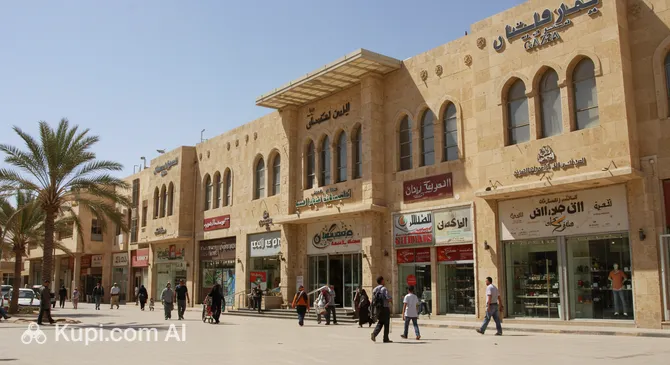
For those seeking more modern leisure formats, the doors of large shopping centers like Capital Mall or Metro Mall are open. These malls house play areas, food courts, and shops, becoming magnets for youth and families in the evenings. The atmosphere in these places is always lively and friendly.
Capital Mall. Illustration.
Source: Kupi.com AI
Traveller photos:
Food lovers should check out popular spots, such as tasting the famous street food at Fahd Shawarma or dining at Al-Taboon Restaurant. The city's cultural life is also supported by universities and cultural centers, which occasionally host exhibitions and community events reflecting the region's creative potential.
Parks & Museums
Green spaces in Gaza's ultra-dense urban environment are true oases of tranquility. Although there are few classic large-scale parks, locals actively use small squares and coastal promenades for walks. The city's waterfront is the primary "natural zone," where the sea breeze helps people relax from the urban hustle.
The city's cultural and historical heritage is often showcased through small exhibitions at universities or within religious complexes. A landmark site is the Great Omari Mosque, which serves as a living museum of architecture and history, reflecting the change of eras from the Roman period to the present day.
Modern public spaces also include the atriums of large shopping malls like Metro Mall, where local cultural events are often held. For those interested in archaeology, the region surrounding the city hides many ancient sites; access to these is best planned in coordination with local guides or scientific organizations.
Getting Around
The public transport system in Gaza relies on an extensive network of shared taxis and minibuses. This is the most affordable and popular way to get around for city residents. There is usually no fixed schedule at stops, but the high frequency of vehicles on the main thoroughfares makes it easy to get from one district to another.
For more comfortable journeys, visitors to the city often use private taxi services. You can call a car through local operators or simply flag down an available vehicle on the street. The cost of a trip within the city is low, but it is best to agree on the price with the driver in advance, as meters are rarely used.
Walking is also very common, especially in the central historical quarters, where all key sites are within walking distance of each other. Keep in mind that during peak hours, heavy congestion can occur on Gaza's main streets, so plan your movements with intensive urban traffic in mind.
Accommodation
The hotel stock in Gaza is primarily geared toward specialists from international organizations, journalists, and business visitors. You won't find the usual global hotel chains here, but the city offers decent options in the form of local hotels and guest houses that provide basic comfort and hospitality.
The most convenient accommodation options are usually located in the central districts or along the coastline, providing faster access to administrative institutions and popular cafes. Apartments and flats for long-term rent are also in demand, especially among those planning an extended visit to the city.
Due to the region's specifics, it is recommended to book accommodation in advance by contacting the host directly or through specialized organizations. Prices for accommodation can vary, but generally remain affordable compared to the major tourist metropolises of the Middle East.
Nearby Cities
Gaza serves as the main starting point for exploring the region's coastal strip. Despite the small size of the territory, the surrounding settlements have their own unique character and pace of life. Trips to neighboring towns allow for a better understanding of the social and economic structure of this densely populated area.
Just a few kilometers to the north lies Jabalia, one of the largest settlements near the enclave's capital. Also worth noting is Beit Lahiya, which was historically famous for its gardens and agricultural lands. These places can be reached very quickly by shared taxis or private cars.
City
Population
Distance
Jabalia
82,877
3 km
Beit Lahia
59,540
7 km
Az Zuwaydah
15,483
12 km
Sderot
23,090
12 km
Deir al Balah
54,439
14 km
Exploring the areas near Gaza provides an opportunity to see the region's daily life beyond the main metropolis. Each of these destinations is suitable for a short trip, allowing you to get acquainted with local hospitality and the traditional way of life in coastal communities.
Shopping & Souvenirs
Shopping in Gaza is primarily about immersing yourself in the atmosphere of traditional oriental bazaars. In the old quarters of the city, you will find endless rows of shops selling everything from fragrant spices and dried fruits to unique handmade embroidery with Palestinian patterns. Bargaining here is not just appropriate; it is an important part of the social ritual.
If you prefer a modern shopping experience in a comfortable setting, visit Metro Mall or Capital Mall. These shopping centers feature clothing, electronics, and perfume stores, as well as rest areas where you can take a break after walking around the city.
Metro Mall. Illustration.
Source: Kupi.com AI
Traveller photos:
Popular souvenirs to bring back from Gaza include local olive oil, ceramics, and textiles with traditional patterns. Most shops are open from morning until late evening, and the main method of payment is cash (usually New Israeli Shekels), as international cards are not accepted everywhere.