Support

Ben Gurion International Airport

About the Airport

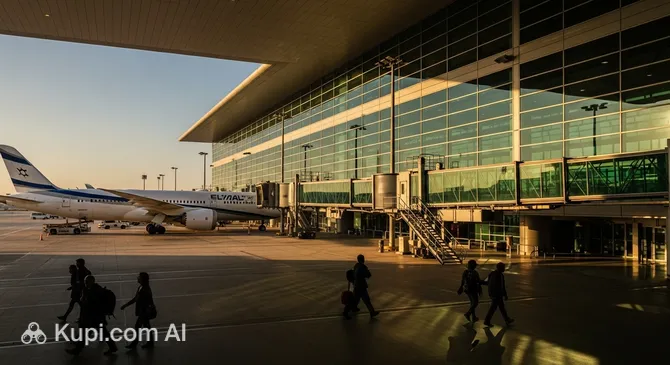
Ben Gurion International Airport. Illustration.
Source: Kupi.com AI

Ben Gurion Airport is more than just a major transportation hub; it is the true "gateway" to Israel. Located near the dynamic city of Tel Aviv, it is considered one of the safest and most technologically advanced airports in the world. Every traveler crossing its threshold is immediately immersed in an atmosphere of Middle Eastern hospitality, complemented by strict but efficient international service standards.

This aviation complex impresses with its architecture, where an abundance of natural light and spacious halls create a sense of lightness. For many tourists, their introduction to the region begins right here, surrounded by palm trees and modern infrastructure. The airport serves millions of passengers annually, connecting the country with the world's largest metropolises and hosting flights from dozens of leading carriers, including the national airline, El Al.

PropertyValue
IATA CodeTLV
ICAO CodeLLBG
CityTel Aviv
CountryIsrael
TimezoneAsia/Jerusalem
Top AirlinesEtihad, El Al, Fly Dubai, ITA AIRWAYS, Israir
ScheduleOnline Timetable

One of the key features of Ben Gurion is its unprecedented security system, which has become a benchmark for global aviation. Despite thorough checks, processes are organized to minimize discomfort for well-intentioned travelers. The airport's infrastructure is constantly being modernized: new biometric control systems are being introduced, waiting areas are being expanded, and eco-friendly solutions are being implemented to reduce the environmental impact.

For those who value comfort, the airport offers premium service in business lounges and exclusive escort services. Regardless of the purpose of your visit—whether it's a business trip or a long-awaited vacation on the Mediterranean—Ben Gurion's infrastructure will ensure a seamless transition from your flight to your adventure. You can always check the current flight schedule by looking at the timetable to plan your time as efficiently as possible.

An important feature of the airport is its focus on accessibility. All necessary conditions have been created for people with limited mobility, and navigation is intuitive even for those visiting Israel for the first time. The combination of high functionality and cozy relaxation areas makes staying in the terminals a pleasant part of any journey, allowing you to relax before your flight or after landing.

Contact Information

For quick resolution of issues and to get up-to-date information about Ben Gurion Airport services, you can use the following contact details:

  • Official Airport Website: www.iaa.gov.il
  • Information Desk Phone (24/7): +972 3-972-3333
  • Address: 7015001, Israel, Ben Gurion Airport
  • Email: info@iaa.gov.il
  • Social Media: Official Ben Gurion Airport pages are available on Facebook and Instagram under the name "Ben Gurion Airport - TLV".
  • Lost and Found Information: To contact the Lost and Found department in Terminal 3, call +972 3-972-3335 or visit the "Lost and Found" desk.
  • Passenger Support: For service quality issues, you can submit an inquiry via the form on the official website or at pniot@iaa.gov.il.

How to Get to the Airport

There are several convenient ways to get to Ben Gurion Airport from central Tel Aviv or other cities in Israel. The fastest and most popular option is the train (Israel Railways). The station is located directly on the lower level of Terminal 3. Travel time from Tel Aviv's central station (HaHagana) is only about 15–20 minutes, and the ticket price is approximately 14 shekels. Trains run around the clock, except during Shabbat (from Friday evening to Saturday evening).

For those who prefer bus travel, many routes run between the airport and various cities. The main transit hub is at Terminal 3, from where Egged and Kavim buses depart for Jerusalem, Modi'in, and other regions. The average cost of a bus trip is between 10 and 25 shekels. There is also a convenient shuttle bus, No. 485, which connects the airport with the center of Jerusalem and operates 24/7 (except for Shabbat).

Taxi services are available 24/7 outside the terminal exits. It is recommended to use only official taxi services, whose desks are located in the arrivals hall. A trip to the center of Tel Aviv costs an average of 140–180 shekels, depending on the time of day and amount of luggage. Taxi booking apps like Gett are also popular in Israel, allowing you to see the estimated fare and driver details in advance.

If you plan to explore the country independently, international car rental companies (Hertz, Avis, Budget, etc.) have offices in Terminal 3. Car pick-up points are open 24/7. For drivers, both short-term and long-term parking options are available. Short-term parking is convenient for those dropping off passengers, while multi-level indoor parking garages are ideal for those leaving their car for several days. Long-term parking rates start at 45 shekels per day.

It is important to remember that public transport (trains and most buses) stops running on Friday afternoon and resumes only on Saturday evening. During this period, the only ways to reach the airport are by taxi, private transfer, or rental car. We recommend leaving early, taking into account possible traffic jams on Highway 1 during peak hours, so that your journey begins without unnecessary haste.

Terminals and Layout

Currently, Ben Gurion Airport operates through two main terminals: Terminal 3 and Terminal 1. Terminal 3 is the main and most modern airport building, serving the vast majority of international scheduled flights. It is divided into three levels: the lower level for arriving passengers and access to the train station, the middle level for check-in, and the upper level for the departures area and duty-free shopping. The central part of the terminal, called the "Rotunda", is striking with its artificial waterfall and glass dome.

Terminal 1, which was completely renovated a few years ago, now specializes in low-cost carriers and domestic flights to Eilat. Despite being a historical building, its infrastructure is on par with the main terminal, featuring its own Duty Free shops, cafes, and waiting areas. If your flight departs from Terminal 1, check-in and passport control will take place there, after which passengers are transported to the aircraft by special buses.

Regular communication between the terminals is organized via a free shuttle bus. The shuttle stop is located on Level G of Terminal 3 and near the main entrance to Terminal 1. Buses run approximately every 15–20 minutes, and the travel time is about 10 minutes. This is important to consider if you find yourself at the wrong terminal or are planning a connection between domestic and international flights. Navigation in the airport is provided in three languages: Hebrew, English, and Arabic, making movement intuitive.

Check-in and security procedures at Ben Gurion can take longer than at other airports worldwide due to thorough checks. It is recommended to arrive at Terminal 3 at least 3 hours before departure. The departure zones are equipped with many gates (A, B, C, D, E), which are reached via long, spacious corridors with moving walkways. Each sector provides seating, restrooms, and small coffee shops to make the wait for boarding as comfortable as possible.

Airport History

The history of Ben Gurion Airport began in 1936 when the British authorities, under the Mandate for Palestine, opened Lydda Airfield. At that time, it was a modest runway intended primarily for military needs and the first postal flights. However, its favorable geographical location quickly turned it into an important hub on the route between Europe, Asia, and Africa. After the declaration of Israel's independence in 1948, the facility was named "Lod Airport."

A significant milestone occurred in 1973 when, following the death of the country's first prime minister, the airport was officially renamed in honor of David Ben-Gurion. This event symbolized a new stage in the development of Israeli aviation and the beginning of large-scale modernization. Over the following decades, the old terminal was reconstructed multiple times to handle the ever-growing flow of immigrants and tourists, turning Ben Gurion into a modern aviation hub.

The real breakthrough was the opening in 2004 of the grand new Terminal 3, known as the "Ben Gurion 2000" project. This futuristic building, designed with the highest standards of safety and comfort in mind, completely changed the face of the airport. With its launch, Ben Gurion ranked among the world's best airports for passenger satisfaction among medium-sized facilities, repeatedly receiving prestigious international awards for service quality.

Throughout its history, the airport has witnessed many historical events—from receiving giant aircraft with new citizens to visits from world leaders and Popes. An interesting fact is that, despite regional challenges, the airport has almost never ceased operations, remaining a reliable bridge between Israel and the rest of the world. Today, Ben Gurion continues to develop, implementing "smart" screening technologies and expanding its capacity to accommodate new generations of airliners.

Services and Facilities

Ben Gurion Airport offers travelers an exceptional level of comfort from the moment they enter the building. One of the main attractions of Terminal 3 is the huge Duty Free area, which features both global brands and unique Israeli cosmetics based on Dead Sea minerals. The James Richardson shop is considered one of the largest in the duty-free world, offering a wide range of goods—from luxury perfumes to famous Israeli wines.

For passengers who prefer peace and quiet, several business lounges are available. The most famous is the Dan Lounges network, where for a fixed fee or with Priority Pass cards, you can enjoy light snacks, drinks, and high-speed Wi-Fi. The exclusive King David Lounge is also available for El Al business class passengers. Free charging stations for gadgets and drinking water fountains are located throughout the terminals.

Families with children will appreciate the specially equipped play areas and mother-and-child rooms, where you can feed or change a baby in a calm environment. For religious passengers, synagogues are open in various parts of the airport. There is also a 24-hour medical point on-site, ready to provide first aid, as well as pharmacies. If you need to exchange currency or use banking services, bank branches and numerous ATMs are at your service in the arrival and departure zones.

Special attention is paid to passengers with disabilities: the airport is fully adapted for barrier-free movement, and escort service staff are ready to provide assistance at any stage of check-in and boarding. For those who need to stay overnight near the airport, transfers to nearby hotels in Tel Aviv or Lod are provided, as there is no full-service hotel directly inside the terminal building, though there are comfortable rest areas with reclining chairs.

Dining

The culinary scene at Ben Gurion Airport offers travelers a wide range of choices, from quick snacks to full meals. A key feature of the local establishments is the kosher certification (kashrut) held by most cafes and restaurants, which is important to consider when planning your meals. In Terminal 3's duty-free area, you'll find the main establishments, such as the popular Aroma Espresso Bar chain, where you can order a classic Israeli breakfast or their famous iced coffee.

For fans of burgers and fast food, world-renowned brands like Burger King and McDonald's operate in the departures area. If you prefer a quieter atmosphere, check out Schmoozy Bar, which offers gourmet snacks and a wide selection of drinks in an elegant setting. The airport also features Frame, serving Asian cuisine and fresh sushi prepared with high-quality ingredients.

Vegetarians and vegans will also find suitable options in most cafes: menus always feature fresh salads, hummus, and falafel. The average check in airport establishments ranges from 40 to 120 shekels depending on the chosen dish. Most restaurants in the departure area operate 24/7, adjusting to the international flight schedule, which allows you to grab a bite even in the middle of the night.

In Terminal 1, the selection of establishments is slightly more modest, but there are still cozy coffee shops and sandwich bars ideal for a quick snack before boarding a low-cost flight. We recommend trying the local pastries—for example, fresh croissants or cheese bourekas, which are a great addition to a cup of aromatic tea or coffee before starting your journey.

Travel Tips

The top tip for anyone using Ben Gurion Airport: arrive 3 hours before your scheduled departure. This is due to the unique security system, which includes a preliminary interview with security staff even before checking in for your flight. There's no need to worry—it's a standard procedure aimed at ensuring your peace of mind. Answer questions clearly and calmly, even if they seem strange or overly personal to you.

To save time at passport control, use the biometric terminals (if your passport supports this feature). After landing in Israel, you will be issued a small blue card (Border Control Clearance) instead of a passport stamp—be sure to keep it until the end of your trip, as it confirms the legality of your stay and will be required for hotel check-ins or car rentals to be exempt from VAT.

If you plan to shop at Duty Free, remember the "Take-it-with-you" service: you can pay for items when you depart and pick them up when you return to Israel, so you don't have to carry extra weight with you. However, this is only applicable to those returning to Ben Gurion. Also, look out for the VAT Refund desks in the departures hall—if you have made purchases in the country totaling more than 400 shekels at participating stores, you can get a refund for part of the money spent.

Keep Shabbat in mind: from Friday evening to Saturday evening, public transport to Tel Aviv and other cities does not run. During this time, the only options for getting to the city are by taxi or a pre-booked private transfer. Taxi prices on Saturdays and holidays can be 25% higher. It is also worth noting that the airport has free and unlimited Wi-Fi, allowing you to stay connected or order transportation via an app immediately after arrival.

Reached the end of the page?

That means the route is fully explored