Support

Egypt

About

Egypt is a land where ancient legends come to life against a backdrop of endless deserts and the azure waters of the Red Sea. Situated at the crossroads of Africa and Asia, this region has remained one of the most captivating places on the planet for millennia, thanks to its colossal historical heritage. For centuries, life here has been centered along the banks of the majestic Nile, which brings life to the valley and creates a unique contrast between green oases and the golden sands of the Sahara.

\n\n

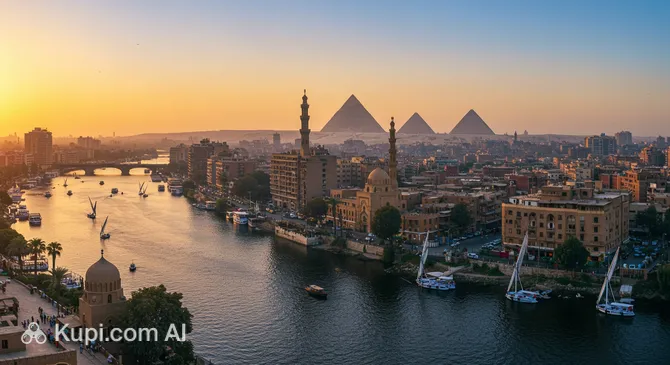
The heart of the modern state is the bustling and multifaceted Cairo. This metropolis is striking in its rhythm, where modern skyscrapers stand alongside medieval quarters and majestic mosques, creating an atmosphere of eternal celebration and Oriental bustle.
\n\n
Illustration.
Source: Kupi.com AI
\n\n

For many, a journey to Egypt begins with an introduction to the great Giza, home to the last surviving wonder of the ancient world—the monumental pyramids. History buffs should also head to Luxor to see the grand Luxor Temple and experience the true grandeur of the Pharaonic era. Each of these sites holds the secrets of a civilization that shaped human development for centuries to come.

\n\n

The country's natural diversity is not limited to its deserts: the Red Sea coast, home to the famous Sharm El Sheikh, is renowned for its coral reefs and rich marine life. The combination of a perfect climate for beach holidays, world-class diving, and a deep immersion into history makes Egypt a truly versatile destination for every traveler.
Currency

The national currency of Egypt is the Egyptian pound (international code – EGP). One pound is divided into 100 piastres. Banknotes of various denominations are in circulation, often featuring ancient Egyptian monuments and historical figures, such as mosques or pharaohs. Coins are also used, especially for small transactions. It is recommended to exchange currency at official bank branches or licensed exchange offices, which can be found in airports, hotels, and cities. Avoid exchanging money with street money changers, as this can be risky.

Credit and debit cards (mainly Visa and Mastercard) are accepted in most hotels, large shops, and restaurants in tourist areas. However, for purchases at markets, in small souvenir shops, or for paying for taxis, it is best to always have some cash on hand. ATMs are quite common in cities and resort centres, allowing you to withdraw local currency when needed.

Visa Requirements

For travellers from the UAE, visa requirements for Egypt depend on your nationality. UAE citizens can travel to Egypt visa-free for up to 90 days. However, most expatriate residents will require a visa.

For many nationalities, a 30-day tourist visa can be obtained upon arrival at Egyptian airports, such as Cairo or Hurghada, for a fee of approximately $25 USD, which must be paid in cash. Alternatively, travellers can apply for an e-visa in advance through the official government portal (visa2egypt.gov.eg). To enter the country, you will need a passport with a validity of at least six months from your date of entry.

While a visa on arrival is a common option, it is recommended to also carry your return flight tickets, proof of hotel booking, and have adequate travel insurance. Visa regulations can change, so before your trip to Egypt, it is strongly advised to verify the latest information on the official website of the Egyptian embassy or consulate in the UAE, or on the official e-visa portal.

We'll tell you if you need a visa

Specify where you are going, or
Your citizenship
Destination

Time Zones

For travellers from the UAE, it is useful to know that Egypt's standard time is Eastern European Time (EET), which is UTC+2. This means Egypt is two hours behind the UAE (which is on UTC+4).

However, it is important to note that Egypt observes daylight saving time (DST). In 2025, clocks will be set forward by one hour on Friday, 25th April, changing the local time to UTC+3. During this period, the time difference between Egypt and the UAE will be reduced to just one hour. The clocks will revert to standard time on Friday, 31st October 2025. We recommend checking the current time before your trip to avoid any confusion with transport or tour schedules.

How to Get There

Getting to Egypt is easiest by air, as the country has several international airports receiving flights from all over the world. For travellers from the UAE, Egypt is a popular and convenient destination, with direct flights from carriers like Emirates, Etihad Airways, Air Arabia, and flydubai taking around four hours. The main air hub is Cairo International Airport, where most international flights arrive. Airports in resort cities such as Hurghada and Sharm el-Sheikh are also popular. Direct air connections are well-established with many countries in Europe, Asia, and the Middle East, and convenient connecting flights are available for travellers from other regions.

Although flying is the dominant way to get to Egypt, other options exist. The country has land borders, but international bus or train services are less developed for tourism compared to air travel. Maritime transport also plays a role: some cruise liners include Egyptian ports in their itineraries, and ferry services are available from some Middle Eastern countries, for example, from Jordan to Nuweiba or from Saudi Arabia. However, these methods are more often chosen for specific routes or combined tours.

Regardless of your chosen mode of travel, it is advisable to book tickets in advance, especially if your trip falls during the peak tourist season (usually the autumn-winter period and spring holidays). This will not only help you save money but also guarantee seats for your desired dates. As a multicultural hub, residents in the UAE should check the latest visa requirements for their specific nationality before travelling. Visitors will find that halal food is widely available, and prayer facilities are common in airports, shopping centres, and public spaces.

AirportCityIATA
Cairo International AirportCairoCAI
Hurghada International AirportHurghadaHRG
Sharm El Sheikh AirportSharm El SheikhSSH
Borg El Arab AirportAlexandriaHBE
Marsa Alam International AirportMarsa AlamRMF

Egypt is a land of incredible contrasts, where ancient history meets modern life, and desert landscapes give way to azure coastlines. It is a country with something for everyone, from exploring millennia-old monuments to enjoying a serene beach holiday. The main centre of attraction is undoubtedly Cairo, a colourful capital that houses the treasures of the pharaohs and bustles with the energy of a Middle Eastern metropolis. With its abundance of historic mosques and halal restaurants, it is a captivating destination. Just nearby, in Giza, the legendary pyramids rise majestically from the desert.

Illustration.
Source: Kupi.com AI

For those dreaming of sun, sea, and coral reefs, Egypt offers world-renowned resorts. Sharm El Sheikh and Hurghada are true jewels of the Red Sea, attracting visitors with their golden beaches, world-class diving and snorkelling opportunities, and comfortable, family-friendly hotels that are well-catered to guests from the UAE, with plentiful halal options and prayer facilities. These resorts are ideal for both active holidays and relaxing family getaways.

Aficionados of history and ancient civilisations should head to Luxor, often called the world's greatest open-air museum. Here, you will find the magnificent temples of Karnak and Luxor, as well as the famous Valley of the Kings. When visiting these sacred and historical sites, it is advisable to dress modestly to show respect for local culture. These cities and resorts are just a few of Egypt's treasures, but they offer a wonderful glimpse into its multifaceted character and warm hospitality, inviting everyone to discover this amazing country.

Top Attractions

Egypt is a country with an incredibly rich historical heritage, drawing travellers from all over the world with the chance to touch the mysteries of ancient civilisations. The main attractions of Egypt are not just architectural monuments, but true witnesses to millennia of human history, astounding in their grandeur and mystery.

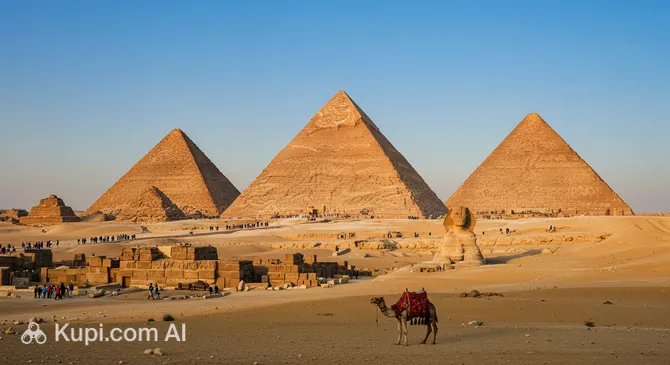
One of the most famous and essential attractions to visit is the Giza Necropolis. This majestic complex, located on the outskirts of Cairo, includes the legendary Great Pyramids – of Khufu, Khafre, and Menkaure – as well as the enigmatic Great Sphinx. The scale of these structures and the skill of the ancient builders never fail to inspire awe in millions of tourists.

Illustration.
Source: Kupi.com AI

Traveler photos:

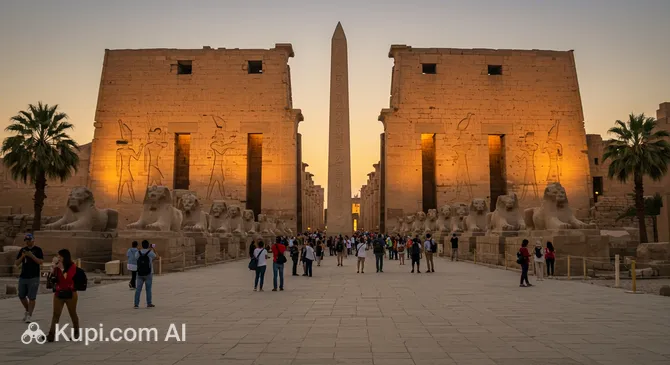
Further south, along the banks of the Nile, you will find Luxor Temple. This grand temple complex, dedicated to the Theban Triad of gods – Amun, Mut, and Khonsu – is striking with its monumental colonnades, huge statues of pharaohs, and beautifully preserved bas-reliefs. The temple looks particularly impressive in the light of the setting sun, when the ancient stones seem to come alive.

Illustration.
Source: Kupi.com AI

Traveler photos:

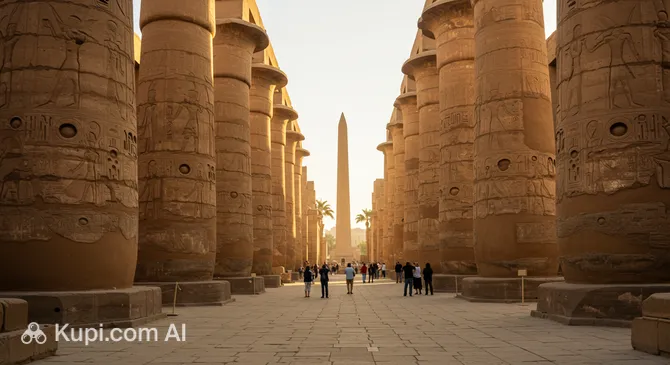
Not far from Luxor Temple lies another giant of ancient Egyptian architecture – Karnak Temple. This is, in essence, an entire city of temples, the construction of which was carried out over two millennia by various pharaohs. Its famous Hypostyle Hall, with its 134 massive columns covered in hieroglyphs and colourful paintings, leaves a lasting impression and is one of the most photographed places in Egypt.

Illustration.
Source: Kupi.com AI

Traveler photos:

Best Time to Visit

Egypt is a year-round destination for tourists, but the best time to visit largely depends on your plans and preferences. High season traditionally runs from October to April. During this period, the weather is most comfortable for exploring the country's ancient wonders, such as the temples of Luxor and Aswan, as well as discovering the capital, Cairo, and the majestic pyramids of Giza. The temperatures are pleasant with many sunny days, and the evenings, particularly in the north of the country, can be cool. At popular Red Sea resorts like Sharm El Sheikh and Hurghada, this is also the ideal time for a beach holiday, snorkelling, and diving. The main drawback of this period is the larger number of tourists at popular attractions and, consequently, higher prices for flights and accommodation.

The low season falls during the hot summer months from May to September. During this time, especially in July and August, temperatures in the southern and desert regions can soar, making daytime excursions quite tiring. However, this period has its advantages: significantly fewer tourists and more attractive prices for tours and hotels. For those who tolerate the heat well, the summer months can be suitable for a holiday on the Red Sea coast, where a sea breeze helps to moderate the high temperatures. When planning your trip, it is also wise to consider the dates of major religious holidays such as Ramadan and Eid al-Adha, which can affect the opening hours of some establishments and shops. One unique event that attracts considerable attention is the Sun Festival at Abu Simbel, which occurs twice a year (around 22 February and 22 October) and gathers many spectators eager to witness this amazing phenomenon.

Traditions

When travelling to Egypt, it is worth remembering a few cultural nuances that will help make your journey more comfortable and show respect to local residents. Politeness is highly valued in conversation; greetings usually involve a handshake (between men or between women; when a man is greeting a woman, it is best to wait for her to extend her hand first). The traditional Arabic greeting, "As-salamu alaykum" (Peace be upon you), will be warmly received. It is important to remember that in Islamic culture, the left hand is traditionally used for personal hygiene and is considered "unclean," so you should always use your right hand for greetings, passing items, or handling food. Egyptians are renowned for their hospitality; if you are invited into a home, it is a great sign of respect. A small souvenir from your country, such as sweets (avoiding alcohol unless you are certain of your host's preferences), or something that symbolises your culture will be a pleasant gesture. In public places, try to avoid overly loud conversations and public displays of affection, and always ask for permission before photographing local people, especially women.

Particular attention should be paid to clothing: when visiting mosques and other religious sites, as well as outside of tourist areas, it is recommended to choose modest attire that covers the shoulders and knees; women should also cover their heads. Men should also avoid overly revealing clothing (such as sleeveless tops) in non-tourist areas and when visiting religious sites. At the table, if eating with your hands (which is common in a traditional setting), the right hand is used; it is also considered good manners to praise the food. The main religious holidays that affect daily life are Ramadan (the month of fasting) followed by Eid al-Fitr (the festival of breaking the fast), and Eid al-Adha (the festival of sacrifice). During these periods, especially throughout Ramadan, many establishments may operate on reduced hours during the day, with public life becoming more active in the evening. Showing respect for these traditions, for instance by refraining from eating, drinking, and smoking in public during daylight hours in Ramadan (outside of your hotel), will be highly appreciated by local residents.

Entertainment

Egypt offers its guests an incredible variety of entertainment to suit every taste. For fans of active pursuits, the country is primarily associated with stunning opportunities for diving and snorkelling in the Red Sea, where you can explore colourful coral reefs and a rich underwater world. The cultural programme is no less rewarding: ancient temples, majestic pyramids, and the tombs of pharaohs, as well as numerous museums, including those in Cairo, allow you to delve into a millennia-old history. When visiting historical and religious sites, modest dress is recommended as a sign of respect. Exhibitions and contemporary art galleries are also gaining popularity in major cities.

As evening falls, popular tourist areas come alive, inviting guests to immerse themselves in the nightlife. This includes numerous restaurants offering both local and international cuisine, with many providing halal options. You will also find inviting shisha cafés and lounges where you can enjoy refreshing beverages. For those who love shopping, Egypt has both modern shopping centres and authentic souks where you can purchase traditional souvenirs such as papyrus, cartouches, aromatic oils, spices, cotton goods, and vibrant jewellery. For a family holiday, many resorts offer excellent infrastructure, including children's clubs, entertainment programmes, and water parks, guaranteeing unforgettable experiences for travellers of all ages.

Currency rates

Planning a trip? Wonderful! To ensure the financial aspects of your journey do not come as a surprise, it is important to remember that currency exchange rates are constantly changing. Therefore, we strongly advise you to monitor the current rates both before your departure and throughout your trip. For this, you can use the data provided below — we monitor currency exchange rates 24/7 and strive to provide the most up-to-date information.

Reached the end of the page?

That means the route is fully explored