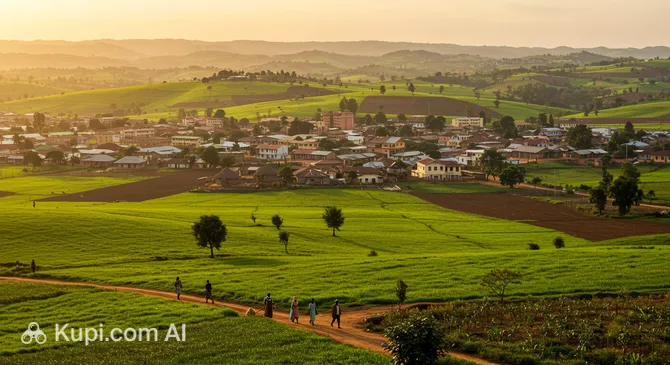
Cibitoke is a cozy and authentic corner in northwestern Burundi, serving as the administrative center of the province of the same name. Situated at an altitude of about 915 meters above sea level, the city welcomes travelers with a peaceful atmosphere and picturesque panoramas. Here, on the right bank of the Nyamagana River, life flows at a steady pace typical of the Central African region, where traditions are closely intertwined with everyday life.
The city's geographical position makes it an important link between the capital and the border territories. With a population of about 23,885 people, Cibitoke is the largest settlement in its province. The surrounding hills and lush tropical vegetation provide an ideal backdrop for those seeking solitude and wanting to experience the country's authentic culture. Exploring the city's historical heritage, one can trace how a small settlement gradually transformed into a significant regional center.
Cibitoke. Illustration.
Source: Kupi.com AI
The main charm of Cibitoke lies in its naturalness: there are no noisy tourist crowds here, but instead, an abundance of sincere hospitality from local residents. The city lives on agriculture, and a walk through its surroundings will reveal endless plantations and gardens. This place is perfect for taking a pause in a dynamic journey through Africa and enjoying the silence surrounded by majestic nature.
Weather Overview
The climate in Cibitoke is classified as equatorial, ensuring comfortable warmth throughout the year. The average temperature usually fluctuates around 21–22°C, rarely dropping below comfortable levels. Throughout the year, daytime highs often reach 25–27°C, while nights remain pleasantly cool, which is ideal for resting after daytime walks.
The region is characterized by a clear division into wet and dry seasons. The rainiest months are April, December, and January, when the lush greenery of the surrounding hills becomes especially vibrant. If you plan to spend a lot of time in nature, it is worth considering the city's weather and choosing the period from June to August for your visit, when the most stable dry season occurs.
High humidity is typical for most months; however, due to the city's location at an altitude of over 900 meters, it is rarely exhaustingly hot here. Constant light winds, especially in the summer, create a pleasant atmosphere for traveling. Cibitoke delights its guests with an abundance of sunny days even during transitional seasons, making it an attractive destination year-round.
Average monthly temperature
Average monthly precipitation
Interesting Facts
Cibitoke is a city with a remarkable geographical location and a dynamic history that can surprise even experienced travelers with its hidden features.
The city is located just 320 kilometers south of the equator, which determines its unique climatic conditions and daylight patterns.
Cibitoke sits at an altitude of 915 meters above sea level, making the air here fresher compared to the country's lowland areas.
Over the past decades, the city has shown impressive population growth: from 1991 to 2008, the number of residents nearly tripled.
Despite its relative remoteness, the city is only 56 kilometers from the country's largest metropolis, Bujumbura.
Cibitoke is an important administrative hub managing a province of more than 1,635 square kilometers.
How to Get There
The transport accessibility of Cibitoke largely depends on its connection with the country's largest city, Bujumbura. Traveling from the former capital is the most logical and convenient way to reach the destination. The journey by car or regular bus takes several hours, passing through scenic regional roads that allow you to enjoy the views of Burundi even before arriving at your destination.
The nearest major air hub is in Bujumbura, from where travelers usually book a private transfer or use the services of local carriers. Since Cibitoke is located near the borders with Rwanda and the DR Congo, entry through land border crossings is also possible, though this requires careful visa planning and knowledge of the crossing points' operating schedules.
Within the city itself, the infrastructure for arriving tourists is quite basic. There is no rail service in this region, so the main emphasis is on road transport. It is recommended to arrange a meeting with local guides or taxi drivers in advance to make your arrival as comfortable and safe as possible.
Station
Passenger traffic
Distance
Kigoma station
1
224 km
Main Attractions
The main attractions of Cibitoke are inextricably linked to its unique nature. The main point of attraction for walking enthusiasts is the Nyamagana River. Its banks, covered with dense tropical vegetation, offer excellent opportunities for observing local flora and fauna in their natural habitat. This is a place where you can feel the pristine beauty of Burundi, far from the major cities.
The hilly landscapes surrounding the city are an attraction in themselves. Walks along the slopes allow you to enjoy panoramic views of rural scenery and even see the lands of neighboring states — Rwanda and the Democratic Republic of the Congo. These views are especially impressive at sunset, when the soft light emphasizes the relief of the famous African hills.
For those interested in culture, the traditional rural settlements in the vicinity will be of interest. Here you can see how the life of Burundian communities is organized, learn about local farming methods, and appreciate the simplicity and functionality of folk architecture. The emphasis in Cibitoke is on eco-tourism and quiet contemplation, making it a valuable stop for thoughtful travelers.
Local Cuisine
Cibitoke's culinary landscape is an ode to the simplicity and freshness of local products. The diet of the residents is based on bananas, beans, corn, and cassava. One of the most interesting local dishes is bantu — a type of flatbread made from banana dough that perfectly complements any meal. Bean dishes are prepared here with special skill, often adding aromatic spices and palm oil.
The city's gastronomic scene is represented by small local cafes and market stalls. A popular spot among locals is Starco, where you can try typical Burundian dishes in a relaxed setting. Street food also plays an important role: markets often sell fried bananas and corn, which make for an excellent snack during a walk.
As for drinks, you should definitely try the local tea, famous for its rich flavor, as well as freshly squeezed tropical fruit juices. For those looking for a truly authentic experience, the best solution is to try home-cooked meals from local residents — such hospitality will allow you to understand the region's culture more deeply through its flavors.
Travel Tips
A trip to Cibitoke is an excellent opportunity to see Burundi without embellishment. To ensure your journey goes smoothly and leaves only pleasant memories, use our practical tips.
Clothing and Essentials: Choose light clothing made from natural fabrics, but be sure to bring a windbreaker or sweater for cool evenings in the hills. Comfortable closed shoes with good tread are a must for walking on rough terrain.
Transport: The most efficient way to get around is by moto-taxi. Always wear a helmet if available, and agree on the fare in advance. For longer trips, it's better to rent a car with a driver from Bujumbura.
Finances: Cibitoke is a world of cash. ATMs are very rare and don't always accept international cards. Exchange currency in the capital and keep a sufficient supply of Burundian francs with you.
Health: Be sure to use repellents and drink only bottled water. There are few pharmacies in the city, so bring an expanded first-aid kit with you.
Communication: The official language is Kirundi. Not everyone understands English or French, so learn a couple of basic greetings in the local language — this will instantly win people over.
Local Etiquette: Greeting is very important. Don't hesitate to shake hands and smile. In terms of clothing, it's best to stick to a modest style, especially when visiting rural communities.
What to Avoid: Do not plan intercity trips after dark. Also, avoid photographing strategic objects (bridges, government buildings) without explicit permission.
Seasonality: The best time to visit is the dry season (June-August), when the roads are most passable and the risk of rain is minimal.
May your introduction to Cibitoke be a bright discovery, full of sincere encounters and amazing landscapes!
Entertainment & Nightlife
Entertainment in Cibitoke is primarily contemplative and nature-oriented. The city is ideal for those who prefer active outdoor recreation over noisy parties. The main leisure activities here are hiking in the hills and along the banks of the Nyamagana River, where you can enjoy the silence and beauty of the tropical forest.
As for evening pastimes, the city has a calm atmosphere. There is practically no traditional "nightlife" in the European sense — you won't find large clubs or trendy bars. However, in local establishments, you can sometimes catch performances by folk groups performing traditional Burundian songs and dances, allowing guests to touch the vibrant local culture.
For more active daytime entertainment, consider excursions to neighboring natural areas of the province. This is a great opportunity to organize a small picnic in nature or go photo-hunting for exotic birds. Cibitoke offers a "slow travel" style of relaxation, where the main attraction is life itself and the surrounding environment.
Parks & Museums
There are no large classical museums or art galleries in Cibitoke, but this is more than compensated for by the city's natural surroundings. The role of the main "open-air museum" is played by the surrounding landscapes. A walk along the Nyamagana River allows you to get acquainted with the natural history of the region, observing the flow of water and ancient landforms that have been shaped over millennia.
The natural areas around the city serve as natural parks for locals and tourists. The province's hilly terrain is ideal for eco-tourism. There are no manicured lawns and benches here, but there are untouched trails leading through tropical groves and agricultural terraces, which are themselves a monument to the hard work of the local people.
For those seeking cultural enlightenment, the best option is to interact with local artisans. Their workshops in some ways replace galleries, demonstrating traditional techniques of basket weaving and woodwork. The lack of formal cultural institutions in Cibitoke encourages tourists to take a more active and lively approach to studying the environment and local traditions.
Getting Around
The transport system in Cibitoke is quite simple and oriented toward the practical needs of local residents. The main form of public transport consists of small buses and minibuses that connect the city with Bujumbura and other communes in the province. They depart as they fill up, so don't expect a strict schedule, which adds an element of authentic African adventure to the trip.
To get around the city itself and for trips to the near suburbs, tourists most often use taxis or moto-taxis. This is the fastest and most convenient way to maneuver through the streets. You should always agree on the price of the trip in advance, as meters are not provided in these types of transport. Moto-taxi drivers know the area perfectly and can take you even to hard-to-reach corners on the hills.
If you plan longer trips around the surrounding area, it is recommended to rent a car with a local driver. This will ensure not only comfort but also safety, as road conditions can vary, and knowledge of local driving peculiarities is crucial. Payment in transport is made exclusively in cash, so always keep small bills of local currency with you.
Accommodation
Accommodation options in Cibitoke are limited, as the city is geared towards authentic travel and is not a mass tourist destination. Most lodging options consist of small guest houses or modest hotels offering basic amenities for an overnight stay. Travelers who value comfort should look into the Nyengwe Top View Hotel, located nearby, which has earned positive reviews for its views of the surroundings.
For those who prefer a wider range of services and a higher level of maintenance, staying in hotels in Bujumbura is often recommended. From there, you can make day trips to Cibitoke using organized transfers or taxi services. This allows you to combine comfortable living with exploring the remote regions of the province.
When planning a trip to this region, it is better to book accommodation in advance, especially if you plan to visit during the dry season. Keep in mind that many local guest houses may not have online booking systems, so the help of a local guide or a phone call might be necessary. The price range here remains very affordable, attracting budget travelers and explorers.
Nearby Cities
The city of Cibitoke is an excellent starting point for exploring the northwestern regions of Burundi and the border zones of neighboring countries. Thanks to its location, it allows travelers to visit interesting cities and communes in a single day, each with its own unique character and natural beauty.
One of the most accessible destinations is Bubanza, located just 35 kilometers away. This city is also surrounded by picturesque agricultural land. If you wish to cross the border, consider the Rwandan town of Bugarama or the lively Rusizi. A trip there will allow you to compare the culture and daily life of two neighboring countries in the Great Lakes region.
Also, do not forget about Gatumba, which is located on the way to Lake Tanganyika. Exploring the surroundings of Cibitoke will give you many impressions of the diversity of landscapes: from endless plains to steep hills covered in greenery. Each such trip is a chance to see the real life of Central Africa in all its glory.
Shopping & Souvenirs
Shopping in Cibitoke is primarily about visiting local markets, which are the heart of city life. You won't find huge shopping centers with global brands here, but you can purchase truly unique items. The city's main market offers a huge selection of fresh vegetables, fruits, and local spices, the aroma of which fills the surrounding streets.
As souvenirs from Cibitoke, it is worth bringing back items made from banana fiber and traditional fabrics with bright African prints. The city is also famous for its woven products — baskets and mats handmade by local craftswomen. Buying such goods directly from artisans at the market not only provides you with a unique gift but also supports the local community.
Shops in the city usually operate from early morning until sunset. For payment, you will definitely need cash in the local currency, as bank cards are very rarely accepted. Bargaining in the markets is part of the local culture, so don't be afraid to politely discuss the price — this will not only help you save money but also strike up a friendly conversation with the seller.