How to Take Beautiful Travel Selfies
 Polina
You're probably familiar with the situation: you're standing against the backdrop of a stunning waterfall or on a mountaintop, and there's no one around to take your picture. Or a helper was found, but the result is far from ideal. In 2026, as the world of travel has become even more technologically advanced, it's time to master the art of self-portraiture. After all, there's nothing more valuable than memories captured beautifully and with high quality.
To get impressive shots, you don't have to be a professional photographer or carry a full-time assistant with you. Today, a smartphone and a few proven techniques are enough. We'll tell you how to photograph yourself so that your pictures evoke genuine delight.
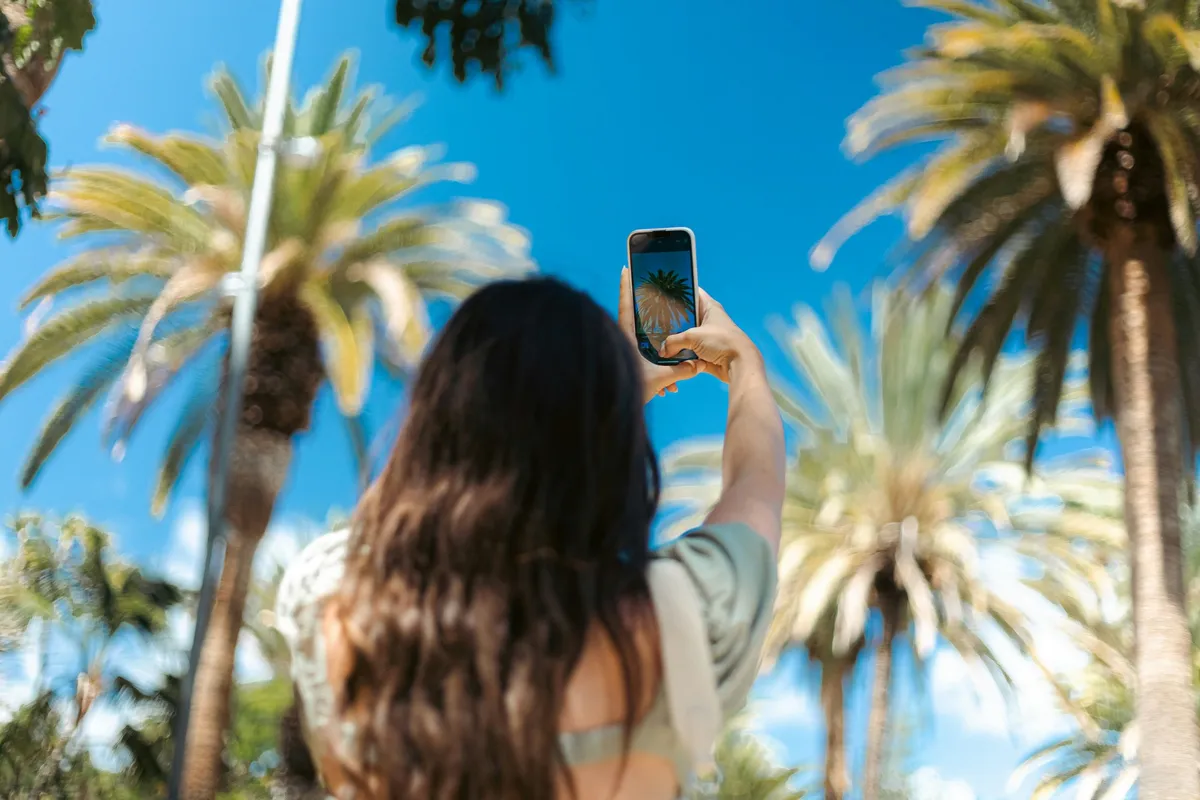
Preparation: Your Main Ally
A quality self-portrait begins long before you press the shutter button.
Research the location in advance.Before you set off, for example, after deciding to buy tickets to Istanbul on Kupi.com, look at photos of other travelers on social media. Where are the best angles? What time of day are there fewer people? This will help you choose the ideal shooting spot and avoid unnecessary passersby in the frame.
Catch the “golden hour”. Early morning or the time before sunset are your best friends. Soft light makes skin smoother, shadows more expressive, and reflections from water more picturesque. Direct midday sun creates harsh shadows under the eyes, which are best avoided.
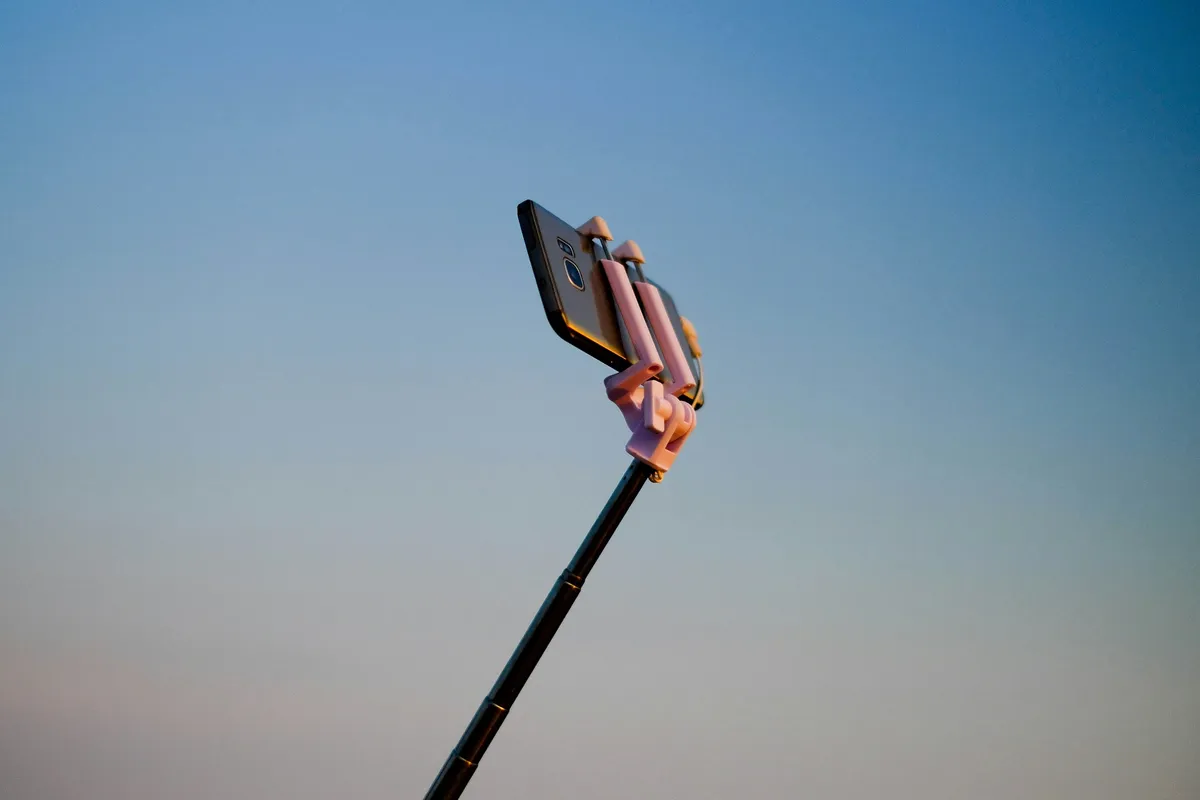
Tripod and timer. This is a basic setup that is often ignored. A small portable smartphone tripod and a 10-second timer function will give you time to strike the right pose. It's even more convenient to use a remote control or a smartwatch to see the picture in real-time.
Important note: be vigilant in crowded or unsafe areas. An expensive smartphone standing alone on a tripod is an easy target for street thieves. Try not to move more than 2-3 meters away from the device and choose positions where you can quickly thwart an attempted theft. Ideally, use a tripod in enclosed courtyards, guarded observation decks, or with friends who can watch your belongings while you're in the frame.
Headphones as a remote control. Few people know that your AirPods or other wireless headphones can act as a remote shutter release. If the camera on your smartphone is open, pressing the volume control button on the wire or the headphone sensor acts as a command to “take a photo” or “start video recording”. This allows you to take a series of shots without running back to the phone every 10 seconds, and helps avoid unnecessary fuss in the frame. Just insert one earbud into your ear and discreetly press it – the perfect shot is ready!
How to achieve an “empty” frame
Want to avoid crowds of tourists in your shot? Here are a few tricks:
The magic of early rising. This is the most reliable method. If you want to capture yourself against the backdrop of the Hermitage without hundreds of people, try to get there at dawn. When visiting Pskov, schedule at least one early morning for a photo walk.
Unusual angles. Sometimes it's enough to crouch down or raise the camera higher to “cut out” unnecessary details and people in the background. Use architectural elements – arches or columns – to create a natural frame that hides the surrounding hustle and bustle.
Long exposure. Modern smartphones have a “Live Photo” mode or special apps for long exposure. If you fix the phone still, moving people will simply “dissolve,” turning into a barely noticeable haze, while you remain the clear center of the composition.
Underwater Photography: The Magic of the Deep Sea
If your path leads to warm seas, don't miss the chance to take unique underwater shots.
Quality underwater housing. Even if your phone is water-resistant, saltwater is an aggressive environment. Use a special case with good transparency.
Fight glare. To avoid intrusive glare from the water's surface, try shooting at a slight angle or when the sun is at its zenith – this way, rays penetrate deeper, illuminating the seabed instead of reflecting off it.
Burst shooting. It's hard to pose and control facial expressions underwater. Turn on burst mode and take dozens of shots in one dive. Among them, you're sure to find that “masterpiece”.
Dynamics and Naturalness
Don't stand still. Your photos should tell a lively story.
Movement in the frame. Walk, turn around, adjust your hair, or simply look into the distance. Shots in motion always look more genuine than posed “at attention” stances.
Interaction with the surroundings. Lean against an old wall, hold a cup of coffee at a street cafe, or turn your face to the sun. The less you look directly into the lens, the more natural the result appears.
Use Reflections for a Double Effect
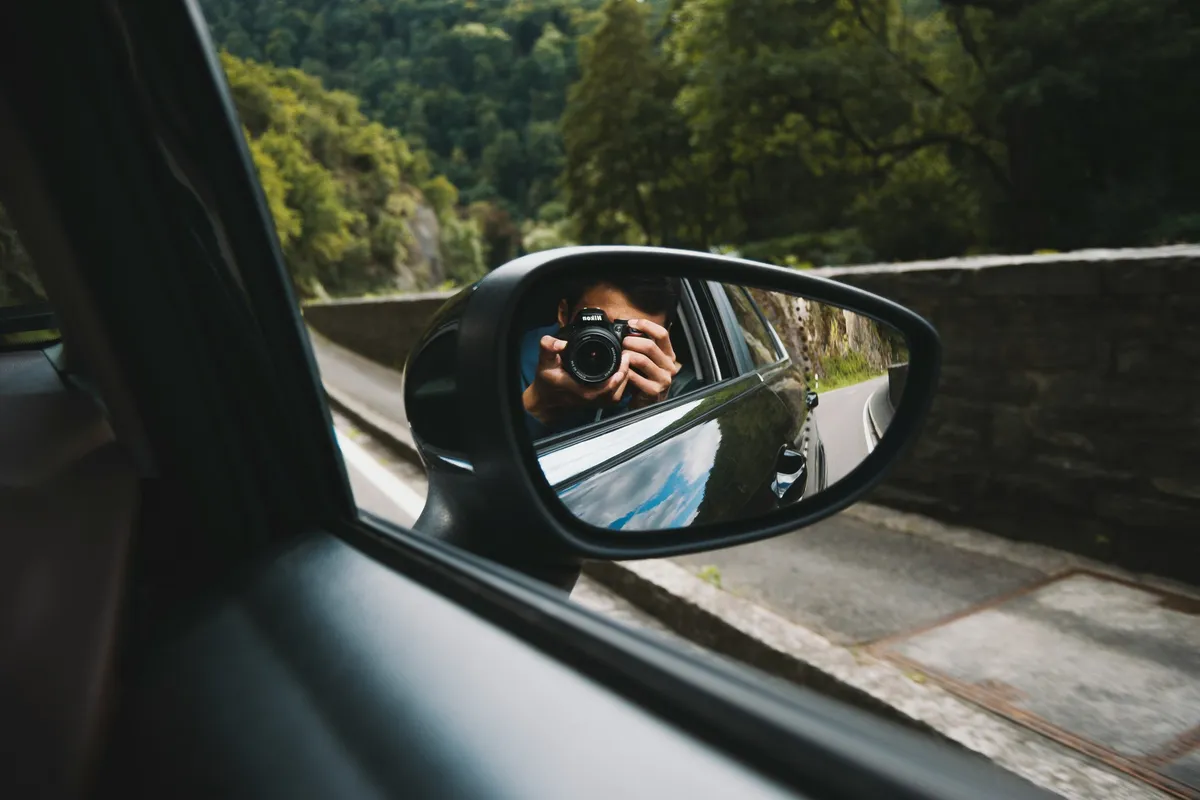
If there's no tripod nearby, look around. Cafe windows, mirrored surfaces of modern buildings, or even the calm surface of a puddle after rain can become your “second photographer”.
Mirror selfie art. Instead of a regular front-facing selfie, photograph your reflection in an antique hotel mirror or a panoramic train window. This creates layering and conveys the atmosphere of the place.
Symmetry by the water. Be sure to try to catch your reflection in the mirror-like surface of lakes. To avoid excessive sun glare that “washes out” the picture, use a polarizing filter for your smartphone or simply shoot when the sun is hidden behind a light cloud.
The Magic of Wide Angle and the “Rule of Thirds”
Many make the mistake of placing themselves exactly in the center of the frame. Try a different approach:
Shift yourself to the side. Enable the grid in your camera settings and position your figure at the intersection of the lines. This way, the shot will look harmonious, and the viewer will be able to see both you and the stunning landscape around you.
Wide-angle lens. It's indispensable when you need to fit both yourself and, for example, a huge cathedral into the frame. But be careful: at the edges, a wide-angle lens can distort body proportions. To make your legs appear longer, hold the camera slightly below waist level and point it slightly upwards. This works especially effectively when you pose against the backdrop of the Kul Sharif Mosque in Kazan.
Use Video Instead of Photos
Sometimes it's almost impossible to catch that split second with the perfect facial expression.
4K screenshot. Set your phone to record high-resolution video, move around a bit, look in different directions, smile. At home, you can calmly review the video and save any freeze-frame you like. The quality of modern smartphones in 2026 allows for such “photos” without loss of clarity.
Slow-mo for a cinematic effect. Try filming yourself in slow motion as you walk down a busy street, with the wind blowing the hem of your coat. This will add a cinematic touch to your shots.
Rely on Improvised Means
Tripod left in the room? No problem. In the world of travel, anything can become a tripod:
Backpack or bag. Place your phone on a backpack, putting a wallet or keys underneath for the desired angle.
Street objects. Embankment parapets, mailboxes, tree branches, or even a coffee cup – all these make excellent stands. The main thing is to ensure the structure is stable and your gadget won't take an unassisted flight.
Working with Color in Clothing
Your outfit is part of the composition. To avoid getting lost against the backdrop of landmarks, choose contrasting colors.
If you plan to shoot against a blue sea or sky, wear something yellow or white. If there's a lot of greenery around, choose red or pink shades. Contrast helps the camera focus on you faster, and makes the shot look more professional.
Don't forget to check the horizon level. A “tilted” horizon against the sea or mountains is the most common mistake beginners make. If the camera is on an uneven surface, straighten the frame in your phone's standard editor immediately after shooting. This will take five seconds, but visually make the photo much neater.


