How to prepare for your first flight and not be afraid
In this article, we'll tell you how not to be afraid of flying and what to do before departure to ensure a comfortable journey. Spoiler: this article is for beginners.
What to remember before your flight
Luggage
Before your trip, you need to pack your luggage. Unlike other modes of transport, on an airplane, all luggage is divided into carry-on (items you take with you into the cabin) and checked baggage, which you check in at the airport (it flies in the cargo hold).
Thus, all items must be divided into two bags. It's best not to take heavy items in your carry-on, as you will be carrying it with you all the time. After passing security, there are no trolleys or luggage storage.
Please note that there are restrictions on weight, dimensions, and contents for both checked and carry-on luggage (not all items can be transported by air). We have covered this in more detail in the articles «Carry-on luggage on an airplane» and «Baggage allowance rules».
So, the luggage is packed. What's next?
What to wear for the flight
The answer to this question depends on the duration of the flight. If it's three to four hours, there's no difference. If it's longer, choose comfortable clothing made from natural materials. Believe me, sitting on a plane in tight jeans for six hours or more is very uncomfortable. Your clothes should be loose.
If you need to look good upon arrival, take a change of clothes. You can change and freshen up in the airport restroom.
Regardless of the flight duration, pay attention to your footwear. It's desirable that it be comfortable (not tight) and without heels. If the flight is in winter, take warm socks with you. Sitting for several hours in winter boots is uncomfortable – it's better to take them off and put on socks.
What to take with you into the airplane cabin
As we've already mentioned, you shouldn't bring a heavy bag onto the plane. If possible, only take items in your carry-on that you will need during the flight. For example:
• a book (physical or e-book);
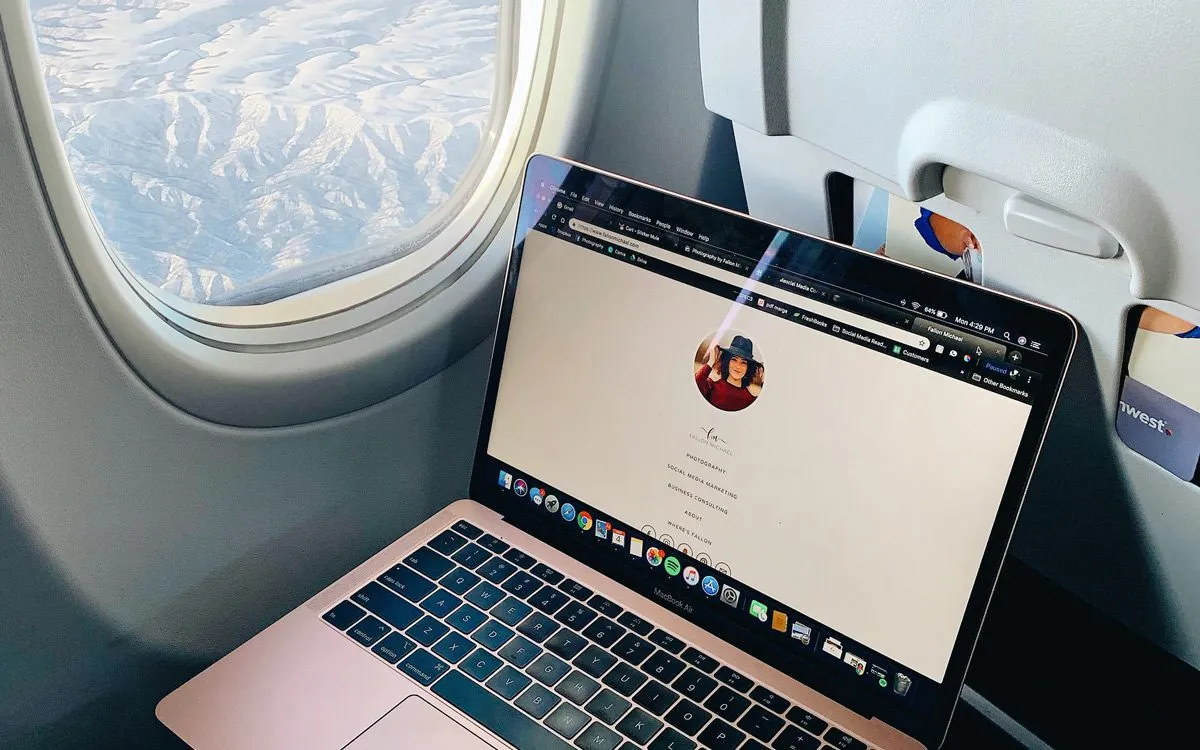
• a tablet or laptop;
• moisturizing cream. The air on a plane is very dry, so cream won't be superfluous, especially if you have dry skin. However, keep in mind that the tube volume must not exceed 100 ml;
• some food. You can bring certain food items on board the plane. Flights shorter than three hours usually don't serve meals, so a small sandwich and an apple won't hurt. Read more about carrying food in carry-on luggage here >>.
How to combat motion sickness and ear congestion
If you get motion sickness on other forms of transport, it's best to address this issue in advance. In many pharmacies and even at the airport, you can buy special pills or lozenges for motion sickness, such as “Aviamore”. This medication will help you get rid of unpleasant sensations during the flight and nausea.
During takeoff and landing, many people experience ear pressure, but in most cases, this can be avoided. Read how to deal with ear congestion in our article «Why do ears pop on a plane».
Getting to the airport
Plan in advance how you will get to the airport: it could be a bus, shuttle, taxi, or train (aeroexpress). The fastest way is by aeroexpress, and if you choose a bus or taxi, consider traffic jams, especially if you're traveling during rush hour in the morning or evening on a weekday.
You need to arrive at the airport 2-2.5 hours before departure and check in. As a rule, check-in closes 40 minutes before departure, and for some transatlantic flights, it's 1 hour.
Read more about what to do at the airport in our guide for first-time flyers.
Phobia or anxiety
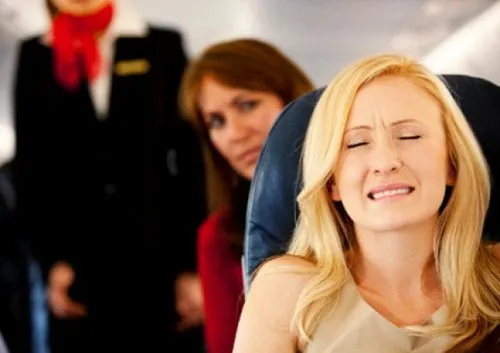
Aerophobia is a psychological disorder characterized by an excessive fear of flying on airplanes. People suffering from aerophobia experience significant discomfort, unease, and anxiety at the thought of flying, even if it is actually safe and poses no threat to their lives. Aerophobes often don't understand how to overcome the fear of flying, as it is irrational.
Be attentive to yourself and do not ignore the manifestations of aerophobia – if you are bothered by anxious states before a flight, consult a doctor.
Symptoms of aerophobia
Symptoms of aerophobia typically include:
• increased levels of anxiety and worry before a flight;
• panic attacks, intrusive thoughts related to flying;
• physical symptoms: sweating, trembling, rapid heartbeat, shortness of breath, dizziness, nausea;
• a desire to avoid flying;
• a desire to feel in control of the situation, even to the point of wanting to pilot the plane.
Types and stages
Types of aerophobia range from moderate anxiety to severe forms that can lead to serious problems in daily life. Stages of aerophobia may include:
• flying only after taking sedatives or under the influence of alcohol;
• avoiding airplanes: flying only when absolutely necessary;
• complete refusal to use air transport and avoidance of related situations.
How to stop being afraid of flying
According to statistics, every third passenger experiences some degree of fear of flying – you are not alone in this. But if we rely on statistics, it's also worth remembering that an airplane is the safest mode of transport. The number of fatalities in air transport accidents is almost three thousand times less than the number of fatalities in road transport accidents.
People often fear flying and get nervous because of turbulence. Sometimes even the most seasoned flyers start to worry about air pockets – in reality, turbulence is unlikely to scare you if you learn why the plane shakes.
If the stress from the upcoming flight is strong, take a sedative and bring it with you. Under no circumstances should you consume alcohol before the flight! It might help for a short time, but passengers who have consumed alcohol feel much worse during the journey. Flying is a significant strain on the cardiovascular system and the body as a whole. Alcohol will only worsen the situation.
Use relaxation techniques: meditation, deep breathing, or yoga – this will help cope with stress and anxiety, and stop the flow of intrusive thoughts.
And if it's hard to cope on your own, seek professional help. Psychotherapy can help you understand the reasons behind your fear of flying and learn to regulate your emotional state.
And of course, cat GIFs are always a good idea.
And don't forget to subscribe to our Telegram channel! There: selections of inexpensive tickets, private sales for our members, the most current news on entry rules for countries around the world, and simply interesting travel content – travel hacks, guides, and expert advice.