Why won't the aircraft engine start or why does it stall?
Due to insufficient passenger awareness about aircraft systems, unpleasant situations often arise, leading not only to passenger panic but also to flight delays of several hours.
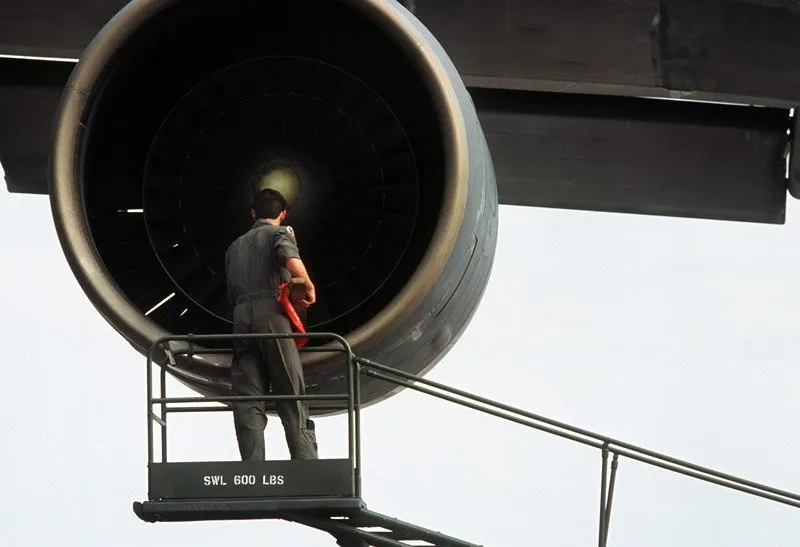
Most often, these situations are related to engine operation. Sometimes you're sitting on the plane, waiting for it to taxi to the runway... but for some reason, the engines won't start, or, even worse, they start and then almost immediately stall.
Usually, panic starts among passengers in such situations. After all, how can one fly on a faulty aircraft? But wait a minute, are you sure it's faulty? Crew members are people just like you, and they also have families; would they really risk it knowing the danger? Of course not!
If the aircraft engines haven't started, there's no reason to panic. To understand why this happens, let's look at how an engine is started.
Aircraft engines are started with air. In modern airliners, in addition to the main engines, there is also a small engine called the APU (Auxiliary Power Unit). The APU is used to generate electricity, create pressure in the hydraulic system, and provide air conditioning while the aircraft is on the ground and for starting the main engines. (The APU is only needed on the ground; it does not affect the flight in any way)
Ducts run from the auxiliary power unit to the main aircraft engines. When the engines are started, the air supply from the cabin air conditioning system is shut off and redirected to the main engines using valves. The air, rushing towards the main engine, begins to spin the turbine.
If the air pressure in the starting system is sufficient, the turbine spins up to the required revolutions, followed by the injection and ignition of the fuel mixture in the combustion chamber. That's it, the engine has started.
However, a situation may arise where there simply isn't enough pressure for some reason to spin the turbine. For example, very high ambient air temperature, sand getting into the valve, etc. In such situations, the protection automation will shut down the APU, leading to a start failure. If the engines cannot be started on the second or third attempt, a mobile air start unit (ASU) approaches the aircraft.
And even it doesn't always manage to start the engine on the first try (for example, if it hasn't been used for a couple of weeks). If the engine does start but then stalls again, it's likely that the air start unit didn't spin the engine up to the required revolutions. This happens if it doesn't provide the necessary pressure or if the pressure dropped during the start process. In these cases, the engine is shut down to prevent overheating, and if starting is not achieved after several attempts, a pause is made (its duration depends on the number of engine start attempts). Then everything starts over until the engines are successfully started.
Typically, an air start unit looks like this:
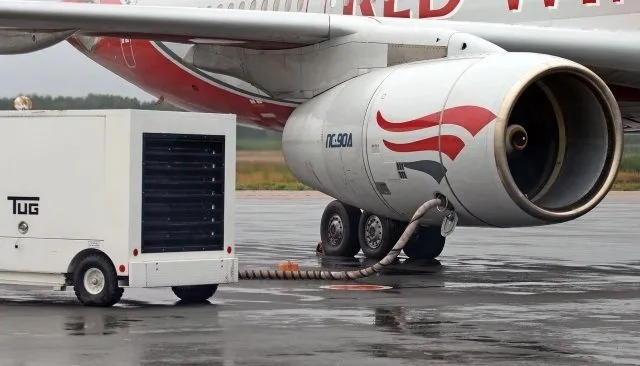
However, in Russian airports, you will more often encounter an ASU based on a UAZ:
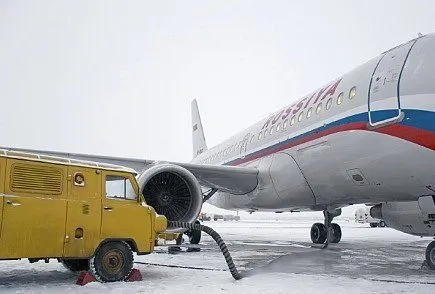
Starting an engine from an air start unit not on the first attempt is a normal occurrence, as is starting from an ASU in general, which does not prevent the aircraft from departing.
If the engines on the aircraft you are about to fly on won't start, don't panic. Calling an ASU costs money, and a significant amount, so airlines sometimes want to save money and try to start the engines themselves, which takes time. Also, the ASU doesn't arrive quickly, especially if you are departing from a large airport where this device serves many aircraft. In some cases, you might have to wait for it for over an hour.