Why is the price of an airline ticket on the airline's website more expensive than on other sites?
If you have ever compared ticket prices on different websites, you might have noticed that in 99% of cases, they are different everywhere. And it is often the case that on the airline's own website, they are more expensive or, even stranger, such a flight does not exist.
Why does this happen?
First, let's look at the first case, when the air ticket price from an agent is lower than on the airline's website. All airline tickets are booked through one of the global distribution systems (GDS), the most popular being Amadeus and Galileo.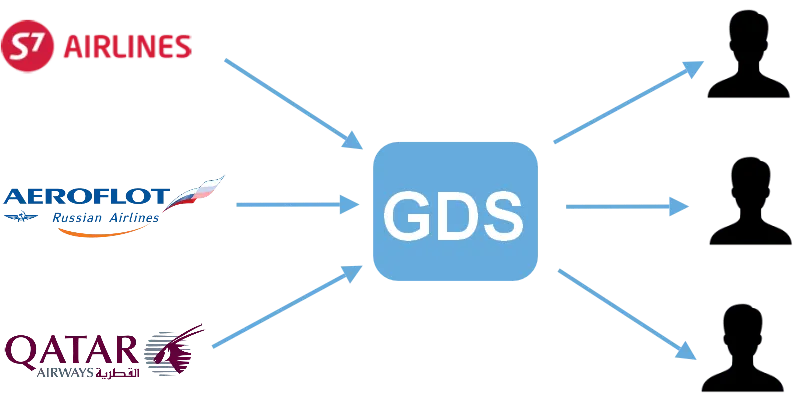
The same happens in the aviation industry. Airlines sell tickets to large consolidators at lower prices, at confidential fares, or pay a high commission.Everything else depends on the policy of the consolidator or agent themselves. They can set a price higher than the airline's, the same, or lower.
What about flights that are not on the airline's website?
As we mentioned above, airline tickets are booked through a global distribution system. Working with it is not easy; it's a huge database with information on fares from all airlines worldwide (except for some budget ones). Finding a direct flight is not a problem, but with transfers, you need to piece it together. One flight segment is usually on one airline's flight, and another on a different one. The ability to combine fares and merge them into a single ticket depends on the agreement between carriers. For example, Aeroflot flights can be easily connected with all SkyTeam alliance airlines, thirty code-sharing partners, and numerous interline partners.Each airline or agency configures the system independently, and the variety of flights you see on the screen depends on how it is configured.Often, only flights operated by the airline itself are displayed on the airline's website, while flights under code-share or interline agreements are not.