How to fly in winter with carry-on luggage and not freeze
 Polina
Winter travel is often associated with huge suitcases packed with sweaters, heavy boots, and bulky down jackets. It seems that flying to a frosty region with just a backpack is a utopia or the lot of extremists. However, experienced travelers know that luggage size does not affect the degree of insulation if you approach packing wisely. The secret lies not in the quantity of clothes, but in the technological nature of the materials and the correct packing strategy.
Opting out of checked luggage gives you freedom of movement, saves time at baggage claim, and, of course, protects your budget, as "light" fares are always more appealing. We've compiled proven strategies that will help you fit your winter wardrobe into an airline's carry-on sizer and still feel comfortable even at minus thirty degrees.
Rule One: Wear the Heaviest Items
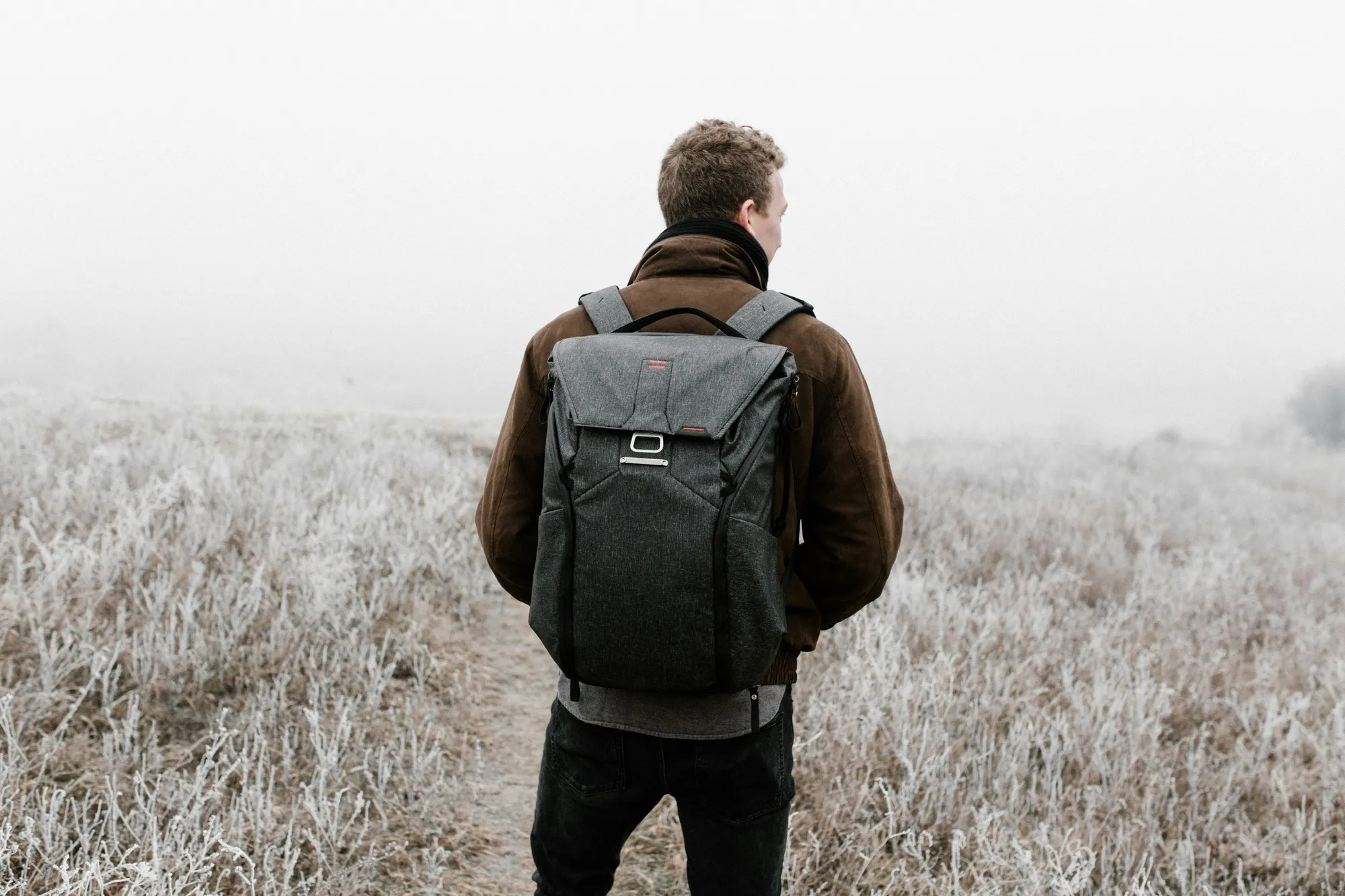
The main axiom of winter travel with carry-on luggage states: all the bulkiest, heaviest, and most cumbersome items should be worn by the passenger, not stored in the overhead bin. Your task is to lighten your backpack as much as possible by wearing items. This means that for the airport, you wear your most massive winter boots, thick jeans or insulated pants, your thickest hoodie, and your main down jacket.
Of course, there's a nuance here. Being in full winter gear in a heated terminal and airplane cabin can be uncomfortable. Therefore, it's important to plan a quick "unpacking" system. As soon as you've passed security and are in the clean zone, take off your outerwear and unbutton your sweater. Many travelers carry a folded fabric shopper bag in their pocket. You can temporarily put your hat, scarf, gloves, and even your jacket into it to conveniently carry them by hand until boarding, without taking up space in your main backpack.
Technology vs. Bulk: Thermal Underwear
If you're flying with a small suitcase, forget about grandma's bulky knitted wool sweaters. They take up half the usable volume and weigh a ton. Your best friend should be quality thermal underwear. Modern sets made of merino wool or high-tech synthetics are as thin as a second skin but provide more warmth than three sweaters.
Thermal underwear works by wicking away moisture and retaining body heat. A set of long-sleeve top and long johns weighs only 200-300 grams and rolls into two tiny bundles. This is a base layer that will allow you to walk in the cold in regular city clothes. For example, if you decide to buy tickets to Murmansk on Kupi.com to hunt for the Northern Lights, thermal underwear will ensure you don't freeze while waiting for the celestial show, and it won't "eat up" any space in your carry-on.
Fleece Instead of Wool
The second layer, worn over thermal underwear, should be fleece. Fleece jackets are a marvel of the travel industry. They are lightweight, hydrophobic (they don't absorb moisture but let it pass through), very warm, and most importantly, compact. A good fleece provides as much warmth as a thick wool sweater but takes up three times less space when packed. Moreover, fleece dries quickly: if you get caught in wet snow or sweat, the clothing will dry overnight in the hotel, unlike wool or cotton.
The Magic of Ultralight Down Jackets
The emergence of Ultra Light Down jackets has revolutionized winter travel. These are thin down jackets that weigh about 200 grams and roll up into a pouch the size of a fist. Such a jacket can serve as primary outerwear (in the off-season) or as an additional insulating layer under a more serious parka or coat.
Such a down jacket is indispensable during a flight. When folded, it lies in your backpack, taking up no more space than an apple. But if the airplane cabin gets cold, you can take it out and use it as a pillow or wear it. And upon arrival, for example, if you took tickets to Novosibirsk and exit the airport into a Siberian frost, this thin down jacket, worn under a regular jacket, will create a thermos effect that will save you from any cold.
Vacuum – A Tourist's Best Friend
Even the warmest clothes are 70% air. To transport bulky clothing in a small suitcase, this air needs to be removed. Use compression bags. There are two types: some require a vacuum cleaner, others only your hands (air is expelled by rolling the bag).
By packing spare warm pants, a fleece, and socks into such a bag, you'll get a flat and solid "pancake" that will easily fit at the bottom of your backpack. This can save up to 50% of usable space. The only thing to remember is that vacuum reduces volume, but not weight. Make sure your tightly packed suitcase does not exceed the airline's weight limits (usually 10 kg for carry-on luggage).
Accessories Make All the Difference
In winter, extremities and the head are the first to get cold. Therefore, accessories are more important than main clothing. A hat, a scarf (or buff), and good gloves are essential. The good thing is that these items don't necessarily need to be put in a bag at all. You can wear the hat on your head or put it in a hood, wrap the scarf around your neck, and put the gloves in your jacket pockets.
Pay special attention to socks. Instead of a dozen pairs of ordinary cotton socks, take two or three pairs of trekking thermal socks. They are thicker, but thanks to their special weave, they keep your feet warm and dry even during active walking. Moreover, trekking socks can be worn for several days in a row without developing an odor, which is critical when luggage space is limited.
Cosmetics and Liquids: Winter Specifics
In winter, skin suffers from dry indoor air and outdoor frost. With liquid restrictions (up to 100 ml), you'll have to choose the most essential items. Opt for thick, rich creams in small jars. A great life hack is to use versatile products: for example, shea butter or coconut oil, which works for face, hands, and lips. Transfer everything into special travel containers or use contact lens cases for creams – they take up minimal space.
The "One Pair of Shoes" Strategy
Footwear is the bulkiest and heaviest part of your wardrobe. In an ideal carry-on travel scenario, you should only have one pair of shoes – the ones you're wearing. These should be versatile, warm, waterproof boots that are comfortable for walking around the city and flying on a plane.
If a second pair is necessary (for example, for a trip to the theater or a restaurant), choose something as soft and light as possible that can be flattened without losing its shape: sneakers, moccasins, or soft loafers. When packing, be sure to tightly stuff socks and underwear inside these shoes – this way you make good use of the internal space of the footwear.
Traveling light in winter is a skill that comes with experience. But once you master it, you'll understand how much more pleasant it is to leave the airport with a light backpack on your shoulder and immediately head off for adventures, without wasting time waiting at the baggage carousel.