What does the crew wish each other when boarding a plane? Good flying weather, of course! But it doesn't stop there; they also cross their fingers and quietly think to themselves: if only all passengers were sober.
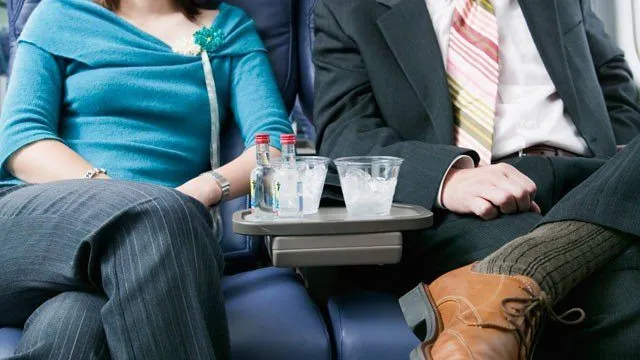
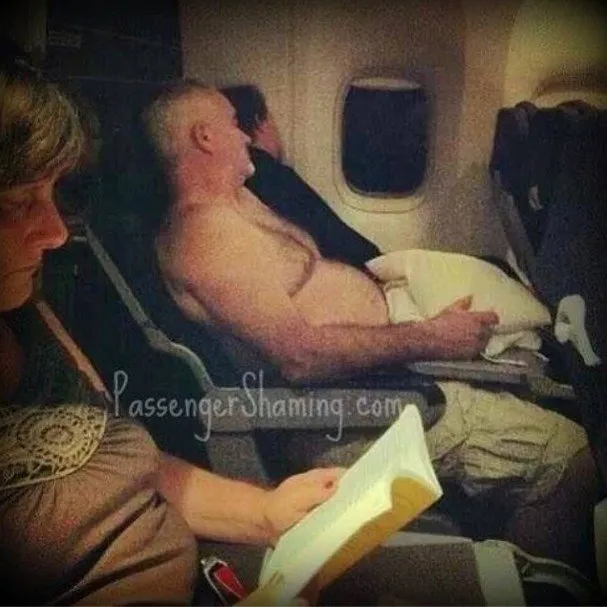
Airlines suffer serious inconveniences from those who like to get drunk during flights. Heated adventurers annoy fellow passengers, are rude to flight attendants, and even try to get into the cockpit. Apparently, they want to check if the plane has deviated from its course.
Sometimes the behavior of unruly passengers goes beyond all permissible limits, and they simply don't reach their destination. For example, this year, a plane flying from Moscow to Phuket was forced to land in Tashkent because a drunk man was hitting passengers, being rude to flight attendants, and even threatening the crew with physical violence.
Those flying from Moscow to Burgas on February 18 were also unlucky. A drunk passenger not only annoyed those around him but also tried to interfere with the pilot's work.
A notorious incident occurred a couple of years ago when students traveling from Russia to the USA on the Work&Travel program decided to celebrate the event and got so carried away that... they rocked the plane. How they managed this remains a mystery, but they never reached America. For safety reasons, the chief captain turned the aircraft around and landed it back home.
The Drunkest Flights
Most often, "alcohol incidents" occur on so-called "resort" flights. Whether from excitement or joy about the upcoming vacation, many head straight to duty-free after check-in and start celebrating their departure already on the plane. Annually, about a thousand passengers on Russian airlines manage to "mark" the occasion.
People flying to Cuba and Thailand are most often found drinking. Apparently, the prospect of relaxing in countries with liberal customs relaxes travelers so much that they lose self-control even before arriving at their destination. On domestic flights, Vladivostok is the most problematic city.
Interestingly, fines in Russia for disturbing order on board are relatively small. The penalty for "unseemly" behavior ranges from 500 to 5,000 rubles. In comparison, Italian and Dutch airlines fine 500 euros for drunkenness on a plane, while in the UK, you'll have to pay 2,000 pounds sterling.
Thus, looking at their counterparts in the airspace, Russian airlines are soon planning to increase fines for those who like to drink.
Fight Drunkenness! But How?
Solving the problem of drunkenness on board is not as simple as it might seem at first glance. Since last year, major airlines have been racking their brains over this issue. Some propose increasing fines, while others suggest equipping planes with special restraints and plastic handcuffs to restrain particularly unruly passengers.
There are proponents of closing duty-free shops. The owner of Aeroflot, Vitaly Saveliev, went even further and proposed introducing passenger blacklists.
Some EU countries, the USA, Canada, and China already have the practice of maintaining such lists, so Aeroflot's initiative was supported by many airlines. Some Russian airlines already maintain their unofficial lists, but they do not make passengers on them "persona non grata." Saveliev, however, insists on the legislative approval of blacklists, which would prevent "offenders" from boarding for 3-5 years.
Planning is one thing, implementing is another. For now, this is not possible due to the difficult legal formalization procedure. Even if such a law is adopted, it is not entirely clear how it will work in practice. After all, denying flights for 5 years is too harsh a measure against a person who overdid it once. Moreover, it is a direct violation of the right to freedom of movement.
Air Rescuer
Flight attendants try to calm down unruly passengers by exercising their eloquence. Usually, it doesn't go beyond verbal arguments, because they are not allowed to use physical force.
Many airlines advocate for expanding the official powers of crew members. However, a fragile flight attendant is unlikely to cope with a violent man. Transaero was the first to understand this, and its planes are accompanied by employees from its own security department.
Nevertheless, even such air rescuers can only influence troublemakers psychologically and, if necessary, protect passengers from rowdies.
However, the presence of a security officer on board does not always suit airlines. These are additional costs that can be avoided if airport staff are more vigilant. In reality, they want to get rid of a drunk person as quickly as possible by putting them on the plane.
Duty-Free is to Blame
It's no secret that alcohol bought at duty-free the day before is often consumed on the plane. At one point, airlines even wanted to collectively fight against this "evil," but the futility of these attempts is obvious. Closing duty-free shops is not beneficial to the airlines themselves, nor to the airport, nor, naturally, to the passengers.
A ban on drinking alcoholic beverages on board already exists, but practice shows that it is nothing more than a formality. Employees of some European airlines confiscate alcohol before boarding and return it upon arrival.
But what is good for Europeans is not always suitable for Russians, who are capable of drinking a bottle of whiskey right in the waiting lounge, then gathering their strength, passing all control zones, and boarding the plane with an unperturbed look.