Support

HMS Belfast

About

Proudly moored on the River Thames in the heart of London, HMS Belfast is one of the most famous museum ships in the United Kingdom. This massive cruiser, a branch of the Imperial War Museum, stands as a unique witness to 20th-century naval history and offers visitors a rare opportunity to step on board a real warship permanently anchored near Tower Bridge.
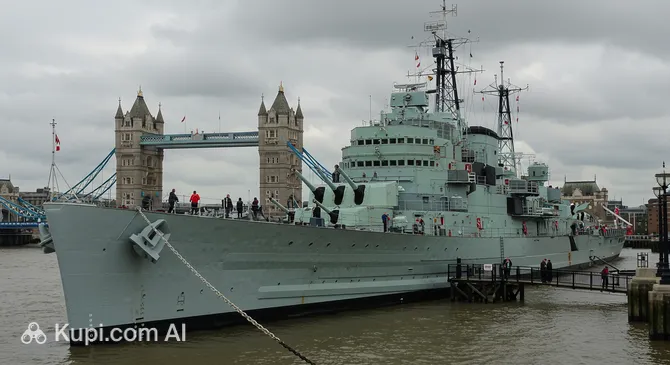
HMS Belfast. Illustration.
Source: Kupi.com AI

Traveller photos:

Built in the 1930s, this Town-class cruiser had a distinguished combat history, participating in key naval operations of the Second World War. Preserved in its historic state, it has become a floating monument telling the story of the service and daily life of British sailors. Walking across its decks is a chance to touch important pages of the past.

Today, nine decks of the Belfast are open for exploration. Guests can peek into the engine room, examine the gun turrets, walk across the captain's bridge, and imagine the crew's life while exploring the cabins, the galley, and even the ship's operating theater. It is not just a museum but a true immersion into history, making it one of the key attractions near the Spitalfields area and all of central London.

Contacts

To plan your visit to the HMS Belfast museum cruiser, check current schedules, or ask questions, you can use the official contact details. The most up-to-date information is always available on the Imperial War Museum website.

How to contactContact
AddressThe Queen's Walk, London SE1 2JH, UK
Phone+44 20 7940 6300
Websitewww.iwm.org.uk

What to Do

Visiting the HMS Belfast museum ship is a true immersion into the history of the British Navy. Guests are free to explore nine decks of this legendary cruiser, looking into rooms recreated with historical accuracy. You will see how officers lived in their cabins, where food was prepared in the galley, and you can descend into the heart of the ship—the engine room. The radio room and even the ship's hospital are also open for viewing, providing a complete picture of the sailors' daily life and service.

One of the museum's main features is its interactive exhibits. Here, everyone can feel like a member of the crew: try sending a message using Morse code as a radio operator or aim the massive main battery guns at a target. The exhibitions tell not only of the ship's technical characteristics but also of the personal stories of its sailors and officers, as well as the real combat operations in which the Belfast took part.

In addition to self-guided tours, there are regular guided tours on board HMS Belfast that reveal even more of the ship's secrets. Themed exhibitions, educational programs, workshops, and engaging quests dedicated to naval history are organized for visitors of all ages. To round off your visit, be sure to head up to the observation decks, which offer magnificent panoramic views of the Thames and the city's iconic landmarks.

Getting There

The museum cruiser HMS Belfast is moored on the River Thames in the heart of London, between the famous Tower Bridge and the Tower of London. Thanks to this central location, getting there is easy. The most convenient way is to use the London Underground. The nearest station, London Bridge, is just a 5-10 minute walk away and is served by the Jubilee and Northern lines. Alternatively, you can go to Tower Hill station (District and Circle lines) and enjoy a scenic walk across Tower Bridge directly to the ship.

Besides the Tube, HMS Belfast can be reached by surface public transport. City buses 42, 78, and 343 stop near the museum. Another exciting way to reach the cruiser is by water. Take the Thames Clippers river bus and get off at London Bridge City Pier, located just a few minutes' walk from the attraction. This trip is a mini-tour of the Thames in itself.

If you are planning to travel by car, keep in mind that finding parking in central London can be difficult and expensive. Although there are paid parking lots nearby, it is highly recommended to opt for public transport. This will not only save you time and stress but also help you avoid traffic in the busy city center.

Nearest city: Spitalfields

History & Facts

HMS Belfast is more than just a ship; it is a floating fortress with a rich and dramatic history. Construction began in 1936, and she was launched on St. Patrick's Day, March 17, 1938. Commissioned in August 1939, the cruiser immediately entered service during World War II, participating in the naval blockade of Germany. However, in November of that same year, her service was interrupted when the ship struck a German mine, suffering serious damage. Restoration took over two years, but the Belfast returned to service even more formidable.

After extensive repairs, the ship returned to service in 1942 with improved weaponry and advanced radar equipment. Her wartime record was truly heroic. The cruiser escorted Arctic convoys delivering vital supplies. She played a key role in the famous Battle of the North Cape, helping to sink the German battleship Scharnhorst. In 1944, HMS Belfast provided fire support for Allied troops during the D-Day landings, becoming a symbol of the British Navy's power.

After the end of World War II, the cruiser continued to serve until 1963, after which she faced the prospect of being scrapped for metal. Fortunately, thanks to the efforts of enthusiasts, the ship was saved in 1971 and transformed into a unique museum. Since 1978, HMS Belfast has been a branch of the Imperial War Museum and has remained permanently moored on the River Thames ever since. Today, it is one of London's most iconic landmarks, allowing visitors to immerse themselves in the atmosphere of naval history and learn about the lives of sailors on board one of the most famous ships in the history of the United Kingdom.

Time Needed

To fully experience the HMS Belfast museum ship, it is recommended to set aside 1.5 to 3 hours. This is usually enough time to leisurely walk through all nine decks open to visitors and get a general impression of life and service on board one of the Royal Navy's most famous cruisers.

During this time, you will have the chance to explore the ship's key sections: from the cavernous engine room and shell rooms to the captain's bridge and the operating theater. If you want to dive deeper into the history, carefully study the interactive displays, or take part in a themed tour, you should budget a bit more time—perhaps up to 4 hours—to see all the details without rushing.

Working Hours

The HMS Belfast museum ship is typically open to visitors daily from 10:00 to 18:00. It is important to remember that the last entry to the ship is one hour before closing, at 17:00, ensuring you have enough time to explore all nine decks of this impressive historic vessel.

As the schedule may change depending on the season, especially during the winter period or on public holidays, it is highly recommended to check the current opening hours on the official museum website before your visit. To avoid queues and guarantee your entry, especially during peak tourist seasons, it is best to purchase tickets online in advance.

10:00 – 17:00

Nearby

After visiting HMS Belfast, don't be in a hurry to leave the area. Exploring the surroundings will allow you to dive deeper into the atmosphere of Spitalfields and discover other gems of the city. Often, the most vivid impressions of a trip come from unexpected finds, whether it's a cozy cafe, a historic building, or a modern art object located just a few minutes' walk away.

The area around HMS Belfast is packed with interesting places to complement your cultural itinerary. From famous skyscrapers and historic markets to cultural centers and unique exhibitions, there's something for everyone here. Below is a list of attractions in the immediate vicinity, with distances provided for easy route planning.

NameDistance
The Shard0.4 km
Leadenhall Market0.7 km
Wilton's Music Hall1.1 km
Arcade London1.3 km
Van Gogh Immersive Experience1.6 km
Barbican Centre1.7 km
BOXPARK Shoreditch1.9 km

Reached the bottom of the page?

Looks like you know this route inside out