Support

Dover Castle

About

Dover Castle is one of the largest and most significant medieval castles in the United Kingdom, located in the town of Dover. Majestically perched on the famous White Cliffs overlooking the Strait of Dover, it served as the country's primary defensive outpost for centuries. Due to its key strategic position, the castle earned the apt nickname "The Key to England," as it controlled the vital sea route connecting the island with continental Europe.

The castle's architecture is a classic concentric fortress that has been beautifully preserved to this day. At its center stands a massive rectangular keep—the Great Tower—which in its time was one of the largest structures in England. This powerful stronghold is surrounded by two sets of high, thick defensive walls, making the castle virtually impregnable and demonstrating the outstanding achievements of medieval military engineering.
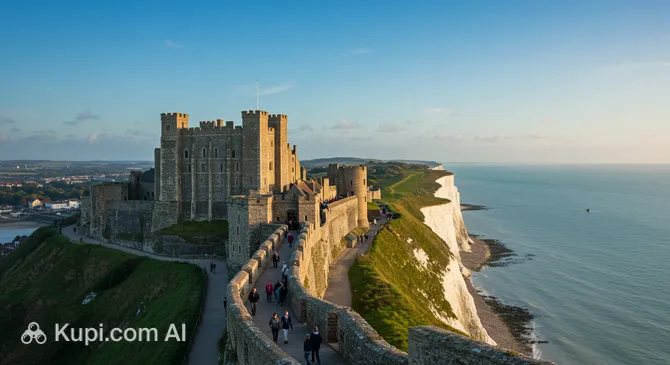
Dover Castle. Illustration.
Source: Kupi.com AI

Traveller photos:

A visit to Dover Castle is a true journey through history spanning nearly two millennia, from Roman times to the events of the 20th century. Guests can explore not only the royal chambers inside the Great Tower but also descend into mysterious medieval tunnels and secret underground passages from the Second World War, which housed a command center. This site is fascinating not only for its defensive strength but also for its rich cultural heritage, making it a must-visit for anyone interested in English history.

Contacts

To plan your visit to Dover Castle and get the most up-to-date information on opening hours, ticket prices, and special events, it is recommended to consult official sources. All necessary information can be found on the castle's website, which is managed by English Heritage.

How to contactContact
AddressCastle Hill Rd., Dover CT16 1HU, UK
Phone+44 370 333 1181
Websitewww.english-heritage.org.uk

What to Do

A visit to Dover Castle offers guests full immersion into history. You can explore its vast grounds, including the massive keep (the Great Tower), numerous towers, galleries, and secret passages. Inside the main tower, which was once a true palace for kings, the medieval atmosphere has been recreated: here you can see meticulously furnished chambers with period furniture, tableware, and stained glass, allowing you to vividly imagine the life of its noble residents. Exhibitions and interactive elements make a walk through the castle engaging for the whole family.

Of particular interest are the extensive tunnels carved directly into the chalk cliffs. Visitors can descend into the 18th-century underground casemates, which housed barracks for thousands of soldiers during the Napoleonic Wars, and explore the passages that served as a secret command center and hospital during the Second World War. Additionally, the castle grounds feature unique historical monuments—an ancient Roman lighthouse, one of the oldest in the United Kingdom, and the Anglo-Saxon church of St Mary in Castro.

Be sure to climb to the top of the Great Tower, which offers breathtaking panoramic views of the town of Dover, its busy port, and the vast expanse of the English Channel. On a clear day, you can even see the coast of France from here. For visitors of all ages, the castle regularly hosts exciting events, such as historical reenactments, themed tours, and special exhibitions, which make the visit even more educational and memorable.

Getting There

The most convenient way to reach Dover, where the castle is located, is from London. The easiest and fastest option is by train. Regular services depart from major London stations, such as London St Pancras and London Victoria, and the journey takes between one and two hours. For those traveling by car, the A2 and A20 main roads lead to the town; the route from the capital is well-marked and comfortable.

From the town's main railway station, Dover Priory, Dover Castle is within walking distance. It takes about 20–30 minutes, but keep in mind that the route is uphill, so it is best to wear comfortable shoes. If you want to save time and energy or are traveling with children, you can take a local taxi or a bus that stops near the entrance. For those arriving by car, a dedicated parking area is available at the castle.

The walk from the city center to the castle can be a pleasant part of your journey in its own right. Signs are installed along the entire route to ensure you don't get lost. As you climb the hill, you can enjoy stunning views of the coastline and the famous White Cliffs, which serve as a perfect introduction to the "Key to England."

Nearest city: Dover

History & Facts

The history of Dover Castle, located in the town of Dover, is rooted in antiquity. The first fortifications on this strategically important hill appeared during the Roman Empire: in the 1st century AD, the Romans built a lighthouse here to guide ships across the strait. However, the castle began to take its modern form much later, in the 11th century, when William the Conqueror ordered the reinforcement of this area after the Norman Conquest of England, recognizing its key significance.

A decisive stage in the castle's development occurred in the 12th century under King Henry II. He initiated a massive reconstruction that transformed Dover Castle into one of the most powerful and advanced fortresses of its time in the United Kingdom. It was then that the famous Great Tower (keep) was erected and a system of concentric walls was created, making the castle virtually impregnable. These innovations in fortification clearly demonstrated royal power and military might.

In the following centuries, the castle was constantly expanded and adapted to changing military threats. For instance, during the reign of Henry VIII, its walls were reinforced to withstand artillery fire. One of the most remarkable features of the castle is the deep tunnels carved into the chalk cliffs in the 18th century during the Napoleonic Wars. These underground casemates served as barracks for a garrison of over 2,000 soldiers. Thanks to its continuous military history and constant improvements, the castle is excellently preserved today, having survived numerous historical events.

Time Needed

When planning a visit to Dover Castle, it is worth setting aside enough time to enjoy its scale and rich history without rushing. For a full tour of the main grounds, including the Great Tower and the fortress walls, it is recommended to allow at least 3–4 hours. This is enough time to see the key exhibitions and soak in the atmosphere of this majestic site.

If you want to get the most out of your experience and explore every corner of the castle, it is better to plan for a half-day or even a full day. Such a visit will allow you not only to see the royal chambers but also to descend into the famous medieval and wartime tunnels, visit all the exhibitions, and participate in the interactive programs often held on-site. Given the size of the castle and the number of unique features, a longer visit guarantees full immersion in its centuries-old history.

Working Hours

Dover Castle is generally open to visitors year-round; however, opening hours can vary significantly depending on the season. During the summer months, from April to September, the castle is usually open daily from 10:00 AM to 6:00 PM. At other times, especially from October to March, closing times may be earlier, such as 4:00 PM or 5:00 PM. In some winter months, the castle may only be open on weekends. Last entry is usually permitted one hour before closing.

Given potential schedule changes, especially during holidays, it is highly recommended to check the current opening hours on the official English Heritage website just before planning your visit. You should also consider booking tickets online in advance, which not only guarantees entry on busy days but often provides a discount.

10:00 – 17:00

Nearby

Visiting Dover Castle is an exciting adventure in itself, but exploring its surroundings can make your trip even more fulfilling and memorable. The town of Dover and its picturesque coastline offer many other interesting sites located just steps away from the famous fortress. A walk through these places will allow you to dive deeper into the history and culture of the region.

From mysterious military tunnels to cozy old pubs and modern shopping centers, there is something for everyone near the castle. Exploring the nearby attractions won't take long but will provide plenty of new experiences and allow you to see the "Key to England" in the broader context of its historical environment.

NameDistance
Secret Wartime Tunnels0.3 km
The White Horse0.5 km
St James Retail and Leisure Park0.7 km
Dover Museum and Bronze Age Boat Gallery0.8 km
Aspendos0.8 km
Connaught Park0.9 km
Dover Marina Hotel & Spa1 km

Reached the bottom of the page?

Looks like you know this route inside out