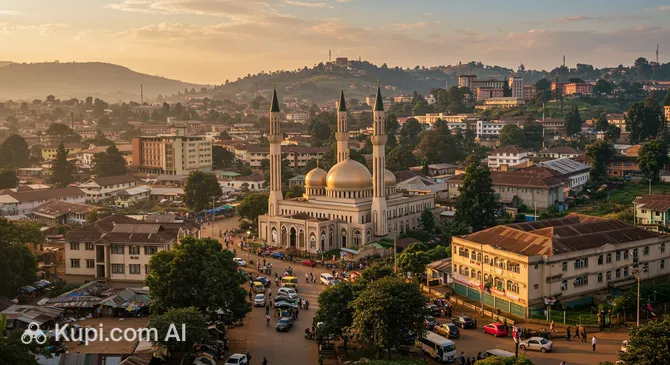
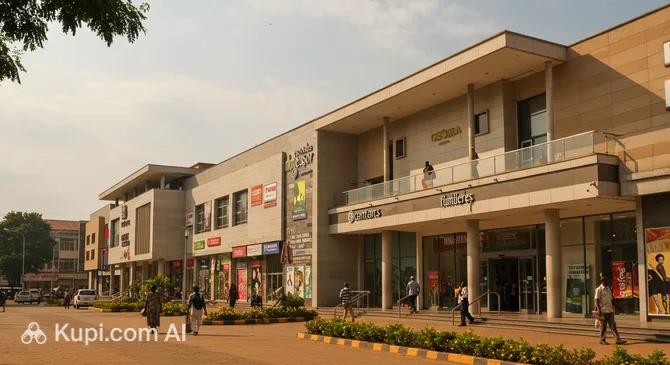
Kampala is the vibrant heart of Uganda, a city sprawling across seven legendary hills right on the shores of majestic Lake Victoria. Situated at an altitude of about 1,300 meters above sea level, the capital welcomes travelers with a mild climate and stunning panoramas, where bright green vegetation contrasts with the red roofs of villas and the azure of the lake waters.
With a population of over 1.6 million people, the city is a fascinating melting pot of cultures and traditions. If you want to dive into the past and heritage of this land, head to Nakasero Hill — the administrative center where modern shopping malls stand alongside historical monuments and temples of various faiths.
Kampala. Illustration.
Source: Kupi.com AI
The hills of Makerere, Mulago, and Kibuli give Kampala its special atmosphere, each holding its own history. Here, you can see unique UNESCO sites, learn about the daily life of local tribes, and feel the true rhythm of African life. We invite you to discover this hospitable city, where modern dynamics harmoniously blend with the authentic nature of East Africa.
Weather Overview
Kampala is located almost on the equator; however, thanks to its significant altitude (about 1,300 meters) and proximity to the vast Lake Victoria, it enjoys a remarkably mild and pleasant climate. Throughout the year, average daytime temperatures hover within a comfortable range of 21-23°C, making the city a great destination to visit in any season.
The region is characterized by two rainy seasons: the main one occurs from March to May, and a less intense one in October and November. The highest rainfall is usually seen in April, when Kampala's nature literally blooms. If you want to enjoy dry and sunny weather, it is best to plan your visit for January, July, or August, when the weather in the city is most stable.
Kampala's typical weather pattern consists of warm mornings, possible refreshing tropical showers in the afternoon, and pleasant coolness in the evenings. The wind is usually light, and the lake's proximity ensures constant air circulation, preventing the sweltering heat characteristic of many other equatorial cities.
Average monthly temperature
Average monthly precipitation
Interesting Facts
Kampala was founded on seven hills, much like Rome. Today, the city has grown significantly and covers more than twenty hills, but the historical seven remain its main symbol.
In the city's vicinity lies a unique UNESCO site — the Kasubi Tombs. This is not just a burial site for Buganda kings but also an outstanding example of architecture made from organic materials: wood, reeds, and thatch.
At local ostrich farms near the capital, tourists are offered a rare and exotic activity — ostrich riding.
Kampala is home to the only Baha'i Temple in Africa. Its magnificent dome and surrounding gardens on Kikaaya Hill attract people of all faiths with their beauty and tranquility.
The city is home to a vast number of exotic birds. During a city walk or a boat tour on Lake Victoria, you can spot the legendary Shoebill, as well as pelicans and herons.
How to Get There
Kampala is the country's main transport hub, and getting here is straightforward for an international traveler. The primary gateway to the region is Entebbe International Airport, located about 40 kilometers from the capital. More details on how to organize your route to the city can be found in the specialized sections of the travel guide.
Kampala also has a local airport, Kampala, which serves private flights and domestic air travel. From the Entebbe international terminal, the most convenient way to reach central Kampala is by official taxi or a pre-booked transfer, which is often offered by major hotels. The road passes through scenic hills, and the modern highway helps bypass some of the city's traffic jams.
As for rail connections, they are currently used primarily for freight transport, though passenger stations within the city remain important landmarks. Most tourists prefer bus services for traveling from neighboring countries or other regions of Uganda. Buses arrive at central terminals, from where it is easy to transfer to local transport.
Main Attractions
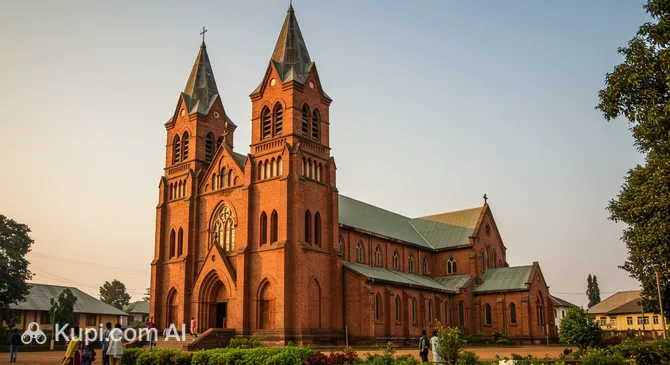
One of the city's most majestic shrines is Saint Mary's Cathedral Rubaga. Located on one of the seven hills, this Catholic church impresses with its architecture and serves as an important spiritual center. It offers beautiful views of the surroundings, and the silence inside the cathedral provides a welcome break from the city bustle.
St. Mary's Cathedral Rubaga. Illustration.
Source: Kupi.com AI
Traveller photos:
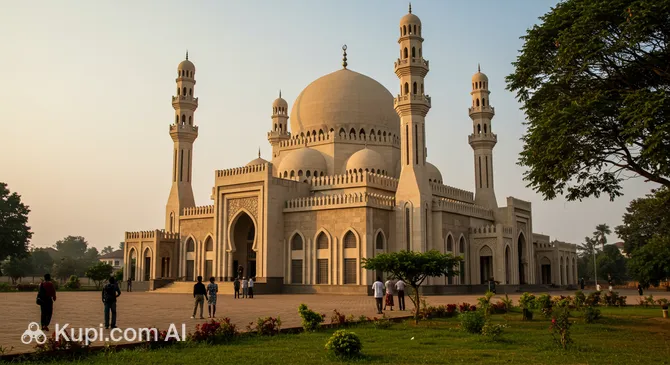
No less significant is the Uganda National Mosque, also known as the Gaddafi Mosque. This colossal structure can accommodate thousands of worshippers. Tourists are allowed to climb the minaret, which offers perhaps the best 360-degree panorama of Kampala. The mosque's interiors are decorated with magnificent carpets and chandeliers.
Uganda National Mosque. Illustration.
Source: Kupi.com AI
Traveller photos:
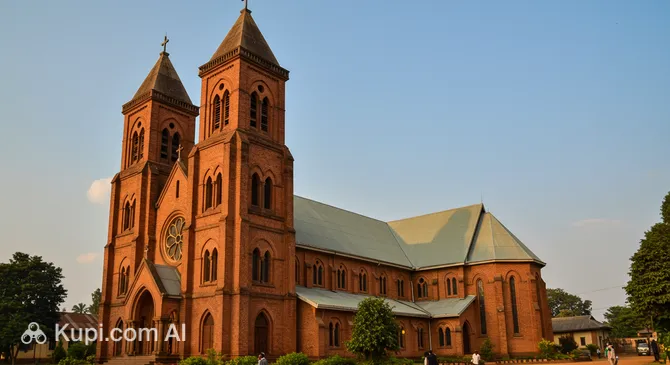
For those interested in Anglican heritage, Namirembe Cathedral is a must-visit. This is the oldest cathedral in the country, built of brick with a distinctive dome. It is located on Namirembe Hill and surrounded by picturesque gardens that create an atmosphere of peace and dignity.
Namirembe Cathedral. Illustration.
Source: Kupi.com AI
Traveller photos:
Beyond religious shrines, pay attention to the Kasubi Tombs — a UNESCO World Heritage site where the kings of the Buganda Kingdom rest. Also worth noting are the Lubiri Palace and the Independence Monument, symbolizing the country's journey to independence. Walking tours through central Kampala will help you discover these hidden gems and feel the lively rhythm of the African capital.
Local Cuisine
Kampala's gastronomic scene is a vibrant blend of local African traditions and international influences. The main dish you must try is matooke — steamed green bananas served with a rich peanut or meat sauce. Another local delicacy is luwombo, meat or fish stewed in banana leaves, which gives the dish a unique aroma.
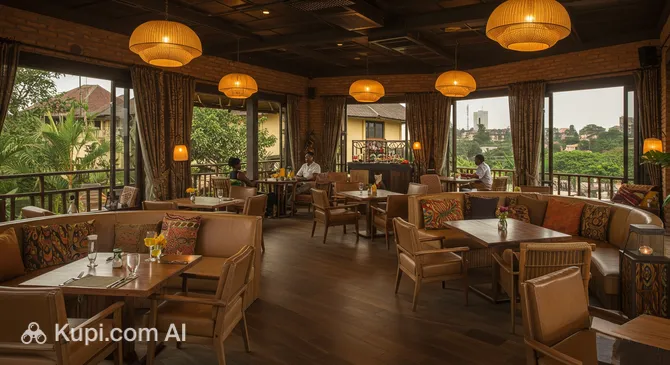
If you want to dine in an elegant setting, stop by the Latitude 0 Degrees restaurant, which serves exquisite dishes with local flair. For those looking for a comfortable place with a good variety of options, Zara Garden Hotel and Apartments is a great choice, where you can enjoy both traditional cuisine and familiar international favorites.
Latitude 0 Degrees. Illustration.
Source: Kupi.com AI
Traveller photos:
It is impossible to imagine Kampala without street food, and the king here is the "Rolex" (Rolex) — a delicious vegetable omelet wrapped in a fresh chapati. For drinks, be sure to try the local tea or coffee, as Uganda is one of the leading producers of these crops. For those who prefer stronger drinks, local beer and traditional banana gin — Waragi — are available. The best places to discover authentic flavors are the city markets, where products are always fresh and the atmosphere is incredibly lively.
Travel Tips
Preparing for your trip to Kampala will be easier if you follow our practical tips. This African capital is hospitable, but knowing local nuances will help you feel confident and safe.
Clothing and Dress Code: Bring light clothing made from natural fabrics, but don't forget a warm sweater for the evenings. When visiting religious sites (mosques, cathedrals) and the Kasubi Tombs, be sure to cover your shoulders and knees. Comfortable shoes are your main ally on the hilly streets.
Transport: For getting around the city, it is best to use licensed taxis from apps. If you decide on a boda-boda, choose services with a rating. Be prepared for chaotic traffic during rush hours.
Finance: The local currency is the Ugandan Shilling (UGX). It is better to exchange currency at banks or official bureaus in the center. Cards are accepted in large hotels and malls, but always keep small-denomination cash for markets and transport.
Health: Do not drink tap water — use only bottled water. Consult a doctor beforehand about vaccinations and malaria prevention. Use repellents, especially near the lake.
Communication: SIM cards from local operators (MTN, Airtel) can be purchased at the airport or shopping centers. Wi-Fi is available in most cafes and hotels in Nakasero, but speeds can be inconsistent.
Etiquette: Ugandans are very polite. Greetings are an important part of communication. Before asking a question, always say hello. Ask for permission before taking photos of local residents.
Safety: Kampala is generally friendly, but avoid walking alone in poorly lit areas at night. Keep an eye on your bags and phones in crowded places, especially in markets like Owino.
When to Visit: Try to plan your sightseeing for the morning hours. This will help you avoid the midday heat and large crowds of tourists.
By following these simple recommendations, you can fully immerse yourself in the atmosphere of Kampala and enjoy every moment of your African adventure.
Entertainment & Nightlife
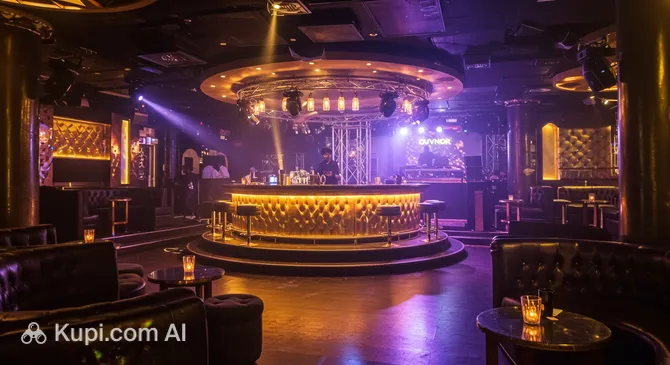
Kampala's nightlife is rightfully considered one of the most vibrant in East Africa. As dusk falls, the city transforms, and neighborhoods like Kololo and Kabalagala fill with the sounds of Afrobeats and modern music. For those seeking high-quality relaxation and dancing, the Guvnor club is an excellent choice, known for its strict entry policy, great service, and performances by popular DJs.
Guvnor. Illustration.
Source: Kupi.com AI
Traveller photos:
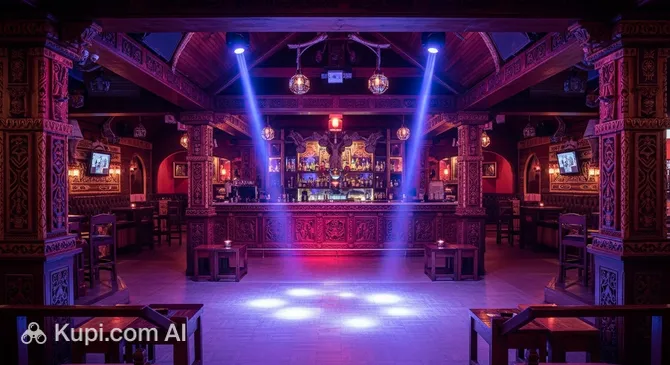
If you are looking for a more laid-back atmosphere, it is worth stopping by Banana Bar & Bistro. It is a popular spot among expats and locals alike, where you can enjoy cocktails and live socializing in a cozy setting. Another interesting option for the evening is Cardamom and Coffee, which combines the coziness of a coffee shop with the style of a modern art space.
Kardamom & Koffee. Illustration.
Source: Kupi.com AI
Traveller photos:
Daytime entertainment in the capital is equally diverse. You can visit the National Theatre or the Nommo Gallery to get acquainted with local art. For outdoor enthusiasts, there are boat trips on Lake Victoria, workshops on making traditional glass jewelry, and tours of colorful craft markets where life never stops for a moment.
Parks & Museums
The best way to start exploring the city's culture is with the Uganda Museum. This is the oldest scientific institution in East Africa, housing an impressive collection of ethnographic exhibits: from traditional musical instruments to ancient pottery and hunting gear. The museum allows you to trace the country's history from ancient times to the present day and is a must-visit for any curious tourist.
Another important historical site is the Kasubi Tombs, which serve as the spiritual center for the Baganda people. Although the site suffered from fire damage, it is being restored and remains a vital monument of royal heritage. For art lovers, the Nommo Gallery is open, showcasing works by leading Ugandan painters and sculptors, as well as handicrafts.
If you want to spend time outdoors, visit La Foret Muyenga Resort Gardens, where well-kept landscapes create ideal conditions for walking. For a closer encounter with nature, you can head to the Wildlife Conservation Education Centre, where conditions are created for observing animals in an environment as close to natural as possible. These parks and cultural spaces in Kampala offer a peaceful retreat from the noisy streets of the business center.
Getting Around
The transport system in Kampala is unique and takes some getting used to. The most popular way to get around is the boda-boda (motorcycle taxi). This is a fast way to bypass city traffic, but it requires caution; always ask for a helmet and choose drivers through specialized apps like SafeBoda. For more budget-friendly trips, there are matatus — minibuses that run on set routes. Payment is made in cash to the conductor, and there is often no fixed price for tourists, so it is better to check the cost with locals beforehand.
If you prefer more familiar comfort, taxi services, including international apps, operate in the city. This is the safest and most convenient option for evening trips or transfers between the hills. The city authorities are also developing a bus service, which is becoming increasingly organized, especially on the main highways connecting the center with the outskirts.
For tourists planning trips out of town, such as to Lake Victoria or the source of the Nile, organized car tours and boat transfers are popular. Independent car rental is possible, but you should consider the specifics of local driving and left-hand traffic. Walking tours in the city center are a great option for seeing mosques and markets, but remember Kampala's hilly terrain, which will require good physical fitness and comfortable shoes.
Accommodation
Travelers in Kampala have a wide choice of accommodation, ranging from luxury five-star hotels on Nakasero Hill to cozy budget guesthouses. If you value comfort and high service standards, look towards the embassy and shopping mall district — this is where the best hotels with pools and panoramic city views are concentrated.
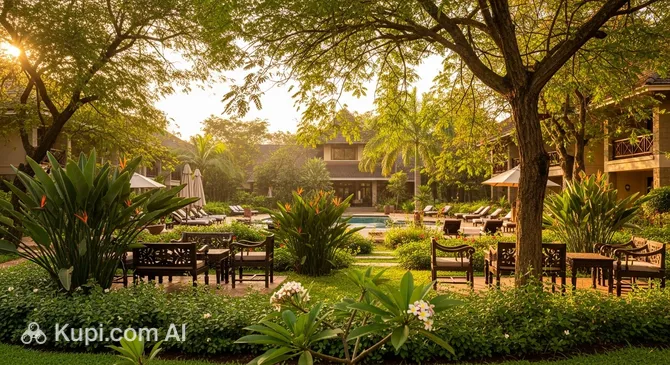
One wonderful option for a peaceful stay is La Foret Muyenga Resort Gardens. This resort hotel offers guests manicured gardens and an atmosphere of seclusion while remaining accessible to major attractions. Those who prefer to be closer to nature often choose hotels on the shores of Lake Victoria, where they can enjoy the cool breeze and picturesque sunsets.
La Foret Muyenga Resort Gardens. Illustration.
Source: Kupi.com AI
Traveller photos:
When planning your trip, it is recommended to book accommodation in advance, especially if your visit coincides with major international conferences or holidays. Main booking systems work reliably, and most mid-to-high-end hotels accept international bank cards, though having local Shilling cash is always useful for paying for extra services.
Nearby Cities
Kampala serves as an ideal starting point for exploring the central part of the country and the shores of Lake Victoria. Very close to the capital are interesting suburbs and towns offering a completely different pace of life and unique attractions.
Just a few kilometers away is the city of Nansana, which is actively developing and provides a glimpse into the region's modern urbanization. For those who want to see historical areas, a trip to Katwe is ideal — this place is known for its workshops and lively shopping streets where you can see the daily life of local artisans.
Don't forget to visit Entebbe to stroll through the Botanical Garden or take a boat excursion to the Equator line, which passes right through Lake Victoria. Further away, the city of Jinja beckons travelers with the chance to see the source of the great Nile and try white-water rafting. Exploring the surroundings of Kampala will give you a complete picture of Uganda's natural and cultural diversity.
Shopping & Souvenirs
Shopping in Kampala is an exciting adventure where modern malls sit alongside colorful African markets. If you are looking for comfort and global brands, head to The Acacia Mall. This is one of the city's most modern shopping centers, featuring clothing stores, excellent food courts, a cinema, and supermarkets.
Acacia Mall. Illustration.
Source: Kupi.com AI
Traveller photos:
Another popular shopping destination is Arena Mall. Here you can find a wide range of home goods, electronics, and fashion. Both centers are located in convenient areas and offer secure parking and a pleasant atmosphere for the whole family to enjoy.
Arena Mall. Illustration.
Source: Kupi.com AI
Traveller photos:
For those looking for authentic souvenirs, the craft markets in the city center are the best choice. Here you can find unique woven baskets, beadwork, traditional fabrics, and handmade jewelry. Be sure to visit Owino Market — it is a massive labyrinth where you can buy almost anything, but be prepared for noisy crowds and the need to bargain. Shops usually open from 9:00 AM to 6:00 PM, while large malls stay open until late evening. Shopping centers accept cards, but you will definitely need cash Shillings at the markets.