Support

Shirakawa-go

About

In the heart of Japan's mountainous region, in the picturesque Shogawa River valley, lies the unique historical village of Shirakawa-go. Looking like something straight out of an old fairytale, this place is world-famous for its traditional "gassho-zukuri" style houses, which translates to "hands folded in prayer." Their steep thatched roofs, resembling the palms of Buddhist monks, create a unique and memorable silhouette.

The gassho-zukuri architectural style is not just an aesthetic choice, but an ingenious response to the region's harsh climate. The massive triangular roofs, with an incline of up to 60 degrees, are designed to withstand the immense weight of the heavy snow that falls here in winter. Thanks to its unique architecture and centuries-old traditional lifestyle, the village was rightfully included in the UNESCO World Heritage list in 1995.

A visit to Shirakawa-go is an opportunity to immerse yourself in an atmosphere of seclusion and harmony with nature. The village is surrounded by majestic mountains and dense forests, making the scenery here truly breathtaking at any time of year. Some of the houses are open to visitors as museums, where you can learn about the local way of life and the history of silkworm farming, which was traditionally practiced on the upper floors of these spacious dwellings.
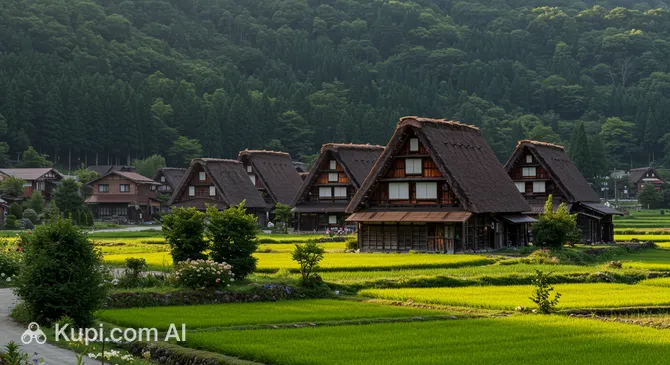
Shirakawa-go. Illustration.
Source: Kupi.com AI

Traveller photos:

Contacts

Since Shirakawa-go is an entire historical village rather than a single site, it does not have a central phone number or email address. The most reliable way to get up-to-date information on the opening hours of individual house museums, ticket prices, and special events is to visit the official website of the Shirakawa-go Tourist Association. The most convenient way to reach the village is by bus from the major cities of Takayama or Kanazawa; the journey takes between 50 and 85 minutes.

How to contactContact
AddressOgimachi, Shirakawa, Ono District, Gifu 501-5627, Japan
Phone+81 5769-6-1311
Websitewww.vill.shirakawa.lg.jp

What to Do

The main activity in Shirakawa-go is a leisurely stroll through the village itself, allowing you to fully enjoy its fairytale atmosphere. Visitors can look into numerous house museums to get a closer look at the unique lifestyle and centuries-old traditions of this region of Japan. Many of the ancient buildings, such as the Wada and Nagase houses, are open to the public. Inside, you can see massive wooden beams, multi-level attic spaces once used for sericulture, and a traditional hearth on the ground floor. Visiting these homes makes it easy to imagine how Japanese farmers lived centuries ago.

The village offers a special experience in every season. In winter, Shirakawa-go transforms into a true winter wonderland as house roofs are covered in a thick layer of snow. During this time, special illumination events are held in the evenings, creating a magical sight. In summer and autumn, the village is bathed in greenery and vibrant colors, offering picturesque views and opportunities for hiking in the surrounding hills. To see the entire village at a glance, be sure to head up to the Shiroyama Tenshukaku Observatory for the famous panoramic view often seen on postcards.

For a full immersion into the past, consider staying overnight at one of the local guesthouses—the minshuku. This is a unique chance to not only sleep in an authentic gassho-zukuri house but also to taste traditional home cooking and chat with the hosts. Additionally, you can visit workshops in the village showcasing traditional crafts and sample local delicacies, such as Hida beef or doburoku (unfiltered sake).

Getting There

The most convenient way to reach the historic village of Shirakawa-go is by bus from the region's major cities. The most popular and frequent routes depart from Takayama, Kanazawa, and Nagoya. The journey from Takayama takes about 50 minutes, and from Kanazawa, it is approximately 1 hour 15 minutes, making the village easily accessible for a day trip.

An alternative is traveling by car along the scenic expressway passing through the mountainous regions of Japan. However, when planning a winter trip, be prepared for heavy snowfall. During this period, delays are possible for both buses and private vehicles, so it is recommended to check the latest road conditions and schedules in advance.

Upon arrival in Shirakawa-go, no additional transportation is required. The village is very compact, and all its main attractions, including house museums and observation decks, are within walking distance of each other. This allows you to fully immerse yourself in its unique atmosphere while leisurely strolling through the ancient streets.

Nearest city: Shirakawa-go

History & Facts

The history of Shirakawa-go spans several centuries, and for a long time, the village remained almost entirely cut off from the rest of the world. Located in a remote mountainous region of Japan, its isolation allowed for the preservation of not only unique traditions but also its distinctive architecture. This seclusion was a key factor in ensuring that the village remains today much as it has existed for centuries.

One of the main industries that shaped the lifestyle and appearance of the houses in Shirakawa-go was sericulture (silkworm farming). The spacious attic areas under the high thatched roofs were ideal for raising silkworms. The "gassho-zukuri" construction provided the necessary ventilation and protection from harsh weather, creating an optimal microclimate for this delicate craft. Thus, the architecture was not merely a tradition but a vital part of the community's economic life.

Global recognition came to the village in 1995, when Shirakawa-go, along with the neighboring Gokayama, was designated a UNESCO World Heritage Site. This status was awarded as an outstanding example of a traditional settlement perfectly adapted to its environment while maintaining its social and economic structure. The gassho-zukuri-style houses are officially recognized as a national treasure of Japan, highlighting their immense cultural and historical value.

Time Needed

For a first visit to Shirakawa-go, 3 to 5 hours is sufficient for most travelers. This is enough time to enjoy a leisurely stroll through the main streets, admire the unique architecture, take photos from the famous viewpoint at the observation deck, and visit one of the house museums to see traditional life from the inside. In half a day, you can fully experience the charm of this place, which seems frozen in time.

If you want to dive deeper into the fairytale atmosphere and see the village without the daytime crowds, you should plan an overnight stay of 1–2 days. This option offers a unique opportunity to stay in one of the traditional "minshuku" guesthouses, sample home-cooked meals, and see Shirakawa-go by the evening lights or in the morning mist. Furthermore, a longer stay allows you to take part in seasonal events, such as witnessing the winter house illuminations, or simply enjoying the peaceful nature of Japan without any rush.

Working Hours

The historical village of Shirakawa-go is open to visitors year-round, allowing you to enjoy its beauty in any season. Most house museums, souvenir shops, and guesthouses follow a standard schedule—generally from 9:00 AM to 5:00 PM. However, keep in mind that these hours may vary depending on the time of year. For instance, during the winter season (December to February), some sites may close earlier, around 4:00 PM.

While no advance booking is required for a regular walk through the village, visiting certain popular museums or participating in special events, such as the winter illuminations, may require purchasing tickets in advance. If you plan to stay overnight in a traditional "minshuku", you should book accommodation several months in advance, especially during peak season. For the most accurate and up-to-date information on opening hours, tickets, and accommodation availability, it is best to consult the official website of the Shirakawa-go Tourist Association.

Nearby

While the village of Shirakawa-go itself is the main attraction, exploring its immediate surroundings can make your trip even more rewarding. A walk through different corners of this unique place will allow you to enjoy views from various angles and gain a deeper understanding of the region's history and lifestyle. All key sites are within walking distance, making exploration easy and pleasant.

In addition to a general stroll through the central streets, it is worth visiting specific house museums and observation decks. Each of these spots offers its own unique perspective on life in Japan in past centuries. Below is a list of interesting places located in the immediate vicinity of the village center.

NameDistance
Kanda House0.1 km
Shirakawago Pudding House0.2 km
Wada House0.3 km
Shirakawa-go Gassho-zukuri Open-Air Museum0.5 km
Ogimachi Castle Observation Deck0.6 km
Shirakawa-go Gassho-zukuri Three Houses0.6 km
Shiroyama Observatory Deck0.6 km

Reached the bottom of the page?

Looks like you know this route inside out