Support

Ōmiwa Shrine

About

Omiwa Shrine, also known as Omiwa-jinja, is one of the oldest and most revered Shinto shrines in Japan. Located in the city of Sakurai at the foot of a sacred mountain, it offers visitors a unique opportunity to touch the roots of Japanese spirituality and traditions that existed long before the arrival of Buddhism.
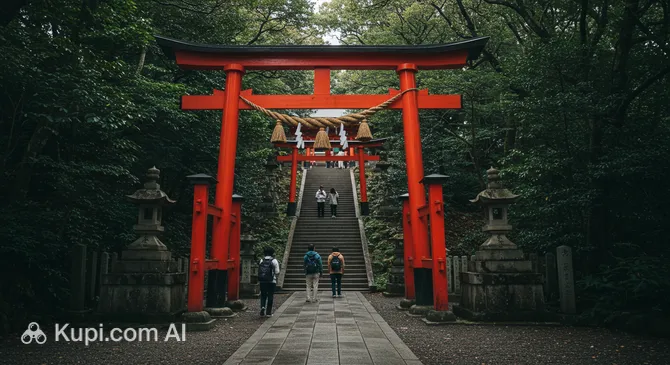
Ōmiwa Shrine. Illustration.
Source: Kupi.com AI

Traveller photos:

The main feature that sets this place apart from thousands of others is the complete absence of a main hall (honden), where the object of worship is usually housed. At Omiwa Shrine, the object of worship, or "shintai" (the body of the deity), is Mount Miwa itself. This is a living embodiment of the ancient cult of nature, where believers address the sacred landscape directly, feeling its power and grandeur.

The history of the shrine is so ancient that it is mentioned in Japan's first written records—the "Kojiki" and "Nihon Shoki," dating back to the 8th century. This confirms its status as one of the country's oldest active religious centers. Visiting this place is not just an excursion, but a true immersion into an atmosphere of myths and legends, where every stone and tree holds echoes of the past.

Walking through the shrine grounds, among ancient cedars and through ritual torii gates, gives a deep sense of peace and harmony. For travelers, it is a rare chance to see Shinto in its primordial form and feel the inseparable connection of Japanese culture with nature.

Contacts

Omiwa Shrine is one of the oldest Shinto shrines in Japan and is a significant religious and historical site. To plan your visit, it is recommended to check the current opening hours on the official website or at tourist information centers in the city of Sakurai. The shrine is typically easy to reach by public transport from the nearest railway stations.

How to contactContact
Address1422 Miwa, Sakurai, Nara 633-8538, Japan
Phone+81 744-42-6633
Websiteoomiwa.or.jp

What to Do

Visiting Omiwa Shrine in the city of Sakurai is an opportunity to immerse yourself in the atmosphere of one of the oldest Shinto shrines in Japan. The uniqueness of this place lies in the fact that the object of worship here is not a man-made building, but Mount Miwa itself, which is considered the embodiment of the deity. Visitors can explore the temple complex at the foot of the mountain, but the main experience is available to those ready to show special reverence.

The primary activity for believers and interested tourists is the pilgrimage climb up the sacred mountain. In the past, entrance to the mountain was completely closed, but this tradition was relaxed starting from the Meiji period. To receive permission for the climb, you must undergo a purification ritual using traditional gohei wands and obtain a special pass—a tasuki cord, which is worn around the neck for the duration of the journey.

During the ascent of Mount Miwa, visitors must follow strict rules to demonstrate respect for the holy site. Eating, drinking, smoking, and, most importantly, photography are strictly prohibited. The entire path passes through a dense primeval forest where ancient pines, cryptomeria (sugi), and cypress (hinoki) trees stand tall. Every tree and leaf here is considered a dwelling of the deities; as a result, no logging has ever taken place on the mountain, preserving its unique flora and special spiritual atmosphere.

Getting There

The most convenient way to reach Omiwa Shrine is by public transport, specifically by train. The nearest railway station is Miwa Station, which is served by the JR Sakurai Line (also known as the Manyo Mahoroba Line). From the station exit, it is only a 5-7 minute leisurely walk to the main entrance of the shrine grounds. The route is intuitive, and you can easily find your way by following the signs or other visitors.

If you are traveling from major tourist hubs such as Nara, Kyoto, or Osaka, your route will likely pass through the city of Nara. From JR Nara Station, take a JR Sakurai Line train heading towards the city of Sakurai and get off at Miwa Station. The trip from Nara takes approximately 25-30 minutes and offers views of Japan's picturesque countryside.

Alternatively, you can take a taxi, especially if you are traveling in a group or with a lot of luggage. A taxi ride from downtown Sakurai will be quick and relatively inexpensive. You can also hire a car from larger transport hubs, such as Yamato-Yagi Station, where Kintetsu trains arrive. Nevertheless, the train remains the most popular and economical way to reach this ancient and revered site.

Nearest city: Sakurai

History & Facts

The history of Omiwa Shrine is rooted in antiquity and is inextricably linked to the mythology of Japan. According to ancient legends, during the reign of Emperor Sujin, a terrible epidemic broke out in the country, claiming many lives. The great god Omono-nushi appeared to the emperor in a dream and revealed the cause of the disasters—it was his will. The god promised that his wrath would subside and the country would find peace if a descendant of the deity named Otataneko was appointed as the chief priest to worship him.

The search was successful: Otataneko was found and, as it turned out, was indeed a descendant of Omono-nushi. He was tasked with performing rituals at the shrine at the foot of the sacred Mount Miwa. Following this, legend says the epidemic ended, and peace reigned in the country. This myth emphasizes the sacred significance of the mountain and explains the origin of the shrine as a site established by direct divine command to save the people.

The historical significance of the shrine is also confirmed by facts from the Kofun period (3rd-7th centuries). During this time, the Miwa clan, responsible for the rituals, received the high noble title of Kimi from the Yamato rulers, indicating their close ties to the reigning house and the importance of the Mount Miwa cult in the state religion. The influence of this site persists to this day: in the early 20th century, a new religious movement called Omiwa-kyo was founded based on ancient beliefs, with its center still located in the city of Sakurai today.

Time Needed

Most visitors will need about 1-2 hours to see the main grounds of Omiwa Shrine. This is enough time to stroll along the picturesque paths, see the unique triple torii gates (miwa-torii), visit the prayer hall, and experience the special, tranquil atmosphere of one of Japan's oldest Shinto shrines. You will also have time to stop by several small auxiliary shrines located within the complex.

If you plan a deeper immersion and wish to climb the sacred Mount Miwa, which is considered the primary object of worship at the shrine, you should set aside half a day or even more for your visit. The ascent and descent along the forest trail takes about 2-3 hours and requires a certain level of physical stamina. This experience will allow you not only to enjoy magnificent views of the surroundings but also to better understand the spiritual significance of this place for Japanese culture.

Working Hours

Omiwa Shrine, like many Shinto sites in Japan, is generally open to visitors year-round. The main shrine grounds are often accessible from early morning until sunset, allowing guests to enjoy its atmosphere at different times of the day. However, please note that administrative buildings, souvenir shops, and exhibition halls within the complex may operate on a stricter schedule, usually from 9:00 to 16:00 or 17:00.

As exact opening hours may change depending on the season, day of the week, or special festivals, it is strongly recommended to check the most current information on the official Omiwa Shrine website before your visit. Advance booking for a standard visit is usually not required but may be necessary for participating in special ceremonies or guided tours.

9:00 – 17:00

Nearby

Visiting an iconic landmark like Omiwa Shrine is just the starting point for exploring the culture and atmosphere of the city of Sakurai. To truly immerse yourself in the unique aura of this place, it is worth exploring its surroundings. Often, the most vivid impressions and unexpected discoveries await you at small temples, cozy restaurants, or scenic spots located just a few minutes' walk away.

A walk through the nearby areas will allow you to see the shrine in a broader cultural and historical context, as well as better understand the daily life and traditions of Japan. Below is a list of interesting sites located near Omiwa Shrine that can be a great addition to your itinerary.

NameDistance
Sai Shrine0.2 km
Miwa Somen Nagashi0.5 km
Omiwa Shrine Grand Torii Gate0.9 km
Hibara Shrine1.1 km
Miwa Yamamoto Restaurant1.9 km
Abe Monju-in Temple3 km

Reached the bottom of the page?

Looks like you know this route inside out