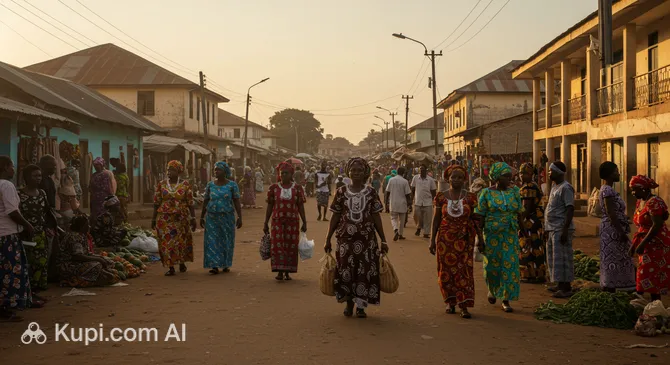
Dormaa Ahenkro is a vibrant and dynamic city located in the Bono Region of western Ghana. Serving as an important administrative and commercial hub, it offers travelers a unique opportunity to immerse themselves in authentic African life, far from standard tourist routes. The city charms visitors with its hospitality and deep respect for local traditions.
Domaa Ahenkro. Illustration.
Source: Kupi.com AI
Geographically, the city is surrounded by fertile lands and picturesque landscapes characteristic of the tropical savanna. With a population of approximately 1,000,000 people, Dormaa Ahenkro is a significant economic center where agriculture flourishes, particularly the cultivation of cocoa and cassava. The climate here is tropical, ensuring lush greenery throughout most of the year.
To better understand the soul of this place, it is worth paying attention to its rich heritage. If you are interested in the history and development of the city, you will learn how ancient chieftaincy traditions and modern economic realities weave together. A visit to Dormaa Ahenkro is an invitation to see the real Ghana through its bustling markets, vibrant festivals, and the genuine smiles of its locals.
Weather Overview
The climate in Dormaa Ahenkro is typical for the West African tropical zone. There are two distinct main seasons: the wet season, lasting from April to October, and the dry season, spanning from November to March. The average annual temperature ranges between 25–32°C, creating conditions of perpetual summer; however, high humidity during the rainy period may require some adaptation.
The hottest month is usually February, when daytime temperatures can reach 36–37°C. In contrast, August brings pleasant coolness with maximums around 28°C. If you are planning a trip, the weather in Dormaa Ahenkro is most favorable during the winter months, when the sky remains clear and rain is virtually nonexistent. Expect warm sunny days and comfortable evenings, ideal for strolling through the city.
Average monthly temperature
Average monthly precipitation
Interesting Facts
Dormaa Ahenkro is a city that knows how to surprise with its hidden details and its important role in the life of the Bono Region.
The city is one of the key centers for cocoa cultivation in Ghana, contributing significantly to the global chocolate industry.
Local markets are considered the heart of social life; here, you can find not only food but also unique handicrafts from the Akwamu and Ewe peoples.
Dormaa Ahenkro is located on a strategically important route leading to the border with Côte d'Ivoire, making it a melting pot of various cultures and dialects.
The staple of the local diet is cassava, and the city is famous for its traditional preparation methods passed down through generations.
How to Get There
Traveling to Dormaa Ahenkro is an adventure in itself, allowing you to see the country's changing landscapes. Ground transport remains the primary way to reach the city. Regular bus services and shared taxis (tro-tros) depart from the capital, Accra, and other major regional hubs such as Kumasi or Ho. A journey on a comfortable bus can take from 8 to 12 hours, depending on road conditions.
For air travelers, the main hub is Kotoka International Airport (ACC) in Accra. After landing in the capital, you can continue your journey in a rental car along the N2 highway or take a domestic flight to the nearest airport to Dormaa Ahenkro in Kumasi, which significantly reduces travel time. Detailed information on routes and logistics can be found in the how to get to the city section.
The railway network in this part of the country is underdeveloped, so the main focus should be on road transport. The road network connects the city with key points in the region, ensuring reliable access for trade caravans and private travelers.
Station
Passenger traffic
Distance
Bouaké railway station
2
243 km
Gare ferroviaire Treichville
2
252 km
Kojokrom Train Station
1
284 km
Main Attractions
The main attractions of Dormaa Ahenkro center around its rich culture and natural surroundings. Since the city is not a mass tourist destination, you can experience true authenticity here. One of the must-visit places is the Central Market, where the daily bustle turns into a colorful spectacle showcasing a variety of local fabrics and exotic fruits.
The city's surroundings will delight nature lovers with picturesque hills and river valleys. These spots are ideal for light hiking and tropical bird watching. If your visit coincides with the traditional festivals of the Akwamu people, you will witness majestic processions and ritual dances performed to the sounds of sacred drums.
The city's cultural centers, while not holding the status of major museums, often host events that introduce guests to the history of local chieftaincies. This is an excellent chance to see ceremonial artifacts and learn about the rules of etiquette and hierarchy in Ghanaian society, making a visit to Dormaa Ahenkro truly educational.
Local Cuisine
A culinary journey in Dormaa Ahenkro is an introduction to the hearty and spicy flavors of Ghana. The local menu is centered around dishes made from cassava and plantains. Be sure to try fufu (a soft dough made from pounded root vegetables), which is usually served in a rich peanut or palm soup with meat or fish. Also popular is banku—fermented corn dough that pairs perfectly with fried tilapia and spicy shito sauce.
Special attention should be paid to kontomire—a flavorful stew made from taro leaves, vegetables, and fish, which is considered a real delicacy. To find authentic flavors, head to the local markets or small eateries known as "chop bars," where food is prepared according to ancient recipes right in front of you. This is the best way to experience the gastronomic character of the region.
Among beverages, the favorite is refreshing palm wine, collected straight from the trees. Freshly squeezed juices from ripe mangoes and pineapples are also widely available. The food culture here is very communal: locals prefer to dine with friends, sharing a meal in a relaxed and lively atmosphere.
Travel Tips
To ensure your trip to Dormaa Ahenkro is as comfortable as possible and leaves only pleasant impressions, please review our practical recommendations.
Clothing and Essentials: Choose clothing made of light, natural fabrics, as it is humid and hot in the city. Don't forget comfortable closed-toe shoes for walking through the markets and a high-quality insect repellent. A Type G power adapter will be necessary.
Transport: Taxis and tro-tros are the main means of transport within the city. For short trips, motorcycle taxis (okada) are popular, but always agree on the fare clearly beforehand.
Finances: The local currency is the Ghanaian cedi (GHS). Cards are rarely accepted, only in large hotels, so always carry a sufficient supply of cash. It's better to exchange currency in advance in Accra.
Health and Safety: Drink only bottled water. There are pharmacies in the city, but it's better to bring specific medications with you. Exercise general caution in crowded places and keep an eye on your personal belongings.
Communication: The official language is English, but knowing a few phrases in Twi will earn you genuine respect from the locals. For stable connectivity, it's best to buy a local SIM card from the MTN operator.
Local Etiquette: Ghanaians are very polite. Always greet people when meeting them, especially elders. Use only your right hand for gesturing and passing items, as using the left is considered impolite.
What to Avoid: Do not photograph people, government buildings, or sacred objects without prior permission. Avoid criticizing local traditions or chiefs in public conversations.
Mobile Money: If you plan to stay a while, try setting up a mobile payment system (MTN MoMo)—it is the most common and convenient way to pay for services in the region.
Following these simple rules will help you feel at home in this welcoming corner of Ghana and enjoy every moment of your African adventure!
Entertainment & Nightlife
By evening, Dormaa Ahenkro lives at a calm yet melodic pace. You won't find massive nightclubs with neon lights here, but you can enjoy live performances of highlife music. Most evening entertainment is concentrated in the bars of local guesthouses and small cafes in the central part of the city. These are perfect spots to try local beer and chat with residents to the slow rhythms of African guitars.
The night markets add a special charm to the city. When the daytime heat subsides, the stalls are lit by lamps, and the atmosphere becomes truly magical. Here, you can not only buy evening snacks but also observe the "unfiltered" life of the city. Business hours usually end around midnight, and the dress code in most places remains casual and everyday.
To ensure safety after dark, it is recommended to use trusted taxis and avoid walking alone in unlit outskirts. Overall, the city is friendly to guests, and daytime entertainment includes visiting small park areas and participating in spontaneous cultural events often organized by local communities during holidays.
Parks & Museums
While there are no large state museums in Dormaa Ahenkro itself, the role of history keepers is fulfilled by local cultural centers and the residences of traditional chiefs. Visiting such places allows you to touch the living heritage of the Akwamu people, see ceremonial artifacts, and learn about the governance system that has existed here for centuries. These improvised displays provide a much deeper understanding of the region than classical galleries.
Nature lovers should pay attention to the landscapes surrounding the city. The vast savanna areas serve as natural parks where locals often have picnics and rest from the city bustle. These are excellent places to enjoy the silence, away from the market noise. Special attention should be given to the surrounding valleys, which hide the rich flora of the Bono Region.
For those seeking more formalized cultural sites, a trip to nearby regional centers is recommended; however, Dormaa Ahenkro itself offers a unique "open-air museum" experience, where history and traditions live in every house and on every street, creating a unique atmosphere.
Getting Around
The transport system in Dormaa Ahenkro is simple and oriented toward practicality. The backbone of passenger transport consists of tro-tros—brightly decorated minibuses that ply routes between main city districts and neighboring communities. They do not have a strict schedule: the vehicle departs when all seats are occupied. This is the cheapest way to get around, with the fare usually not exceeding a few cedis.
Taxis are also widespread and can operate either as "shared taxis" (where you share the car with other passengers) or as private hires. They can be identified by the characteristic yellow fenders on the car body. Another popular alternative is the okada (motorcycle taxi), which maneuvers through the market bustle and is ideal for covering short distances.
Payment in all types of transport is made in cash directly to the driver or conductor. There is no need to buy tickets in advance, as no validation systems exist. Remember that most transport activity dies down at dusk, so plan your trips during daylight hours to avoid long waits.
Accommodation
Accommodation options in Dormaa Ahenkro are mainly represented by cozy guesthouses and small hotels (lodges). You won't encounter massive international chains here, but you can find comfortable options with a homey atmosphere. Most establishments cater to mid-range budgets, offering basic amenities such as air conditioning or fans, as well as Wi-Fi in common areas.
The most convenient area to stay is the city center, adjacent to the main market. This is where the core infrastructure, banks, and transport hubs are concentrated. By staying in this area, you will always be in the thick of things and can easily reach any point in the city. Room prices are very affordable, making the city attractive to budget-conscious tourists.
When choosing a place to stay, it is recommended to check for the presence of backup generators, as power outages occur in the region. It is best to book accommodation in advance, especially if your trip coincides with local festivals when the influx of visitors to the city increases significantly.
Nearby Cities
Dormaa Ahenkro serves as an excellent starting point for exploring the western regions of Ghana, offering access to several interesting destinations. Very close by is Berekum, known for its sports traditions and lively trade. A trip there takes less than an hour and allows for a comparison of the pace of life in two neighboring communities.
A larger and more significant destination is Sunyani, the administrative capital of the region. This city is famous for its cleanliness, abundance of greenery, and numerous educational centers. Here, you can find more options for shopping and dining. Also worth noting is Odumase, which offers the calm atmosphere of provincial Ghana and traditional markets.
Exploring the surrounding towns will help you gain a complete understanding of the diversity of the Bono Region. Regular tro-tro services make such day trips easy and affordable, opening up new cultural horizons and interesting discoveries for the traveler.
Shopping & Souvenirs
Shopping in Dormaa Ahenkro is primarily a vibrant and bustling experience at the local markets. The Central City Market is the main draw, where you can find everything from the freshest exotic fruits to household items. Particular attention should be paid to textiles—you can often find fabrics with traditional patterns that local craftsmen turn into true works of art.
As souvenirs from Dormaa Ahenkro, it is worth bringing back local handicrafts. Look for kente cloth, woven baskets made from natural fibers, and unique African beads, each carrying its own symbolic meaning. These items will serve as a wonderful reminder of your trip and an excellent gift for loved ones who appreciate authenticity.
There are no large shopping malls in the Western sense in the city, but this only adds to the charm of the shopping process. Be sure to haggle with vendors at the markets—in Ghana, this is not just a way to lower the price, but also an important element of social interaction. Most retail outlets operate from early morning until sunset, and payment is accepted exclusively in cash in the local currency.