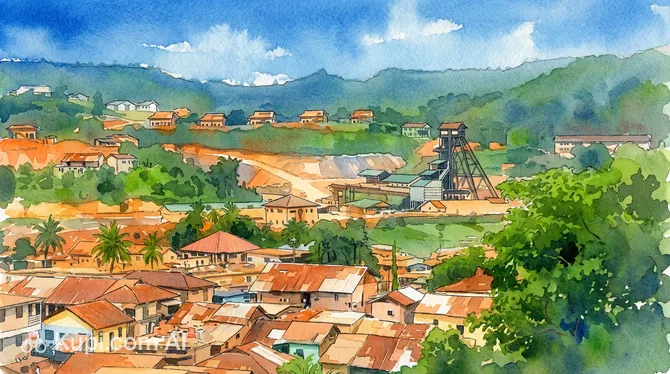
Prestea is an energetic and hardworking town located in the heart of Ghana's Western Region. The place is steeped in the atmosphere of a dynamic settlement, where daily life is closely intertwined with the region's rich traditions. The town attracts those seeking an authentic African experience, well off the standard tourist routes.
Prestea. Illustration.
Source: Kupi.com AI
With a population of approximately 35,760 people, Prestea serves as an important economic hub, its significance driven by a developed gold mining industry. Part of the Prestea-Huni Valley Municipal District, it is a unique example of how natural resources shape the character and rhythm of an entire region. Here, the hospitality of the locals blends with an industrial landscape and proximity to the picturesque scenery of Western Ghana.
Exploring the historical heritage of this area, travelers can learn about traditional ways of life and the town's contribution to the national economy. Prestea invites you on a journey into the world of the real Ghana, where stories of labor, culture, and the natural beauty of the Ankobra River valley await at every turn.
Weather Overview
Prestea enjoys a tropical savanna climate typical of Ghana's Western Region. Two main seasons stand out here: the wet season, lasting from April to October, and the dry season, from November to March. If you want to plan your trip as accurately as possible, we recommend checking what weather in Prestea awaits you on specific dates in advance.
According to climate data, the warmest months are February and March, when the average maximum reaches 32.7°C. During the rainy season, especially in May and June, there is heavy rainfall (up to 262 mm per month), which brings a pleasant freshness and makes the surrounding landscapes incredibly green. The coolest and most comfortable weather settles in August, when the average temperature is around 25°C.
The best time to visit the town is from December to February. During this period, humidity decreases and the number of sunny days increases, making it ideal for walking and sightseeing. However, even in the rainy season, showers are usually brief, and the weather remains favorable for traveling around the region.
Average monthly temperature
Average monthly precipitation
Interesting Facts
Golden Heart of the Region: Prestea is one of the key gold mining centers in Ghana, a trade that has defined the town's life for many decades.
River Arteries: The town is situated in close proximity to the Ankobra River, which historically served as an important transport route for delivering cargo and minerals.
Municipal Union: Prestea forms a single administrative district with the neighboring settlement of Huni Valley, creating a unique industrial and natural cluster.
Traditional Governance: Despite its industrial status, traditional chiefs maintain a strong influence in the town and its surroundings, playing a vital role in community life.
Eco-Potential: The landscapes around Prestea are considered some of the most promising in the Western Region for sustainable ecotourism development, thanks to the combination of forests and hilly terrain.
How to Get There
Transport accessibility to Prestea largely depends on major regional hubs. The town is located away from main highways, which gives it a certain seclusion but requires careful route planning. If you want to learn more about the logistics in this region, we recommend checking the detailed information on how to get to Prestea.
The primary air gateway for visiting the town is Kumasi International Airport (KMS). It is a major hub from which you can reach Prestea by intercity bus or taxi. The trip takes about 3–4 hours and passes through the scenic roads of the Western Region. Another option is flying into Takoradi Airport (TKD), from which a ground transfer will take between 2 to 3 hours.
Railway service in this part of Ghana is currently limited, so roads remain the primary mode of travel. Comfortable buses run from the capital, Accra, to Prestea, though the journey can take 6 to 8 hours with a transfer in Kumasi. For more flexibility, travelers often choose to rent a car with a driver or use local taxi services.
Station
Passenger traffic
Distance
Kojokrom Train Station
1
69 km
Gare ferroviaire Treichville
2
208 km
1
213 km
Main Attractions
The main attractions of Prestea are inextricably linked to its unique geographical location and industrial significance. One of the most fascinating aspects of the town is the opportunity to see traditional gold mining methods. In designated and safe areas, tourists can observe the work of local miners, providing deep insight into the historical and modern importance of this trade for the entire region.
The natural beauty of the Prestea-Huni Valley Municipal District deserves special attention. The town's surroundings are ideal for ecotourism: green hills and valleys offer excellent routes for hiking. A journey along the banks of the Ankobra River allows you to enjoy the tranquility of tropical nature and discover the biodiversity of Western Ghana.
The town's cultural landscape is complemented by authentic local villages where traditional lifestyles have been preserved. A walk through the streets of Prestea allows you to feel the rhythm of a typical Ghanaian settlement, while interacting with the open and friendly residents will be one of the highlights of your trip. This is a place for those who appreciate natural beauty and genuine human connection.
Local Cuisine
A gastronomic journey in Prestea is an introduction to the vibrant flavors of Western Ghana. The local diet is based on root vegetables such as yams and cassava. Be sure to try the famous fufu—a thick dough made from pounded tubers, traditionally served with aromatic soups made from peanuts, palm oil, or fresh fish. This dish is eaten with the hands, which adds a special cultural touch to the meal.
Another local favorite is banku—a fermented corn and cassava dough that pairs perfectly with grilled meat or fish. Street food in Prestea is ubiquitous: in the markets, you can find fried plantains and kelewele—spicy pieces of plantain fried with ginger and chili pepper.
Among beverages, fresh palm wine, harvested from the surrounding forests, is particularly popular. Tropical fruit juices and refreshing coconut water are also widely available. The food culture here is centered in small "chop bars"—local eateries that always serve freshly prepared home-cooked food reflecting the true character of Ghanaian cuisine.
Travel Tips
A trip to Prestea is an opportunity to see the real, non-tourist Ghana. To ensure your trip goes smoothly and leaves only pleasant memories, use our practical tips.
Clothing and Essentials: Pack a wardrobe of light, natural fabrics. Be sure to bring sunscreen, a hat, and comfortable shoes for walking on hilly terrain. When visiting villages and interacting with locals, choose modest clothing that covers the shoulders and knees.
Transport: The main way to get around is by "tro-tro" minibuses and taxis. If you value comfort, it is better to rent a car with a driver in Kumasi for the whole day. Be prepared for roads in the area to be uneven.
Finance: The official currency is the Ghanaian Cedi (GHS). International cards are hardly accepted in Prestea, so exchange currency in advance in major cities and always carry a sufficient supply of cash.
Health: A yellow fever vaccination is mandatory for entry into Ghana. It is also recommended to take malaria prophylaxis and use repellents. Drink only bottled water.
Communication: English is the official language and is widely spoken. Knowing a few phrases in local languages (Twi or Fante), such as "Akwaaba" (Welcome) or "Medaase" (Thank you), will instantly win over the locals.
Local Etiquette: Ghanaians are very polite. Always greet people, especially elders, first. Use only your right hand for greeting, eating, and passing objects—the left is considered unclean.
What to Avoid: Do not photograph people, their homes, or government facilities without prior permission. This can be perceived as disrespect or a security violation.
Seasonality: Plan your trip for the dry season (from November to March) to avoid heavy rains that can make traveling around the region difficult.
Prestea will welcome you with its sincerity and diligence. Be open to new experiences, show respect for local traditions, and this town will reveal its most interesting sides to you!
Entertainment & Nightlife
Entertainment in Prestea is predominantly traditional and community-based, allowing guests to fully immerse themselves in the local culture. The main centers of social life are the local markets and open squares, where spontaneous celebrations often take place. In the evenings, the town fills with the sounds of live music, and the most authentic experience can be found by joining residents around bonfires, where ancient legends come to life to the rhythm of drums.
Nightlife in the conventional European sense is limited here; however, the town has several cozy bars and local eateries where you can spend a quiet evening. This is a great opportunity to try local drinks and chat with townspeople in an informal atmosphere. Safety in the town is maintained at a good level, but it is recommended to use trusted taxis for nighttime travel.
Daytime leisure in Prestea is geared towards nature lovers and cultural exchange. Attending local festivals, which often coincide with harvest time or historical dates, will provide a wealth of vibrant emotions. For those seeking more modern entertainment formats, such as large cinemas or shopping malls, a trip to nearby major cities like Sekondi-Takoradi is recommended.
Parks & Museums
The natural areas around Prestea are its main open-air "museum." The town is surrounded by picturesque green hills and dense forests, which are ideal for picnics and birdwatching. The banks of the Ankobra River, where nature has been preserved in its pristine state, add a special charm to the region. These spots attract lovers of silence and peaceful walks in the fresh air.
While there are no large art galleries or historical museums in the town itself, local communities and traditional centers act as guardians of heritage. Here, you can learn about the history of gold mining through the stories of local residents and by visiting old mine workings. This is living history that cannot be found in display cases but can be felt through interaction with the people whose labor has shaped the town's identity for decades.
For a more formal introduction to Ghana's history and culture, tourists are recommended to visit Kumasi, where the famous National Cultural Centre Museum and Manhyia Palace are located. Combining nature walks in the hills of Prestea with visits to cultural sites in neighboring regions will provide the most complete impression of the richness of Western and Central Ghana.
Getting Around
The public transport system in Prestea features traditional Ghanaian modes of travel that make it easy to move between neighboring settlements. The fleet's backbone is the trotro—minibuses that run on specific routes. This is the most affordable and popular way to travel among locals, allowing you to reach hubs like Kumasi or Takoradi.
Within the town itself and for short-distance trips, tourists often use taxis or motorized rickshaws. There are usually no fixed fares, so the price of the trip should be negotiated with the driver in advance. Taxis can be hired for an individual trip or shared with other passengers (shared taxi), which significantly reduces the cost.
For getting around the central part of Prestea, walking is most convenient, as the main shops and markets are located quite compactly. Keep in mind that roads in the surrounding areas may be unpaved, so travel can slow down during the rainy season. There is virtually no regular transport schedule: vehicles depart as they fill up, which requires a certain amount of patience and flexibility in time planning from the traveler.
Accommodation
Accommodation options in Prestea are primarily geared toward budget travelers and those looking for an authentic immersion into the local environment. The town and its immediate surroundings are dominated by small guest houses and local hotels. These are simple but cozy establishments offering a basic set of amenities necessary for a comfortable rest after a busy day.
When choosing a place to stay, it is worth looking at the Prestea-Huni Valley Municipal District, where you can find options with more picturesque views of the valleys. Local guesthouses are known for their hospitality and homey atmosphere. The cost of living here is significantly lower than in Ghana's major tourist centers, making Prestea attractive for budget-conscious travelers.
For those who prefer a higher level of service and modern amenities, it is often recommended to stay in Kumasi or Tarkwa and make day trips to Prestea. If you decide to stay in town, we advise booking accommodation in advance, especially during local festivals when demand for guest house rooms increases.
Nearby Cities
Prestea serves as an excellent starting point for exploring the surrounding Western Region of Ghana, which is rich in both industrial centers and natural beauty. Just 22 kilometers away is the city of Tarkwa, known for its large mines and developed infrastructure, making it a convenient spot for a short trip.
For those who want to see historical settlements, it's worth visiting Aboso, located very close by. If you feel like trading industrial landscapes for a sea breeze, head to Axim. This coastal town is famous for its magnificent beaches and an ancient fort, offering a completely different pace of life.
Another interesting destination is Sekondi-Takoradi—a large port city where you can enjoy a modern urban atmosphere and a wide range of entertainment. Exploring the nearby cities will allow you to get a full picture of the multifaceted nature of this region, where traditions are closely interwoven with modernity.
Shopping & Souvenirs
Shopping in Prestea is primarily about visiting vibrant local markets, which are the heart of city life. You won't find massive shopping malls with glass storefronts here, but you will be able to purchase truly authentic goods. The main interest for tourists is traditional Ghanaian fabrics with bright geometric patterns, which can be bought by the yard or used to have clothes made by local tailors.
Prestea's markets offer a rich selection of handmade items. Look for wooden masks, woven baskets, and pottery created by local artisans. The town is also known for its jewelry: you can often find high-quality imitations of gold pieces here, which make for wonderful souvenirs reflecting the region's gold-mining specialty.
Shops and stalls usually operate from early morning until sunset. When shopping at the market, it is customary to bargain politely—it is an important part of the local communication culture. Payments are primarily made in cash in the local currency (Ghanaian Cedis), so it is recommended to take care of currency exchange in larger cities before traveling to Prestea.