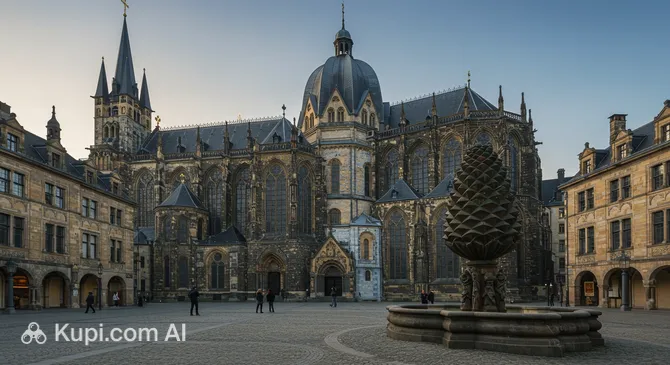
Aachen Cathedral (Aachener Dom), also known as the Imperial Cathedral, is an outstanding architectural monument and one of Europe's primary shrines, located in the city of Aachen in Germany. This majestic temple is considered one of the oldest in Western Europe and holds immense cultural and historical significance. Its history is inextricably linked with the name of Emperor Charlemagne, who initiated its construction at the end of the 8th century.
The heart of the cathedral is the Palatine Chapel—an octagonal building built in the Byzantine style and consecrated in 805. It became the burial place for Charlemagne himself. Over the centuries, new elements were added to the original chapel, including the magnificent Gothic choir, known as the "Glass Chapel" due to its massive 27-meter-high stained-glass windows. This blend of architectural styles—from Carolingian and Byzantine to Gothic—gives the cathedral its unique and unmistakable appearance.
Traveller photos:
For 600 years, from 936 to 1531, Aachen Cathedral served as the coronation site for 30 German kings and 12 queens, emphasizing its status as the center of power for the Holy Roman Empire. Inside, priceless Christian relics are kept, including the swaddling clothes of the infant Jesus and the loincloth of the Savior, as well as the famous Throne of Charlemagne. Due to its exceptional historical and architectural value, in 1978, Aachen Cathedral became one of the first sites to be included in the UNESCO World Heritage list.