Support

Château de Franqueville

About

Imagine an elegant 19th-century estate perched on a hilltop, offering some of the most breathtaking views of the Pyrenees. Château de Franqueville is more than just a historic building; it is a true gem of the Bizanos commune, located in close proximity to the city of Pau. This site harmoniously blends Neo-Gothic and Romantic features, serving as an important cultural landmark protected by the state since 1944.
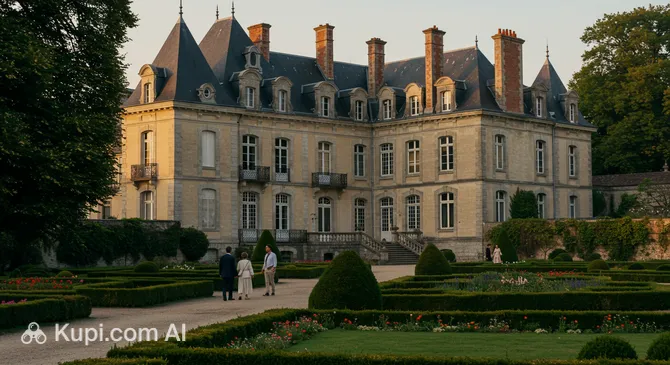
Château de Franqueville. Illustration.
Source: Kupi.com AI

Traveler photos:

The castle's crowning jewel is its vast 33-hectare park. Wandering through its grounds, you will encounter rare exotic trees planted by the famous botanist Albert de Franqueville and an ancient chestnut grove. France is renowned for its vineyards, and this château is no exception: in recent decades, the winemaking tradition has been successfully restored here, and today, clusters of grapes ripen once again on the estate's southern slopes.

Today, the château serves not only as a place for quiet strolls but also as the starting point for the famous Chemin Henri IV hiking trail. It is an ideal location for tourists who appreciate tranquility, history, and the natural beauty of Béarn. Here, you can escape the hustle and bustle of the city while admiring the flow of the Gave de Pau river and the majestic mountain peaks on the horizon.

Contacts

If you are planning a visit or wish to book an event at the château, we recommend using the official contact details to confirm the specifics.

How to contactContact
AddressChem. Henri IV, 64320 Bizanos, Франция
Phone+33 5 59 82 97 61
Websitewww.chateau-de-franqueville.com

What to Do

At Château de Franqueville, there is something for everyone. Active travelers should check out the health trail—a special route with 20 stations that combines physical exercise with local history. For those who prefer long walks, the château serves as the starting point for the legendary Henri IV path, which leads all the way to Lourdes.

Nature lovers will be delighted by the local apiary, organized by the "Dance of the Bees" association, and the opportunity to explore the park's unique flora. In 2009, vineyards were replanted here, so during your visit, you can experience the living winemaking tradition of the Béarn region and see how vines are grown on these historic slopes.

Families with children will find it a wonderful spot for an outdoor picnic or for participating in orienteering on a dedicated course. And, of course, don't forget your camera: the château's terraces and the southern slopes (the glacis) are perfect photo spots, offering panoramic views of the Gave de Pau river and the snow-capped peaks of the Pyrenees.

Getting There

Reaching this attraction is easy, as it is located just 5 kilometers from the center of Pau. The most convenient way is by car, following the D817 highway or via the eastern tunnel bypassing the city. Convenient parking for visitors is available right by the château.

For those who prefer public transport, buses (the IDOS network) run regularly from the center of Pau to the commune of Bizanos. After getting off at the stop near Chemin Henri IV, you will have a pleasant 20–30 minute walk uphill. You can also use a local taxi; the ride from the city's main square will take no more than 10–15 minutes.

If you enjoy hiking, you can start your journey directly from the city via the famous Henri IV trail. For cyclists, the roads of the Béarn region offer excellent conditions and smooth surfaces, making the ride to the château easy and scenic.

Nearest city: Pau

History & Facts

The modern Château de Franqueville is the third structure built on this strategically important hill. Until the mid-19th century, fortifications stood here, used to monitor the approaches to Pau. The château acquired its current appearance as a classic villa around 1850, thanks to the work of architect Laurent Dabadie.

A key figure in the estate's history was Count Albert Belhomme de Franqueville, who settled here in 1854. He was not just an aristocrat but a distinguished botanist and mountaineer who was the first person in history to summit Aneto—the highest peak in the Pyrenees. It was he who laid the foundation for the magnificent park, planting rare exotic species collected during his expeditions.

In the 20th century, the château's fate was varied: it served as a private residence for the de Pruines family and even as a rest home for the city hospital. In 1988, the commune of Bizanos purchased the property to save it from ruin. Following an extensive restoration completed in the 1990s, the château once again became a cultural hub, and in 2009, the ancient winemaking tradition was revived on its slopes.

Time Needed

For a quick tour of the château's architecture and a stroll through the main park avenues, 1–2 hours is usually sufficient. This gives you enough time to enjoy the panoramic mountain views and take some great photos of the building's facade.

If you plan to walk the health trail, explore the apiary, or embark on a short journey along the historic Henri IV route, it is better to set aside half a day (about 3–4 hours) for your visit. This will allow you to immerse yourself in the tranquility and natural beauty of the site without rushing.

Working Hours

The château and its administrative offices operate on a set schedule; however, please note that they are typically closed to visitors on weekends (Saturday and Sunday). Nevertheless, the park is often accessible for walks on a more flexible basis.

Opening hours:

  • Monday, Thursday, Friday: 08:30–12:00, 13:30–17:00;
  • Tuesday: 08:30–12:00;
  • Wednesday, Saturday, Sunday: closed.
Before visiting, be sure to check the château's official website, as park access hours may vary depending on the season or private events.

DayWorking hours
Monday08:30–12:00, 13:30–17:00
Tuesday08:30–12:00
WednesdayЗакрыто
Thursday08:30–12:00, 13:30–17:00
Friday08:30–12:00, 13:30–17:00
SaturdayЗакрыто
SundayЗакрыто

Nearby

The château's location makes it easy to combine a visit with exploring other interesting sites around Pau. Its proximity to the river and the historic city center offers many opportunities for active and cultural recreation.

NameDistance
Pau-Pyrénées Whitewater Stadium1 km
Kofu Japanese Garden1.3 km
Théâtre de Verdure1.4 km
Beaumont Park1.5 km
Pau Museum of Fine Arts1.9 km
Le Garage2 km
Place Clemenceau2 km

Reached the end of the page?

That means the route is fully explored