Support

Kastellet

About

Kastellet is one of the most remarkable historic fortresses in Copenhagen, the capital of Denmark. Located on the island of Zealand, on the shores of the Øresund Strait, it is an impressive example of Baroque fortification art. Its unique shape of a regular pentagon with powerful bastions at the corners makes it easily recognizable and photogenic.
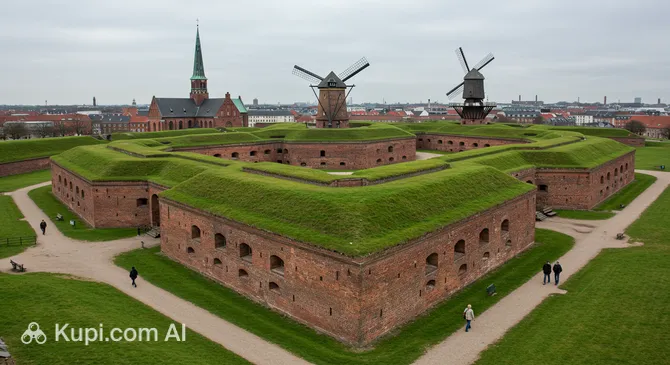
Kastellet. Illustration.
Source: Kupi.com AI

Traveller photos:

Today, Kastellet serves a dual purpose: on one hand, it is an active military facility under the jurisdiction of the Danish Ministry of Defence, and on the other, it is a favorite spot for walking and relaxation. Both residents of Copenhagen and numerous tourists appreciate this green zone for its peaceful atmosphere and historical character. It is a wonderful place to take a break from the city bustle and enjoy the views.

A significant part of the fortress territory is open to the public. Walking along its ramparts, you can enjoy the views and see the historic buildings, many of which are painted in the characteristic burgundy tones of Copenhagen. These structures, including the old church and the windmill, create a unique ensemble and immerse you in the atmosphere of the past, making Kastellet a must-see on any traveler's itinerary through the Danish capital.

Contacts

For the most up-to-date information regarding your visit to Kastellet, including opening hours, scheduled events, and access rules, it is recommended to check the official website. As Kastellet is a historical monument and a partially active military site, direct telephone or email contacts for tourists may not be explicitly listed.

How to contactContact
AddressGl. Hovedvagt, Kastellet 1, 2100 København, Denmark
Websitewww.kastellet.dk

What to Do

A visit to Kastellet offers many interesting activities and experiences. One of the main pleasures is a leisurely walk along the picturesque ramparts of the fortress. Climbing up to them, you can enjoy panoramic views of Copenhagen and the busy port. Old cannons are mounted along the fortifications, serving as a reminder of the rich military history of this place and providing an excellent backdrop for photos.

Inside the fortress walls, a cozy park with scenic ponds awaits you. Here, you can often see graceful swans and other waterfowl, which adds a sense of tranquility to the place. Crossing bridges over deep moats and exploring the historic gates, you will feel immersed in the past. This is a wonderful opportunity to appreciate the scale and cleverness of the fortification.

Furthermore, on the territory of Kastellet, there are memorials dedicated to Danes who perished in the world wars. These monuments serve as an important reminder of history and invite a moment of reflection. Overall, Kastellet is an ideal place for peaceful walks, family picnics on the grass, or simply for taking beautiful photos, especially in spring and summer when the entire area is lush with greenery and flowers.

Getting There

Kastellet is conveniently located near the center of Copenhagen, making it easily accessible for visitors. Thanks to its distinctive star shape, the fortress is clearly visible on the city map and serves as an excellent landmark. Many tourists prefer to reach Kastellet on foot or by bicycle, as it is situated close to major tourist routes. It is a pleasant walk that allows you to enjoy views of the city.

If you prefer public transport, reaching Kastellet is also quite simple. The nearest major transport hub is Østerport station, which can be reached by metro or one of the many city buses. From Østerport station, the entrance to the fortress is just a few minutes' walk away, making this a very convenient option.

Furthermore, Kastellet is in close proximity to other famous Copenhagen attractions, such as the iconic Little Mermaid statue and St. Alban's Anglican Church. You can easily combine a visit to these sites by planning a walking route. A taxi from the city center is also a fast, though more expensive, way to reach this historic citadel.

Nearest city: Copenhagen

History & Facts

The history of Kastellet dates back to the 17th century, when construction of the first fortification on this site began at the initiative of King Christian IV. This took place in 1626, with the primary goal of the structure being to protect the entrance to the port of Copenhagen from potential maritime threats. However, the modern appearance of the citadel as we see it today began to take shape a bit later, between 1662 and 1663. It was then that Kastellet was rebuilt and became a vital part of the defensive ring designed to protect the Danish capital.

Over the centuries, Kastellet has witnessed and participated in significant historical events. One such moment was the siege of Copenhagen in 1807, during which the fortress played its defensive role. Despite numerous trials, including fires and bombardments that could have wiped it off the face of the earth, the citadel has remarkably survived. This is a testament to the strength and ingenuity of its design.

Thanks to its resilience and historical value, Kastellet was fully restored in 1999, preserving its original appearance. Today, this star-shaped fortress is rightfully considered one of the best and most well-preserved examples of 17th-century fortification architecture in all of Europe. It not only serves as a reminder of Denmark's rich military past but also stands as a living monument to the engineering art of that era, attracting both historians and travelers alike.

Time Needed

To fully enjoy the atmosphere of Kastellet and see its main sights, most visitors usually need between 1 and 2 hours. This amount of time is generally enough to take a leisurely stroll along its famous ramparts, which offer beautiful views, inspect the historic bastions, and take commemorative photos while soaking in the unique atmosphere of the place.

During this period, you will be able to not only see the external fortifications and internal buildings, including the old church and the picturesque windmill, but also simply enjoy a peaceful walk through this unique historical site, which is a true green oasis in Copenhagen. If you do not aim for a detailed study of all historical nuances, then 1-2 hours will allow you to get vivid impressions from visiting Kastellet.

Working Hours

The Kastellet fortress is open to visitors daily, and what is particularly pleasant for travelers is that entry to its territory is free. This means you can enjoy walks along its scenic ramparts and park area any day. No advance ticket booking or registration is required for general access to the fortress grounds.

It is important to note that while the general territory of Kastellet is available to the public year-round, individual buildings and some sites inside the fortress may be closed to tourists. This is because part of Kastellet is still used by the Danish Ministry of Defence. Therefore, if you are interested in visiting specific museums or interior spaces, it is recommended to check their opening hours and access conditions in advance on the official website or at local tourist information centers in Copenhagen.

6:00 – 20:00

Nearby

Exploring the surroundings of Kastellet can significantly enrich your experience of visiting this historic citadel. Copenhagen is a city full of amazing places, and many of them are within walking distance of the fortress, allowing you to easily combine several visits into one busy day.

A stroll through the nearby areas will not only complement your journey with new discoveries but also allow you to feel the atmosphere of the Danish capital more deeply. From world-famous city symbols to cultural centers and cozy corners, the area around Kastellet offers various routes for curious travelers. Here are a few interesting places located nearby:

NameDistance
The Little Mermaid0.4 km
Design Museum Denmark0.5 km
Amalienborg Palace0.8 km
Reffen0.9 km
National Gallery of Denmark1 km
Rosenborg Castle1.2 km
The Memorial Anchor1.3 km

Reached the bottom of the page?

Looks like you know this route inside out