Why Go to Mauritania
Mauritania is a destination for those who have exhausted the list of classic countries and are looking for “that” authenticity. There is no “all-inclusive” system here, but there is the endless horizon of the Sahara, the rustle of ancient manuscripts, and the Atlantic Ocean, which every morning washes hundreds of brightly painted boats ashore. If you are ready to trade five hotel stars for their infinite number in the night sky above the desert, it's worth buying tickets to Nouakchott in advance. This will be the start of a journey that will change your perception of travel.
Which cities are worth visiting
Mauritania is a country of contrasts, where modern capitals coexist with settlements gradually being swallowed by the great desert.
Nouakchott
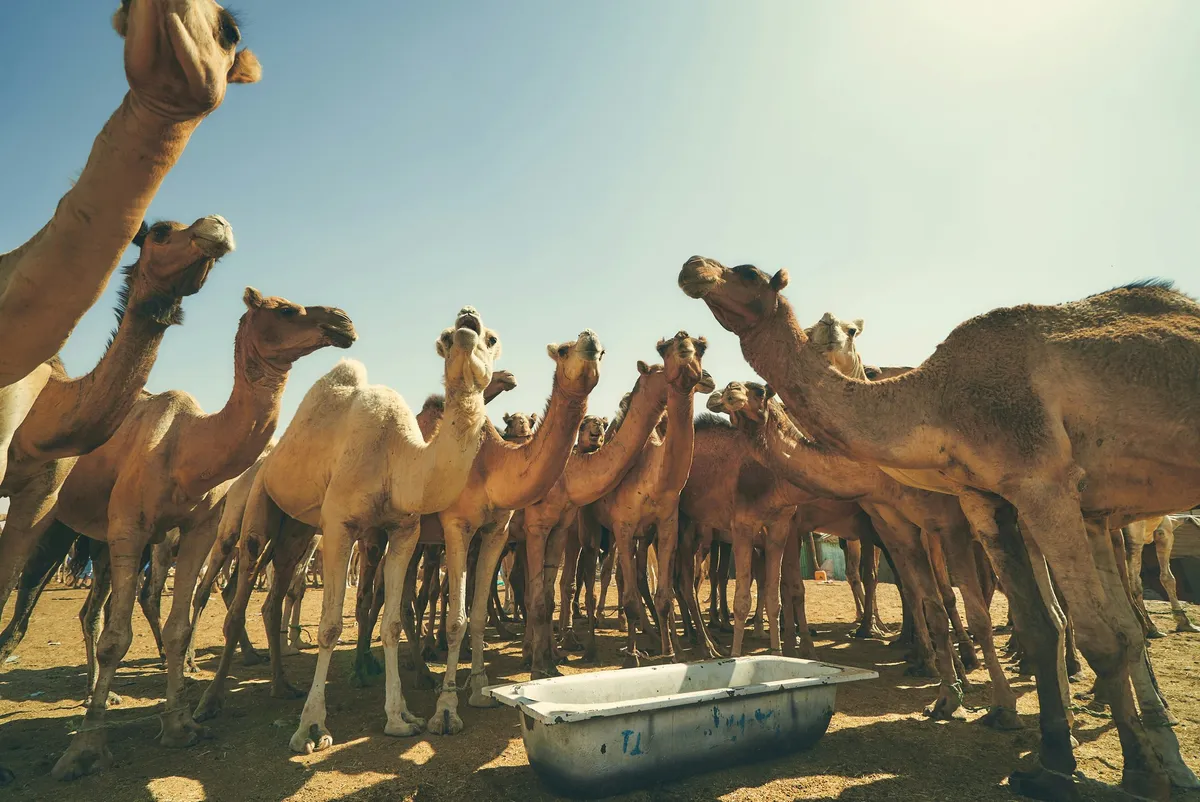
The capital, which was a tiny village just 60 years ago, has today transformed into a chaotic but captivating metropolis. The main attraction here is the Fish Market (Port de Pêche). This spectacle is not for the faint of heart: hundreds of brightly painted pirogues return with their catch, and thousands of people on the shore engage in eager trading. It's also worth visiting the National Museum to see archaeological finds from abandoned cities, and the Camel Market, where you can observe the life of real nomads within the city limits.
Chinguetti
A city known as the “Sorbonne of the Desert.” Founded in the 13th century as a crossroads for caravan routes, today it is divided by sands into two parts: old and new. The old part preserves unique ancient libraries, where custodians across generations display priceless manuscripts on astronomy, law, and medicine. The city's main mosque with its square minaret is one of the country's most recognizable symbols. This is a place where you can literally hear the silence of bygone eras.
Nouadhibou
The economic capital, located on the narrow Cap Blanc peninsula. For a long time, the city was known as the world's largest “ship graveyard.” Dozens of rusting shipwrecks in the coastal waters created a post-apocalyptic landscape that still attracts photographers, despite the gradual scrapping of the vessels. Not far from the city is Cap Blanc, where you can see one of the world's last colonies of rare monk seals. This is also a key point for those planning a trip on the famous iron ore train, which we will discuss below.
Ouadane
A once-thriving fortified city (ksar), now transformed into a magnificent open-air museum. Its ruins, cascading down a hillside, are a UNESCO World Heritage site. Walk along the “street of forty scholars” and climb to the top of the old city – from there, a panoramic view opens up to the palm groves of the oasis and the endless sands. A couple of dozens of kilometers from Ouadane is the entrance to the famous Richat Structure.
4 reasons why it's worth crossing the desert
Ride the “Iron Ore Train” through the Sahara. The longest and heaviest train in the world is a true legend of Mauritania. The train, about 2.5 kilometers long, runs between the Zouérat mines and the port of Nouadhibou. For locals, it's a vital transport artery, and for travelers, a test of endurance. You can choose the single old passenger car, but true thrill-seekers climb directly onto the open freight platforms on top of the iron ore. Prepare for a 20-hour journey: during the day, the sun will bake you, at night, the desert cold will penetrate, and your face will need to be tightly wrapped in a traditional shesh scarf against the ubiquitous dust. The reward, however, will be incredible views of the dunes and a sense of absolute surrealism under the dome of the brightest starry sky you have ever seen.
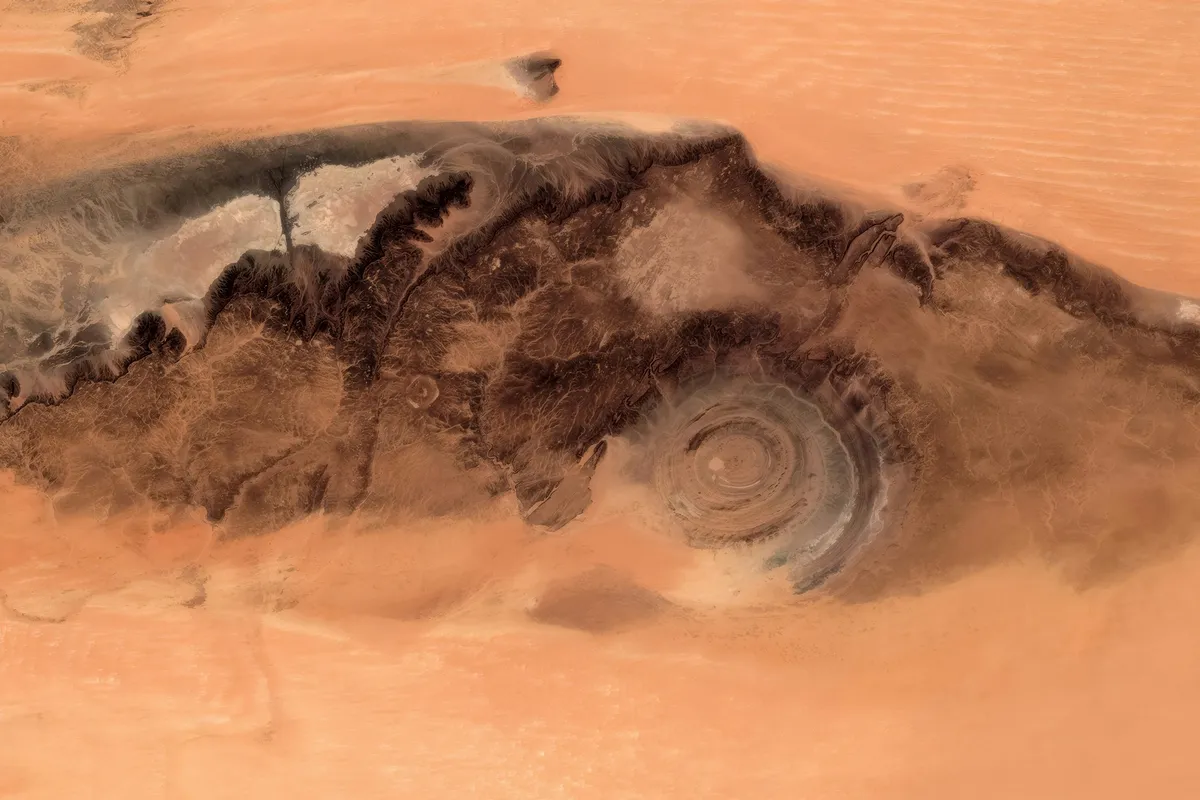
Unravel the mystery of the “Eye of the Sahara” (Richat Structure). The Richat Structure is a geological marvel, a series of giant concentric rings 50 kilometers in diameter. For a long time, scientists debated its origin: some saw it as the trace of a meteorite impact, others as the result of a volcanic eruption. Modern science leans towards the version of erosion of an ancient geological dome, but legends of Atlantis, supposedly located right here, are still alive among mystery enthusiasts. You can reach the center of the “Eye” by off-road vehicles from the city of Atar. Once inside, it's difficult to grasp the scale of the object, but the relief rocky circles and incredible silence create the feeling that you are on another planet.
Visit the bird kingdom in Banc d'Arguin National Park. This UNESCO-listed park is one of the most contrasting places on Earth. Here, the scorching sands of the Sahara meet the cold waters of the Atlantic, forming shallow bays rich in fish. This place serves as a crucial stopover for millions of migratory birds. You can see giant colonies of pink flamingos, white pelicans, and grey herons. The park's uniqueness also lies in the fact that it is home to the Imraguen fishing tribes, who still use traditional fishing methods, sometimes cooperating with wild dolphins that drive schools of fish into their nets. The silence, the absence of motors (movement is only possible by sail), and the cries of birds create an atmosphere of a pristine world.
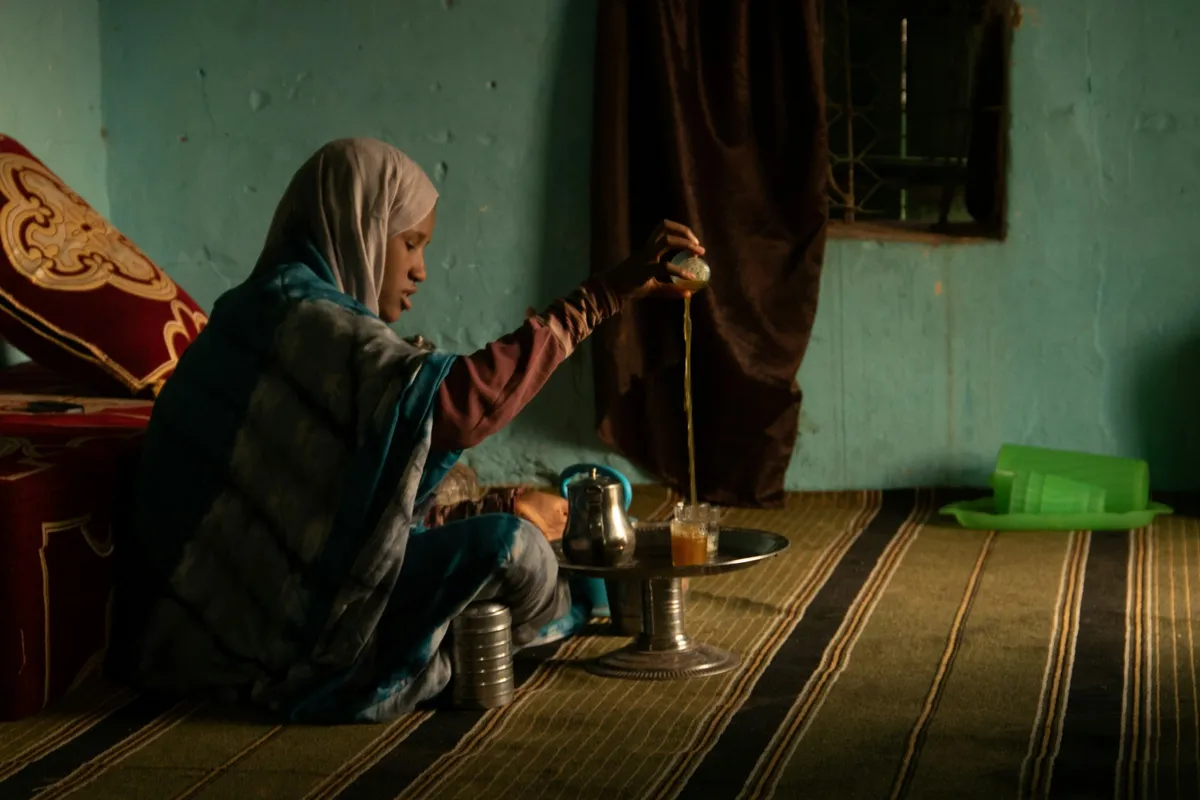
Live in a Bedouin tent and learn the philosophy of the desert. Mauritania is primarily a country of nomads. To understand its soul, you need to leave the cities and venture deep into the sands towards the oases. Spending a night in a traditional khaima (a tent made of coarse fabric or leather) is not just an overnight stay, but an immersion into the culture. The evening begins with a long ritual of preparing tea over coals. There is no hustle and bustle in the desert: you will spend hours gazing at the fire, listening to the guides' stories, and tasting freshly baked flatbread in the sand. Here, time flows differently, and the stars seem so close you could almost touch them. This is the best way to “reset” and feel the grandeur of nature, before which man is just a tiny grain of sand.
What to try
Thieboudienne. A national dish of fish, rice, and vegetables cooked in a tomato sauce. It's a very spicy and aromatic dish, traditionally eaten by a large group from a single plate.
Mechoui. Tender lamb meat, roasted whole in a pit with coals or in a special oven.
Mauritanian Tea. This is a whole ritual. Tea is drunk three times: the first glass “bitter as life,” the second “sweet as love,” and the third “gentle as death.” The drink is heavily frothed by pouring it from glass to glass from a great height.
Dates and Camel Milk. Basic desert products. Be sure to try fresh dates in the oases – their taste is incomparable to store-bought ones.
How to get there
Via Casablanca (Morocco). This is one of the most convenient and popular routes. Royal Air Maroc operates regular flights to Nouakchott.
Via Istanbul. Turkish Airlines offers comfortable connections from many cities in Russia.
Via Paris. If you have a Schengen visa, you can consider an option via Europe with Air France.
For entry, Russian citizens require a visa, which is easiest to obtain upon arrival at Nouakchott airport. The cost is about 55 euros, and the procedure takes minimal time.
Mauritania is not about relaxation in the usual sense, but about overcoming and discovery. Here you will understand that the silence of the desert can be louder than any city, and the hospitality of people who have almost nothing is the most sincere in the world.