What to see in Tbilisi
 Polina
Tbilisi is a city embraced by mountains, permeated with the aroma of wine and spices, and its streets whisper ancient legends. The capital of Georgia is an amazing mix of antiquity and modernity, European chic and oriental flavor, where every stone breathes history, and every acquaintance turns into a warm memory. If you are looking for a place where cultural heritage combines with gastronomic delights and genuine hospitality, then this is definitely the place for you!
This guide will help you plan the perfect trip to Tbilisi: we will tell you how to get to Tbilisi, what to see, where to go, and how to make your trip as comfortable and memorable as possible.

How to get to Tbilisi
Tbilisi is one of the most accessible cities for travelers. How to get to Tbilisi quickly and conveniently? The most common way is by air.
Flights
- Direct flights: you can buy tickets to Tbilisi on Kupi.com on regular direct flights. This is the fastest and most comfortable way to get to the capital of Georgia. The flight takes about 3-3.5 hours.
- Connecting flights: if you are looking for more budget-friendly options, you can consider flights with layovers, for example, via Yerevan or other cities. Tickets for the Moscow – Yerevan route or tickets for the Moscow – Baku route can often be found at favorable prices, and from there it is easy to get to Tbilisi by bus, train, or local airlines.
Ground transport
- Bus: from major cities, you can get to Tbilisi by international buses, but this is a longer and more tiring option.
- Train: there is currently no direct railway connection from Russia, but you can get there with transfers through neighboring countries.

When to go to Tbilisi and what about the weather
What weather awaits travelers? The city's climate is subtropical, but with noticeable seasonal fluctuations.
- Spring (April – May): ideal time to visit. The temperature is comfortable (+15…+25 °C), everything is blooming, and there isn't much rain yet. The city comes alive after winter, and summer terraces open.
- Summer (June – August): hot and sunny. Temperatures can rise to +30…+35 °C and higher. This is a great period for lovers of hot weather, but long daytime walks can be tiring. Evenings are pleasant.
- Autumn (September – October): another beautiful season. Warm and sunny (+15…+25 °C), grape harvest ripens, and harvest festivals ("Rtveli") begin. The city is painted in golden hues.
- Winter (November – March): mild but cool. Temperatures rarely drop below 0 °C, but rain and sometimes snow are possible. It might be less comfortable for sightseeing, but it's a time for cozy gatherings in cafes and enjoying winter Tbilisi without crowds of tourists.
Tbilisi Attractions
What to see in Tbilisi first? The city is rich in historical and cultural monuments. Here is a list of places you should definitely visit.
Old Town (Kala)
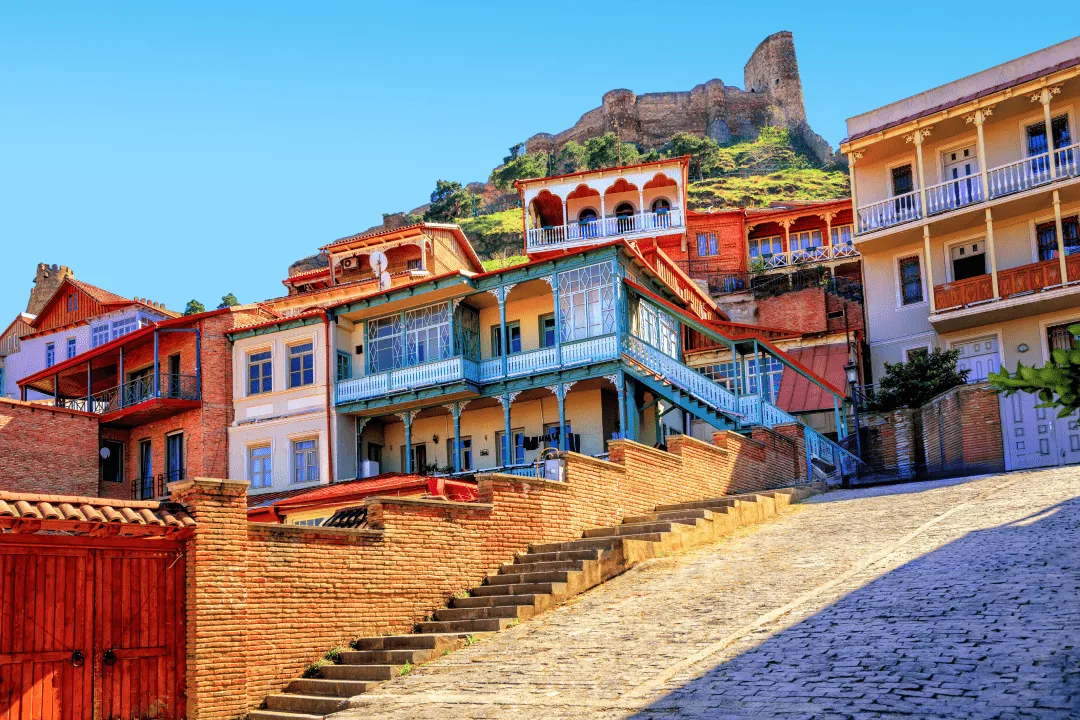
The heart of Tbilisi, where every house, every street breathes history. Time seems to have stopped here.
- Narikala Fortress: an ancient fortress towering over the city. You can reach it on foot or by cable car from Rike Park. Its walls offer breathtaking panoramic views of all Tbilisi.
- Mother of Kartli (Mother Georgia): a majestic statue, a symbol of Tbilisi, located on a hill next to Narikala. In one hand, she holds a sword (for enemies), in the other – a cup of wine (for friends).
- Abanotubani Sulfur Baths: a famous quarter with domed roofs, where the sulfur baths are located. This is not only a historical site but also active public baths. Be sure to visit one of them to feel the true spirit of Tbilisi.
- Shardeni Street: a narrow, colorful street full of cafes, bars, and souvenir shops. An excellent place for an evening stroll.
- Sioni Cathedral: one of the main Orthodox churches in Georgia, where the cross of Saint Nino – the enlightener of Georgia – is kept.
- Metekhi Church: another ancient church, picturesquely located on a cliff above the Mtkvari River.
- Leselidze Street (now Kote Abkhazi Street): the central street of the Old Town, where Georgian churches, synagogues, and mosques intertwine.

Rustaveli Avenue and the Modern Center
- Rustaveli Avenue: the main artery of modern Tbilisi. Here are located the Parliament of Georgia, the Georgian National Museum, the Opera and Ballet Theater, the Rustaveli Theater, and many shops.
- Georgian National Museum: here you will find rich archaeological collections, including the famous "golden treasures" of Colchis.
- Opera and Ballet Theater: a building with unique oriental architecture, where you can enjoy classical art.
Bridges and Parks
- Bridge of Peace: a modern pedestrian bridge over the Mtkvari, made of glass and steel in the shape of a wave. Bright night illumination makes it one of the symbols of modern Tbilisi.
- Rike Park: a modern park on the left bank of the Mtkvari, from where the cable car departs to Narikala. Here you will find dancing fountains and a recreation area.

Mtatsminda
- Mtatsminda Mountain and Pantheon: you can ascend to the top of the mountain by funicular. Here is an amusement park and the Pantheon of Writers and Public Figures of Georgia, where many prominent personalities are buried. The mountain offers another stunning view of the city.
What to see in Tbilisi in one day
If you only have one day to figure out where to go and what to see, we recommend the following itinerary:
- Morning (9:00 - 13:00): start with the Old Town. Stroll through the narrow streets, visit Sioni Cathedral. Head to the cable car in Rike Park and ascend to Narikala Fortress. Enjoy the city panorama and take photos at the Mother of Kartli statue.
- Day (13:00 - 18:00): descend from Narikala to the Abanotubani sulfur bath quarter. If you have time and desire, visit one of the baths. Have lunch in one of the many cafes in the Old Town. Walk along Shardeni Street, buy souvenirs.
- Evening (18:00 - 22:00): cross the Bridge of Peace to the left bank. Stroll along Rustaveli Avenue, feel the modern rhythm of the city. End the day with dinner at a traditional Georgian restaurant, enjoying khinkali and khachapuri.
This itinerary will give you the most complete picture of Tbilisi's two faces – ancient and modern.
What to see around Tbilisi
If you have a few days, be sure to set aside time to understand what Georgia is like beyond the capital. The surroundings of Tbilisi offer no less impressive experiences.
Mtskheta: the ancient capital of Georgia (only 20 km from Tbilisi), a UNESCO World Heritage site. Here you will find:
- Svetitskhoveli Cathedral: one of the main Orthodox churches in Georgia, the burial place of Christ's chiton.
- Jvari Monastery: rises on a mountain above the confluence of the Mtkvari and Aragvi rivers, offering a stunning view of Svetitskhoveli and the surrounding landscapes.
Kakheti: the main wine-making region of Georgia.
- Sighnaghi: the "city of love," a picturesque town with a fortress wall, located on a hill overlooking the Alazani Valley. An ideal place for wine tasting.
- Telavi: another major city in Kakheti, known for its wineries.
- Bodbe Monastery: a nunnery where Saint Nino is buried.
Georgian Military Road and Kazbegi:
- Ananuri Fortress: a picturesque fortress on the shores of Zhinvali Reservoir.
- Gudauri: a popular ski resort in winter, and a place for active recreation in summer.
- Kazbegi (Stepantsminda): a small village at the foot of Mount Kazbek. From here, you can hike to the famous Gergeti Trinity Church – located against the backdrop of majestic mountains.

How to get to Tbilisi from here? All these places are easily accessible by marshrutka ("minibus"), taxi, or as part of an organized tour group.
Transport in Tbilisi
Getting around Tbilisi is quite easy.
- Metro: the fastest and cheapest way. It has two lines. To pay, you need a special MetroMoney card (bought at any metro ticket office, costs 2 lari, topped up at vending machines).
- Buses and minibuses: extensive network. Payment also by MetroMoney card or cash to the driver (but no change).
- Cable car: connects Rike Park with Narikala Fortress. Paid with a MetroMoney card.
- Funicular: leads to Mtatsminda Mountain. Paid with a special card that can be bought at the lower funicular station.
- Taxi: numerous and relatively inexpensive. It is recommended to use apps (Yandex.Taxi, Bolt) to avoid inflated prices.
What to eat
Georgian cuisine is an attraction in itself, and wherever you go, a gastronomic paradise awaits you.
- Khinkali: juicy meat dumplings that should be eaten by hand. Be sure to order different types.
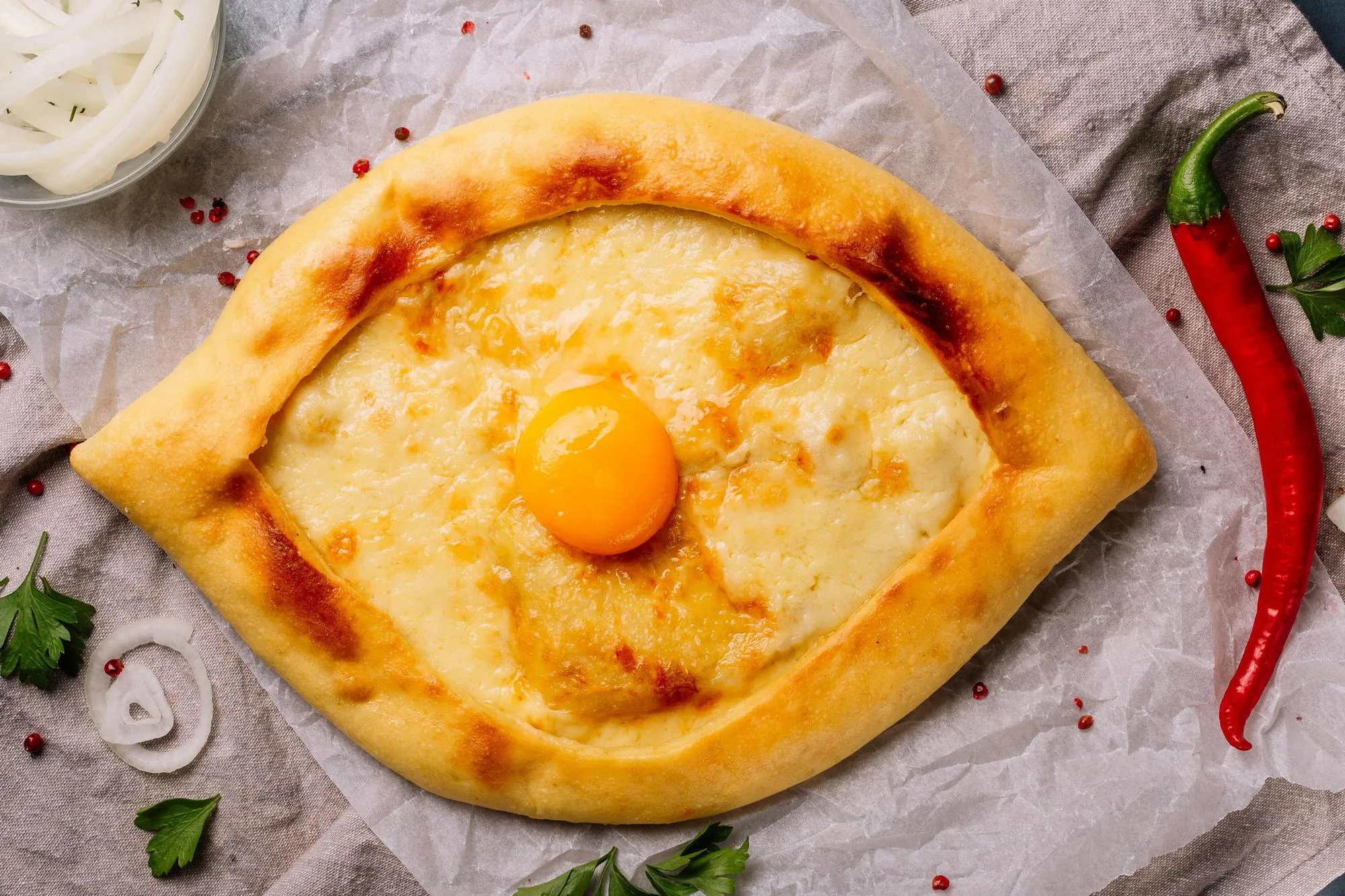
- Khachapuri: you can't do without it! Imeretian, Adjarian (with egg and butter), Megrelian – try them all!
- Shashlik (Mtsvadi): Georgian shashlik is especially delicious.
- Pkhali: vegetable appetizers made from spinach, beets, eggplants with nuts.
- Satsivi: chicken in walnut sauce.
- Wine: Georgia is the cradle of winemaking. Be sure to try local wines, especially those from qvevri (clay amphorae buried in the ground). Saperavi (red) and Rkatsiteli (white) are the most famous varieties.

Where to eat
- Traditional restaurants (dukanis): such as "Khinkalis Sakheli", "Samikitno", "Phaeton".
- Wine bars: there are many of them in the Old Town. A great way to try different wines and snacks.
- Sulfur baths: some baths have their own cafes where you can grab a bite after treatments.
- Local markets: a great place to taste cheeses, churchkhela, dried fruits.
Tip: Georgian portions are large, be prepared!

Where to stay
In Tbilisi, you can find accommodation for every taste and budget.
- Old Town (Kala) and Abanotubani: an ideal option for those who want to be in the center of events and experience the historical atmosphere. There are many boutique hotels, guesthouses, and hostels here.
- Sololaki District: adjacent to the Old Town, known for its beautiful old houses with carved balconies. Quieter, but also central.
- Rustaveli Avenue and Freedom Square area: for those who prefer modern hotels, proximity to shops, theaters, and major transport hubs.
- Avlabari: another historic district on the opposite bank of the Mtkvari from the Old Town. From here, attractions are also easily accessible, and prices may be slightly lower.
- Vake and Saburtalo: residential areas where you can find more budget-friendly accommodation options, but they are further from the center.
Tip: book accommodation in advance, especially during high season, to get the best options.
What to bring from Tbilisi
Where to buy souvenirs and gifts? The city has many shops, markets, and stores where you will find unique items.
- Wine: this is, of course, number one. Where to buy the best wine? In specialized wine shops, at wineries, or in small family vineyards. Try different varieties and choose what you like. Wine in clay bottles or gift packaging will make an excellent present.
- Churchkhela: a Georgian sweet made from nuts strung on a thread and covered with thickened grape juice. A variety of flavors and colors! Buy fresh ones at markets.
- Spices: Georgian spices are a separate world of aromas. Suneli, utskho-suneli, Imeretian saffron, Svanetian salt. You can buy them at markets or in specialized shops.
- Cheese: Georgian cheeses are very tasty. Imeretian, Sulguni, Guda, smoked cheeses. Some sellers vacuum-pack them.
- Minankari (cloisonné enamel): a unique Georgian enameling technique. Handmade items – jewelry (earrings, rings, pendants), miniatures, paintings. This is a very beautiful and valuable souvenir.
- Horn products: traditional drinking horns (kantsi) – a symbol of Georgian feasts. They can be simple or richly decorated.
- Carpets and kilims: if you are a connoisseur, you can find beautiful handmade Georgian carpets here.
- Clothing and accessories: felt products, traditional Georgian hats, scarves.
- Graphics and painting: on Shardeni Street and in other tourist areas, paintings by local artists depicting views of Tbilisi are often sold.
- National dolls: in traditional Georgian costumes.
- Dagger or drinking horn: for a male gift.
Tip: at the Central Market of Tbilisi, you can find almost all of the above at good prices, but don't forget to bargain!

Tbilisi is a city that you don't just visit, but experience. Its atmosphere, its cuisine, its people will leave an indelible mark on your soul. We hope our guide helped you understand what to see in Tbilisi and how to plan your unforgettable trip to this wonderful city. Get ready to meet the real Georgia!