What to see in Brussels
 Polina
Brussels is a city that knows how to surprise. Here, the strictness of European quarters coexists with ironic graffiti on the walls, and the smell of fresh waffles follows you at every step. The capital of Belgium is ideal for both thoughtful cultural recreation and a fun weekend with friends. If you are planning your trip, it is worth buying tickets from Moscow to Brussels with a layover in Istanbul. This will allow you to save time and energy for walks along the cobbled streets.
How to get to Brussels
In 2026, you can get to Belgium from Russia via major international hubs.
Via Istanbul: the most convenient option. Turkish Airlines and Pegasus offer daily flights with short layovers.
Via Casablanca or Algiers: often more budget-friendly options, allowing you to see new countries along the way.
By train from Europe: if you are already in the EU, you can reach Brussels from Paris or Amsterdam by high-speed Eurostar (formerly Thalys) train in just 1.5-2 hours.
When is the best time to visit Brussels
Spring (April – May): the city blossoms, and the Royal Greenhouses of Laeken open access to rare plants.
Summer: time for street festivals and the famous 'Flower Carpet' on Grand-Place (held every two years, and 2026 is one such year).
Winter (December): one of Europe's most beautiful Christmas markets, 'Winter Wonders,' transforms the city center into a fairy tale.
Main attractions of Brussels
Grand-Place (Grote Markt)
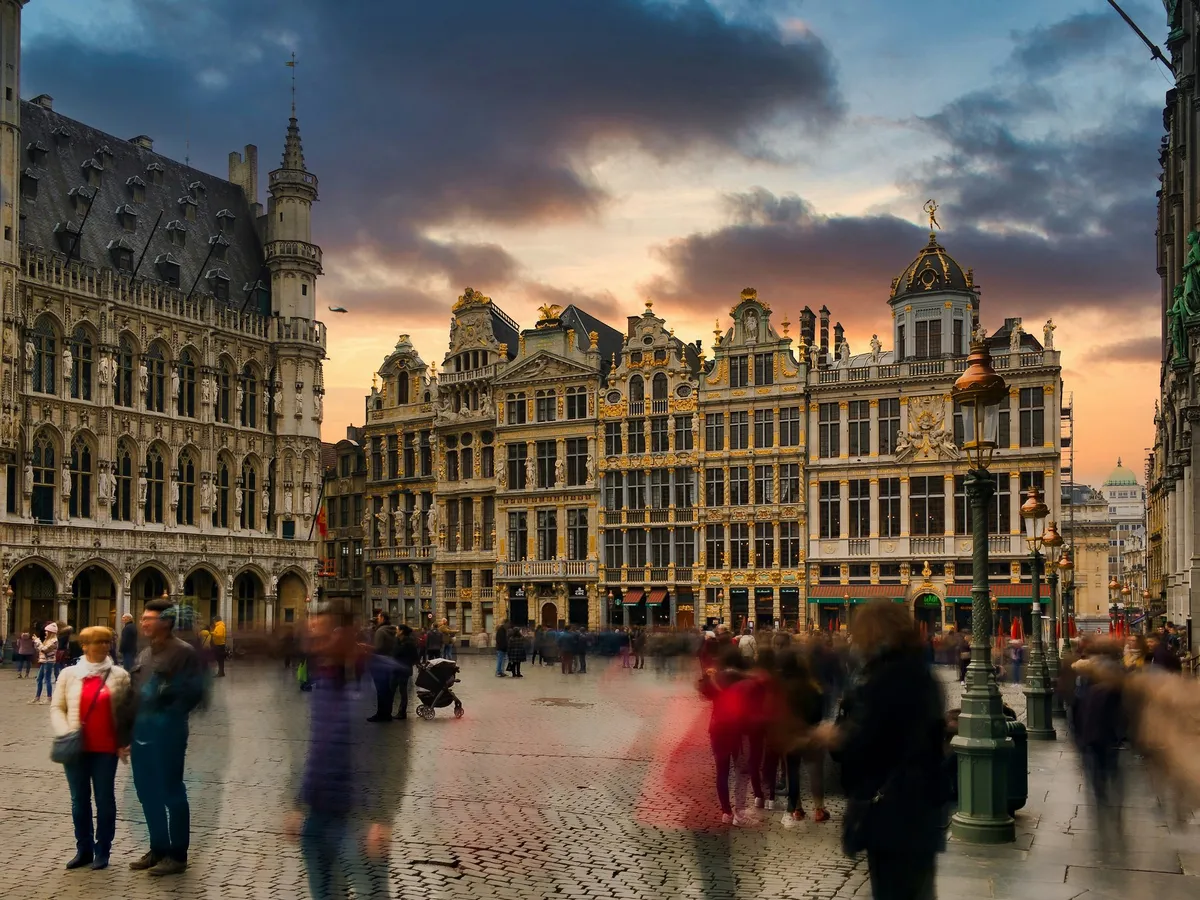
The city's central square is rightfully considered one of the most beautiful in the world. Its ensemble was formed over centuries: it is dominated by the Gothic Town Hall with an openwork spire and the King's House, which now houses the city museum. Of particular note are the Guild Houses with gilded facades and whimsical statues. Each house has its own name – 'The She-Wolf,' 'The Cart,' 'The Fox.' In the evening, the square is illuminated, creating an atmosphere of medieval celebration.
Atomium
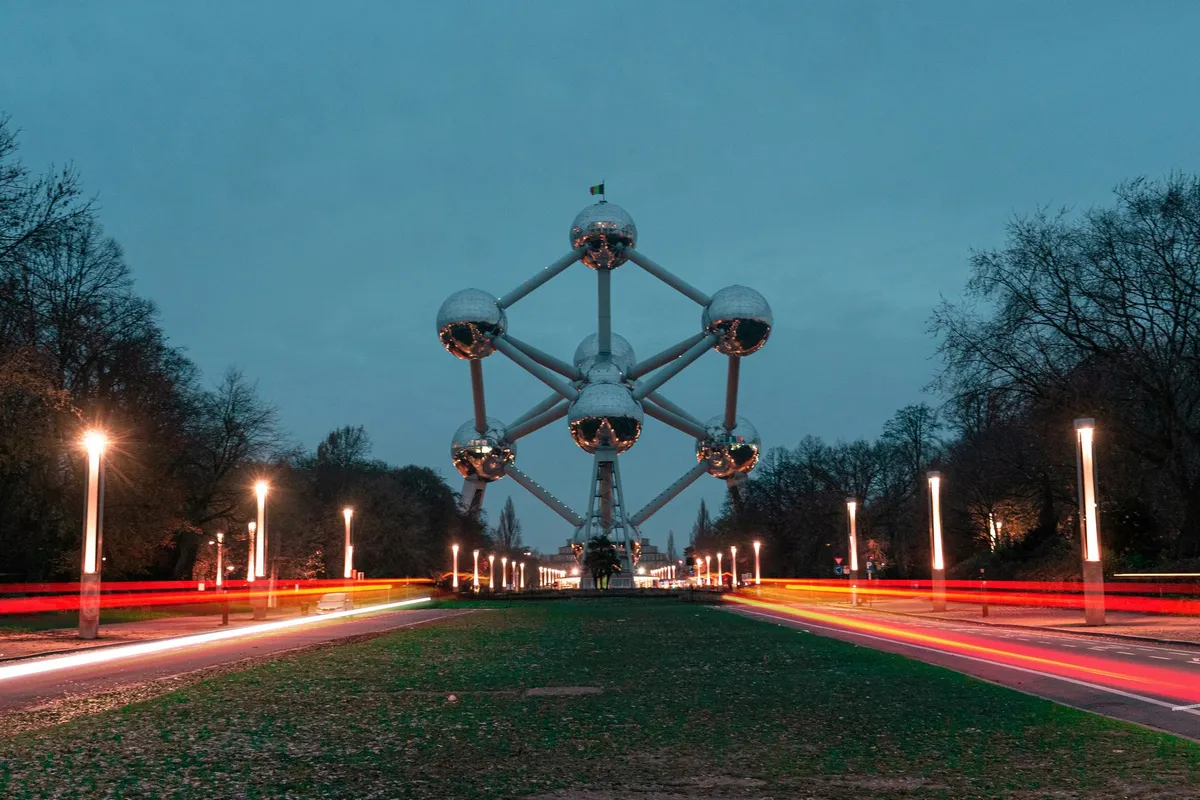
Built for the 1958 World's Fair, the Atomium has become as much a symbol of Brussels as the Eiffel Tower is for Paris. It is a giant model of an iron crystal, magnified 165 billion times. Six of the nine spheres are open to visitors: they house permanent and temporary exhibitions, and the topmost sphere features a panoramic restaurant. Transitions between spheres are made via escalators with futuristic lighting. In 2026, an entrance ticket costs 17 €.
Royal Galleries of Saint Hubert
This is the oldest covered shopping arcade in Europe, opened in 1847. Under its magnificent glass dome are three galleries: the King's Gallery, the Queen's Gallery, and the Princes' Gallery. Here you'll find flagship boutiques of legendary chocolate houses (Neuhaus, Pierre Marcolini), cozy cafes, and theaters. A stroll here is an opportunity to experience the luxury of 19th-century Brussels.
Cathedral of St. Michael and St. Gudula
This majestic cathedral, standing on the Treurenberg hill, resembles Notre-Dame de Paris with its two symmetrical towers. Inside, you'll see stunning 16th-century stained-glass windows and a baroque wooden pulpit. The cathedral is Belgium's main church, where royal weddings and state ceremonies take place.
Musical Instruments Museum (MIM)
Even if you're not a musician, this museum is worth visiting just for its Art Nouveau building, known as Old England. The collection features over 8,000 instruments from around the world. At the entrance, you'll receive headphones that automatically play music from the instrument you approach. The top floor of the museum has a terrace with one of the best views of the historic center. In 2026, admission costs 15 €.
Manneken Pis, Jeanneke Pis, and Zinneke Pis
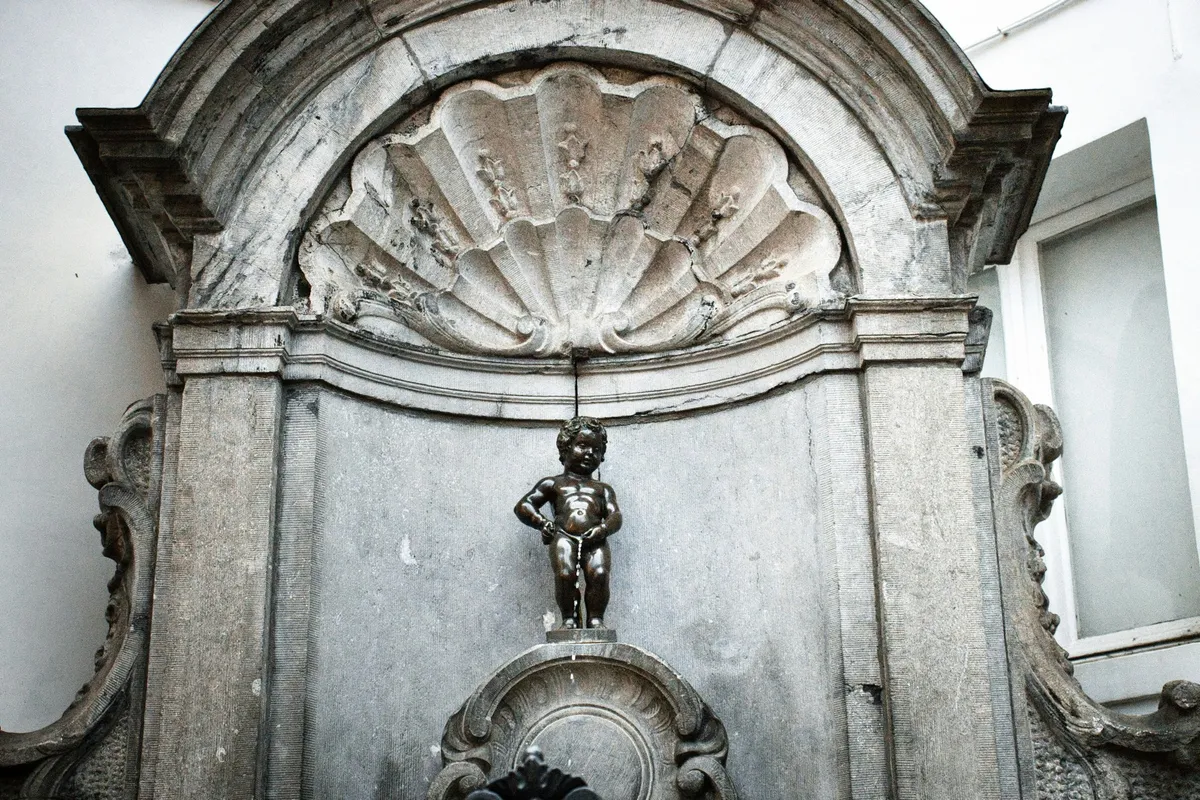
The famous Manneken Pis is a tiny 17th-century bronze fountain statue. Its popularity is phenomenal: the boy has his own wardrobe of over 1000 costumes. But Brussels didn't stop there. In search of 'company' for the boy, find Jeanneke Pis (the peeing girl) and Zinneke Pis (the peeing dog) at the corner of Rue des Chartreux and Rue du Vieux Marché aux Grains.
Cinquantenaire Park
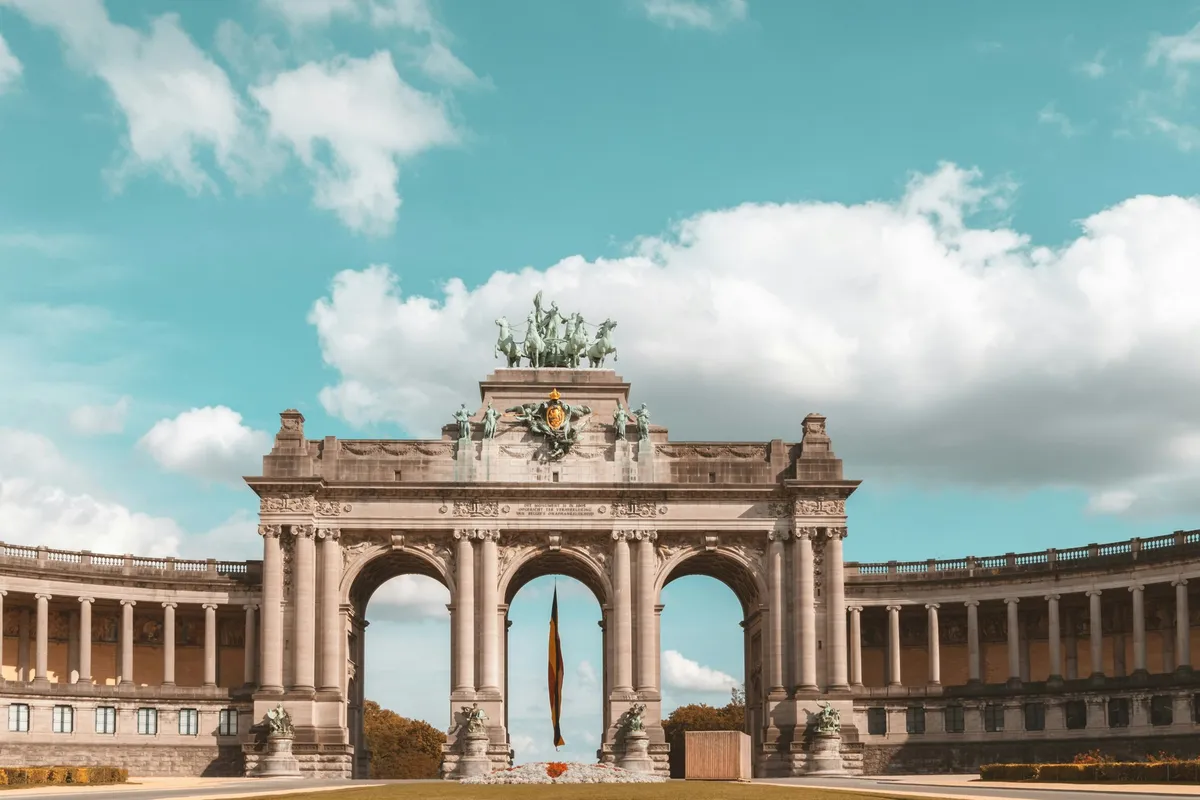
A huge park laid out by King Leopold II. Its centerpiece is the majestic Triumphal Arch. Within the park are three major museums: Autoworld (a vast collection of vintage cars), the Royal Museum of the Armed Forces and Military History, and the Art & History Museum. It's an ideal spot for a leisurely picnic after a long walk.
What to see in Brussels in one day
If time is limited, start with Grand-Place, then walk to Manneken Pis. Stroll through the Royal Galleries of Saint Hubert to the Cathedral of St. Michael and St. Gudula. After lunch, take the metro to the Atomium, and spend the evening in the Saint-Géry area, tasting local beer.
What to see near Brussels
Ghent (30 minutes by train): the medieval Gravensteen Castle and masterpieces by Van Eyck.
Bruges (1 hour by train): a real 'gingerbread' city with canals, where time seems to have stood still.
Leuven (20 minutes by train): a student town with an incredibly beautiful Town Hall in the 'Flamboyant Gothic' style.
Transport in Brussels
Brussels' transport network (STIB/MIVB) is logical and simple, but has its peculiarities that every traveler should know in 2026.
Metro and Premetro. The metro consists of four lines connecting the center with the outskirts. However, in the city center, you will often encounter 'premetro' stations. These are tram lines that go underground and operate exactly like regular metro trains. This is convenient, fast, and avoids traffic jams.
Tap & Go payment system. Forget about queues at ticket counters. You can pay for your fare with any contactless bank card or smartphone. Simply tap your device on the blue validator at the metro entrance or inside a tram/bus. A single journey costs 2,40 €, and the total amount for the day will never exceed 8,50 € (daily limit) – the system will automatically block further charges.
Brussels Card. If you plan to visit many museums, buy this pass (from 41 € for 24 hours). It can include unlimited travel on all public transport in the city. This eliminates the need to think about paying for each trip and gives you free entry to 49 museums.
Trains (SNCB/NMBS). Belgium's railway network is one of the best in Europe. From Brussels, trains to Ghent, Bruges, or Antwerp run every 15-20 minutes. If you travel on weekends (from Friday evening to Sunday), a 'Weekend Ticket' offers a 50% discount on round-trip journeys.
Taxis and bicycles. For short trips, you can use the bike rental service Villo!. The first 30 minutes are free. Taxis in the city are quite expensive, so for savings, it's better to use official apps like Uber or local services.
Where to eat in Brussels
Brussels cuisine is not just a pleasure, but a serious gastronomic experience. Here, it's customary to eat a lot, deliciously, and unhurriedly.
Mussels and fries (Moules-frites). This is the culinary 'face' of Belgium. Mussels are usually served in large black pots, stewed in white wine, cream, or with garlic. In 2026, a portion at Chez Léon will cost approximately 20-25 €.
Fries from kiosks (Fritkot). Forget everything you knew about fast food. Belgian fries are fried twice in beef fat to achieve a perfect crispness. Head to Maison Antoine in Place Jourdan or to Frit Flagey. A portion with sauce costs around 5-7 €. Be sure to order one of the dozens of sauces.
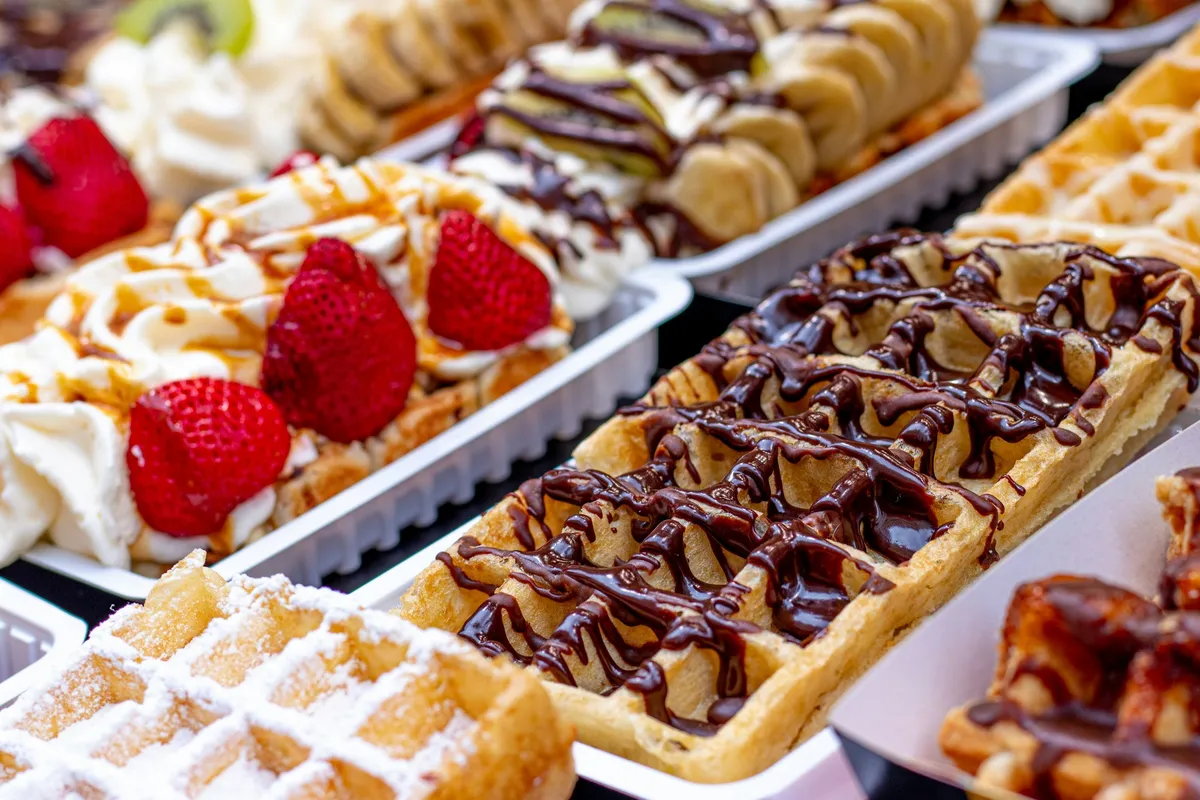
Belgian waffles. They come in two types. Brussels waffles – rectangular, airy, and unsweetened, dusted with powdered sugar. Liège waffles – denser, oval, with caramelized sugar crystals. Find the tastiest ones at Maison Dandoy (around 6-10 € per waffle).
Flemish Carbonnade (Carbonnade flamande). Tender beef stew, simmered for hours in dark Belgian beer. For a classic taste, visit the restaurant Fin de Siècle – it's always lively and very delicious here.
Beer pubs. At Delirium Café there are over 2000 varieties, and in the cozy A la Mort Subite you can enjoy a glass of traditional lambic in early 20th-century interiors.
What to bring from Brussels
Choosing souvenirs in Brussels is a pleasant task, as quality and craftsmanship are highly valued here.
Chocolate and pralines. Belgian chocolate is unparalleled. For a gift, sets from Neuhaus (creators of pralines) or Mary are ideal. If you're looking for 'haute couture' in the world of cocoa beans, pay attention to Pierre Marcolini. A box of chocolates costs from 20 €.
Trappist beer. Authentic beer brewed in monasteries under the supervision of monks. Look for brands like Westvleteren (rare and expensive, around 15-20 € in shops), Rochefort or Orval. You can buy them in specialized stores like Beer Mania.
Comics (Bandes Dessinées). Brussels is the birthplace of Tintin and the Smurfs. A colorful edition in the original language or a character figurine makes an excellent souvenir. Visit the boutique The Tintin Shop.
Lace and tapestries. Brussels lace has been famous for its delicacy since the 16th century. In shops around Grand-Place, you can find handmade fans and napkins.
Speculoos (Spéculoos). Spiced, crispy cookies with cinnamon and ginger. The most aromatic cookies in beautiful tin boxes (from 15 €) are sold at Maison Dandoy.
Brussels is a city of contrasts that doesn't reveal itself immediately but leaves a lasting impression on your heart with its details.