What to see in Astrakhan
 Polina
Astrakhan is a city of contrasts, where the scorching southern sun melts the asphalt, and the coolness of the great Volga brings salvation. It is a place where the golden domes of Orthodox churches stand alongside the minarets of ancient mosques, and carved merchant mansions stand next to the glass facades of modern buildings. Many tourists, asking for the first time “why has Astrakhan become so popular in recent years?”, find the answer not only in the country-famous fishing, but also in its rich history, the unique nature of the delta, and incredible gastronomic discoveries.
In this guide, we will explore what secrets Astrakhan hides behind its white stone walls, what Astrakhan offers an experienced tourist to see besides a fishing rod, and how to plan the perfect trip to the delta of the great river.

How to get to Astrakhan
Astrakhan is located in the south of Russia, in the upper part of the Volga Delta. You can get here in several ways, the choice depends on your budget and available time.
Plane: the fastest and most comfortable way. Astrakhan International Airport named after B. M. Kustodiev receives regular flights from many major cities. A flight from the capital takes only about 2.5 hours (not 3-4, like to many southern resorts). This is the optimal option for those who value time. To start your journey, you just need to buy tickets to Astrakhan on Kupi.com, and in a couple of hours, you will find yourself in a realm of warmth.
Train: for lovers of railway romance, the clatter of wheels, and tea in cup holders. Trains in this direction depart mainly from Paveletsky or Kazansky railway stations in Moscow. Travel time varies from 24 to 30 hours. The branded train “Lotos” is one of the most comfortable options.
Bus and car:bus tours are an option for the resilient, as the journey will take about 20–24 hours in a seated position. Traveling by personal car (distance is about 1400 km) gives you freedom of movement: you can stop in Volgograd, climb Mamayev Kurgan, and enjoy the steppe landscapes of Kalmykia or Volgograd Oblast. The R-22 “Caspian” highway is generally in good condition, but during watermelon season (August-September), be prepared for heavy traffic from trucks carrying melons.
When to go to Astrakhan and what about the weather
The climate in Astrakhan is sharply continental and arid. This means that summers here are scorching, and winters can be piercingly windy, although snow does not fall every winter. When choosing the time for your trip, it is important to consider seasonal features so as not to spoil the impression.
Spring (April – May): the time of nature's awakening and the start of the tourist season. In April, the famous vobla run begins – a cult event for fishermen from all over the country, when fish can literally be caught on a bare hook. In May, the steppe is covered with a scarlet carpet of blooming poppies and wild Schrenk's tulips. The air temperature is comfortable: +15…+25°C. If your goal is to see the blooming steppe and fish without exhausting heat, spring is ideal.
Summer (June – August): summer in Astrakhan is a test of endurance that divides tourists into two categories.
- June: the most difficult month. During this time (usually from late May to June 20th), midges emerge. These are small, annoying insects that ordinary sprays don't help against (locals use vanilla solution or clove oil). It's difficult to be outside without special clothing and a net. It is not recommended for regular tourists to visit in June.
- July and August: the time of real southern heat. Temperatures often rise above +35°C, and sometimes up to +40°C in the shade. However, this is the best time for beach holidays on river spits, swimming in the warm Volga, and, most importantly, the lotus blooming season.
Autumn (September – October): “velvet season”. The heat subsides to a pleasant +25°C. The river water is still warm, markets are overflowing with cheap watermelons, melons, grapes, and tomatoes, and fishing becomes especially productive for predators (pike, zander). This is the best time for sightseeing and city walks.
In winter, ice fishing enthusiasts come here. The weather is unpredictable: it can be freezing rain or -20°C frost with strong steppe winds.
Astrakhan Attractions
Astrakhan – what to see first? Of course, its historical center. The city has preserved the spirit of merchantry and multinational flavor that has been formed over centuries.
Astrakhan Kremlin
The main gem of the city and a unique example of 16th-century Russian defensive architecture. Unlike many other Russian Kremlins built of red brick, Astrakhan's is white-stone. It is located on an island (historically called Zayachiy Bugor, or Hare's Hill), which made it an impregnable fortress.
- Prechistenskaya Bell Tower: the city's calling card. The 80-meter tower, visible for kilometers, rises above the main gates. It has a visually noticeable lean, which is why it is often called the local “Leaning Tower of Pisa”.
- Assumption Cathedral: a majestic cubic temple connected to the Lobnoye Mesto (Place of Skulls). Its domes and rich decor are admirable, and inside, a unique eight-tiered iconostasis has been preserved.
- Trinity Cathedral: part of the monastery complex, more strict and ascetic, preserving the spirit of antiquity.
- Lobnoye Mesto: a unique architectural monument. This is one of the few surviving Lobnoye Mesto in Russia, and the only one located inside the Kremlin walls, not outside.
- Artillery Yard and Torture Tower: here you can learn about the harsh military history of the garrison, see ancient cannons, and visit gloomy casemates.

Petrovskaya Embankment (Volga River Embankment)
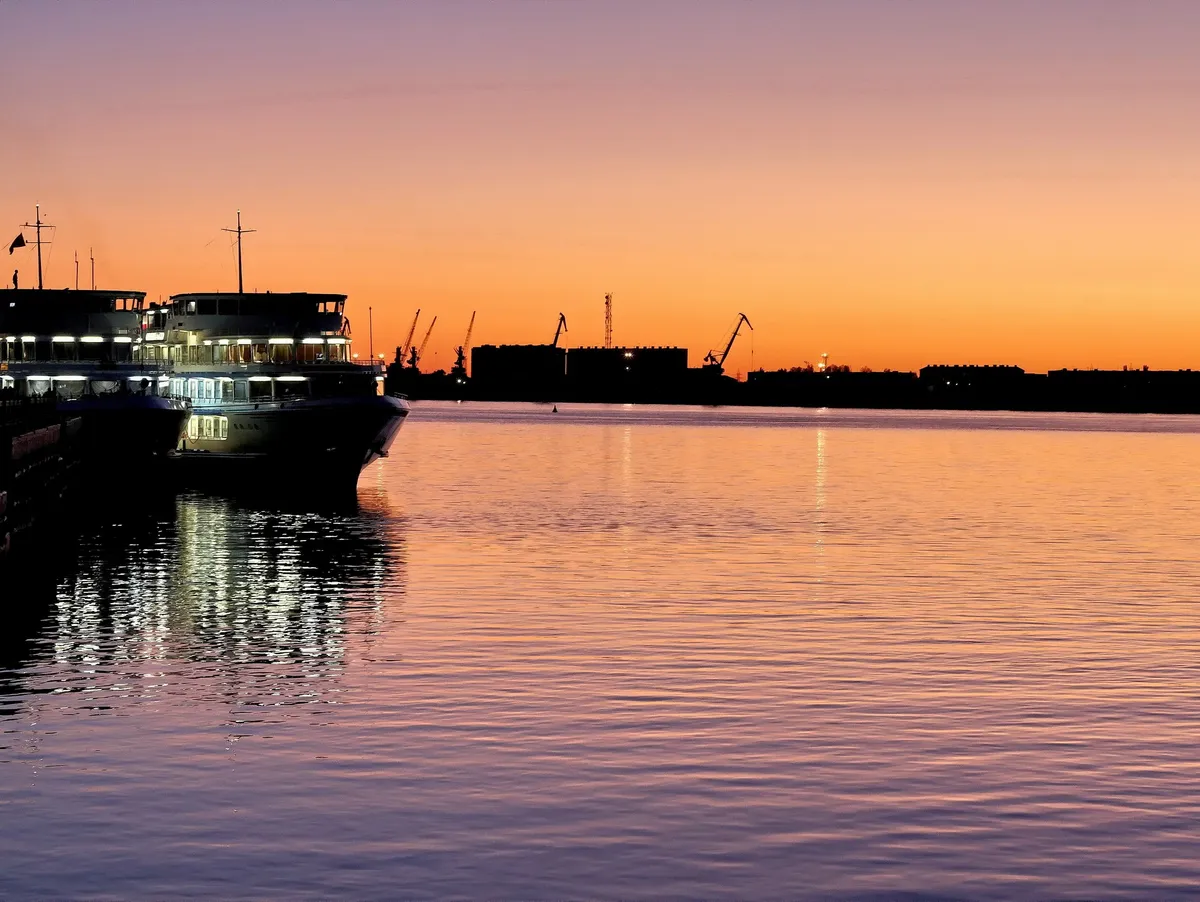
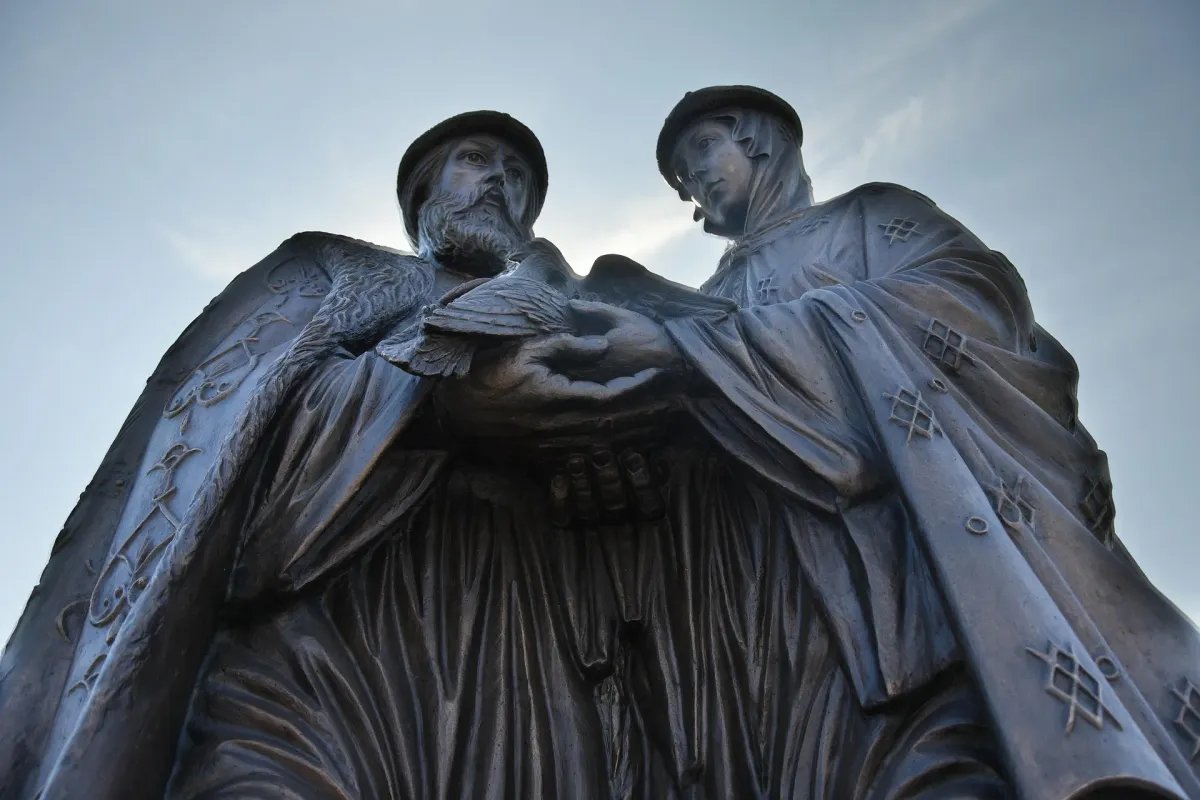
The long and well-maintained promenade area is the main place for evening strolls for locals and tourists. The embankment is adorned with fountains (“Petrovsky”, “Dandelion”), interesting sculptures (“Lady with a Dog”, “Shoe Shiner”), and cozy recreation areas. From here, a panoramic view of the wide Volga and passing ships opens up. In the evening, it is especially atmospheric: lights turn on, street musicians play, and summer cafes operate. It is here that you will feel that Astrakhan is a southern city on the water.
Nikolskaya Street
Formerly “Bank Street”, and now a true open-air architectural museum. Here, luxurious buildings from the 19th – early 20th centuries have been preserved, featuring intricate cast-iron balcony railings, rich stucco, and massive oak doors. A stroll along Nikolskaya transports you to the times of prosperous merchants, fish industrialists, and shipping company owners. This street often serves as a backdrop for film shoots.
Merchant Tetyushinov's House
A real fairy-tale terem (traditional Russian wooden palace). This is one of the best examples of Russian wooden architecture in the entire Volga region. The house was built by merchant Grigory Tetyushinov in 1872 as a summer residence. Now it is an interactive museum and cultural center. Staff in 19th-century costumes will greet you, conduct a theatrical tour, tell you about the life of a merchant family, and treat you to tea.
Swan Lake
A picturesque natural reservoir in the very center of the city, formed after the change in the Volga's course. The lake lives up to its name – mute swans indeed live here, which you can feed. A cozy park, a favorite recreation spot, is laid out around the lake. In winter, when frosts hit, the lake turns into the city's largest natural ice rink.
Opera and Ballet Theatre
A huge, monumental building, constructed in 2011 in a pseudo-Russian style with Art Nouveau elements. Its scale and architecture provoke debate, but this palace of arts leaves no one indifferent. The theater is considered one of the most technically equipped in Europe and is a new architectural dominant of the city. A beautiful Theater Park is laid out around it, where it is pleasant to walk before a performance.
Historical Courtyards
For centuries, Astrakhan was a trade crossroads of the Silk Road. Historical courtyards of foreign merchants have been preserved here: Persian, Armenian, Indian. These are enclosed stone complexes of buildings with internal galleries and arcades, where warehouses, shops, and merchants' residences were once located. Although now they often house ordinary apartments or offices, the spirit of an Eastern caravanserai is still felt.
Local Lore Museum
One of the oldest regional museums in Russia. Be sure to visit the “Sarmatian Gold” exhibition – a unique collection of gold jewelry and household items of ancient nomads found in Astrakhan kurgans. The “Living Past of the Earth” exhibition, featuring stuffed mammoths and giant bison that lived here thousands of years ago, also generates great interest.
What to see in Astrakhan in one day
If you only have one day to understand this city, follow this proven itinerary:
- Morning: start with the Astrakhan Kremlin. This is the base. Climb the walls (battlements), visit the Assumption Cathedral, and take photos against the backdrop of the leaning bell tower. The tour will take about 2-3 hours.
- Lunch: exiting the Kremlin through the Prechistenskiye Gates, walk along Sovetskaya or Akhmatovskaya Street. Visit a local cafe to try real Astrakhan ukha (fish soup) made from three types of fish or fish dumplings.
- Day: stroll along the beautiful Nikolskaya Street down to the Volga. Admire the architecture. Then take a taxi to the Merchant Tetyushinov's House (or walk for about 20 minutes) to see the wooden lace.
- Evening: head to the Petrovskaya Embankment. This is the ideal place to watch the sunset. Be sure to take an hour-long river tram ride to see the city panorama from the water. End the day with dinner at one of the riverside restaurants (on a landing stage), enjoying the river's coolness.
At this pace, you will manage to cover everything that needs to be done in Astrakhan first, without getting too tired from the southern sun.
What to see in the surroundings of Astrakhan
The most important treasures of the region are located outside the city limits. The nature of the Astrakhan region is unique and sometimes resembles another planet or scenery for a fantasy film.
Lotus Fields (Volga Delta)
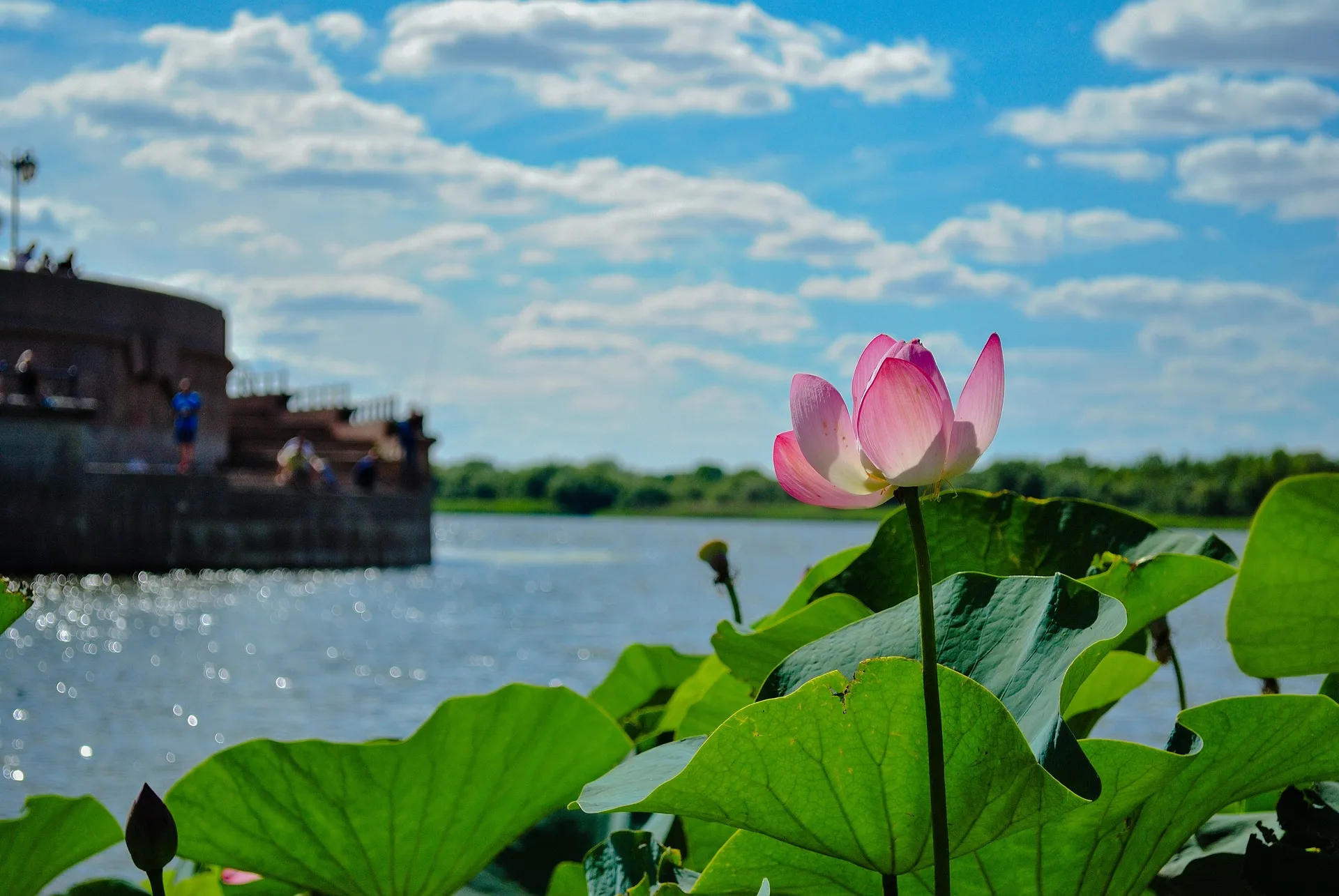
This is the main tourist brand of the region. From mid-July to September, the Volga Delta transforms into a blooming garden. Here are some of the world's largest fields of wild lotus (Caspian rose). These are not just flowerbeds, but hectares of flowers stretching to the horizon, among which you can boat.
- How to get there: only with a guided boat tour. Tourist bases organize trips.
- What to do: breathe in the sweet aroma, take stunning photos, and observe birds (white-tailed eagles, herons, swans live here).
Sarai-Batu (Selitrennoye Gorodishche)
140 km from Astrakhan, in the desert steppe of the Kharabalinsky district, stand the clay walls of an ancient city. This is a large-scale reconstruction of the Golden Horde capital. The sets were built for the historical film “The Horde”, and after filming, it was decided to preserve them and turn them into a tourist complex. Clay houses, narrow winding streets, a water supply system, the Khan's palace – here you can feel like a resident of a medieval metropolis. Nearby are real archaeological excavations of the ancient settlement.
Lake Baskunchak and Mount Bolshoye Bogdo
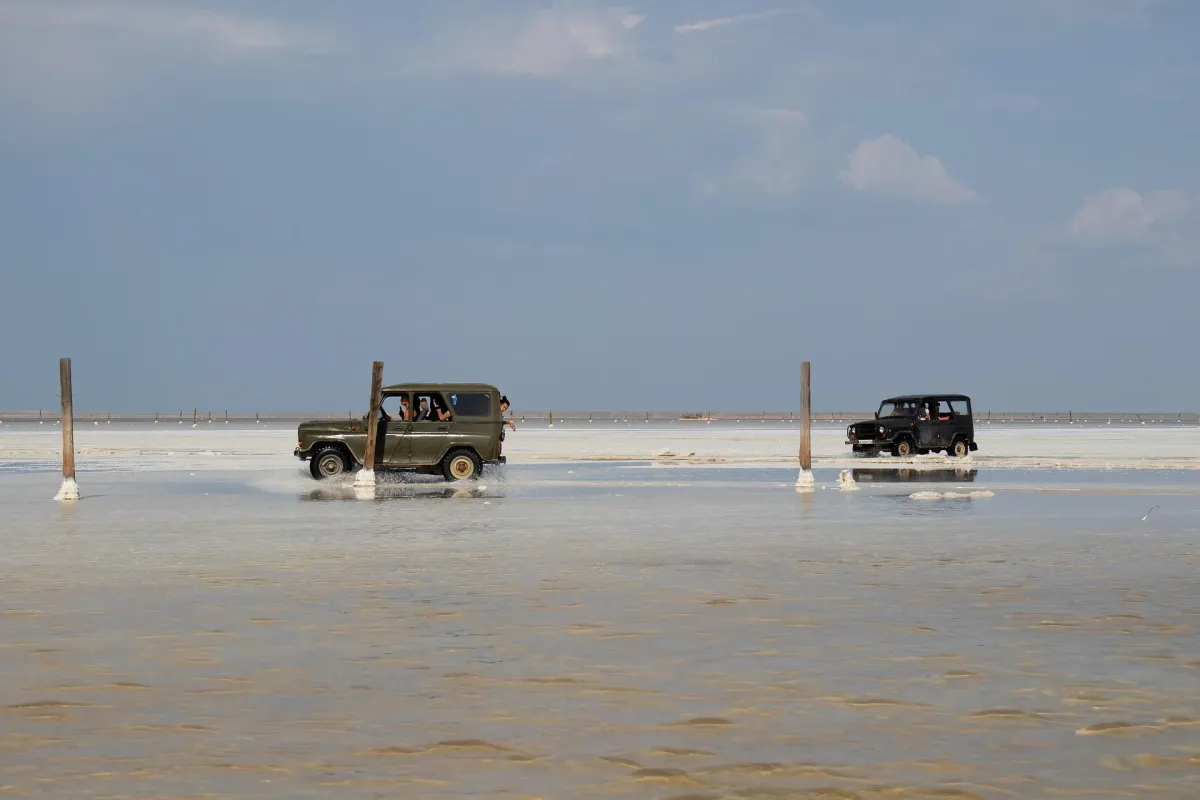
This is Russia's “Dead Sea”. A salt lake where it's impossible to drown – the water is so dense that it pushes the body to the surface.
- Baskunchak: 80% of all Russian salt is extracted here. The landscape is cosmic: a snow-white salt crust, a blue sky, and train tracks laid directly across the lake for salt removal.
- Mount Bolshoye Bogdo: a sacred mountain for Kalmyk Buddhists. This is the highest point of the Caspian Depression, which grows annually due to the salt dome inside. The mountain is red due to clay and “sings” in the wind because of numerous caves. Rare tulips bloom here in spring.
Sturgeon Farms
Since wild sturgeon fishing in the Volga is strictly prohibited (moratorium), the legendary “tsar-fish” can only be seen on special farms. You will be shown the process of cultivating beluga and sturgeon, allowed to feed the fish, and, of course, offered to taste legal black caviar and hot-smoked balyk.
Transport in Astrakhan
The city's transport system has its own peculiarities, which tourists need to be prepared for.
- Taxi: the most convenient and affordable way for tourists. Prices in Astrakhan (Yandex.Taxi, Uber aggregators operate) are significantly lower than in the capital. A trip around the center can cost 150-250 rubles. This saves time and nerves in the heat.
- Buses and Marshrutkas: the network is developed, but marshrutkas (the main mode of transport) are often overcrowded, especially during peak hours.
- River transport: during the navigation season, “Moscow” river trams operate, connecting the city with dacha settlements on the islands and serving as an excellent and inexpensive entertainment for tourists.
If you want to visit Baskunchak or Sarai-Batu independently, it is better to rent a car or book an organized transfer, as public transport there is infrequent and takes a long time.
Where to eat in Astrakhan
Astrakhan cuisine is a vibrant mix of Russian, Tatar, Caucasian, and Asian traditions, but the queen of the table here is, undoubtedly, fish.
What to try:
- Ukha: real Astrakhan ukha is cooked from several types of fish (sturgeon, zander, carp), often over an open fire, and has a rich flavor.
- He from pike or zander: a legacy of Korean cuisine, firmly integrated into the local diet. This is marinated raw fish with vinegar, onions, and spices.
- Fish pies: with catfish, carp, or viziga (sturgeon chord).
- Balyk: dried or smoked fillet of fatty fish (sturgeon or catfish).
- Noodle soup (Tutmach): a thick noodle soup, often served with a fermented milk dressing.
Establishments:
- Restaurant “Shchuka” (Pike): a flagship establishment with high-end fish cuisine, stylish interior, and an emphasis on local products (caviar, sturgeon).
- “Cult Bar”: a popular spot for young people with delicious burgers, cocktails, and a lively atmosphere.
- Cafe “Izba”: traditional Russian cuisine, excellent dumplings and borscht in a wooden log cabin interior.
- Fish Market “Selenskiye Isady”: this is not a restaurant, but a cult place. Here you can buy ready-made hot-smoked fish (still warm!) and eat it with bread – tastier than any delicacy.
What to bring from Astrakhan
Shopping in Astrakhan is, first and foremost, a gastronomic adventure. Magnets and souvenir plates take a back seat here.
- Fish: vobla (the region's main brand), smoked catfish, zherekh balyk, pike caviar. It's best to buy at the “Selenskiye Isady” market or in branded stores where fish can be vacuum-packed.
- Black caviar: buy only in official stores or at sturgeon farms. Be sure to get a receipt and a veterinary certificate – this is important for air travel.
- Astrakhan watermelons and melons: if you are by car – take them with you. If by plane – buy “watermelon honey” (nardek) or watermelon rind jam.
- Caspian cosmetics: creams, soaps, and masks containing caviar or therapeutic mud from Lake Baskunchak.
- Wicker products: made from chakan (lake reed) or cattail. Baskets, hats, bast shoes, bags – a traditional local craft.
- Mustard oil: Astrakhan Oblast and neighboring Volgograd are centers of mustard production. Sarepta oil has a unique taste and is very healthy.
Answering the question “What impressions does Astrakhan leave?”, one can say unequivocally: bright, hot, and very tasty. Regardless of whether you came for a trophy catfish, a perfect shot among lotuses, or the history of the Golden Horde, this city will find something to surprise you with. The main thing is to choose the right season and tune into a special, unhurried southern rhythm of life, where no one is rushing anywhere.