Toilet on a plane: everything you wanted to know about it
We tell you what they used to be like, where waste goes (no, it's not dumped into the sky), and what toilet problems every passenger should be wary of.
Historical background: what toilets were like on old planes
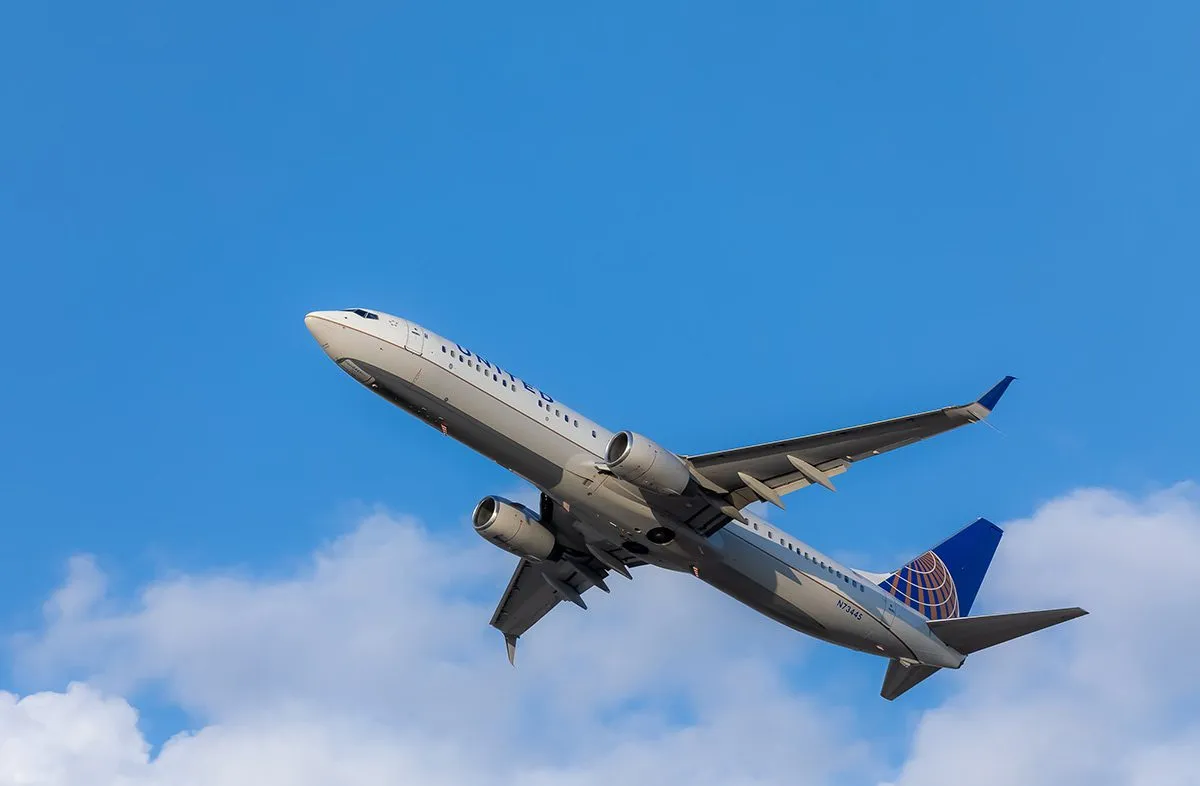
Planes of the last century, naturally, were less comfortable. And their toilet rooms — too. Fifty years ago, they were built with open waste disposal systems. That is, yes, after flushing the toilet, its contents went into the air. At an altitude of several thousand, the liquid turned into ice and fell to the ground. Cases of such falls were recorded even in the 2000s. For example, in Spain during these years, a piece of ice with feces weighing a total of 4 kg fell on a car. And in 1998, waste fell on a fisherman in Germany. At that time, an A320 plane was flying over him.
Gradually, aircraft sewage systems improved, and finally, aviation engineers achieved mechanisms such that no waste enters the air before landing.
How is the toilet on board arranged today?
Toilets, or as they are also called — lavatories — on planes are usually small. Every centimeter of the aircraft counts, so there's no possibility of making spacious bathrooms.
In every plane, the toilet is arranged identically: it has plumbing, sewage drains, a toilet, a sink, a trash can, and a fold-down changing table attached to the wall.
Water in the airplane toilet comes from special tanks. They are filled with liquid in advance. And the pressure under which the water actually flows is provided by compressor units.
In addition, each toilet has a special sewage system. What kind exactly depends on the fuselage parameters. It differs for all aircraft models.
How many toilet rooms are there on planes?
The number of toilet rooms on board an aircraft highly depends on its model. Some may have three, some five, and some even eleven. For example, in the double-deck Boeing-747. Two toilets on board are located at the front of the cabin, four — in the middle, two — at the back, and three more on the upper deck.
However, the Boeing-767 has only 5 toilet rooms. One — for business class, two — between business and economy class. And two more at the back of the economy cabin.
It's impossible to get lost on a plane and not find a toilet. They are usually always located at the rear of the aircraft.
Toilet operating mode on board
The toilet can be used during the flight, but never during takeoff and landing. There is an increased risk of falls, bruises, and other injuries that a passenger may sustain if not buckled in and seated.
Where does the waste go?
Of course, modern aircraft are equipped with bio-toilets, where waste is processed using special molecular agents. The sewage system has a sealed tank into which waste from the toilet and sink flows through pipes. Liquid accumulates there throughout the flight. Dirty water is not discharged into the sky.
Many airliners have a system that purifies water. It works like this: first, the toilet tank is filled with clean water, after flushing, the dirty liquid goes into another compartment where it is purified by filters and then returned.
Waste from the aircraft is drained into a special vehicle after landing. When passengers disembark, it approaches the plane, connects to it with a special hose, and sucks out the contents of the tanks.
What toilet problems can arise on a plane?
The most common problem — is a clogged sewage system. Unfortunately, not all passengers follow the rules and try to flush solid waste (personal hygiene products, wet wipes, diapers) and food scraps down the toilet. As a result, the former swell in the sewage system and clog it. Using such a toilet is prohibited until the end of the flight.
What hygiene products are available in the airplane toilet?
Flight attendants monitor the cleanliness and convenience of the toilet rooms. They also ensure that all necessary hygiene products are available in the lavatories. Situations where they run out on board will not happen.
Every airplane toilet must have liquid soap, toilet paper, paper towels or napkins, and an antibacterial agent.
How to properly use the toilet on a plane?
First, it's worth remembering how to tell if the toilet room is vacant. A green light on the display or handle means the toilet is empty. Red — means it's occupied.
To flush the toilet, you need to use a special button on the wall. But don't forget to lower the lid beforehand. Otherwise, the vacuum system will not work properly.
Water flows from the tap if you press it from above. This is how airplanes try to control water consumption.
The toilet can only be used during the flight, but with the exception of takeoff and landing. During these moments, passengers must remain in their seats and be fastened with seat belts.
What is forbidden to do in airplane toilets? One point might surprise you.
- smoking Due to smoke on board, the fire alarm system will be triggered. It will take time to ascertain the causes and find the culprit, and at that very moment, passengers will start to panic. Moreover, smoking on a plane is subject to administrative punishment;
- standing on the toilet seat with your feet;
- flushing solid waste down the toilet is also prohibited. They swell in the sewage system and disrupt its operation. Use the trash can;
- do not flush the toilet with the lid open! This way, vacuum systems work better and faster.