Koh Samui: Main Attractions
Samui is one of the main islands of Thailand, which locals call Coconut Island. Previously, the island thrived on exporting these fruits, but now it's a true tourist paradise. We'll tell you why to come here, what to see and how to get the most out of your trip to Samui.

When to go to Samui
The best season to travel to Samui is winter, specifically January and February. During this time, the air temperature stays around +30 degrees Celsius, and the water warms up to +28.
In spring, on Samui, it's very hot, with air temperatures rising up to +40 degrees Celsius. If you're afraid of the scorching sun, it's better to avoid traveling during this time. For everyone else, it's a great season to save money: hotel and accommodation prices drop significantly.
From June to September, it's also good: the heat subsides, air temperature warms up to +33 degrees Celsius, and water to +29. This is probably the best option for a budget vacation: there aren't many tourists here at this time.
From September to December, on Samui, it's rainy season. It rains especially heavily in November, waves rise in the sea, and water floods the roads. It's a thrill for extremists, but not so much for others.
To summarize, the most resort-like time is winter; many tourists come here during this season. But if you want to save money and have a good rest, you can choose the period from June to September.
How to get there
Samui has an international airport that mostly handles flights from local airlines from Bangkok. This means you'll likely have to fly with a layover. Here's a life hack: it's better to book a flight on Kupi.com with a stopover in Bangkok, take a walk and see the local attractions, and then head to Samui. You can always buy tickets at favorable prices on our website.
Before your trip, be sure to familiarize yourself with the entry rules for Thailand.
What to see on Samui
Big Buddha
A huge gilded 12-meter Buddha statue, visible right as you approach the island. But to understand its grandeur, you need to visit the temple complex. Big Buddha is located on a small islet not far from Samui. Also, near the statue, there are souvenir shops where you can buy singing bowls and jewelry.
The temple complex is open from 7:00 to 18:30, admission is free.
Wat Plai Laem
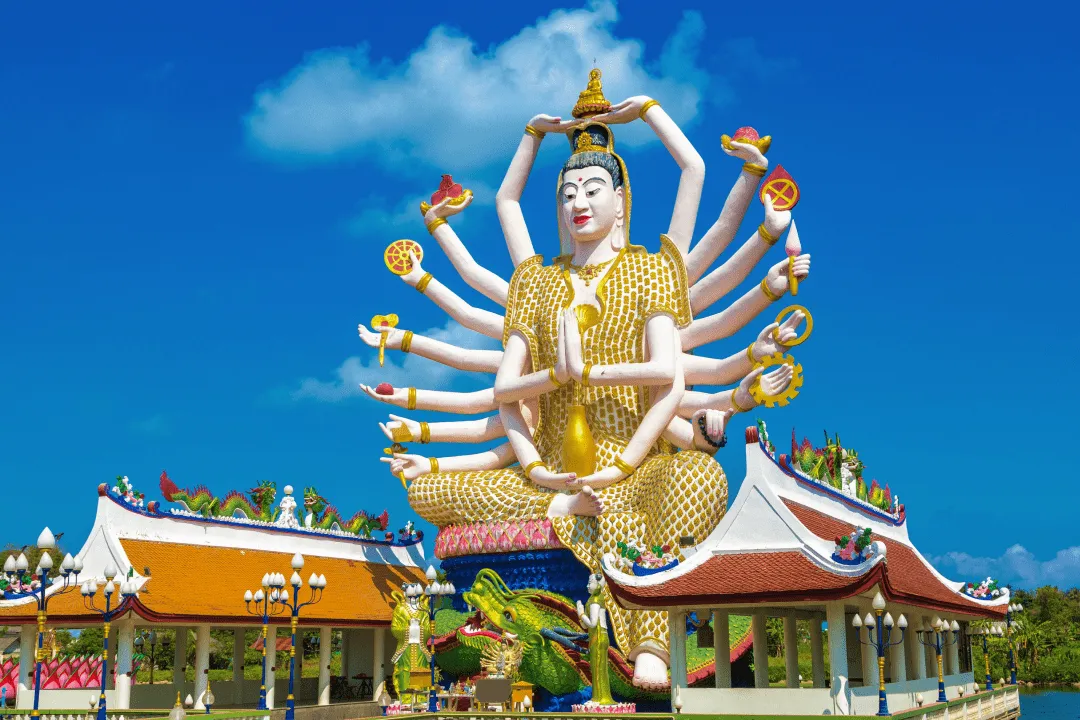
Immediately after Big Buddha, head to another temple complex located very close by. Here you can see statues of Chinese deities: the Goddess of Mercy Guanyin, the Laughing Buddha, and huge Naga snakes. Also, near the temple, there is a pond with sacred fish — carp, which you can feed for a small fee.
Fisherman's Village
If you're hungry, you definitely need to stop by Fisherman's Village on Bo Phut beach. Fishermen used to live here, but now it's a street with cafes and souvenir shops. At night, a night market is set up here, and sometimes musicians play.
Here you can try Thai cuisine and dishes made from fresh seafood. Local favorites include grilled squid and coconut ice cream.
Central Festival
A large shopping mall where you can stock up on branded clothing at favorable prices. Plus, there's a cinema showing films in English, plenty of cafes, and areas for children. A great place to catch your breath and take a break from the Asian vibe.
Lad Koh Viewpoint
Come here if you want beautiful and memorable photos against the backdrop of the sea and cliffs. The viewpoint is located between Chaweng and Lamai beaches. You can also go down to the sea and admire the waves. Admission to the viewpoint is free.
Crystal Bay
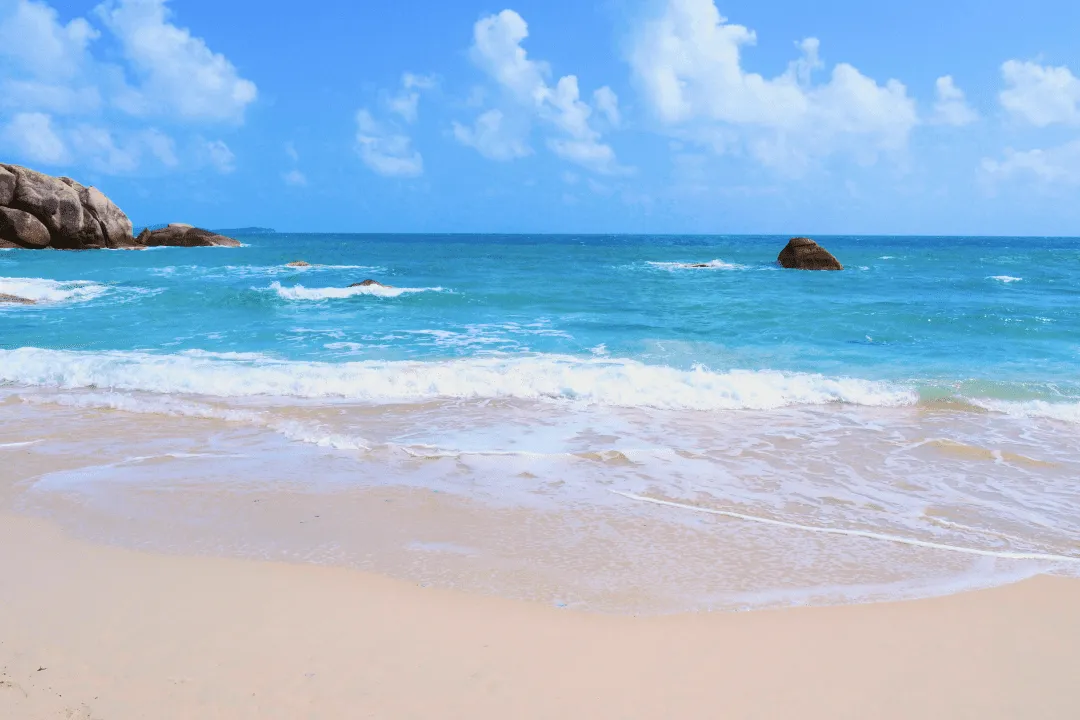
Next to the hotel of the same name, there is a small bay with white sand and crystal clear water. Here you can go diving, snorkeling and see cute fish. Life hack: there are most of them near the rocks far from the shore.
The beach is open and free.
Tarnim Magic Garden
A magical garden built by the Samui farmer Nim Thongsuk, who loved growing durian — a tropical fruit with a very unpleasant smell (it's even forbidden to transport it on planes). Towards the end of his life, the farmer decided to build a garden in honor of Buddha. Now it's an interesting place by a waterfall, lost in the jungle.
Describing Tarnim Magic Garden could take a long time, but it's better to see everything with your own eyes. You can get to this garden independently by car or scooter, or with a tour.
Grandfather and Grandmother Rocks
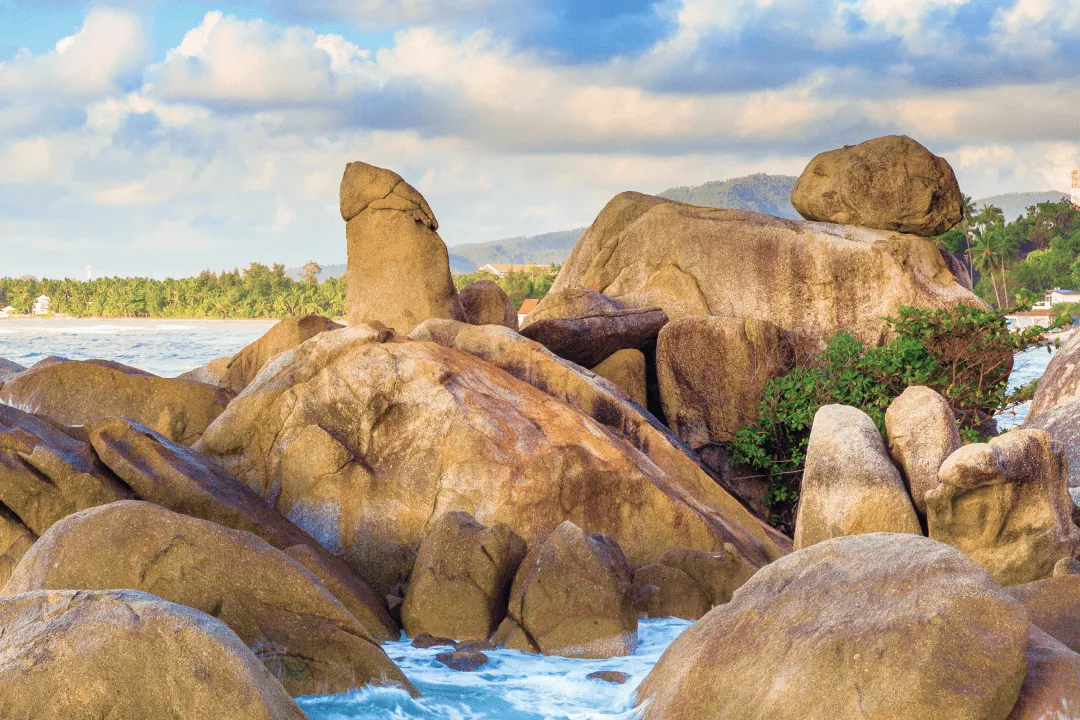
Two rocks that would certainly have interested Grandpa Freud with their appearance. According to legend, an elderly Thai couple, who set out to find a bride for their son and got caught in a storm, perished here.
Besides the unusual rocks, there's an amazing view of the sunrise from here.
Wat Sila Ngu
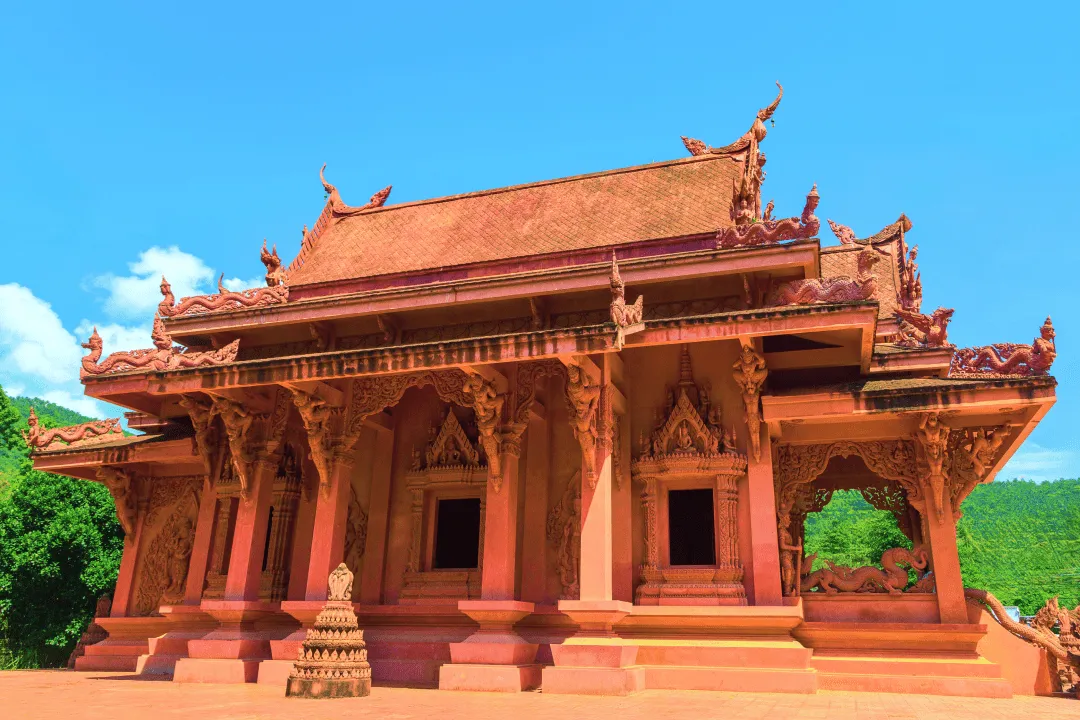
One of the main temples of Samui, where ancient Buddhist relics are kept. The complex features a viewpoint and a staircase adorned with snake sculptures.
Guan Yu Shrine
A temple built by descendants of Chinese immigrants from Hainan Island. The central figure of the entire complex is a giant statue of General Guan Yu, renowned for his bravery, wisdom, and honesty. If you want to connect with a historical figure and learn about Chinese culture, this is the place for you.
By the way, in our blog, we talk more about Thailand. For example, about the attractions of Phuket.
How to get around the island
On Samui, as everywhere in Thailand, mopeds and scooters are very popular. Renting a bike for a day will cost about 200 baht or 500 rubles, for a month — 4,000 baht or 10,000 rubles. You can rent a moped almost anywhere on the island, but they are most often rented out in the busiest areas.
For rental, you will need:
– a contract with terms of use;
– a deposit: passport, driver's license, or several thousand baht.
If you rent bikes, be sure to take photos before/after to avoid overpaying for repairs later.
Also, on the island, there's the online taxi service Grab — install the app upon arrival. One trip usually costs between 200 and 300 baht.
Also, on Samui, motorcycle taxis are popular — they'll give you a breezy ride for 200 baht. Look for drivers in yellow reflective vests with the word 'Taxi'.
What to eat
If you've never eaten Thai food, get ready: this country has a lot to surprise you with. It will be spicy, delicious, and very hot. You definitely need to try traditional food: tom kha from coconut milk, spicy soups, traditional Thai green curry, or pad Thai noodles.
We've compiled a list of top establishments with Thai and European cuisine for you:
– Amazon. A cozy beachfront cafe where you can refresh yourself after visiting the Guan Yu Shrine. They have excellent cold coffee, homemade lemonades, and more. The main advantage of the place is a great sea view;
– Cafe K.O.B. Another beachfront establishment with excellent European breakfasts. The main highlight is poached egg with avocado and salmon. Perfect for those who are tired of the variety of Asian cuisine and want to try something familiar;
– 2 Fishes. The best place to try fresh fish and seafood. Plus, they'll pair the perfect wine with each dish;
– Nathon Pier Night Market. A pleasant and budget-friendly place for a traditional Thai dinner. There's a huge selection of food here — from skewers to desserts.
What to bring back
Medicines and cosmetics
Thai cosmetics are inexpensive but effective. And not only tourists take them home, but also particularly enterprising businessmen for resale. You can find medicinal ointments, popular pharmaceutical products, and cosmetics in any Thai pharmacy or supermarket.
Coconut oil
A very popular item that can be found in almost any souvenir shop. There are options for coconut oil labeled 'Extra Virgin', which can be added to food. If there's no such label, then it's cosmetic oil.
In fact, coconut oil in Thailand is purely a tourist product; locals don't particularly like it.
Soap
A useful and inexpensive souvenir that you can bring to colleagues. On Samui, there is soap in the shape of mango, coconut, banana, and other fruits. The most popular is in the shape of a flower.
You can also find medicinal soap that reduces skin inflammation. It can be bought in almost any store.
Tinctures
In Thailand, they make absolutely wild tinctures with alcohol-preserved scorpions, snakes, and other reptiles. Locals believe that such tinctures boost immunity and enhance potency. They look very exotic — suitable as a 'shock' souvenir.
Tea
Blue tea is one of the calling cards of Thailand and a very popular souvenir. If you want to surprise your loved ones, be sure to grab a few packs. Besides this, they also sell popular milk oolong with additives: mango, coconut, pineapple. In souvenir shops and pharmacies, you can find tea in beautiful packaging for a relatively low price.
In our blog, we tell you more about what you can bring from Thailand.
What traditions you should know
Thailand is a very colorful country with its own cultural peculiarities. To avoid problems and not upset locals, you need to know the traditions and etiquette:
– dress code. If you decide to visit local temples, your knees and shoulders must be covered. Also, you need to take off your shoes when entering a shrine;
– show respect to Buddhism, local monks, and the royal family. Disrespect can land you in jail, so be careful with that;
– women should not speak to monks;
– no touching. In Thailand, touching during a conversation is considered impolite;
– learn the 'Wai' gesture. It's a bow with hands clasped together at the chest. It symbolizes respect or gratitude. If someone thanks you with this gesture, respond in kind;
– no hugs or kisses in public.
Don't put life off — Samui is already waiting for you! You can always buy affordable tickets on our website.
Also, in the blog, we tell you where else to go in Thailand. And if you want to learn about another paradise, read about where to relax in Goa.