I love planning vacations within 50 thousand rubles, but the trip to Italy turned out to be even cheaper, which is surprising. 10 days of travel, 6 cities, mountains, sea, the search for the perfect lasagna, and an escape from noisy Rome cost 40,000 rubles. I started preparing for the trip a month to a month and a half in advance. It would have been even cheaper if I had bought tickets immediately instead of waiting for price drops that never happened. The itinerary included these cities: Verona, Riva del Garda, Bolzano, Venice, Rome, Ostia.
Why I went
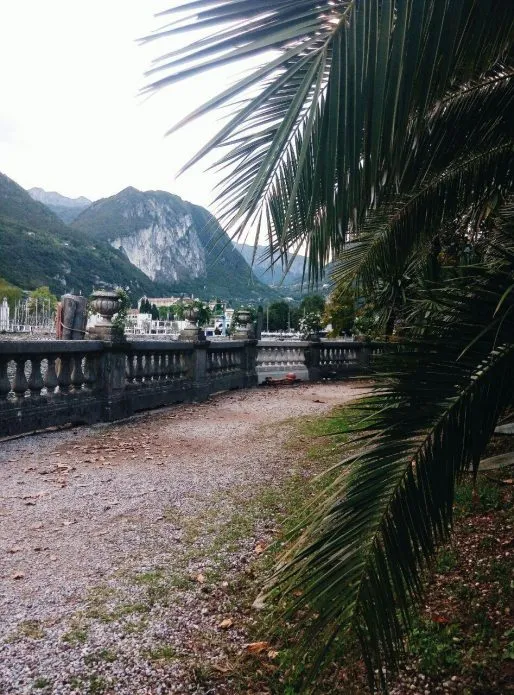
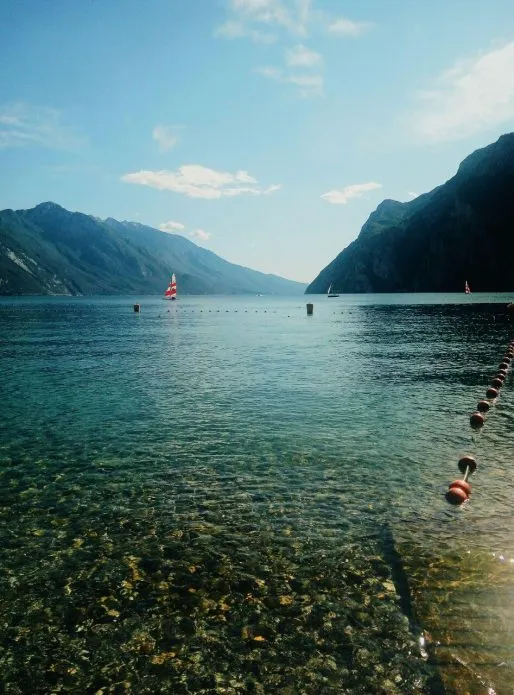
My main goal in Italy was not the Colosseum or the Leaning Tower of Pisa, but Lake Garda. I heard about it a year ago and couldn't forget it. The lake is large, and you can stay on all sides. Most tourists go to Desenzano del Garda — the southernmost point of the lake, but Google Maps panoramas showed there was nothing to do there. So I went north, to the town of Riva del Garda. There are fewer tourists there, it's quieter, and the mountains begin. And I love mountains! The journey was difficult, with many transfers, but I made it, even though I only ate once — on the plane. I got food poisoning, by the way.
A Saint Petersburg-Verona ticket with a layover in Chisinau cost 6,500 rubles. From the airport, you need to get to Verona's main train station, Porta Nuova, and take a train to Rovereto station (7-8 euros). I bought the ticket from a machine and asked the station attendant for the correct platform because it wasn't written on the ticket. You need to find your train number on the display board, but that takes time, and I only had 5 minutes to buy the ticket and find the platform. The train ride is about an hour. The main thing is to get off in time, as Rovereto is not the final station.
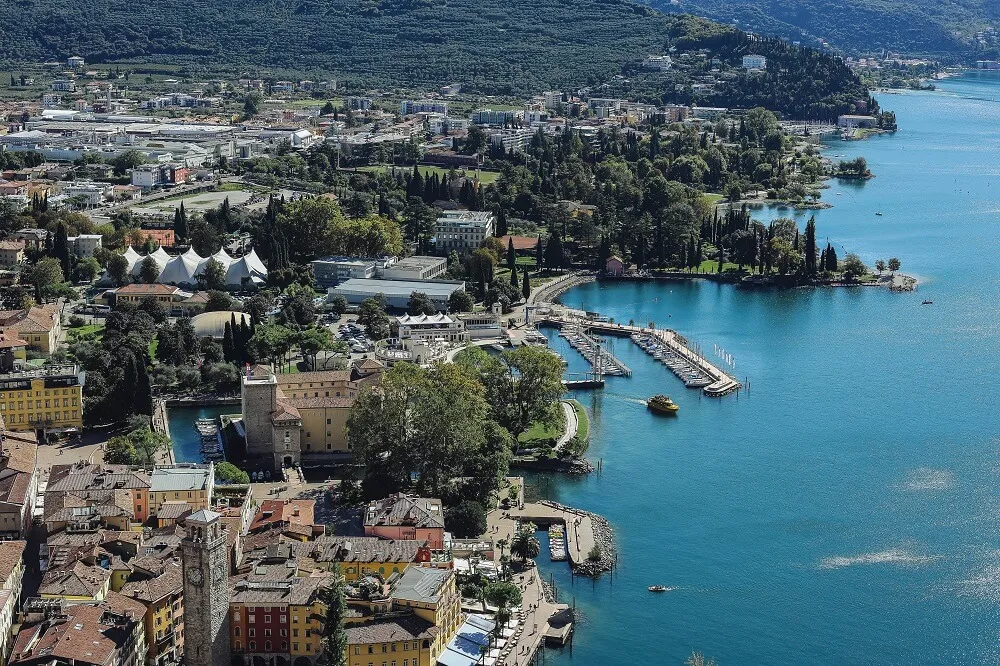
On the way, I was glued to the window: mountains, hills, vineyards, and neat little houses. I associated my playlist with these views.
Are we there yet? No.
There's a bus from Rovereto to Riva del Garda — the stop is immediately to the right upon exiting the station, no roads to cross. But I didn't know that, and I rushed to almost every bus from all sides of the road, asking if it was going my way.
So, the bus has no number; only the final stop is written at the top — Riva-del-Garda. The ride is 30-40 minutes, and the bus doesn't stop at all stops; you need to press a button for the one you want. I paid 2.5 euros for the fare, paid to the conductor inside. Buses run on a schedule, the later it is, the less frequent they are — this is important.
One of the drivers advised me to check the schedule, and my disappointment was immense when I realized my bus had left while I was running around looking for the stop. But it wasn't so bad after all. The bus was just 4 minutes late, so I made it. If I had missed it, I would have had nowhere to sleep, because my hostel's reception was open until 9 PM.
The hostel I'm talking about is Ostello Della Gioventù Benacus. It's in the city center, close to the bus stop, offers a light breakfast, and has lockers with locks in shared rooms — overall, quite well-maintained for 6,500 rubles for 4 nights.
The World Beyond Garda
I didn't plan the four-day itinerary; I figured it out on the spot. So I took a day trip to Verona (approximately 20 euros for round-trip travel). In September, it's very hot in Italy; the city was practically melting under the sun.
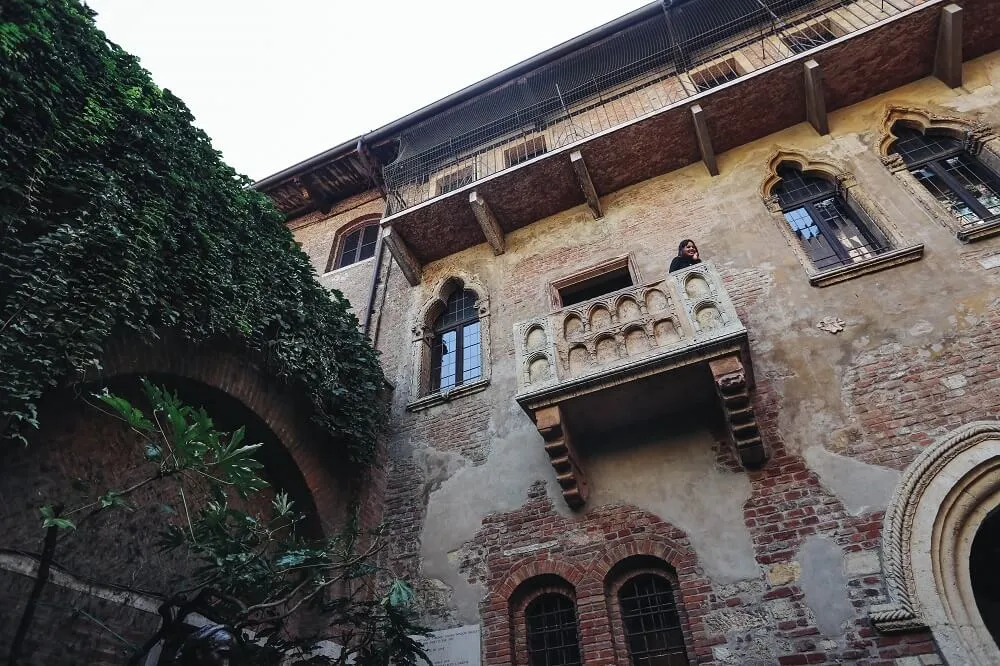 In Juliet's courtyard, there's a crowd of tourists, a queue even by the arch. It seemed that Verona was too small for so many people. Every corner of it was as cramped as the Moscow metro during rush hour.
 And for another day, I went further north — to Bolzano, because there are mountains there! The city itself didn't leave any impression; I didn't feel like walking around it, so I immediately headed to the lifts. For travel, I spent the same 20 euros, plus 15 euros for the lifts to Soprabolzano. You can go higher, but this was enough. The 15 euros include a funicular and a cable car (round trip), and there's plenty of walking to do once you're there!
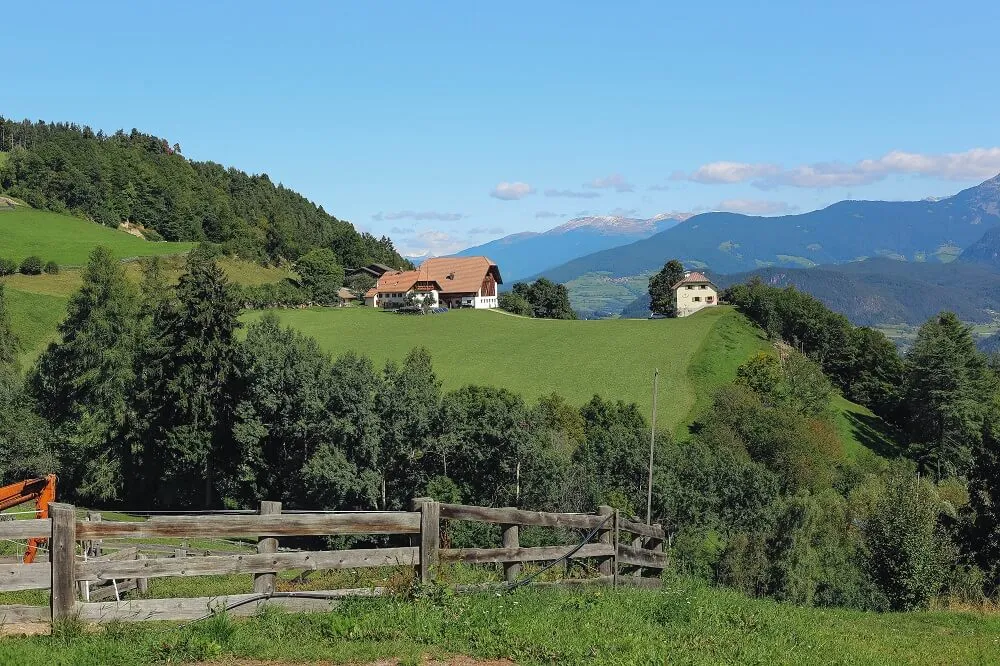 Clean, even alpine meadows, cows walking in the streets, private houses with mountain views, a school, and silence. Even in the packed cable cars, it was quiet; everyone looked out the window and silently gaped at what they saw. I would honestly spend my old age there!
Venice
I traveled to the city on water from Verona by train. It took a little over two hours and cost 10 euros for the ticket. There are generally no problems with trains in Italy. The carrier Trenitalia has many cheap tickets for short distances even on the day of travel, but for long distances, you need to buy in advance.
Clean, even alpine meadows, cows walking in the streets, private houses with mountain views, a school, and silence. Even in the packed cable cars, it was quiet; everyone looked out the window and silently gaped at what they saw. I would honestly spend my old age there!
Venice
I traveled to the city on water from Verona by train. It took a little over two hours and cost 10 euros for the ticket. There are generally no problems with trains in Italy. The carrier Trenitalia has many cheap tickets for short distances even on the day of travel, but for long distances, you need to buy in advance.
 Venice seemed ominous and mysterious to me. Here's a noisy and crowded street, and here's an empty, narrow, and suspiciously quiet one. And as darkness fell, it became quite eerie.
 Rome
The Venice-Rome train is precisely the case where you need to buy a ticket in advance. If you see a cheap train, ferry, or plane ticket, buy it immediately, because the price won't go down.
Rome
The Venice-Rome train is precisely the case where you need to buy a ticket in advance. If you see a cheap train, ferry, or plane ticket, buy it immediately, because the price won't go down.
A month and a half before the trip, a couchette ticket from Venice to Rome cost 24 euros; 3 weeks before, I bought it for 39 euros, and on the day of departure, the ticket already cost 80 euros.
 Rome is a big, noisy, and diverse city. One moment you're wandering down some ancient street, with ivy on the walls, small ice cream shops, souvenir nooks, and the smell of pastries. And suddenly you emerge onto a large, noisy square, full of refugees, dirt, strange smells, with Italians only occasionally passing by.
Unlike Garda, where there's almost no choice of accommodation, in Rome, you need to choose a hostel wisely. Most owners are Indian, so the atmosphere there is accordingly. I stayed at HostelRoma for 6,000 rubles for 5 nights. The reception and rooms were in different buildings; they only gave two keys: for the entrance and for the apartment. The rooms themselves in the large apartment didn't lock, and there were no lockers for storing belongings — I always had to carry documents and electronics with me. It was cramped, smelled of Indian food, but there was a supermarket downstairs, and Termini main station was five minutes away.
Rome is a big, noisy, and diverse city. One moment you're wandering down some ancient street, with ivy on the walls, small ice cream shops, souvenir nooks, and the smell of pastries. And suddenly you emerge onto a large, noisy square, full of refugees, dirt, strange smells, with Italians only occasionally passing by.
Unlike Garda, where there's almost no choice of accommodation, in Rome, you need to choose a hostel wisely. Most owners are Indian, so the atmosphere there is accordingly. I stayed at HostelRoma for 6,000 rubles for 5 nights. The reception and rooms were in different buildings; they only gave two keys: for the entrance and for the apartment. The rooms themselves in the large apartment didn't lock, and there were no lockers for storing belongings — I always had to carry documents and electronics with me. It was cramped, smelled of Indian food, but there was a supermarket downstairs, and Termini main station was five minutes away.
 The Sea
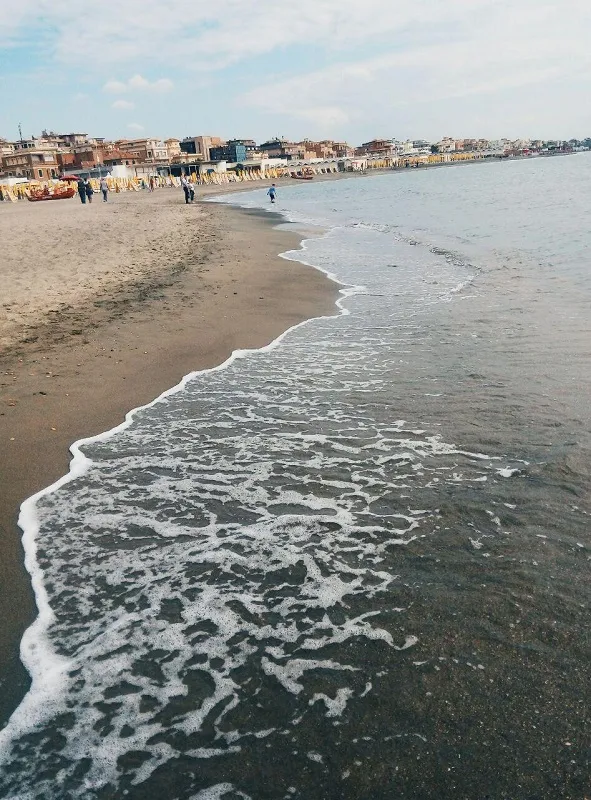
Rome was so noisy and dirty that I wanted to hide in a quiet and clean place. The day before the last day, I saw a photo on Instagram from Ostia — a coastal town. In the morning, I was already on the train. I paid 3 euros for a round trip, spent half an hour on the way, and found myself by the sea!
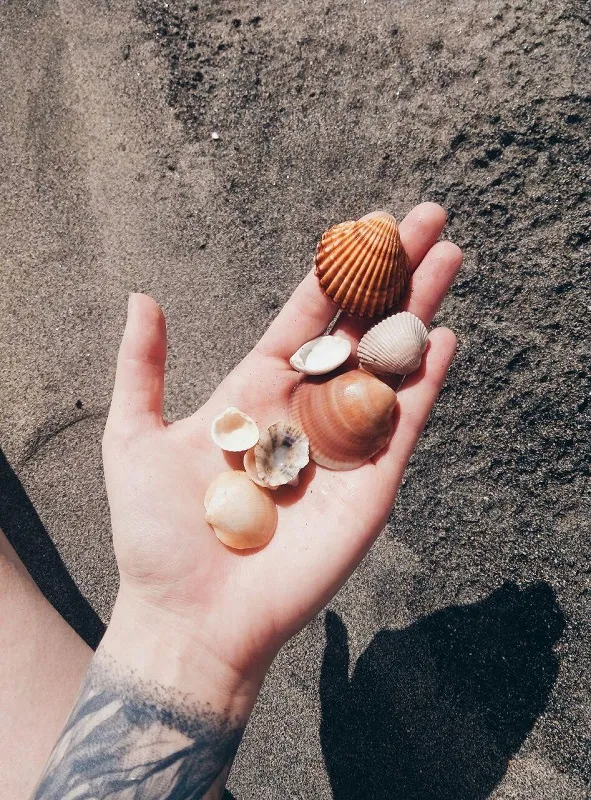
In Ostia, there's just the station, a few streets, and beaches, beaches, beaches. There are few locals, and tourists can be counted on one's fingers. Apparently, it wasn't the season, although the temperature was unforgiving — it was a scorching 28 degrees.
The Sea
Rome was so noisy and dirty that I wanted to hide in a quiet and clean place. The day before the last day, I saw a photo on Instagram from Ostia — a coastal town. In the morning, I was already on the train. I paid 3 euros for a round trip, spent half an hour on the way, and found myself by the sea!
In Ostia, there's just the station, a few streets, and beaches, beaches, beaches. There are few locals, and tourists can be counted on one's fingers. Apparently, it wasn't the season, although the temperature was unforgiving — it was a scorching 28 degrees.
Food
People are divided into two types: those who admire Venice and those who consider it a swamp, those who rave about Italian food and those who didn't like it, and so on.
I am one of those who was not impressed by either Venice or Italian cuisine. Since I really love lasagna, I focused specifically on it in Italy. I tried it in different places: in expensive restaurants and cheap eateries, in recommended and hyped places with queues at the entrance, and in unknown empty cafes. And in one cafe on the main square of Bolzano, I suspect the lasagna was reheated from a semi-finished product. The same goes for pizza. The food didn't impress me anywhere. Need I say that I got tired of eating on this trip? I still believe that the best pizza is at Kmotra pizzeria in Prague, and the most delicious lasagna is at Julia cafe in Ljubljana.

How much I spent and on what
I spent about 25,000 rubles on accommodation and flights. The rest of the money was spent on trains, souvenirs, and the search for delicious pizza. I don't think I spent a lot of money. Of course, with couchsurfing, it would have been much cheaper, but I'm a quiet introvert with a school-level English. The easy communication I had in hostels and cafes was enough for me.
Since I hadn't planned anything beyond Lake Garda and Venice, I was happy about the appearance of beautiful mountains and the sea in the itinerary — without them, the trip would have been boring. It was especially nice that such spontaneous excursions didn't cost much.
 I'm not a museum lover, so I didn't pay attention to them. At first, I even regretted not getting into the Vatican museums for free on the last Sunday of the month (that's their thing, yes). But, remembering those wild queues and the heat, I decided I hadn't lost anything — I spent the time visiting other attractions. I didn't go inside the Colosseum either; I just hung around it a few times at different times of the day — it's especially good at sunset.
What I took with me
I love flying without checked luggage — my backpack is spacious and fits carry-on dimensions. But luckily, no one weighed it — it was clearly more than the allowed 10 kg. Why a backpack and not a suitcase? It's easier to move around with a backpack if you're traveling alone. You can't go everywhere with a suitcase, but with a backpack, all doors are open, and it definitely won't get lost. If you often fly with luggage, read our article on how not to lose it.
I took a couple of t-shirts, a sweater, a change of underwear, toiletries, and a camera with all its accessories. Whenever possible, I washed clothes and dried them on the bed rails. I washed them with local soap in the bathroom and wasn't worried about the result — I took t-shirts I wouldn't mind ruining. I didn't spoil anything.
 I divided the euros and put them in different places: in my cosmetic bag, document folder, wallet. I even forgot about one stash and got upset, thinking I had run out of cash. Then I accidentally found it and spent it on another lasagna. I carried my camera and documents with me if there was nowhere to leave them. I advise buying a medium-sized padlock, because in many hostels with lockers, locks are only provided for a fee. It's just a couple of euros, but you never know where they might be more needed.
My favorite and reliable offline map Maps.me helped me not get lost. The evening before, I would Google interesting places, put markers on the map, and my route was ready. And how it helped me in Venice! There, without a map, if you're rushing for a train, you simply can't get out of the dark alleys.
I always charged my gadgets whenever possible: while having lunch at a cafe or drinking coffee at Starbucks. I encountered a problem: in a four-person room, there were only two outlets, and my roommates liked to charge their phones all night. The main thing is to charge your power bank — it will take care of the rest itself.
I divided the euros and put them in different places: in my cosmetic bag, document folder, wallet. I even forgot about one stash and got upset, thinking I had run out of cash. Then I accidentally found it and spent it on another lasagna. I carried my camera and documents with me if there was nowhere to leave them. I advise buying a medium-sized padlock, because in many hostels with lockers, locks are only provided for a fee. It's just a couple of euros, but you never know where they might be more needed.
My favorite and reliable offline map Maps.me helped me not get lost. The evening before, I would Google interesting places, put markers on the map, and my route was ready. And how it helped me in Venice! There, without a map, if you're rushing for a train, you simply can't get out of the dark alleys.
I always charged my gadgets whenever possible: while having lunch at a cafe or drinking coffee at Starbucks. I encountered a problem: in a four-person room, there were only two outlets, and my roommates liked to charge their phones all night. The main thing is to charge your power bank — it will take care of the rest itself.
Don't be afraid to be without a plan or itinerary, because you feel much freer when you don't have a list of must-visit places in the city.