How to pack using Marie Kondo's method to fit everything
 Polina
Packing for a trip is always a balancing act: you want to take those fancy shoes, and hiking boots, and that book you haven't opened in six months. We believe that a properly packed backpack is already half the battle. To avoid turning your trip into a struggle with zippers and straps, let's try applying Marie Kondo's method. Her KonMari system is not just about tidying up, but a way to pack your whole life into standard carry-on dimensions. Here's a detailed guide on how to turn your backpack into a masterpiece of ergonomics.
Gather everything into one "pile of shame"
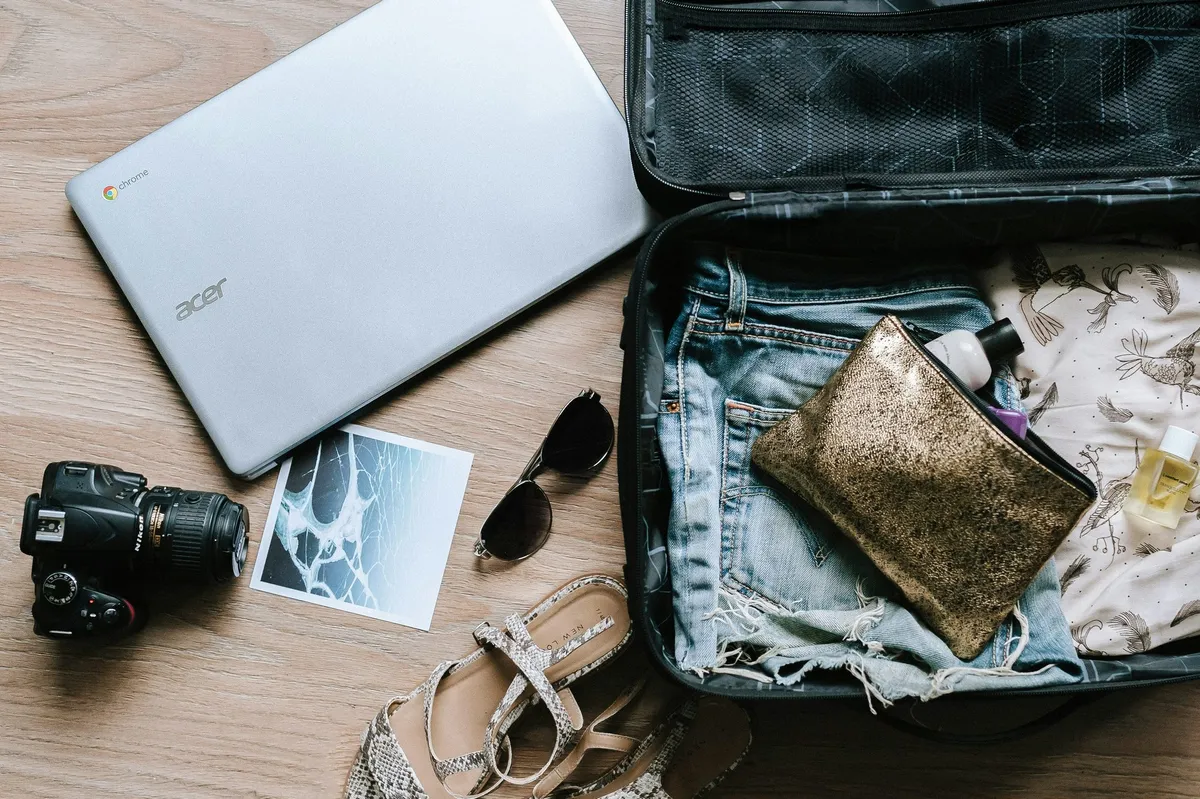
Marie insists: you can't pack things gradually. Dump absolutely everything you plan to take onto the bed or floor. Only by seeing the full scale of the disaster will you realize that three identical gray hoodies are excessive.
Example:lay out clothes separately, electronics separately, and the first-aid kit separately. If you are going to buy tickets to Petrozavodsk on Kupi.com, where it might be +5 in the morning and +20 during the day, choose one technical windbreaker instead of three different sweaters. The KonMari method teaches us to keep only what will truly be useful and sparks "joy."
Master vertical folding (The Fold)
This is the heart of the method. Every T-shirt, pair of pants, or dress should turn into a compact, stable rectangle.
Place the T-shirt in front of you.
Fold the sides towards the center to form a long rectangle.
Fold it in half, then in half or thirds again.
Example: the final bundle should be able to "stand" on its edge independently. In your backpack, you place these rectangles not on top of each other, but in a row, like books on a shelf. Now, when you want to get that specific shirt from the bottom, you won't have to empty your entire backpack – you'll simply pull out the desired "brick."
Use the matryoshka principle for shoes and small items
Empty space inside items is your main resource. Marie Kondo teaches us to respect our belongings, and using the internal volume of shoes helps them maintain their shape.
Example: fold socks using the KonMari method (don't roll them into tight balls, it damages the elastic!), turning them into flat envelopes, and place them inside your sneakers. You can also put a charging cable or a fragile bottle wrapped in soft fabric in there. If you have booked tickets for the Saint Petersburg – Kazan route and plan to walk a lot, such dense stuffing will prevent your shoes from getting crushed under the weight of other luggage.
Group "komono" into zip-lock bags
"Komono" for Marie refers to all sorts of small items. In a backpack, these are chargers, adapters, headphones, and cosmetics. The most effective way is to use transparent organizers or sturdy zip-lock bags.
Category 1: cables and power banks.
Category 2: hygiene products (in travel sizes).
Category 3: documents and important small items.
Example: instead of a huge cosmetic bag, take a flat transparent pouch. Put liquids into small bottles of 50-100 ml. When each category is in its "home," you spend exactly three seconds to find a plaster or a phone cable.
Pack clothes by density principle
A backpack has its own specifics, unlike a suitcase. To prevent your back from saying "goodbye" after half an hour of walking, distribute the weight considering geometry.
Lightest items (spare shoes in a case, down jacket) – at the very bottom.
Heaviest items (laptop, cosmetic bag, jeans) – in the center, as close as possible to the straps and your back.
Essentials (documents, wipes, snacks) – in the top flap or outer pockets.
Get rid of "what if"
Marie Kondo teaches us to trust ourselves. If an item is only taken in case of an unlikely apocalypse, it doesn't deserve a place in your backpack.
Example: instead of an umbrella, which takes up a lot of space and weighs half a kilo, take a compact rain poncho. Instead of three books – one e-book or an audio service subscription. Remember: lightness in your backpack directly translates to ease of movement.