How to move to Montenegro
We continue the section «Let's get out ̶o̶n̶ ̶v̶a̶c̶a̶t̶i̶o̶n̶», where Kupi.com team members and their friends share personal relocation experiences to other countries. New guide — about Montenegro! Specifically: life hacks for residence permits, transport, medicine, prices, and housing.
Hi! My name is Anya, I'm a graphic designer at Kupi.com. In this guide, I'll tell you how to move to Montenegro.
Why Montenegro?
Actually, I'm from Novosibirsk, but before leaving, I lived in St. Petersburg for three years and studied in Tomsk for five years.
I've been living in Montenegro since June 9, 2022. It's a wonderful place where you feel at peace. Here you slow down, live amidst incredible nature, and feel like you're on an endless vacation: every weekend you can go either to the mountains or to the sea.
Moreover, it's easy to get a residence permit here. And it's inexpensive compared to the rest of Europe. Housing, food, and services are definitely cheaper. It's beautiful, has a low crime rate, and is simply peaceful. Plus, warm winters!
By the way, before moving to Montenegro, I first tried living in different districts of Istanbul. But I realized that Turkey isn't really my country. It's cool, but the city's rhythm and atmosphere just don't suit me. Then I moved to Montenegro and fell in love with it. For now, I'll live here, I like everything. I plan to travel around Europe later (a visa can be obtained after six months of living with a Montenegrin residence permit). I also dream of visiting Australia, Morocco, and Canada.
Where to live in Montenegro?
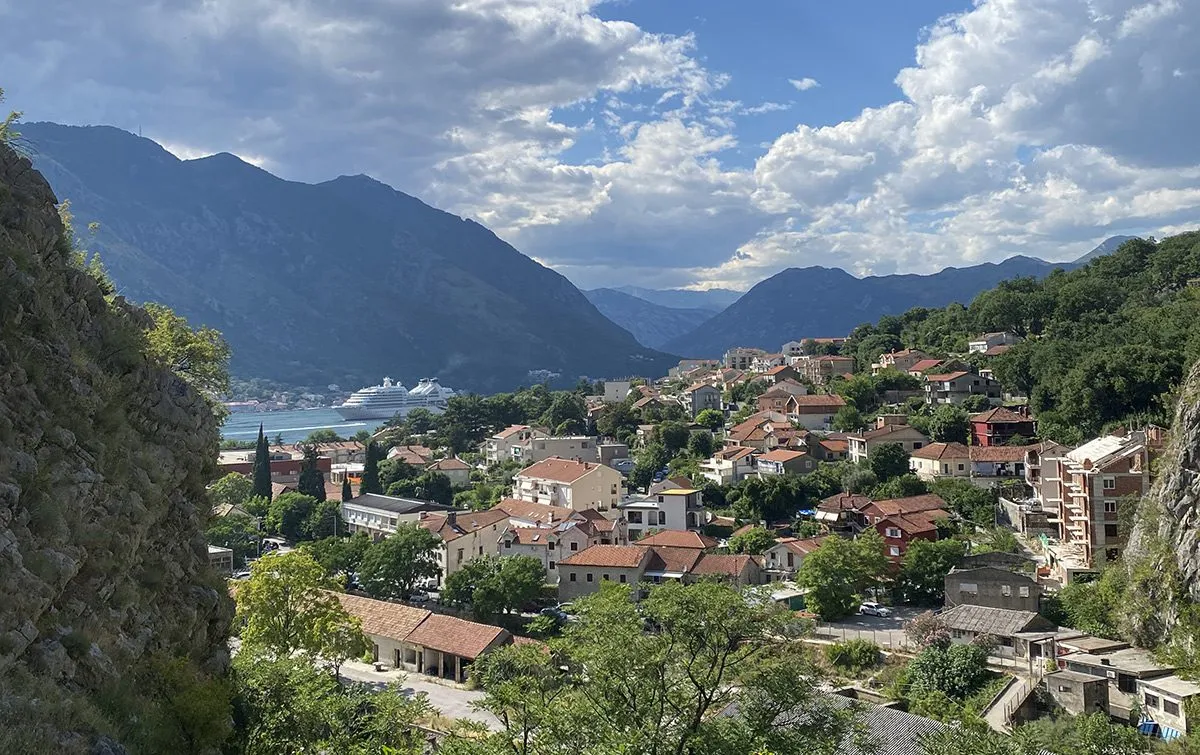
I recommend living in Podgorica, the capital. There's always activity here, developed infrastructure, and it's simply convenient. It's an hour's drive to the sea and mountains. Resort towns, however, are dead from autumn to spring. At the same time, living in Podgorica is cheaper: 1+1 apartments cost from 350 euros per month. In resort towns (Budva, Kotor, Tivat), they start from 800. Utilities amount to about 50 – 60 euros per month.
What about prices? And food!
The average salary in Montenegro is 500 euros. You can live lavishly, without denying yourself anything, on 1500.
Local prices are quite normal, comparable to Moscow/St. Petersburg. Some things are even cheaper. For example:
- kilo of pork – 4-5 euros;
- kilo of beef – 9 euros;
- eggs – 2 euros;
- pasta – 1 euro;
- milk – 1.5 euros.
There are Russian stores with dumplings, kvass, tvorog (cottage cheese), and other products we're used to. Yes, there are plenty of restaurants, everything is very tasty, inexpensive, and portions are huge.
What if something hurts?
When applying for a residence permit, you will have basic insurance with free service. Dentistry is not included. For reference: the price for a tooth extraction is 20 euros (examination, X-ray, anesthesia, extraction). A private doctor's appointment is also 20 euros.
You can get voluntary health insurance (DMS): it costs from 30 euros per month.
What about transport?
In Podgorica, for example, public transport exists but is not well developed, and simply not popular. There are several city bus routes, they cost about 1 euro for an hour's ride, but you'll have to wait 15-20 minutes at the stop. Mostly people use taxis. It's inexpensive (on average, a trip around the city will cost 2 – 3 euros) and fast (there are almost no traffic jams). Taxis here are called via Viber: you just write where to send the car. And you tell the driver the final destination. Every taxi has a taximeter, so the final price will be known at the end of the trip. There's also the TeslaGoApp: it's the same as familiar taxi apps. The only difference is that you'll be riding in a Tesla. Its cost differs slightly: about 1 euro more expensive. But generally, Podgorica is a small city, you can just walk.
Buses run between cities. It's very convenient to travel around the country without a car. Their cost is on average 8 euros. Routes and schedules can be conveniently viewed here.
Car rental is also very popular here. Off-season, you can rent a car for 25 euros per day. In season, the price is approximately 60 euros. You can rent a car with a Russian driver's license. You can also buy a car; friends recently bought a used one for 2500 euros.
If you need a school for your child
All children are accepted into schools, regardless of whether they have a residence permit or not. Public schools are free. I don't know exactly about the language in public schools, but I know that many Russians send their children there and are satisfied. There are definitely private schools with Russian language. In Budva, there are two: Kompas and Adriatic College. These schools also have branches in the city of Bar.
Adriatic is considered Russian-Montenegrin. Kompas is a purely Russian school.
There's also Dukley, where teaching is in English. Russian children are accepted there.
About the community
There are many TG chats for various interests: chats with IT people, chats by cities, for services, and medicine.
Leisure activities cater to every taste: lots of bars, parties, concerts, exhibitions, LGBT+ events.
There are many Russian speakers now. Locals and other foreigners are always happy to hang out together.
Do you need to learn the language?
Usually, if I need to translate something, I use Google Translate. You can live here without knowing the language. Especially since Montenegrin is similar to Russian: many words are familiar, and it's easy to grasp the general meaning. Most people know English. And basic phrases for shopping and ordering in a restaurant are learned within the first week. There are also language courses here – I've seen a lot of their ads on social media. I'm not studying it myself yet, my basic knowledge is enough. I plan to learn, but haven't gotten around to it yet. The language is mostly needed in government institutions, where almost no one speaks English.
What about sports and fitness?
Here, there's a pleasant and accessible environment for sports: many workout spaces, locals constantly exercise. There are parks designed for activities, with tennis tables, basketball courts, volleyball courts — all available for free to anyone interested. There are also many yoga and dance studios. You can even find highly specialized things like Greco-Roman wrestling. In Podgorica, for example, there's a large sports complex with a swimming pool, which is also open to everyone. If I'm not mistaken, the cost of visiting the pool is about 5 euros per day. Also, in Podgorica, there are convenient bike paths almost everywhere.
How to get a manicure?
In Montenegro, there are many Russian nail and hair masters. Their contacts can be easily found in TG chats.
About difficulties
Honestly, moving to Montenegro wasn't associated with major difficulties. Everything simply worked out as comfortably as possible. I think it might be difficult for those who don't have remote work. Montenegro is a tourist country, and the main vacancies where foreigners can be hired are limited to the tourist season. I know that skilled trades are always in demand here: auto mechanics, plumbers, etc.
About cool places
This list is non-touristy:
Kabanya Kitesurf & Windsurf school & Beach Bar
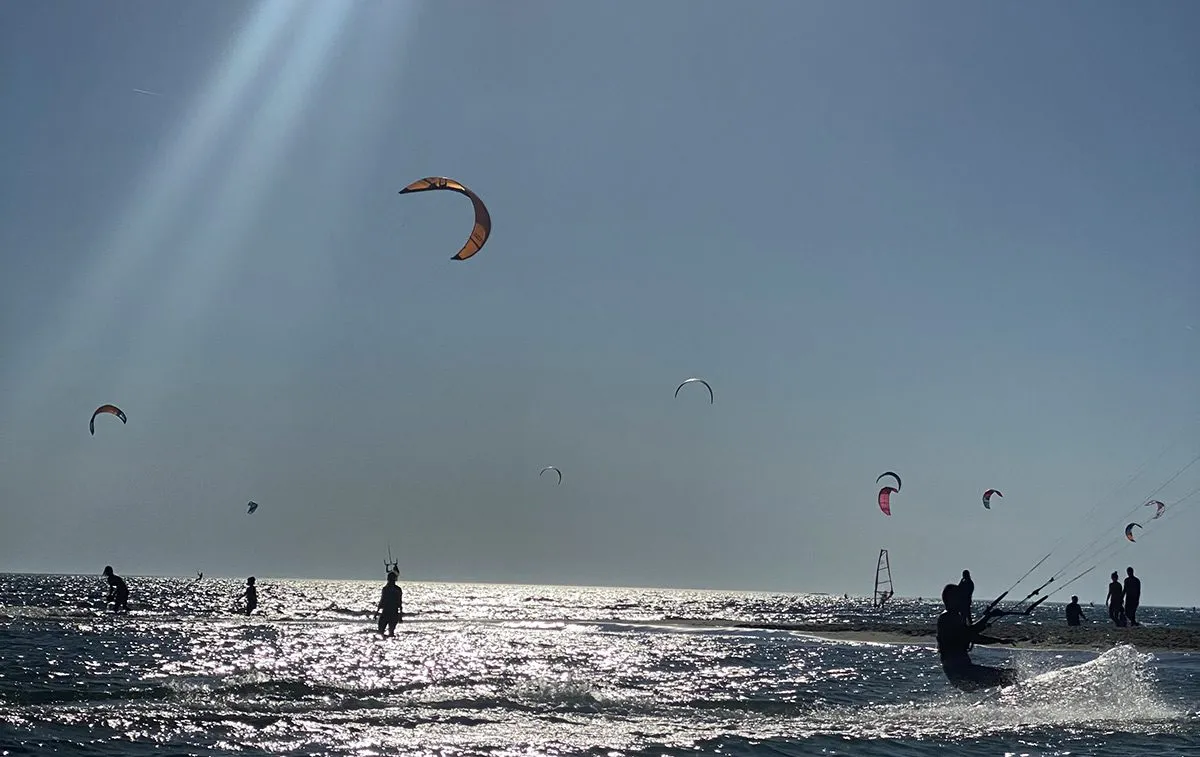
A place on Velika Plaža (7 km of sandy beach with a gentle entry into the water). Kitesurfing is practiced there. The place resembles Cappadocia – it's very beautiful when there are many kites in the sky. You can take lessons. And you can also just relax and eat delicious burgers here.
A rainbow trout farm in the mountains: they serve fish caught right in front of you.
Vodopad Vrteljak u selu Turčini
A waterfall in the mountains. You can swim and jump from a rope swing. There's also a cafe-bar.
Prihvatiliste i oporavak zivotinja CRNA GORA
A large zoo, many animals: they roam the territory, you can feed and pet them.
And this is the tourist list:
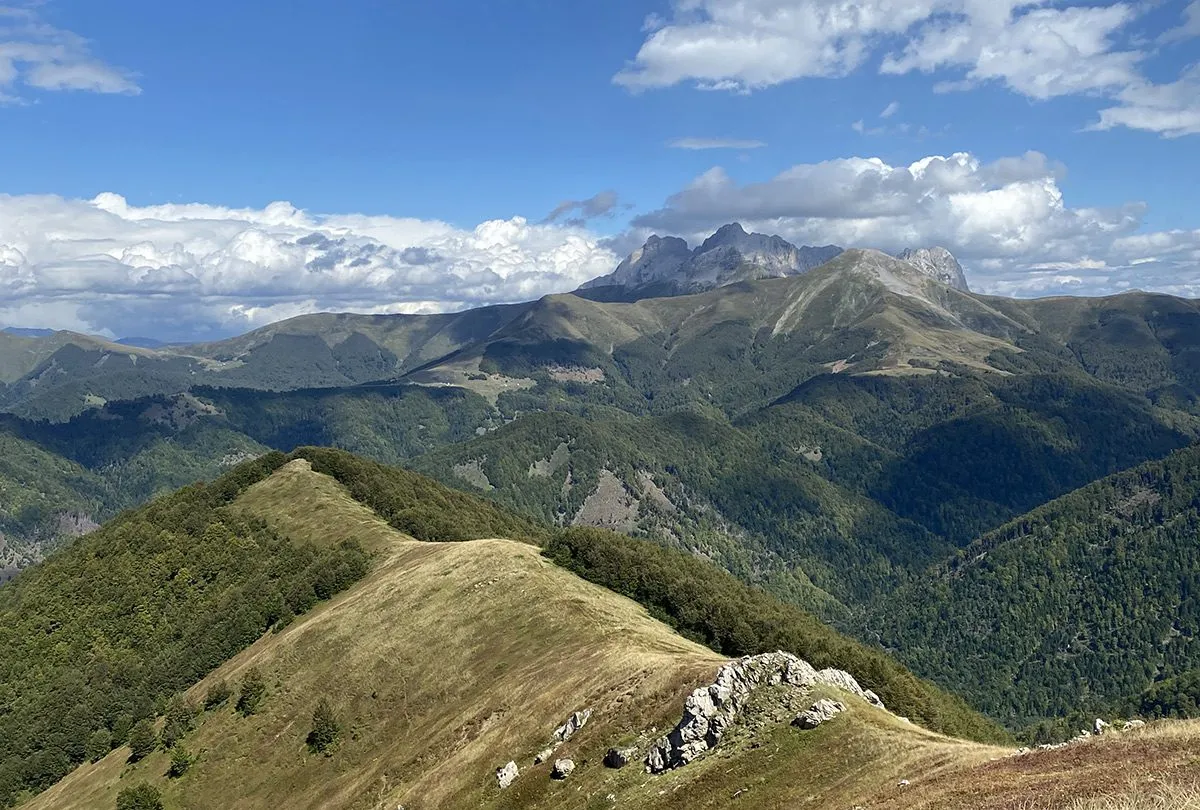
Mountain panorama on the border with Albania. You can shout really loudly there and hear an echo!
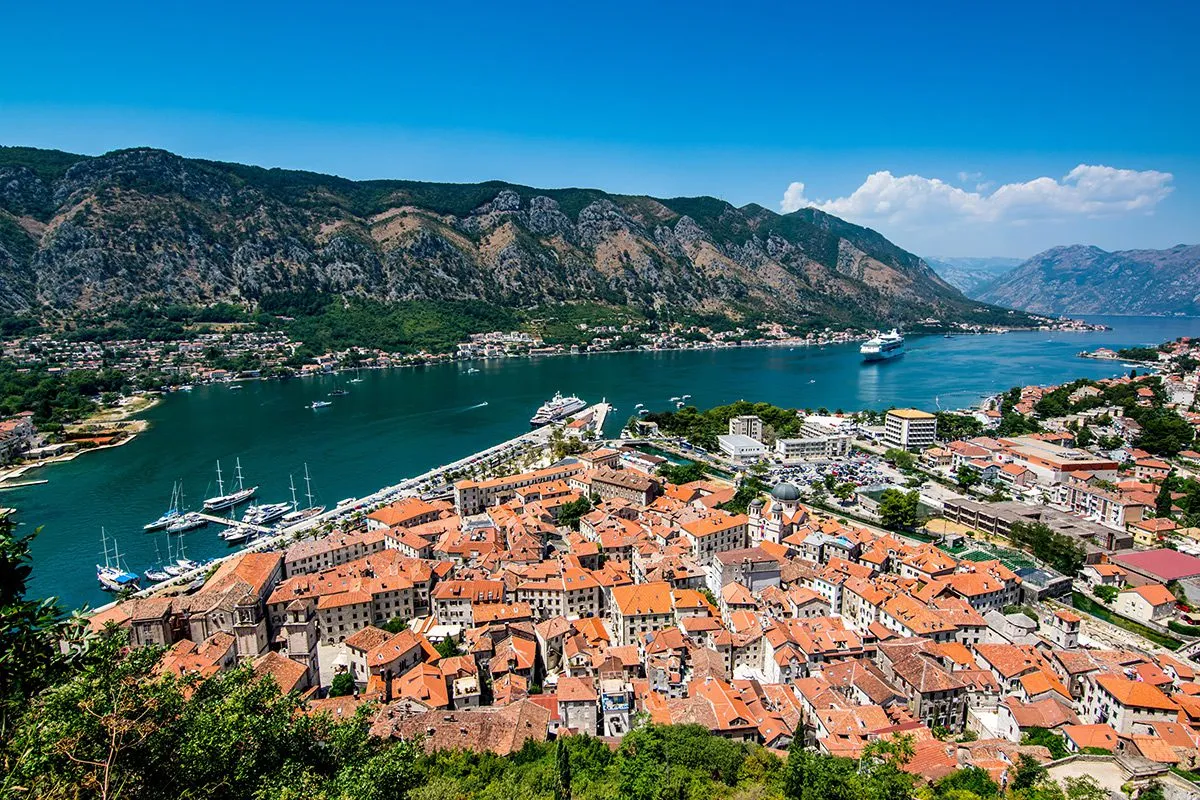
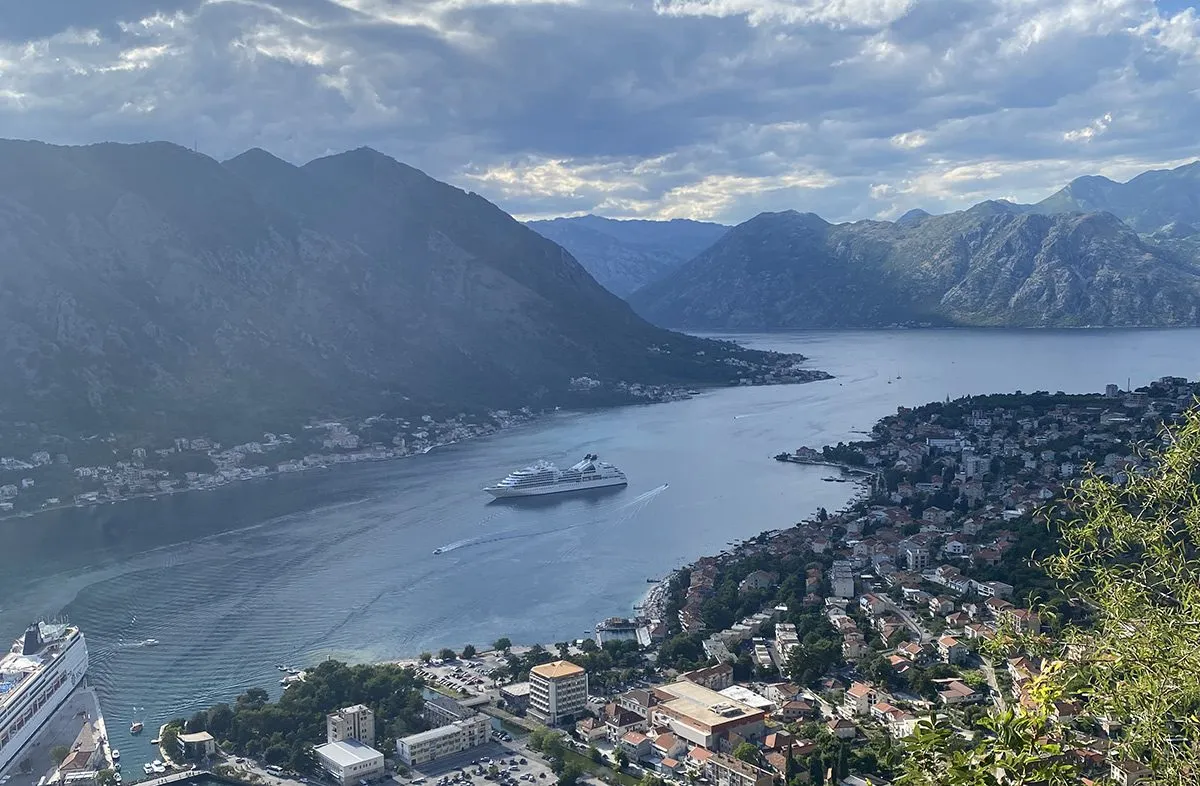
A small old town in Kotor Bay; it is entirely under UNESCO protection.
A large mountain with hiking trails, panoramic views, and the mausoleum of Petar II Petrović-Njegoš at the summit.
Ruins of the old town. Many restaurants nearby, a place with a rich history.
The cave ceilings resemble cathedral vaults – the King of Montenegro held negotiations here. Stalactites and stalagmites in huge numbers.
Restaurants in Podgorica
The best ćevapi in the city.
Favorite pizza and sandwiches.
The best pizza in the city.
Everything is delicious. Especially the pasta. The restaurant is on the rooftop, with an open veranda, beautiful views, and sunsets.
Bars in Podgorica
A library bar under the bridge. Delicious cocktails, often hosts themed parties and festivals.
Great cocktails.
Techno parties, cool DJs, great crowd.
How to get a residence permit?
To open a legal entity and obtain a residence permit in Montenegro, you will need:
- education diploma or school certificate;
- foreign passport;
- certificate of no criminal record.
You can get this certificate through Gosuslugi (Russian public services portal). The main thing is to get the one with a stamp and obtained in person. It takes a month to process. To avoid waiting, you can do the following:
- Submit an application for the certificate;
- Issue a power of attorney to a person who will definitely remain in the city where you will receive it;
- Depart;
- Once the certificate is ready, your authorized person will pick it up and send it to you via DHL and EMS.
Just in case, also make an electronic version of the certificate: there are cases where it worked.
There's no need to apostille or translate documents! (for Russian citizens).
I recommend resolving the residence permit issue with Bora Consulting – it's a trusted agency of my acquaintance.
By the way, you can also live without a residence permit. In Montenegro, it's allowed to stay without a visa and submitting documents for a residence permit for one month. Then you can leave for half an hour to a neighboring country and return. This is called a visa run. Many live here like this for years. In this case, you will pay a tourist tax of 30 euros. And the visa run itself will cost you approximately 60 euros – for example, taking a taxi to Albania, hanging out there for half an hour, and coming back.
Residence Permit Expenses
If you arrange a legal entity and residence permit through an agency (like I did), it will cost you 900 euros per person. This amount includes all fees, document processing, and opening a bank account. You won't have to do anything: just submit the documents and pick up your residence permit.
You will also need to pay 30 euros per person per month – this is income tax.
In your "organization," for which the legal entity will be opened, you will be listed as the director. If your friend / boyfriend / girlfriend / brother / sister is employed by the same organization, they will also have to pay this tax.
Spouses and children receive a residence permit through family reunification. This means they don't need to open a separate legal entity. A residence permit for a child will cost 280 euros, for a spouse – 300.
- 30 euros per month for fiscalization for your company.
- 70 euros per month for accountant's fees.