How to get a US visa
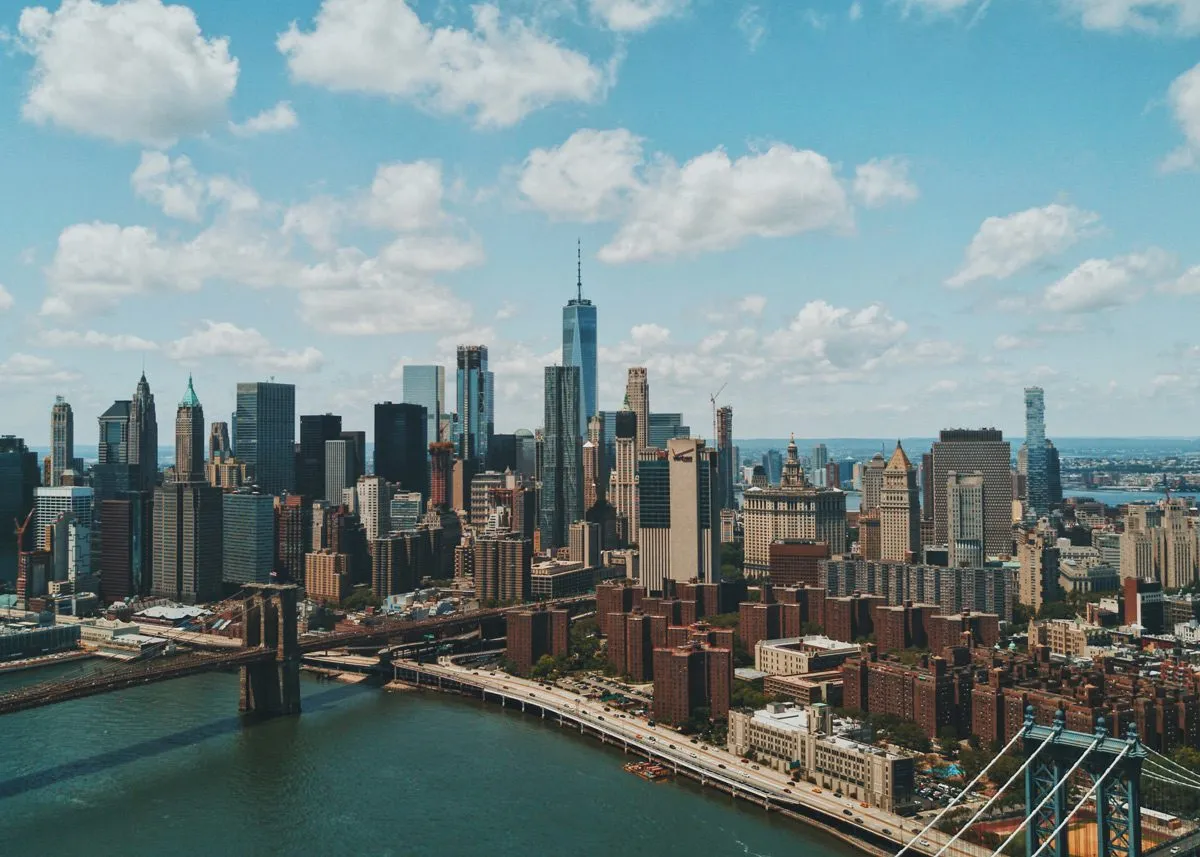
Broadway musicals, the Empire State Building, and sunny Manhattan. Yes, all of this is possible to see with your own eyes, even if you are a citizen of Russia and it's 2023. In this article, we'll tell you how to get a US visa and avoid rejection.

Types of Visas
All American visas are divided into immigrant and non-immigrant. A non-immigrant visa implies that a person's visit to the US will be time-limited, and they do not intend to stay in the country or seek employment.
There are different types of non-immigrant visas to America.
Visitor (or Tourist)
This is the visa with which you can see Christmas in New York or relax on a beach in Florida. It is assigned category B1/B2.
A US tourist visa is issued to anyone planning to travel across the States to see sights, visit friends and relatives, receive medical treatment, conduct short business negotiations, or attend conferences. It is issued for three years, and you can enter the country any number of times.
You are allowed to stay in the country for 180 days per trip. But here you need to be careful: visa running in the case of the US is not the best idea. If during your embassy interview you said you were going to Miami for a week, and then you stayed in the country for six months, next time border guards will have questions. In the worst case, you might be denied entry or refused a visa next time. So it's better not to abuse American hospitality.
Student
If you plan to study in American schools, colleges, and universities, you will need an F category visa. An M visa is for those who intend to enroll in technical schools or pursue vocational training courses. Student visas are usually issued for one year.
Exchange
This visa is for those who plan to live with an American family as part of an exchange program, as well as volunteers. The category for this visa is J. It is valid for the duration of the educational or volunteer program for which the person comes to the US, but not exceeding three years.
Work
There are many types of work visas: for example, category R is given to religious workers, E to entrepreneurs, and employees of international companies who are relocated to the US receive an L visa.
Creative
A short-term O category visa (also known as the "US talent visa"). It is issued to foreigners who have achieved success in science, education, sports, or art.
Obtaining an American visa is not a guarantee that you will enter the US and be able to complete all your desired cultural program items. The final decision will be made by the border officer, so you will need to answer additional questions: be prepared for a mini-interview at passport control.
Requirements for a US Tourist Visa
It is believed that obtaining a US visa is very difficult. But it's not about having to collect a lot of documents — it's simply that this visa has a very high rejection rate. However, there's good news: among all CIS and neighboring countries, Russians have one of the lowest rejection rates, only about 20%, even despite sanctions. To avoid falling into this 20%, you need to take two things seriously: filling out the application form and the embassy interview.
Required Documents
1. A foreign passport that expires no earlier than six months after your date of entry into the States.
2. DS-160 application form. The embassy will make a decision on entry based on this form.
To cross the border into the States, you will need a certificate of full vaccination with a WHO-approved vaccine.
Among such vaccines are:
• Pfizer/BioNTech;
• Moderna;
• Johnson & Johnson (Janssen);
• Sinopharm;
• Sinovac
and others.
"Sputnik V" and "Sputnik Light" are not recognized in the States. This means that before your trip, you will need to get vaccinated abroad. Keep this in mind when purchasing tickets to the USA. Children under 18 will not need a vaccination, but a PCR test will be required.
Some tourists who have recently visited the US report that border guards are relaxed about presenting certificates and do not check them, as they understand the situation with Russian vaccines and are accommodating. However, we still advise you to be on the safe side.
US Visa Consular Fee
To schedule a visa appointment, you will need to pay the consular fee. If your documents are not approved, the money will not be refunded, so keep this in mind. For tourist, student, and exchange visas, the cost is 160 $. Work visas are more expensive — 190 $.
The receipt is valid for exactly one year from the date of payment, so you must complete your interview at the consulate within this period. If you miss the deadline, you will have to pay the fee again.
Payment must be made in the national currency of the country from which you are applying for the visa. For example, if you are interviewed in Tel Aviv, the fee is paid in shekels. This can be done online using a bank card. In most countries, the "MIR" card is not accepted.
US Visa for a Child
It is processed the same way as for an adult. You collect the same documents for a US visa. The nuance is that children under 14 answer fewer questions on the application form than adults: they do not need to provide information about work, study, and travel history for recent years.
How to Schedule a US Consulate Interview
Since April 30, 2021, the US has stopped issuing visas in the Russian Federation. This means that you cannot currently schedule an interview at a consulate in Moscow or St. Petersburg. However, Russian citizens can still obtain a visa: for this, they will have to travel to another country. You can fly to the States from Russia, though with layovers. Affordable tickets from Moscow to New York are available on the Kupi.com website.
According to some users who share their experiences in chats discussing US visa acquisition, it is easiest to get an interview in Mongolia, Poland, or Cyprus. Other options include: Kazakhstan, UAE, Turkey, Italy, Kyrgyzstan, Serbia. Scheduling an appointment at the consulate is not for the faint of heart: it's difficult to secure an interview slot. Detailed reviews and impressions about obtaining visas and booking slots in these countries can be read on Vinsky's forum.
The classic instruction is as follows: first, you go to the visa application website, select the desired location where you will be interviewed, confirm that your application form is filled out, pay the consular fee, and book a slot. You might be offered an appointment at the consulate in six months — this is normal, as queues are very long. Exact timings depend on the country and city where you are interviewed.
• Website where you can choose a country for the interview and pay the consular fee.
• And here to read about how to submit documents and schedule an interview in Kazakhstan.
There are special Telegram bots that support your nervous system and monitor available slots independently. As soon as a spot appears, the bot immediately books you there. Such bots are paid and expensive. The price is about 20,000 rubles.
How to Fill Out the Visa Application Form
Website for filling out the DS-160 form.
The DS-160 form is filled out by each applicant, including minor children. You do this online. To undergo an interview at a US consulate, you must provide the code number you receive after confirming your application. During the interview, you will need a printed form, so take it with you. The consulate does not consider handwritten applications.
Be sure to check that all information you provided is correct. An error or deliberate deception risks you not being able to obtain a US visa.
A detailed guide on filling out the application form (though intended for residents of Kyrgyzstan, there is no significant difference) can be read here.
Instructions for filling out the DS-160 form
• Before filling out the data on the website, select Russian in the upper right corner of the window. You will need your foreign and internal passports, as well as information about previous trips to the US.
• The application form is filled out in English, with the exception of the section where you are asked to write your first and last name in the letters of your native language. Your full name should be indicated as it appears in your foreign passport. You transliterate your patronymic yourself. And here you can see how common patronymics are transliterated, here.
• In the application, specify not the embassy / consulate located in Russia, but the embassy / consulate where you will be interviewed.
• If you step away for tea, be careful: after 20 minutes of user inactivity, the form-filling session will expire, and all data will be erased. To avoid being upset about lost data, click Save ("Сохранить") as often as possible. And just in case, save the application on your computer.
• Upload a photo to the website that you took no more than six months ago. The photo must be present on the printed page that you will take with you to the consulate. If the photo did not print, bring a separate printed photo to the interview.
• When you complete the application, a 16-digit digital code will appear on the screen. You need to print this page and provide it to the consul during the interview.
• After you print the page, click the "Back" button in your web browser and email a copy of the DS-160 application to yourself. You will receive a PDF with the completed application.
Photo Requirements
• The photo for the application must be recent. The maximum "age" of the photo is six months. It is important for consulate employees that your appearance matches what they see in the photo. And you will have fewer questions at the border: you won't have to explain that you've drastically changed your image in the last few years.
• The photo must show your entire head, from the crown to the chin. Head height should be between 25 and 35 mm. You cannot close your eyes or look away.
• The required photo size is 5 x 5 cm. Minimum image resolution: 600 x 600 pixels, maximum: 1200 x 1200 pixels.
• The background should be traditionally white or very light, without patterns or images.
• Black and white photos are prohibited for the application.
• There are also clothing requirements: you cannot be photographed in a uniform or in items not considered everyday wear.
• Glasses are also prohibited, even if you wear them regularly.
Fingerprints
Fingerprinting is a mandatory condition for entry into the US. This happens directly during the interview at the consulate: the procedure is simple, inkless, and performed using a digital scanner.
Fingerprints are not taken from children under 14 and elderly citizens over 79.
US Consulate Interview Process
Unlike European countries, US representatives themselves communicate with those wishing to obtain a visa. All consulate employees who interview you view a tourist as a potential immigrant: this is their duty. Therefore, your goal is to prove that you do not intend to stay in the US to live there. Here's what you'll need to convince the interviewer of:
• you are traveling to the US for tourist or business purposes and intend to return home;
• your trip will be time-limited;
• you have sufficient funds to stay in the US for the stated period;
• you have strong ties to your home country, which will guarantee your return.
Having reasons that guarantee your return to Russia is one of the most difficult points that must be observed. This includes having a family, children, and a job. A good official job is considered the most compelling guarantee of return: it is desirable that you have worked for the company for a significant amount of time and have advanced in position.
It's more difficult with freelancers: it's hit or miss. You will need to prove that you are self-employed and have regular projects and clients. The consulate officer may ask what your last project was: be prepared to talk about it. If you work remotely, they might object, as this implies you are not tied to your country and can perform tasks from anywhere, including the US.
• You can bring any documents to the interview that you believe confirm the honesty of your intentions. These include airline tickets, hotel booking confirmations, bank statements, and a sponsorship letter.
• Under no circumstances should you forge documents or get a job at a shell company to confirm that you work for a Russian company. If you are unemployed, it's better to state this honestly, confirm your financial solvency, and during the interview, emphasize other points that connect you to Russia. US consulates have a very negative attitude towards attempts to deceive: if a lie is uncovered, you risk never getting a visa again.
• It is important that your answers completely match what is written in the application form. If you are asked about the purpose of your visit and in the application you mentioned wanting to see sights, repeat this, but do not say you are visiting relatives from Brighton Beach. Otherwise, you risk a repeat check.
• It is recommended to answer the consul's questions honestly, but not in too much detail: so that the interviewer is not tempted to nitpick. That's a life hack for you.
Tracking and Receiving Your Ready Visa
To track whether your visa is ready, you will need your DS-160 application number (Application ID).
1. Go to the website.
2. Select your visa type (non-immigrant) and the location where you were interviewed. Enter your application number.
3. One of the following statuses will appear on the screen:
• No Status — your documents have not yet been processed;
• Application Received — your documents have been received, they will be processed soon;
• Administrative Processing — documents are being processed;
• Issued — the visa has been approved and already affixed to the passport;
• Refused — visa issuance denied;
• Your search did not return any data — your application was not found.
The passport with the ready visa will be delivered to the address you provided when scheduling your consulate interview. This service is paid. You need to track the geolocation of the passport with the visa on the Pony Express website. For this, you will need your UID data. This is an 8-digit code found on the interview appointment page or in your personal account.
Reasons for Refusal
Potential for immigration. If you don't have a permanent staff job, your own business, or family, you will be considered someone planning to move to the States. This is the most common reason for refusal. Everything here depends on the human factor. If you get a lenient consulate representative, consider yourself lucky.
You have traveled little in the last five years. This is a very important point. If you have traveled to many countries and returned home each time, it means you have no immigration plans and definitely have money for travel. Conversely, a lack of or few trips suggests that you are not very well-off and might want to stay in America.
Ideally, you travel to different continents and your passport contains stamps from trips to Asia, Australia, or South America. Then the consulate representative will consider the US as another item on your "to visit" list.
Strange behavior during the interview. Answering hesitantly, delaying, getting confused in your answers — this implies you have something to hide. But also, overwhelming the officer with a million documents confirming you are the most honest person in the world is a bad strategy. It will create the impression that you want to get into the States at any cost, which is suspicious.
You stay in different countries for a long time. A long stay in one country is a reason to suspect the applicant of having worked illegally in its territory.
Your partner lives in the States. If you mention this during the interview, it's a guaranteed refusal. You will be advised to apply for a K-1 fiancé(e) visa or participate in the Green Card lottery. We have written a separate article on how to win a Green Card.
Fake documents. This includes fake invitations from "relatives" or "friends" residing in the States, employment certificates from a job you started a month before the interview, or non-existent bank statements. Consulate employees are familiar with these tricks and will quickly expose you.
You are awaiting a residence permit in another country. This could mean that you do not have strong ties to your homeland, and if you wish, you could easily move to the US. Conclusion: you are a potential immigrant.
You have already been refused a US visa, and nothing has changed since then. For example, you haven't gotten married, found a good job, or had children. Many people reapply immediately after being refused, hoping that next time they will encounter a more lenient officer. If you receive a second refusal, obtaining a visa in the future will become very difficult. So if your trip to New York didn't work out, wait a couple of years, and then try your luck again.
Detailed refusal cases can be read on Vinsky's forum in this thread.
You might think that getting an American visa requires going through fifty circles of hell. We won't argue: it's a difficult task. But ahead are salmon bagels, Frank Sinatra songs, and boat trips around the Statue of Liberty. Good luck!
And don't forget to subscribe to our Telegram channel! There you'll find: selections of inexpensive tickets, private sales for subscribers, the most current news on entry rules for countries worldwide, and simply interesting travel content — travel hacks, guides, and expert advice.