How to fly with an infant
Traveling with an infant is not an easy task. You need to think about how to keep them occupied during the flight, make a checklist of important things, and mentally prepare for the disapproving looks of other passengers. Below, we tell you how to deal with these difficulties.

Do you need to buy a ticket on Kupi.com for a child
If you are traveling domestically. Yes, a ticket is required in any case. But on domestic Russian flights, children under two years old can fly for free if they sit on their parents' laps. If you have several infants, only one will fly for free, and the others will receive a discount. If children are over two years old, they will fly on the plane like adults: for a fee. However, ticket prices for children will be significantly lower.
If you are flying abroad. International flights for infants are paid, but children's tickets, as a rule, are inexpensive, just like within Russia.
What else to consider. According to WHO rules, a child can fly on a plane if 48 hours have passed since their birth. If you plan to fly with an infant who is less than a week old, you will need written permission from a doctor. After this period, you can fly freely. But we still recommend consulting a doctor: to withstand the flight, the infant must be healthy, because on board the aircraft, they will not be able to receive quick assistance if they feel unwell.
What infant documents are needed for a flight
If you plan to fly abroad. A child's birth certificate will be required.
An international passport will be required for international flights. The exceptions are Kyrgyzstan, Belarus, and Kazakhstan. You can fly to these countries with a birth certificate or an internal passport.
You can travel with a birth certificate until the age of 14. After that, you can only fly with a passport.
Before buying a ticket, check the passport's validity period. Some countries do not allow entry if the passport's expiration date is less than six or three months away. In Russia, it is permitted to have two international passports: if one expires, you can get a second one.
What else will be needed: a doctor's certificate if the baby is less than 48 hours old.
Important: children under two years old can only travel accompanied by adults. From two years old, it is allowed to fly independently with an escort from the carrier and a power of attorney from the parents.
How to properly transport an infant on a plane
Reserve a seat in advance if you are flying with a child on your lap. The most ideal option would be a window or aisle seat in the very first row by the bulkhead that separates one aircraft cabin from another. This will provide you and your infant with a little privacy. Where you definitely should not sit: close to the restrooms, where people queue, make noise, and slam doors.
Use a bassinet. Unfortunately, bassinets are not available on all flights, so you need to contact the airline in advance and ask if there is a bassinet on the plane. Bassinets are booked on a first-come, first-served basis, so it's important not to delay with the reservation. If a bassinet is available, you won't have to hold your child in your arms during the flight.
Bring a car seat. If you book a separate seat for your child on the plane (for example, if you have two children and one flies for free on your lap), a car seat will be needed. The maximum base size is 40 x 40 centimeters.
Main rule: before planning a flight with an infant, call the airline and inform them that a child will be flying with you. This will help clarify all details regarding the bassinet for the child on the plane, meals, and seating immediately.
Oh, by the way, about how to comfortably spend a vacation with children, we wrote an article on the Kupi.com Blog.
Where to put the stroller on the plane
Strollers can be transported on the plane for free if you are traveling with an infant. If without a child, the stroller will be considered regular luggage, and similar requirements will apply to it.
If you are flying with a child, the stroller will be allowed in the aircraft cabin, but only if its dimensions do not exceed 55 x 40 x 23 cm. A larger stroller will go into checked baggage.
During check-in, it's worth clarifying when to check in the stroller: immediately or at the boarding gate. Sometimes airlines allow using the stroller right up until boarding. Then an employee takes the stroller and checks it in, and you pick it up after landing. It will be returned either at the aircraft or on the baggage carousel along with your suitcase. We also wrote about this in detail, here.
How to get a bassinet
• If you have already flown with a small child, you know that their seat is not paid for and the baby spends the entire flight in the parents' arms. This is not always convenient, especially if the flight is long. Many airlines accommodate such passengers and provide a bassinet for infants free of charge.
• A baby bassinet on a plane is usually attached to the wall in front of the first row of seats. If there is no such separation on the plane, and business and economy classes are only separated by a curtain, then there will be no bassinet on such a plane.
• To order a bassinet for newborns on the plane, you need to contact the agency where you purchased the airline ticket or the airline. It is advisable to do this no later than three days before departure.
• If the airline refused a bassinet, don't despair prematurely. Arrive at check-in early and ask the airline employee if a bassinet can be provided for you.
• Passengers with infants are often allowed to check in without queuing: just ask, they are unlikely to refuse you
• In many airlines, bassinets are issued on a first-come, first-served basis: whoever came first took it. If several infants are flying on the flight, there is a chance that some will not get one. Therefore, we remind you again: arrive at the airport at the start of check-in.
• If you are abroad and the airline employee does not speak Russian, ask for a bassinet or carry-cot (carrycot).
• The bassinet will be given to you after takeoff, when the 'Fasten Seatbelts' sign turns off. The flight attendant will set it up.
• Please note that each airline has its own restrictions on the child's permissible weight and height. As a rule, a baby bassinet can be used if the child weighs up to 8–12 kg and is up to 65–70 cm tall. More precise information should be clarified with the airline you are flying with. However, even if there is a slight excess, many airlines are accommodating.
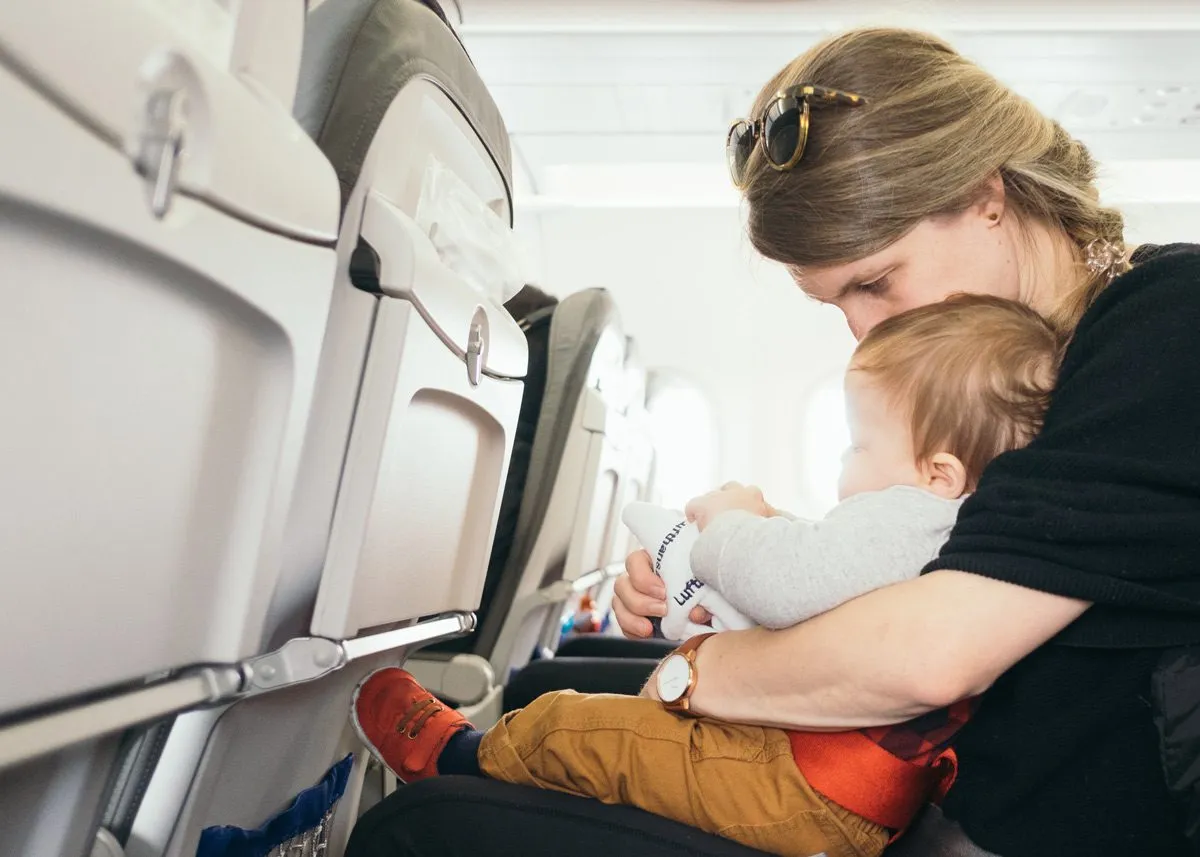
Is there food for infants on board the plane?
Infant food is considered special meal, which must be ordered in advance, like kosher or vegetarian menus. It's best to do this when purchasing your ticket, but you can also order meals later: through your personal account or the carrier's call center. The main rule: special meals for the baby must be booked at least two days before the trip.
Usually, special meals for babies are coded with the abbreviation BBML (baby meal). This is pureed food in a jar, milk, or juice with a straw.
We recommend taking baby food with you just in case: there is a risk that the infant will refuse to eat unfamiliar food. Usually, there are no obstacles to transporting baby food: even if it concerns liquids that exceed the limit, aviation security personnel are accommodating.
Where can you change an infant on the plane
Some restrooms have fold-down changing tables. You can change the child there. Keep wipes, diapers, and a change of clothes in your hand luggage in advance to act quickly. You can also change the infant before you board the plane: airports always have a mother and child room. And of course, you should not change diapers right in your seat on the plane, so that the flight is comfortable for all passengers.
How to make the flight more comfortable for an infant
Check in for your flight in advance. Traveling with a child will require a large number of additional items: a stroller, car seat, diapers, slings, heavy luggage. Standing in line with all of this is very difficult. The earlier you check your luggage, the more comfortable you will feel.
Arrive at the airport early. Flying with a child means twice as much hassle. You will definitely need extra time to check in the stroller, change a diaper in the mother and child room, and feed the infant. The more you rush and stress, the more anxious your infant will be, so it's best to allow plenty of time, relax, and not rush.
Use the Fast Track program. This is a service that involves passing pre-flight formalities, including check-in, passport, and customs control in an accelerated mode. A detailed description of Fast Track capabilities is available, for example, on the S7 website. This service is not available at all airports. You will have to pay extra for it. If Fast Track services are not available at the airport, you can use the VIP lounge: most pre-flight procedures are allowed to be completed there.
Fly during the hours when the child is used to sleeping. This doesn't always work, as the infant may be anxious due to the unfamiliar environment. But it still increases the chance that they will follow their habit and fall asleep according to their usual schedule.Feed the child during takeoff and landing. Children's ears are sensitive to changes in atmospheric pressure. Due to unpleasant sensations, the child may cry intensely. If you breastfeed or give a bottle, swallowing will prevent unpleasant sensations in the ears. You can also give the infant a pacifier.
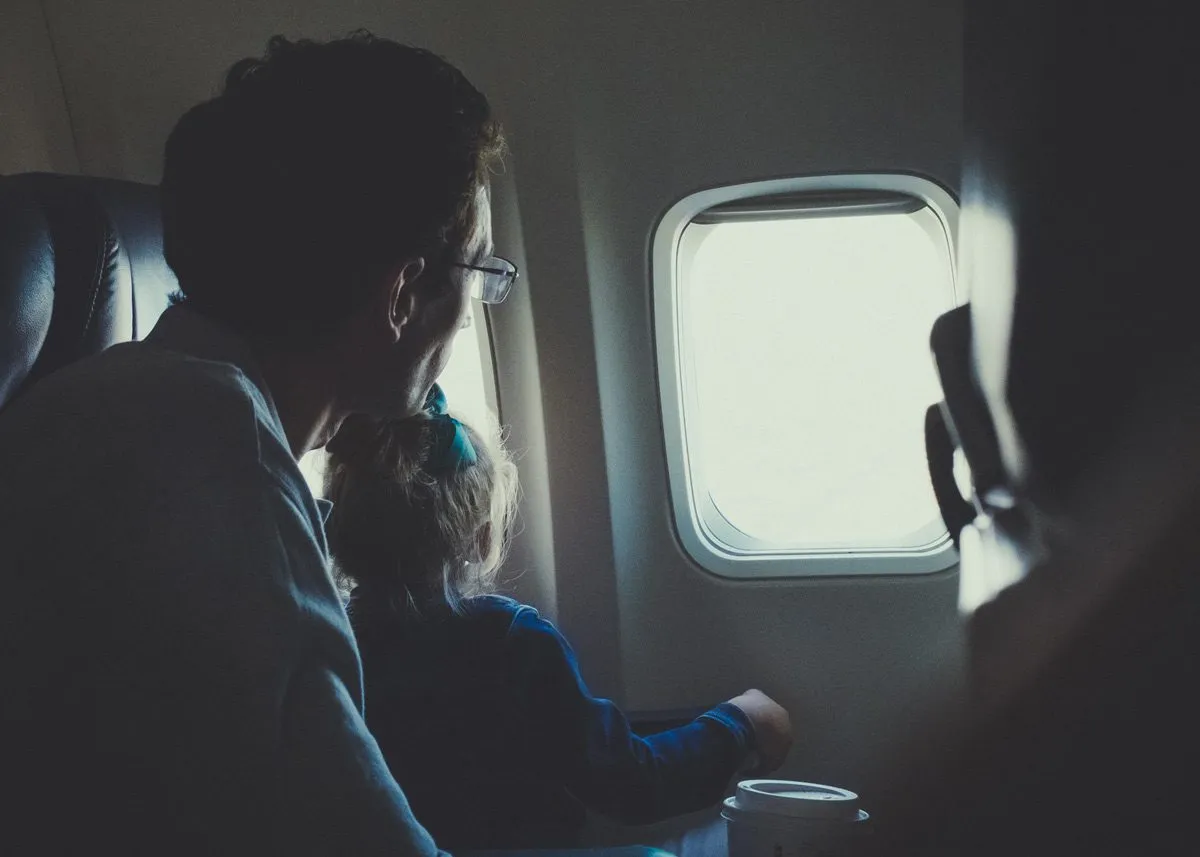
What to do at the airport if you're flying with an infant
Visit the mother and child room. In such a room, there is a private area where you can change diapers and clothes, a kitchen, high chairs for eating, and a small play area.
Play. It's best to bring both new and old toys. New ones will help attract the child's attention for a while, while old ones will create a cozy atmosphere and remind them of home.
What to take on a plane for a flight with an infant: checklist
• favorite books and toys;
• baby food, in case the child doesn't want to eat puree from the special menu;
• car seat (if a separate seat ticket has been purchased for the baby);
• wet wipes;
• diapers;
• necessary medications;
• a blanket to wrap the baby in during sleep.
