Have you heard that the risk of catching ARVI on a plane is 100 times higher than on the ground? In this article, we will look at the main reasons for such rapid spread of infection and how to protect yourself from an unwanted cold.
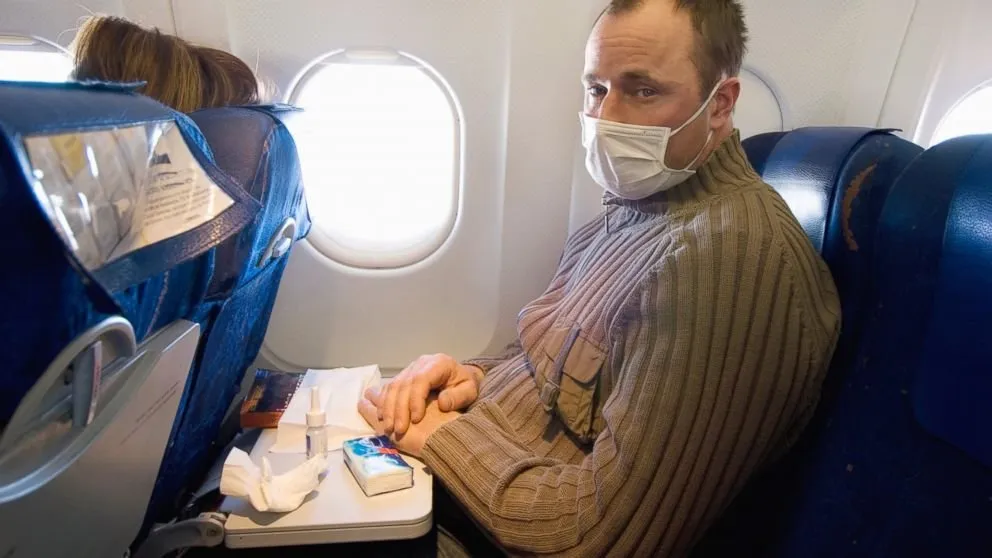
Why do infections spread faster on a plane? There can be several reasons.
Air in the airplane cabin
One of the most common misconceptions about cabin air quality is that you breathe the same air throughout the flight; fortunately, this is not the case. A special aircraft internal environment control system takes outside air and mixes it with filtered internal air in a 50/50 ratio, after which it supplies it to the cabin.
The ventilation system design provides for the supply of ventilation air to each row of seats, as well as the collection of exhaust air from the space of the same row. This reduces, but does not eliminate, the risk of infection spreading throughout the aircraft cabin.
Special HEPA filters are used to purify the air in the cabin. They trap viruses and infections, with a purification efficiency of 94–99.97%. However, for stable and effective operation, these filters must be checked regularly. If the filters are not subjected to regular maintenance, the risk of deteriorating indoor air quality increases.
What to do? There are two solutions here:
- wear a mask
- use oxoline ointment
Bacteria and infections on the interior parts of the cabin
Armrests, tray tables, lavatory…. in short, everything you can touch in the cabin carries various viruses and infections.
After each flight, the airplane cabin is cleaned, but not disinfected. The conclusion is simple – wash your hands more often and carry an antiseptic hand gel with you. You can buy it at the checkout of almost any store now.
Low air humidity
The third and main reason for the rapid spread of infection is low air humidity in the airplane cabin.
Aircraft internal environment control systems dehumidify outside air using moisture separators. As a result, the only sources of moisture in the cabin are passengers' breathing and evaporation from the human body surface.
The average air humidity in the cabin is only 10–20%, when it should normally be 35-40%.
At very low humidity levels, your body's natural defense system, the mucus in your nose and throat, dries out, thereby eliminating the barrier between your body and infection.
How to avoid a cold on a plane?
Avoid dehydration. Drink more fluids, ideally in small sips throughout the flight. Remember that coffee, alcohol, and caffeinated beverages contribute to dehydration, so don't overindulge in them during your flight.
Keep your hands clean. As we wrote above, wash your hands more often and use antiseptic hand gel.
Use antiviral drugs. One of the most popular is oxoline ointment, which should be applied inside the nostrils, thereby creating a barrier against infections. Your doctor may advise you on other remedies.
If you have a cold, try to postpone your trip. Remember that many airlines' rules include a clause stating that flight attendants can remove you from the plane if you could cause infection to other passengers.


