Guide to France: desert, art, and Provençal fjords
Our designer Anya spent three months in France among oysters, baguettes, and architectural masterpieces. Now she shares her route and impressions. What is real France like?
 Everything here was surprising. Cheese and wine cost two euros, but potatoes are more expensive than tomatoes! Trains and intercity buses might not arrive or be four hours late without explanation — no one is surprised by this anymore. In the end, we got used to it — we stopped rolling our eyes to the sky, silently asking: “how is that even possible?”.
Dates:
August 10 - October 29, 2018
Documents:
Schengen visa for 90 days of stay per half-year. Medical insurance expired on the 30th day
Flights:
There: Saint Petersburg-Helsinki (ferry) 4,000 rubles for a double cabin
Helsinki-Nice (Norwegian Air), 5,000 rubles (per person)
Back: Cologne-Moscow (Pobeda) 6,000 rubles with luggage (per person)
Accommodation:
Airbnb, Booking, friends, Couchsurfing
Apartments on Airbnb cost 2,500-4,000 rubles per day; the more days of stay, the lower the cost.
Hotels on Booking cost from 3,000-6,000 rubles per day,
Friends and Couchsurfing — priceless.
Food:
We bought groceries at supermarkets, went to markets in the morning for seafood delicacies, cooked at home, and ate at friends' places.
Average daily bill — 30 euros for two, dinner at a restaurant cost 30-100 euros for two.
Transport:
Flixbus, Ouibus, SNCF (rail), Blablacar, low-cost carrier EasyJet, bicycle, and on foot.
SNCF is expensive but fast (Sète-Barcelona 150 euros)
Buses are cheaper but slower (Sète-Barcelona 30-50 euros)
Everything here was surprising. Cheese and wine cost two euros, but potatoes are more expensive than tomatoes! Trains and intercity buses might not arrive or be four hours late without explanation — no one is surprised by this anymore. In the end, we got used to it — we stopped rolling our eyes to the sky, silently asking: “how is that even possible?”.
Dates:
August 10 - October 29, 2018
Documents:
Schengen visa for 90 days of stay per half-year. Medical insurance expired on the 30th day
Flights:
There: Saint Petersburg-Helsinki (ferry) 4,000 rubles for a double cabin
Helsinki-Nice (Norwegian Air), 5,000 rubles (per person)
Back: Cologne-Moscow (Pobeda) 6,000 rubles with luggage (per person)
Accommodation:
Airbnb, Booking, friends, Couchsurfing
Apartments on Airbnb cost 2,500-4,000 rubles per day; the more days of stay, the lower the cost.
Hotels on Booking cost from 3,000-6,000 rubles per day,
Friends and Couchsurfing — priceless.
Food:
We bought groceries at supermarkets, went to markets in the morning for seafood delicacies, cooked at home, and ate at friends' places.
Average daily bill — 30 euros for two, dinner at a restaurant cost 30-100 euros for two.
Transport:
Flixbus, Ouibus, SNCF (rail), Blablacar, low-cost carrier EasyJet, bicycle, and on foot.
SNCF is expensive but fast (Sète-Barcelona 150 euros)
Buses are cheaper but slower (Sète-Barcelona 30-50 euros)
 We spent a lot of time walking and visiting art museums, as they covered almost all our interests. Each city had something special, which makes remembering this trip so warm!
 We worked and swam all month, even painted five pictures! We went to the nearest city, Montpellier, to buy paints and canvases. There, we also found an interesting modern church Eglise des Saints François.
 A couple of kilometers from Bordeaux is the famous Frugès housing estate, where Le Corbusier also left his mark. Here are four types of buildings, varying in configuration and layout – ribbon houses, terraced houses, and detached houses. The estate was placed under UNESCO protection, and since there is no money for its maintenance (and people are not allowed to touch the facades of the buildings), everything is in a very deplorable state, and one house even burned down.
 We got there by three trains from Strasbourg!
In this small village, there are two hotels, but we stayed in a real castle Château de la Houillère with Christopher. In the forest, with a fireplace, a bulldog, furniture, decor, and five double rooms. Breakfast was at a large round table for 10 people. I even felt like a princess.
3 months in France — an unforgettable experience and excellent language practice. If you have such an opportunity, go without hesitation!
More photos on my Instagram.
We got there by three trains from Strasbourg!
In this small village, there are two hotels, but we stayed in a real castle Château de la Houillère with Christopher. In the forest, with a fireplace, a bulldog, furniture, decor, and five double rooms. Breakfast was at a large round table for 10 people. I even felt like a princess.
3 months in France — an unforgettable experience and excellent language practice. If you have such an opportunity, go without hesitation!
More photos on my Instagram.
***
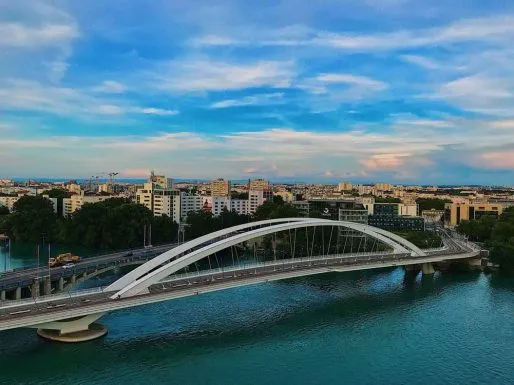
In August, my friend and I went to conquer French lands. We were able to fully immerse ourselves in art, eat many oysters, run in the desert, travel almost all of France, all while working remotely.Our route: Nice → Lyon → Dijon → Paris → Poissy → Sète → Montpellier → Marseille → Toulouse → Lisle-sur-Tarn → Albi → Bordeaux → Arcachon → Pessac → Strasbourg → RonchampReal France is away from Paris and other big cities. Most French people prefer to live in their own houses, not apartments. They have short breakfasts — almost fleeting, but dinners stretch until midnight. People there are smiling, give compliments, are in no hurry, and look for eye contact to start a conversation.
Everything here was surprising. Cheese and wine cost two euros, but potatoes are more expensive than tomatoes! Trains and intercity buses might not arrive or be four hours late without explanation — no one is surprised by this anymore. In the end, we got used to it — we stopped rolling our eyes to the sky, silently asking: “how is that even possible?”.
Dates:
August 10 - October 29, 2018
Documents:
Schengen visa for 90 days of stay per half-year. Medical insurance expired on the 30th day
Flights:
There: Saint Petersburg-Helsinki (ferry) 4,000 rubles for a double cabin
Helsinki-Nice (Norwegian Air), 5,000 rubles (per person)
Back: Cologne-Moscow (Pobeda) 6,000 rubles with luggage (per person)
Accommodation:
Airbnb, Booking, friends, Couchsurfing
Apartments on Airbnb cost 2,500-4,000 rubles per day; the more days of stay, the lower the cost.
Hotels on Booking cost from 3,000-6,000 rubles per day,
Friends and Couchsurfing — priceless.
Food:
We bought groceries at supermarkets, went to markets in the morning for seafood delicacies, cooked at home, and ate at friends' places.
Average daily bill — 30 euros for two, dinner at a restaurant cost 30-100 euros for two.
Transport:
Flixbus, Ouibus, SNCF (rail), Blablacar, low-cost carrier EasyJet, bicycle, and on foot.
SNCF is expensive but fast (Sète-Barcelona 150 euros)
Buses are cheaper but slower (Sète-Barcelona 30-50 euros)
We spent a lot of time walking and visiting art museums, as they covered almost all our interests. Each city had something special, which makes remembering this trip so warm!
Nice
A story happened in the very first city. We wanted to stay with a couchsurfer, but his brother had died the day before, so we couldn't stay with him. Therefore, we were stuck at the airport for three hours looking for accommodation. Booking caused panic — offering hostels for unimaginable money. Our only hope was another couchsurfer. But only Moroccan guys responded to our urgent call. We were a little scared, so on the way to meet them, we checked every hostel. In one, luck smiled upon us, and we checked into a five-bed room for 100 euros per night for two. Since we had already arranged to meet those guys, we decided not to bail and at least go for a walk with them. They invited us to their home, fed us Moroccan food, and were friendly. In short, we had a great time, and stereotypes — ugh.
Lyon
We lived in an apartment whose windows overlooked the train station. We had to listen to the noise of trains around the clock. At first, it drove us crazy, but eventually, we got used to it. We were a little shocked by the sight of military patrols. Imagine: groups of eight people in helmets with loaded weapons vigilantly monitoring the safety of cities across France. What we saw and did:- We were impressed by Musee des confluences — a science center and anthropology museum. This is for lovers of glass, steel, and complex forms. Architects from the studio Coop Himmelb(l)au.
- Gallo-Roman Museum of Lyon-Fourvière — the museum of Gallo-Roman civilization is located on Fourvière hill next to the ancient theater and odeon. The building is hidden in the hillside. This way, it does not disrupt the overall appearance of the ancient architectural ensemble. Architect Bernard Zehrfuss.
- We liked the atmospheric old town and cats at every turn. We petted them to our heart's content.
- We peeked into the courtyard of the courthouse with its six-story facade staircase Cour des Voraces.
- We lounged in Parc des Hauteurs — a green hilly park with crowds of huge snails.
- We worked on the lawn in Parc de la Tête d'Or. There's a free botanical garden and zoo with turtles, flamingos, deer, giraffes, and fearless geese. The main thing is that you are just as fearless.
- We bought goat cheese and drank wine at the AOC market.
- We walked around the concert hall Auditorium-Orchestre National de Lyon.
- We visited an exhibition dedicated to Andy Warhol at the Museum of Printing and Graphic Communication, Musée de l'imprimerie et de la communication graphique.
Dijon
I will never forget all the spoons of Dijon mustard I ate! And our noses got sunburned, and we ran from bees. The city is interesting because it was the birthplace of Gustave Eiffel, the father of France's main landmark. What we saw and did:- We hung out at a huge student campus.
- 2. Stade Gaston-Gérard — a football field you can get into if you try opening all the doors.
- We walked around the old town.
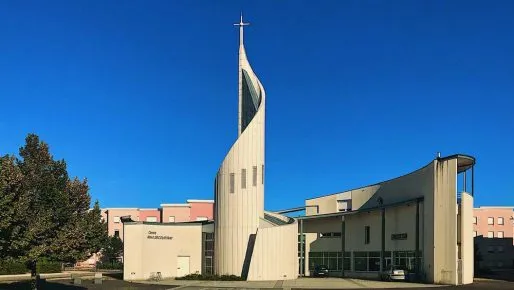
- We liked the snail-shaped Catholic church Centre Albert Decourtray.
- We shopped at the market built by Eiffel.
- We met many friendly people: bonjour madame, bonjour monsieur!
- And the contemporary art museum Le Consortium was closed for holidays. No worries, we'll be back!
Paris
Here, an old friend was waiting for us, in whose apartment we settled. Yes, France reveals itself in small towns, but not visiting Paris would have been foolish! What we saw and did:- We attended an organ concert at Notre-Dame de Paris.
- 2. At the Centre Pompidou — there was a temporary exhibition of Le Corbusier's chairs, tables, and building plans.
- We got acquainted with French fashion at Marni and Balenciaga on the Champs-Élysées.
- We visited the home of iconic 20th-century artists Jean Arp et Sophie Taeuber. The foundation has a good collection of sculptures.
- We tried beer with grenadine. Unusual! Recommended.
- We saw the city panorama from the Arab World Institute.
- We liked the modern metal house maison individuelle rue de l'Ermitage. Architect Christophe Lab.
- We had a picnic in La Villette park next to the spherical cinema.
- We went to the La Défense business district, saw business centers, sculptures by Alexander Calder and Joan Miró, and a large cube-shaped arch.
- We visited the Catholic church Notre-Dame d'Espérance.
- We peered over the fence at the residential villa Maison Jaoul by architect Le Corbusier.
- We saw the homeless shelter La cité de refuge by architect Le Corbusier. Color combinations characteristic of the author: red, green, yellow, blue. We stared so intently into the windows looking for interesting forms that we almost ended up getting a free dinner at the shelter.
- The brick church Notre-Dame de La Sagesse stole our hearts.
- Le Corbusier's villa-museum Maison La Roche also captivated us. The combination of different volumes, playing with perspective, blurring the line between “inside” and “outside,” and, most importantly, the active use of color.
Poissy
A small town and commune in the French department of Yvelines, district of Saint-Germain-en-Laye. We walked around and inside Villa Savoye. This is a country house for industrialist Pierre Savoye, designed by French architect Le Corbusier in 1929-1930. A matchbox on stilts. Inside, a set of plastic sensations. Villa Savoye can only be truly felt by touching it, by being inside it. Come and feel it too!
Sète
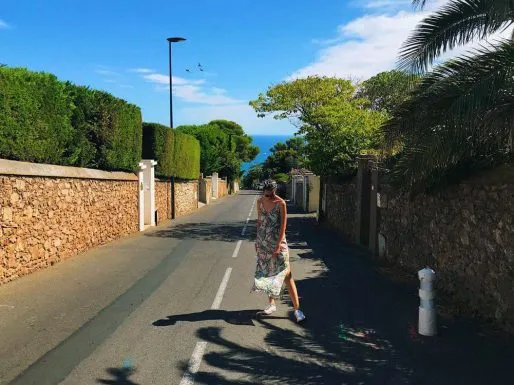
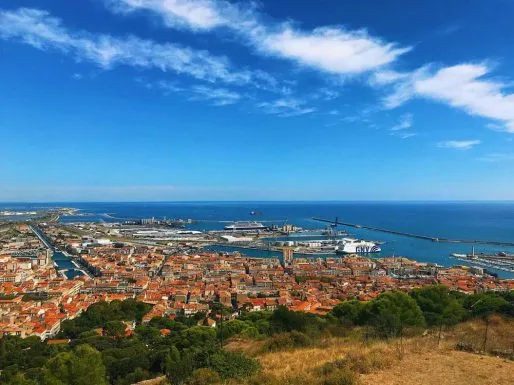
A small commune on the French Riviera, near Montpellier — a resort for the French themselves. And you can understand why — it's a cozy place with a beautiful coast, rocky and sandy beaches, and the sound of big and small waves. There are many cheap seafood options here: mussels, oysters, snails, shrimp, small fish...
We worked and swam all month, even painted five pictures! We went to the nearest city, Montpellier, to buy paints and canvases. There, we also found an interesting modern church Eglise des Saints François.
Marseille
We stayed overnight in a residential unit built by guess who? Yes, our old “acquaintance” Le Corbusier. Unité d'Habitation — a residential building with a hotel on the second floor, and on the roof, there's a stage, a kindergarten, a swimming pool, and a running track. You can walk around the building all day, being in completely different spaces. What we saw and did:- We climbed to the highest point of the city Basilique Notre-Dame de la Garde.
- We walked in the old port, looking at a million yachts of different characters.
- We saw the conference hall standing in the water Villa Méditerranée.
- We rode the metro without a ticket. No, not ashamed.
- We watched the sunset on the shore.
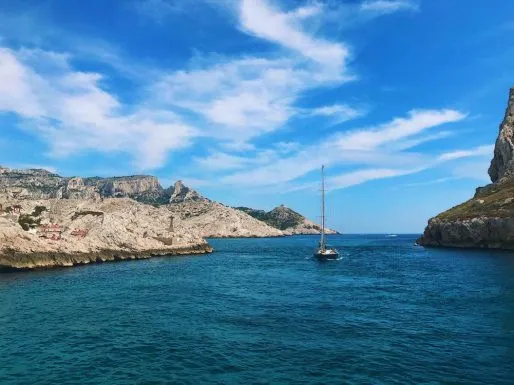
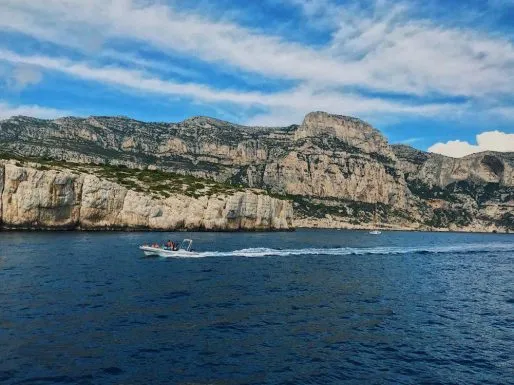
- We took a boat tour of the calanques Parc national des Calanques. These are Provençal fjords between Marseille and Cassis. You can take a tent, trek through the mountain ranges, and spend a couple of days in a beautiful place.
Toulouse, the "Pink City"
Toulouse is the fourth most populous city in France. It has unique architecture, and the city is called “pink” because of the color of its bricks. The entire old town was built from this traditional material. No rose-tinted glasses needed! What we saw and did:- We gave a painting to a passerby while sitting in the park with all our belongings and canvases.
- We stayed with a friend who had a smart speaker "Alexa"; it turned the lights on and off, but flatly refused to play Russian music.
- We went to a couchsurfer party, played board games there, and met new people.
- We cycled all over the city on rented city bikes.
Lisle-sur-Tarn
A small commune 50 kilometers from Toulouse, with vineyards and a population of about 3,000 people. We also stayed with friends there, who fed us unusual food: artichokes with vinaigrette sauce, risotto with Greek salad, baked Camembert, dorada with salad and balsamic vinegar, steaks and chicken wings, pot-au-feu, tartiflette.
Albi
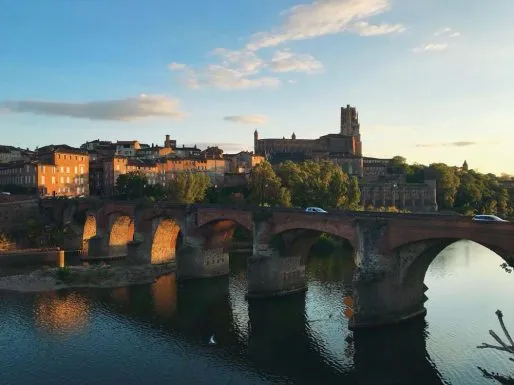
A small three-tiered town with huge predatory fish in the river that hunted pigeons. Just imagine the scene! The city was interesting because the famous French post-impressionist artist Toulouse-Lautrec lived and was born there. And there was a large collection of his paintings, posters, and graphics at the Musée Toulouse-Lautrec.Bordeaux and Pessac
In Bordeaux, endless rain and wine awaited us. Well, okay) What we saw and did:- We ate salmon tartare and drank regional red wine.
- Miroir d'eau — the world's largest “pool” with an area of 3450 square meters. If you stare at it long enough, you might see someone washing their feet there.
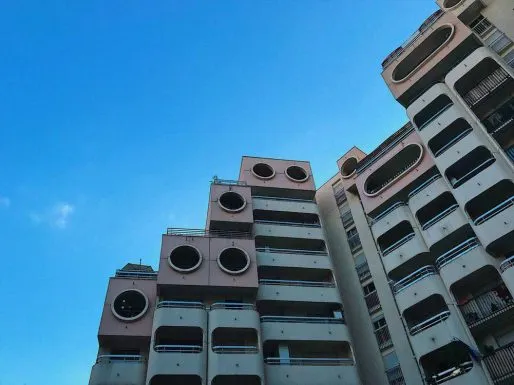
A couple of kilometers from Bordeaux is the famous Frugès housing estate, where Le Corbusier also left his mark. Here are four types of buildings, varying in configuration and layout – ribbon houses, terraced houses, and detached houses. The estate was placed under UNESCO protection, and since there is no money for its maintenance (and people are not allowed to touch the facades of the buildings), everything is in a very deplorable state, and one house even burned down.
Langon
A ruined town, but with the coolest night sky, star by star, constellation by constellation. Lying in the park and watching such a sky is pure pleasure. It's worth visiting for at least a day just for that.
Arcachon
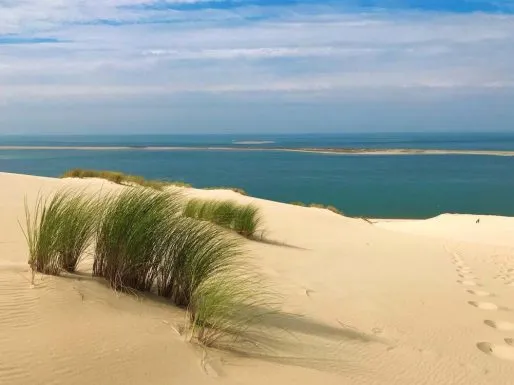
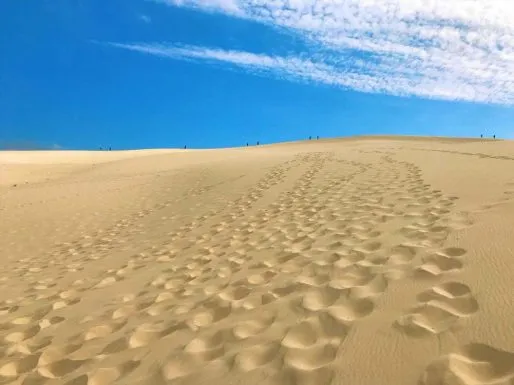
And here's the desert! Dune du Pilat — a large sand dune. It is located 6 km from Arcachon. This dune stretches for 3 km and rises 130 meters above sea level. On one side, there's a forest, on the other, the Bay of Biscay, transitioning into the Atlantic Ocean. Amazing views! Also, due to the proximity of the ocean, there are many oyster farms in this region.
Strasbourg
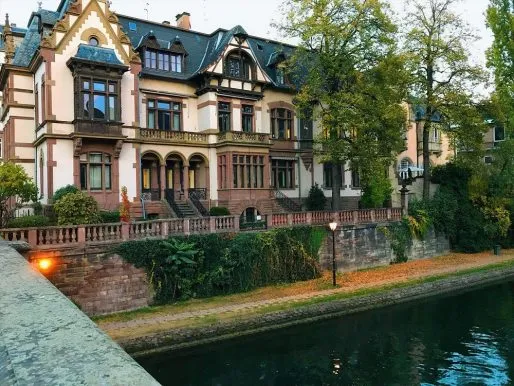
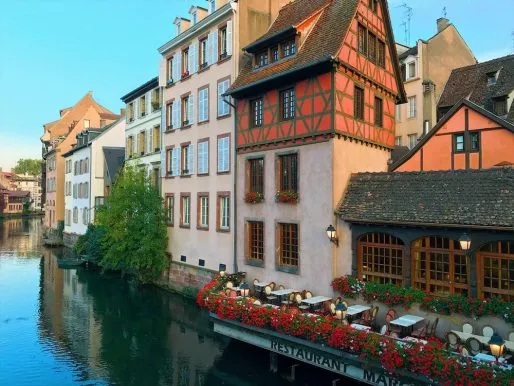
The most vibrant student town with a German atmosphere. Fresh, beautiful, clean, free — perfect for bicycles. And across the bridge is Germany! What we saw and did:- Here are the unique Alsatian houses in the "Petite France" quarter. The doors of almost every house can be reached by water.
- One of the largest red sandstone buildings is Strasbourg Cathedral. Red sandstone is unique because it changes its color from pink to golden and from red to gray under different lighting.
- The most delicious pastries, éclairs, and charlottes in all of France.
- We tried a local dish — choucroute. Roughly speaking, it's sausages with boiled potatoes, like at grandma's house.
- We came across an interesting architectural solution for a tennis club — Ill Tennis Club, by architect Paul le Quernec.
Ronchamp
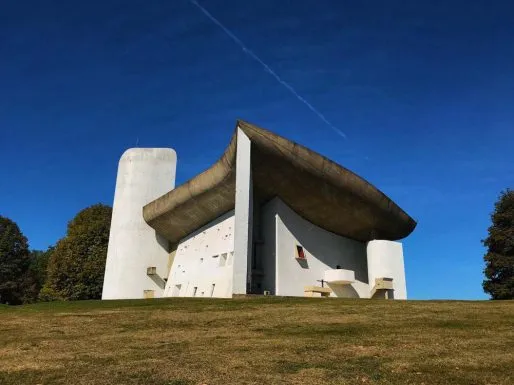
And here is the most unusual church, which externally looks more like a residential building. Notre-Dame du Haut — a concrete church by architect Le Corbusier, beautiful inside and out. It stands in the small French village of Ronchamp on a hill, surrounded by forest. Freedom, color, and light! Le Corbusier was not religious and was skeptical of the proposal to build a church. He changed his mind only after a trip directly to the construction site — in Ronchamp. He was ambitious and put forward a number of conditions to the Catholic Church leadership, the key of which was that he would have complete freedom of action and thought in designing the building. This is absolutely free architecture. And an essential element of this architectural solution is the landscape, opening up to four horizons.
We got there by three trains from Strasbourg!
In this small village, there are two hotels, but we stayed in a real castle Château de la Houillère with Christopher. In the forest, with a fireplace, a bulldog, furniture, decor, and five double rooms. Breakfast was at a large round table for 10 people. I even felt like a princess.
3 months in France — an unforgettable experience and excellent language practice. If you have such an opportunity, go without hesitation!
More photos on my Instagram.