Child's Travel Abroad
On the eve of the tourist season, more and more parents are concerned about how to properly prepare documents for a child's travel abroad? Let's look into this issue.
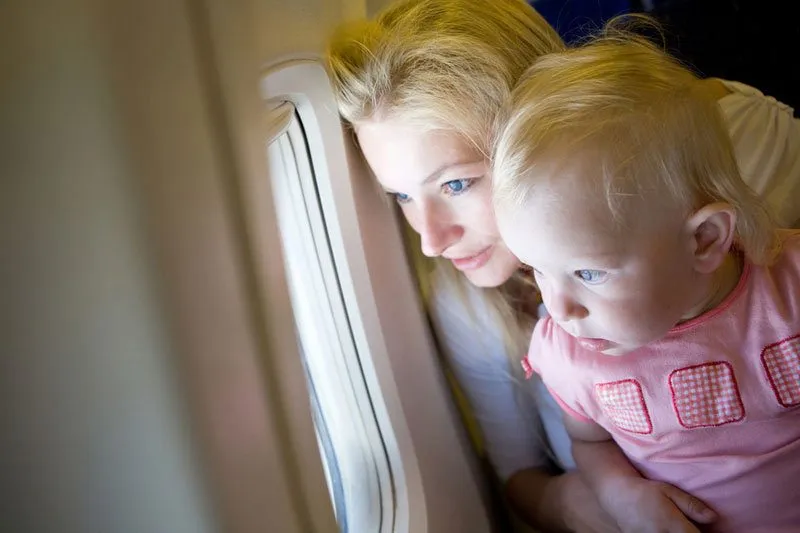
Child's Travel Abroad with Both Parents
Documents required for a child under 14 years old to travel abroad: 1. Foreign passport, or 2. Parent's passport, with a glued-in photo of the child, bearing the seal of the passport and visa service (only for documents issued before March 2010), or 3. Birth certificate with a stamp or insert confirming Russian citizenship, when traveling to Belarus, Ukraine, Kazakhstan, Moldova, Tajikistan, the Kyrgyz Republic, Abkhazia, South Ossetia, and Armenia. Children over 14 years old, when traveling abroad, must have their own passport. If your child has a different surname and crosses the border with their own passport, we recommend taking a notarized copy of the birth certificate with you.Child's Travel Abroad with One Parent
If a child travels abroad with only one parent, written consent from the second parent is not required. Except in cases where a statement prohibiting the child's travel abroad has been issued. Please note that this requirement applies only to travel outside the Russian Federation. Entry and exit rules for other countries may differ, so to avoid unpleasant situations, we advise obtaining notarized consent from the second parent for the child's travel.What documents may be required at the borders of other countries?
- If the child is under your guardianship or trusteeship, consent from the guardianship authorities may be required.
- In case of the death of the second parent, we recommend taking a notarized copy of the death certificate with you.
- If the father is listed in the birth certificate based on the mother's words, then for traveling abroad, as well as for obtaining a visa, a certificate from the civil registry office (ZAGS) form No. 25, confirming single mother status, may be required.
- In cases where one parent is deprived of parental rights, a copy of the court decision is required.
- If the whereabouts of the second parent are unknown, a certificate from the police must be provided stating that they are wanted or considered missing.
Child's Travel with a Relative or Escort
A child's travel abroad without parents or guardians is permitted only with their own passport and notarized consent for the child's travel abroad. This means that if a child travels with a grandmother or an adult brother or sister, a notary must be contacted before the trip to obtain permission.Requirements for the Form and Content of Parental Consent for a Child's Travel
There is no single, legally approved form of parental consent for a child's travel abroad. As a rule, the notary has samples of this statement. However, according to the law "On the Procedure for Exit from the Russian Federation and Entry into the Russian Federation," this document must contain information about the period of travel and the state or states the child intends to visit. Specifying a country as "EU country" or "CIS country" is not allowed. The validity period of this consent may be limited by a date, for example, until 31.12.2013, as well as by a period calculated in years, months, weeks, days, or hours. In addition, the period may be determined by specifying a certain event, such as reaching adulthood, the expiration of a visa, or a passport. If you are obtaining consent for travel to get a visa, clarify with the consulate or visa center what information should be included. Requirements can vary significantly in different countries.Child's Travel Without an Escort
First, let's determine from what age children can travel abroad unaccompanied.- Children under 2 years old – can only travel accompanied by an adult.
- Children from 2 to 12 years old – can travel independently, only with the consent and under the supervision of the carrier. As a rule, this point is specified in the carrier's rules.
- Children over 12 years old – can travel unaccompanied.
