Can you carry medications on a plane?
If you are going on a trip, do not forget to take your pills with you. Illness during vacation is not uncommon — from acclimatization to exacerbation of chronic diseases. To be safe, it's worth taking care of your first-aid kit in advance.
Let's figure out if you can take medications on a plane and which drugs are prohibited from being carried across the border.
However, we warn you: before using any medications, you should consult a specialist.
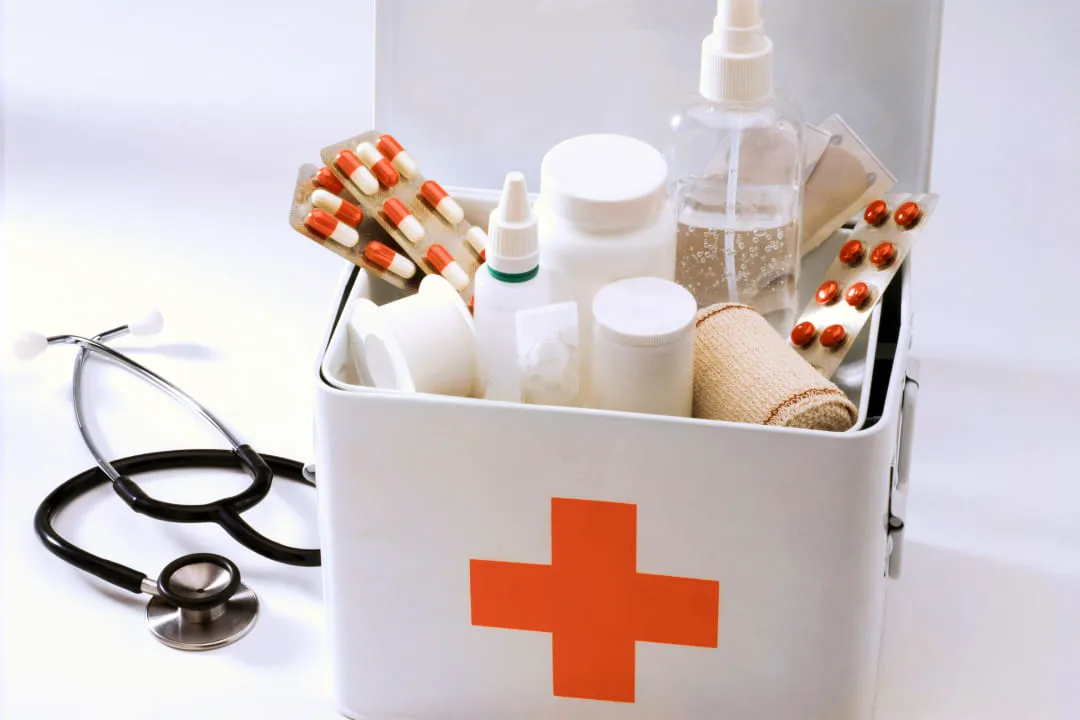
Customs rules for carrying medications on a plane
You can carry medications both in the aircraft cabin and in checked baggage. There are few transportation requirements; restrictions mainly concern liquid medications and potent drugs that contain narcotic substances. In both cases, the solution is one: a doctor's prescription will be required. If the passenger has a supporting document, they will be allowed to carry the medication.
When a prescription is needed:
- the drug contains narcotic or psychoactive substances;
- if the volume of the medication is more than 100 ml, and you intend to take it into the aircraft cabin.
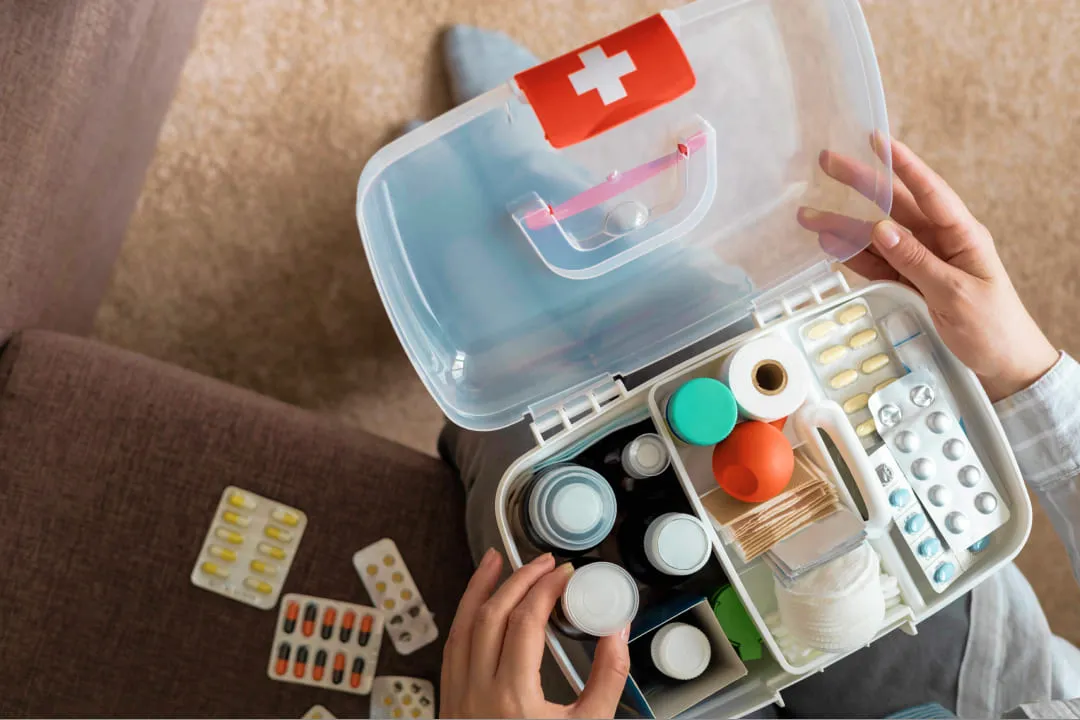
Flights within Russia
Requirements for carrying medications on a plane vary and depend on whether you will be traveling abroad or not. If you are traveling within Russian cities, you can carry medications freely.
In checked baggage, which you check in during flight registration, it is permitted to carry medications in any quantity. Although, of course, it's not advisable to fill your suitcase with packs of pills: customs officers will have questions. Pills can be carried in hand luggage on the plane. In addition, you can take dragees and powders with you.
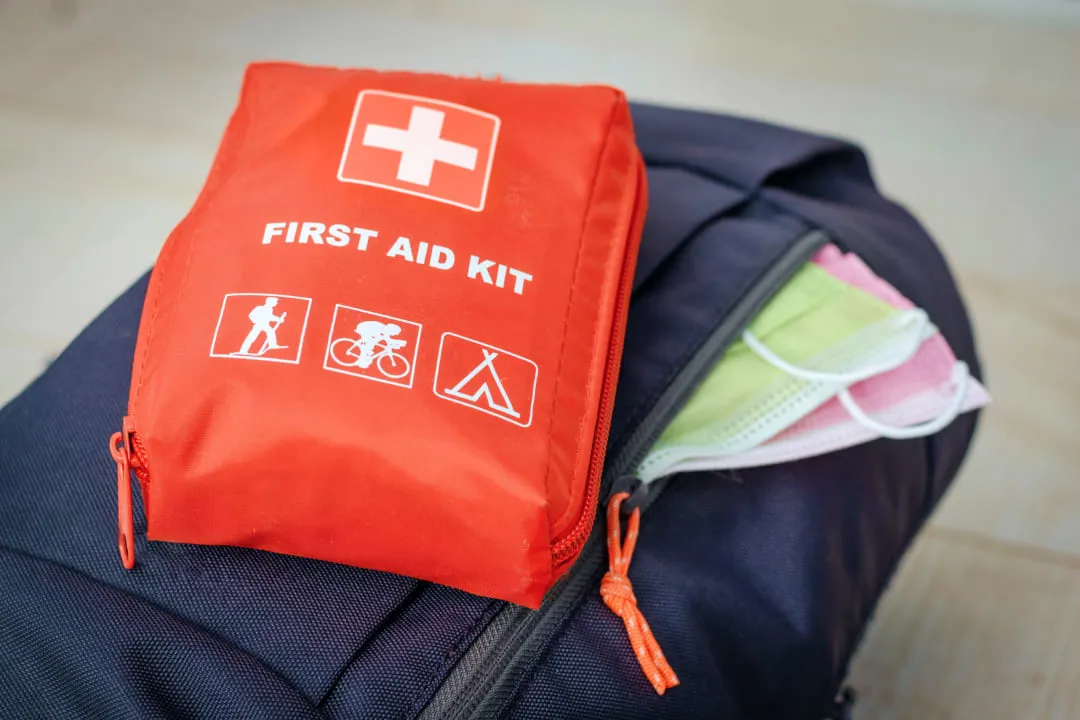
However, there are separate requirements for carrying liquids in the cabin: they must be packed in containers no larger than 100 ml each. The maximum total volume of liquids carried is one liter.
So, if you plan to put cold syrups, tinctures, or ointments in your backpack or bag, pack them according to the rules. In a critical situation, when you need to take a medication in a bottle larger than 100 ml on board the aircraft, you should show airport staff a doctor's prescription and a medical history extract with a signature and seal. In this case, it will be impossible to find fault with you.
International Flights
Each country has its own customs restrictions. Before traveling abroad, you need to check whether medications can be carried in hand luggage or checked baggage on resources that list the customs rules of your destination country.
Common restrictions:
- it is forbidden to import medications containing ephedrine into Thailand — a substance that relieves bronchospasm and is part of many cough mixtures;
- when crossing the border into EU countries, you cannot bring melatonin;
- UAE is a country where codeine, one of the most popular remedies for blocking the cough reflex in bronchitis and tracheitis, cannot be imported;
- in Lithuania, popular heart medications such as Valocordin and Corvalol are prohibited. In the USA — too;
- customs officers might not notice prohibited items in your luggage. And of course, your relatives, friends, and acquaintances “have traveled a hundred times, and no one ever asked”. But we do not advise taking risks: if the medication is found, it can result not only in its confiscation but also in problems with local law.
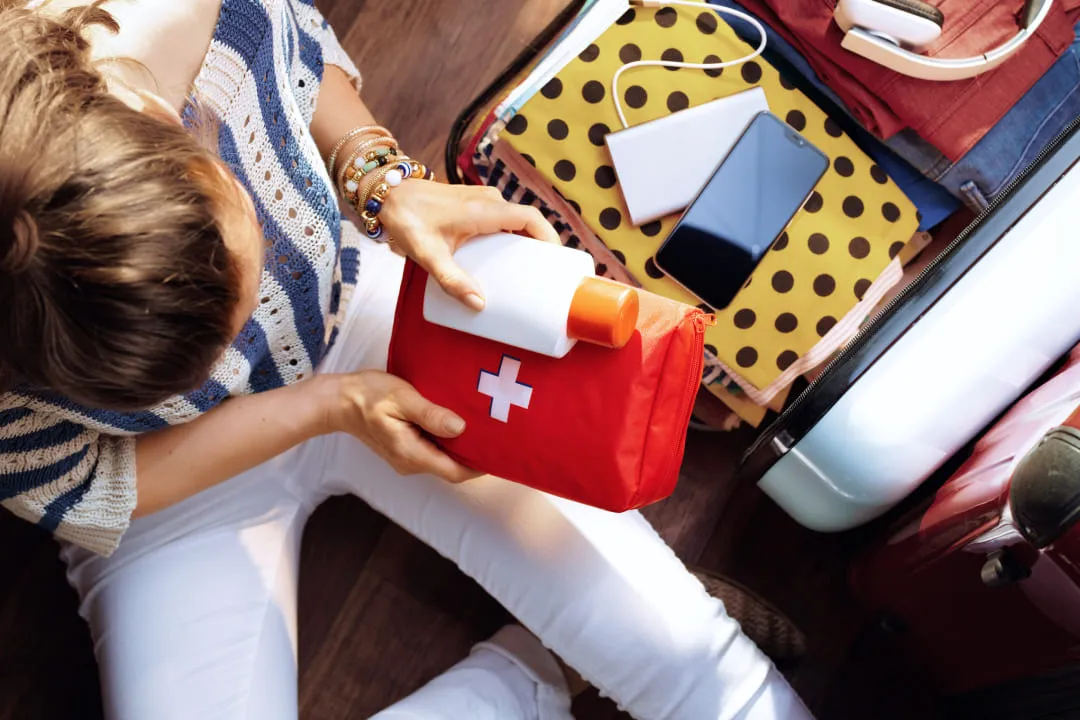
If you are carrying suspicious medications or a large quantity of the same medication, be sure to bring a prescription to avoid trouble.
Here is a partial list of medications that may cause problems at the border:
- «Sedalgin»,
- «Nurofen Plus»,
- «Codelac»,
- «Terpincode»,
- «Solutan»,
- «Broncholitin»,
- «Ketanov»,
- «Theofedrine-N»,
- «Valocordin»,
- «Corvalol».
Rules for carrying liquid medications
Passengers often worry if liquid medications can be carried in hand luggage. For liquid preparations — ointments, syrups, drops, tinctures — the requirements are the same as for cosmetics: mandatory packaging in containers up to 100 ml and a total maximum volume of 1 liter. So, you can carry syrup or other liquid medication with you, but you will need to pour it into a small bottle beforehand.
If you take a liquid medication regularly, it is critically important for your well-being, and its volume is more than 100 ml, do the following:
- Place the medication in a transparent bag. Do not pour it out of the original factory bottle, which indicates the name and volume.
- During the screening procedure, inform the staff in the screening area that you have liquid medication with you and its volume is more than the allowed 100 ml.
- Show the aviation security officer the prescription for the medication. If you are traveling abroad, it must be translated into the language of the country where you are being screened in advance.
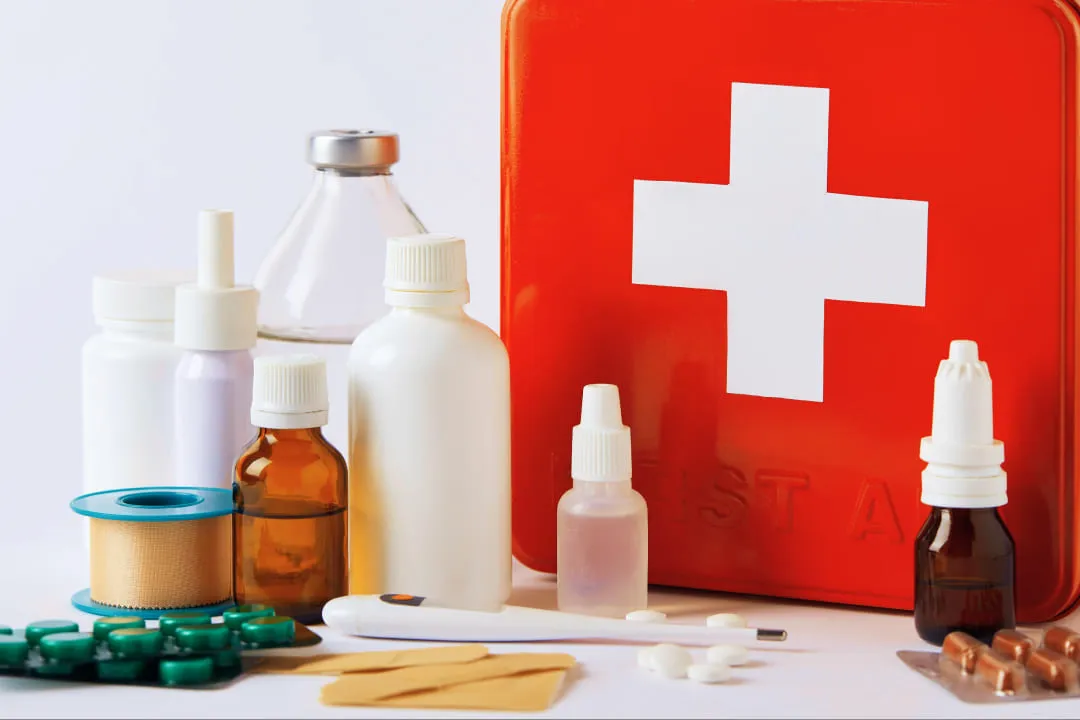
Rules for carrying medications containing narcotic and other prohibited substances
Sometimes doctors prescribe medications to patients that contain psychoactive and narcotic substances. This applies to sleeping pills, tranquilizers, stimulants — in general, all those drugs that directly affect a person's mental state.
Problems may arise with the transportation of potent medications when crossing the border, so if you are going on a trip, take a doctor's prescription and a medical history extract with you. It is best to transport medications in their original packaging and not transfer them to other containers, and at the airport, we recommend taking out the medication and showing the employee all documents confirming that the drug is critically important for you.
The main rule: when crossing the border of the Russian Federation, it is forbidden to carry medications that contain psychotropic and narcotic substances. The full list is — in Government Decree No. 681 of June 30, 1998.
Medications in hand luggage on a plane
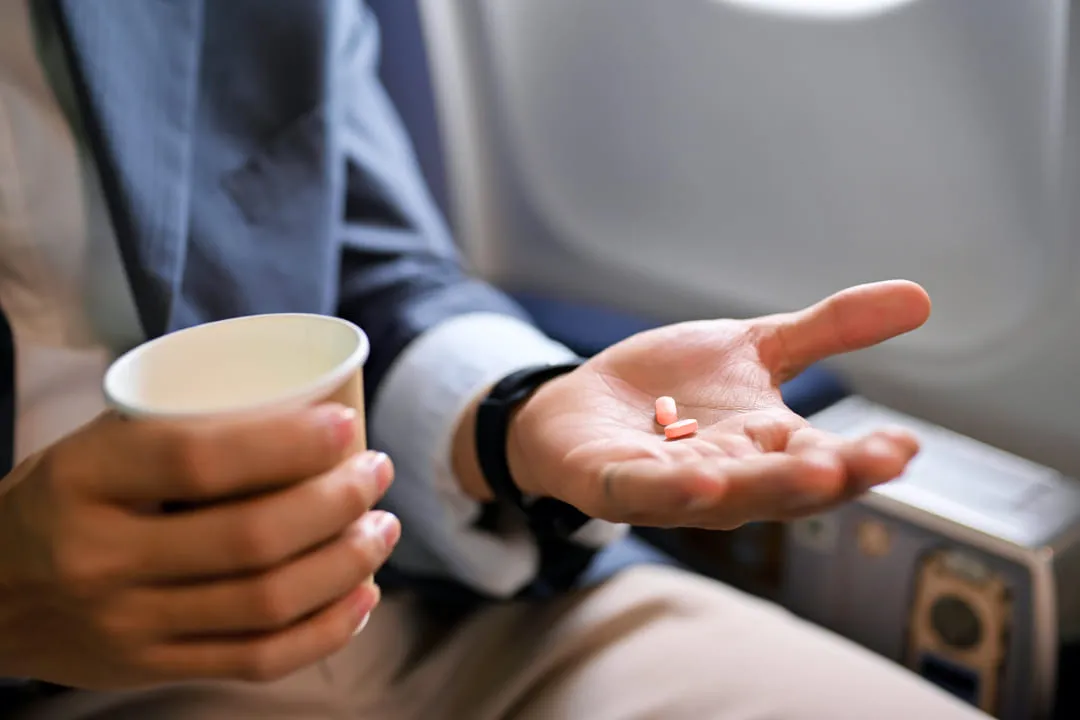
Carrying medications in hand luggage on a plane is possible if they are pills or dragees. Ideally, you should take the medication in its original factory packaging so that you are not asked unnecessary questions during the screening procedure: unlabeled pills can cause confusion. Staff cannot determine by sight exactly what medication you are carrying, so they will have suspicions, and you will spend an extra half hour proving that the medications are fine.
To avoid getting confused by all the rules and losing valuable items on vacation, read our article on baggage rules. It will be very useful for the future.
Liquid preparations — cough syrups, tinctures, drops, ointments — are also allowed in hand luggage, but you will need to pack them in mini-containers up to 100 ml. You can buy these in an online store or a cosmetics store. These are special bottles that are convenient for travel: they close securely and save space in your bag. The containers will need to be packed in a dense, impermeable transparent bag.
What else you can carry with you:
- electronic thermometer;
- medicinal aerosol (up to 100 ml);
- syringes and ampoules for injections, but only with a doctor's prescription. Without a prescription, a syringe with a needle is considered a sharp object, which is prohibited for transport.
We advise distributing medications as follows: place critically important medications in hand luggage, and everything you take just in case — in checked baggage.
Medications in checked baggage
You can carry any medications in checked baggage, except those prohibited for import into your destination country. Therefore, it is worth checking in advance whether your favorite painkiller tablets contain, for example, the substance nimesulide, which is prohibited in Germany.
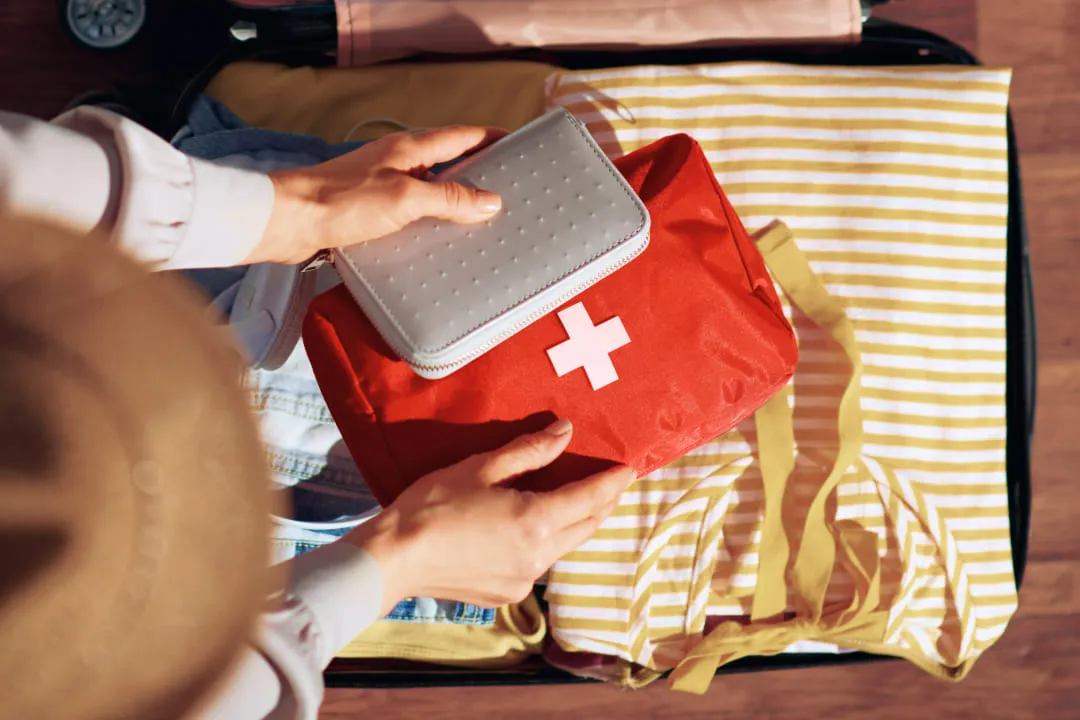
Important: do not take more than five packages of the same medication with you, so that airport staff do not decide that you intend to sell medications wholesale. In such a case, the preparations may be confiscated. Approach packing your first-aid kit responsibly and do not take extra packs of pills as a reserve, so that nothing at all is confiscated from you.
Which medications cannot be carried
We have already explained that the prohibition depends on where exactly you are flying: after all, there are as many prohibitions as there are countries. In some states, medications that are freely sold in Russian pharmacies are either dispensed by prescription or have been withdrawn from use altogether. So, before traveling, you need to carefully analyze the composition of the preparations you use: what is allowed in Russia may be prohibited in the European Union or the USA.
Conclusion: first review the contents of your first-aid kit, and then decide if you can take medications on the plane.
If you don't know if your medication contains prohibited substances, pay attention to the painkillers, heart medications, sleeping pills, cough suppressants, and sedatives in your daily routine. It is in these preparations that prohibited substances are most often found: codeine, phenobarbital, ephedrine. Take a closer look at your favorite sedative or cough mixture, check the composition. If you find a prohibited substance in the medication, take a doctor's prescription with you on your trip or ask your doctor to suggest an alternative.
We wish you great trips without unpleasant screenings!