Amalfi Coast and its Best Towns
 Polina
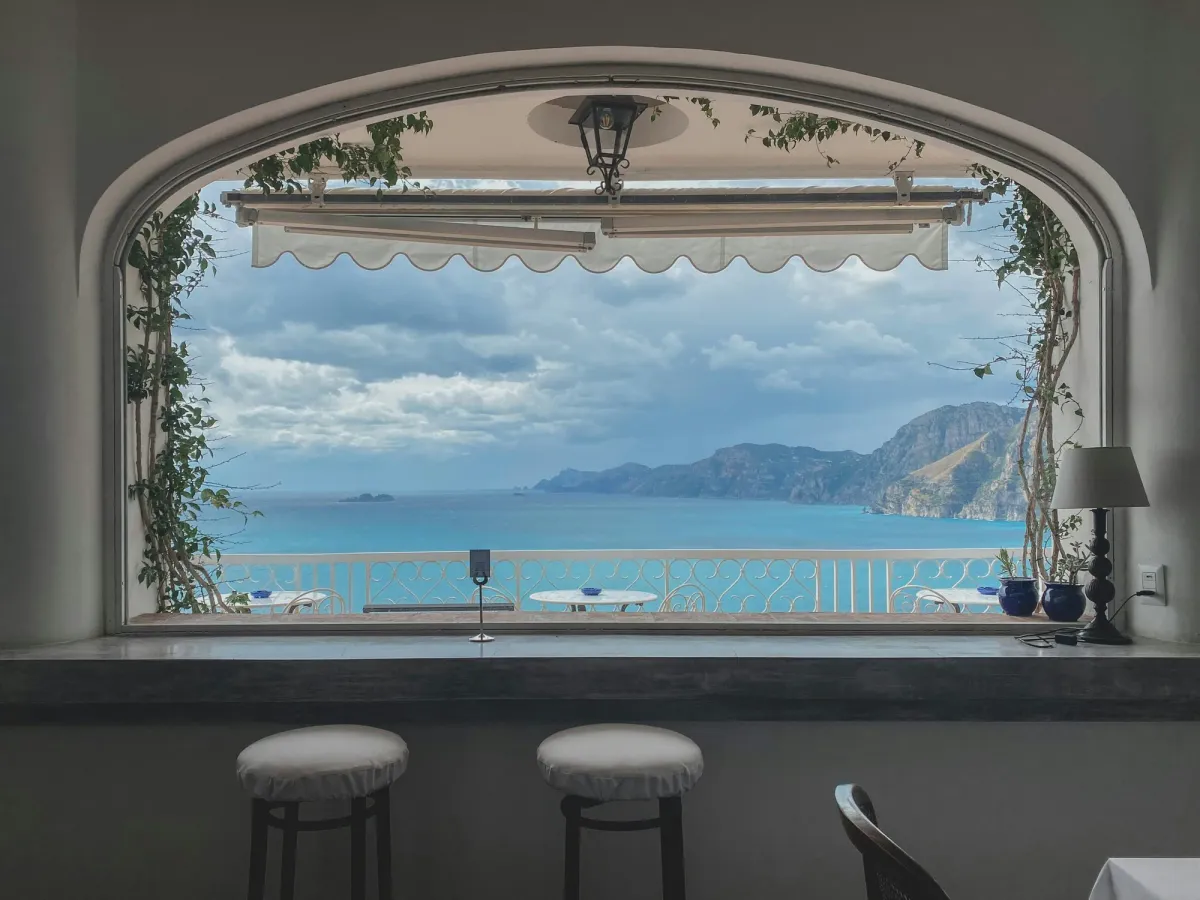
Imagine a road that feels more like a thrill ride than an ordinary highway. A narrow ribbon of asphalt winds like a serpentine path at a bird's-eye view: on the left, sheer mountain cliffs covered with terraced lemon groves loom, and on the right, somewhere far below, the Tyrrhenian Sea, an incredible “electric” blue, crashes against the rocks. This is the Amalfi Coast – a place where natural beauty borders on danger, and every turn reveals a view worthy of a painter's canvas.
This region, included in the UNESCO World Heritage list, has attracted artists, aristocrats, and dreamers for centuries. Here, dolce vita is not just a beautiful phrase, but an everyday reality. We have prepared a guide to the towns along the coast, adding hidden gems and convenient transport hubs to popular locations.
How to get there
The journey to the Amalfi Coast is an adventure in itself. The closest entry point is Naples, a chaotic and vibrant city at the foot of Vesuvius. The most convenient way to get here remains a flight with a layover in Istanbul. If you decide to buy tickets from Moscow to Naples, you'll be able to swap the city's hustle for a sea breeze just a few hours after landing.
An alternative route goes through the Eternal City. Many travelers prefer to fly into the capital, spend a couple of days there, and then take a high-speed train to Naples or Salerno in just over an hour. If you choose tickets for the Moscow – Rome route, you will have more layover options (via Yerevan, Belgrade, or Baku), and a train journey will add romance to your trip.
Sorrento
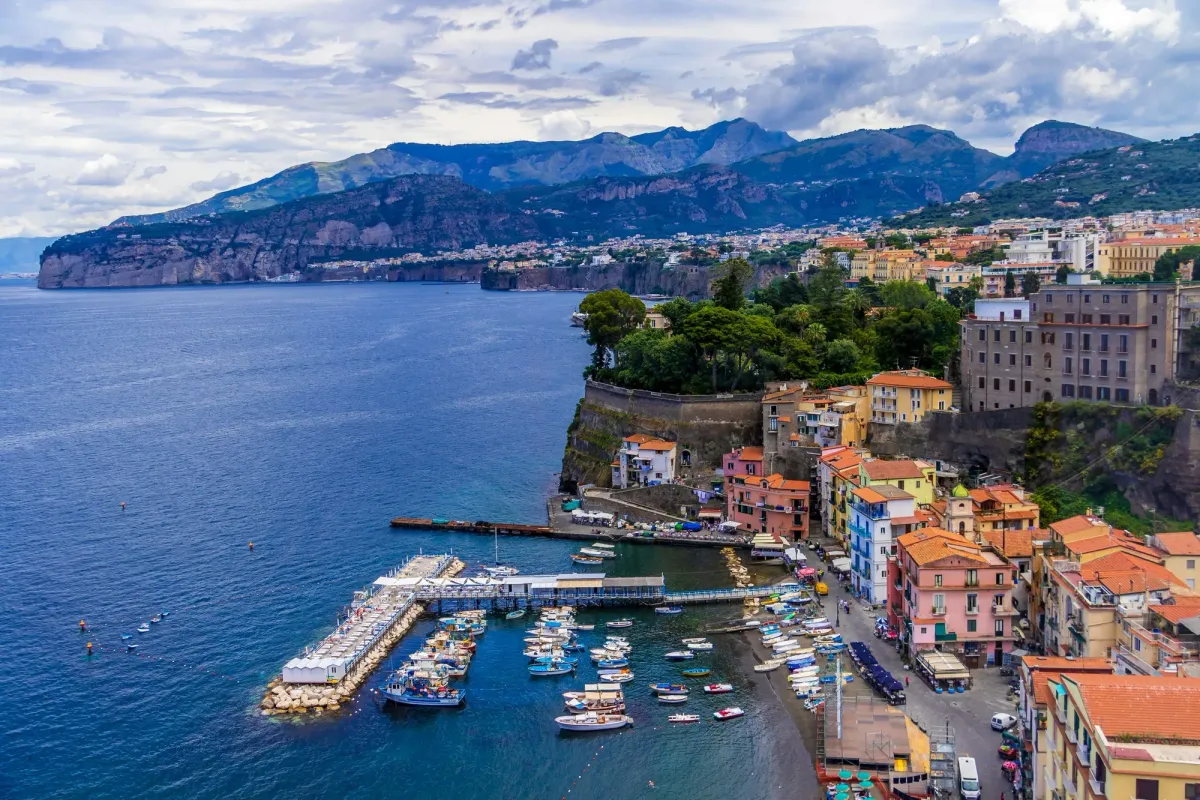
Although technically Sorrento is located on the peninsula of the same name and merely precedes the Amalfi Coast, most journeys begin here. It's an aristocratic town perched on high tuff cliffs. Its main value is the fantastic panorama of the Bay of Naples and the dormant volcano Vesuvius. Sorrento is ideal as a base: from here, it's easy to reach the island of Capri by ferry, Pompeii by train, or any point on the coast by bus. In the evenings, life buzzes in Piazza Tasso, and the air is filled with the scent of citrus, as Sorrento disputes with Amalfi for the title of limoncello's birthplace.
What to see: Valley of the Mills (Vallone dei Mulini), San Francesco Cloister, Marina Grande fishing harbor.
Positano
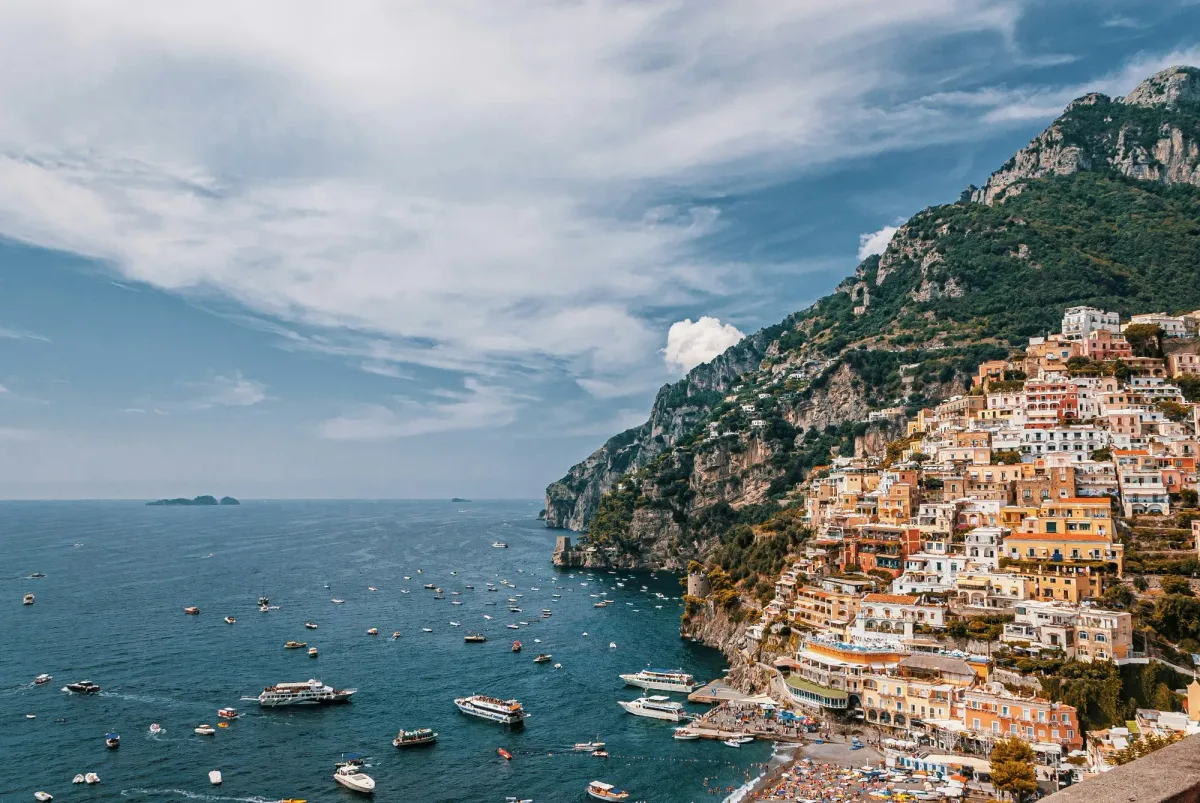
If the Amalfi Coast is the crown of Italy, then Positano is its brightest diamond. It is the most recognizable town in the region, whose photos have flooded social media. Its main feature is its incredible verticality. Colorful houses, like Lego bricks, climb on top of each other, descending from steep cliffs right to the water's edge. An atmosphere of absolute glamour reigns here: narrow streets are filled with boutiques selling linen clothing and artisan ceramics. Positano is made for contemplating sunsets from restaurant terraces, but it requires good physical fitness, as the entire town consists of endless stairs.
What to see: Church of Santa Maria Assunta with its majolica dome, Spiaggia Grande beach, Path of the Gods (path to Nocelle), Saracen towers.
Praiano
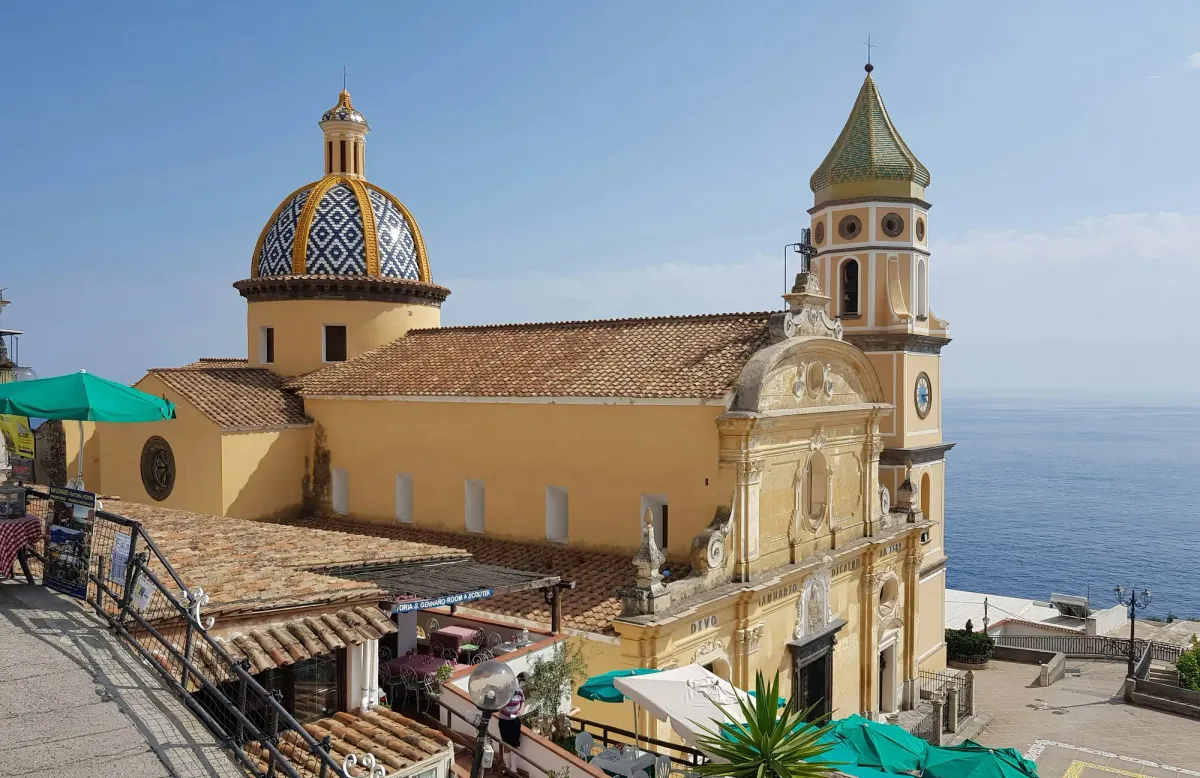
Moving east, you arrive in Praiano. Unlike neighboring Positano, it is much quieter and more peaceful here. The main asset of this small town is its location. Praiano faces west, so the sun lingers here the longest, offering tourists the most prolonged and colorful sunsets on the entire coast. This place is chosen by romantics and hiking enthusiasts, as it is the most convenient starting point for the famous “Path of the Gods” – a mountain trail that runs above the clouds.
What to see: Church of San Gennaro, Marina di Praia beach, Gavitella cove (one of the few beaches with long sun exposure), coastal tower Torre a Mare.
Amalfi
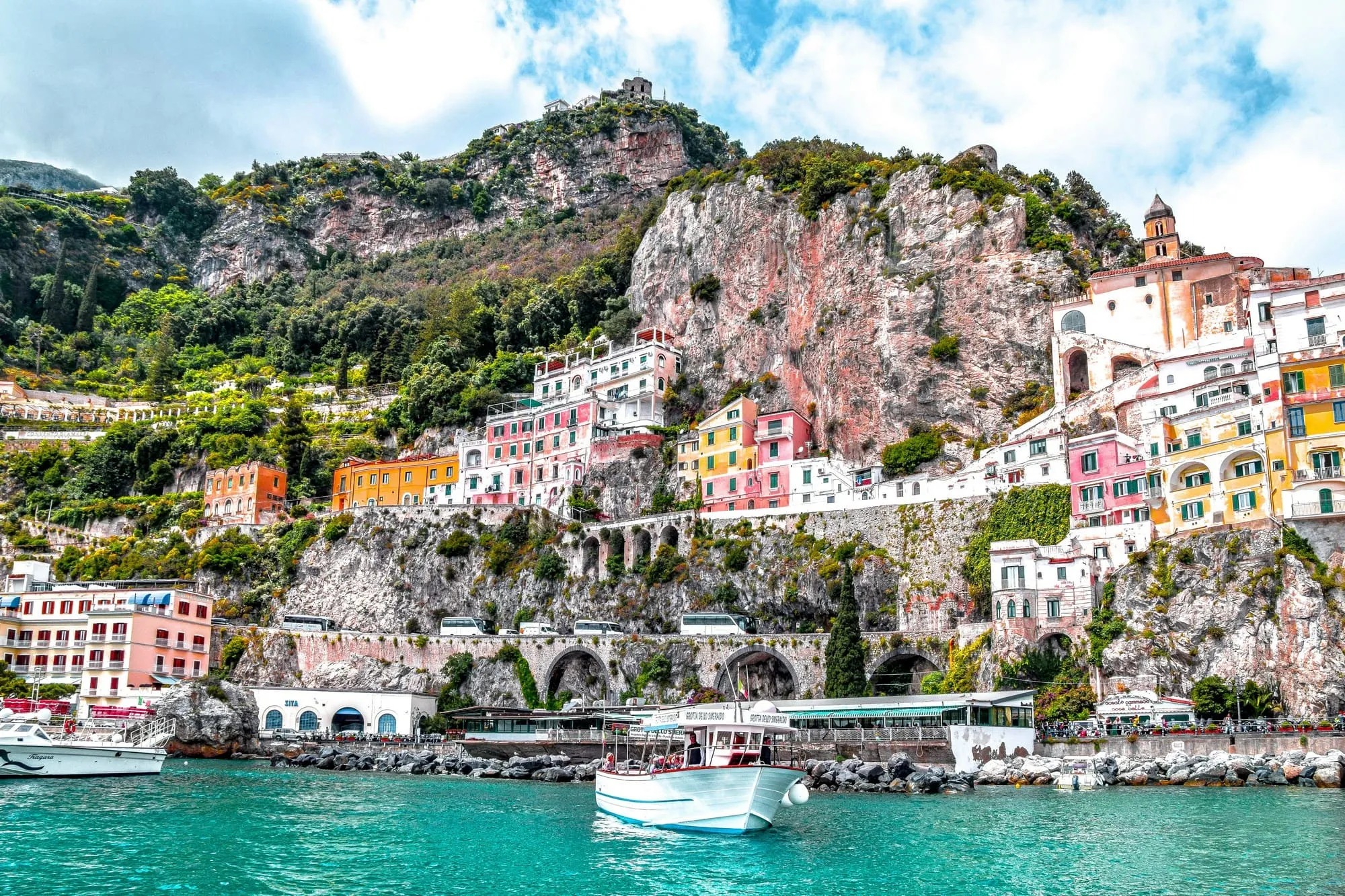
The town that gave its name to the entire coast was once a powerful Maritime Republic, rivaling Venice. Today, its former grandeur is recalled by the magnificent Cathedral of Saint Andrew with its monumental staircase and ornate facade. Amalfi is a lively, bustling center of the region. Besides its architecture, the town is famous for its crafts. In the Valley of the Mills, an old paper mill still operates, where you can see how thick bambagina paper for royal decrees was made for centuries.
What to see: Cathedral of Saint Andrew (Duomo), Cloister of Paradise (Chiostro del Paradiso), the ancient Arsenal of the Republic.
Atrani
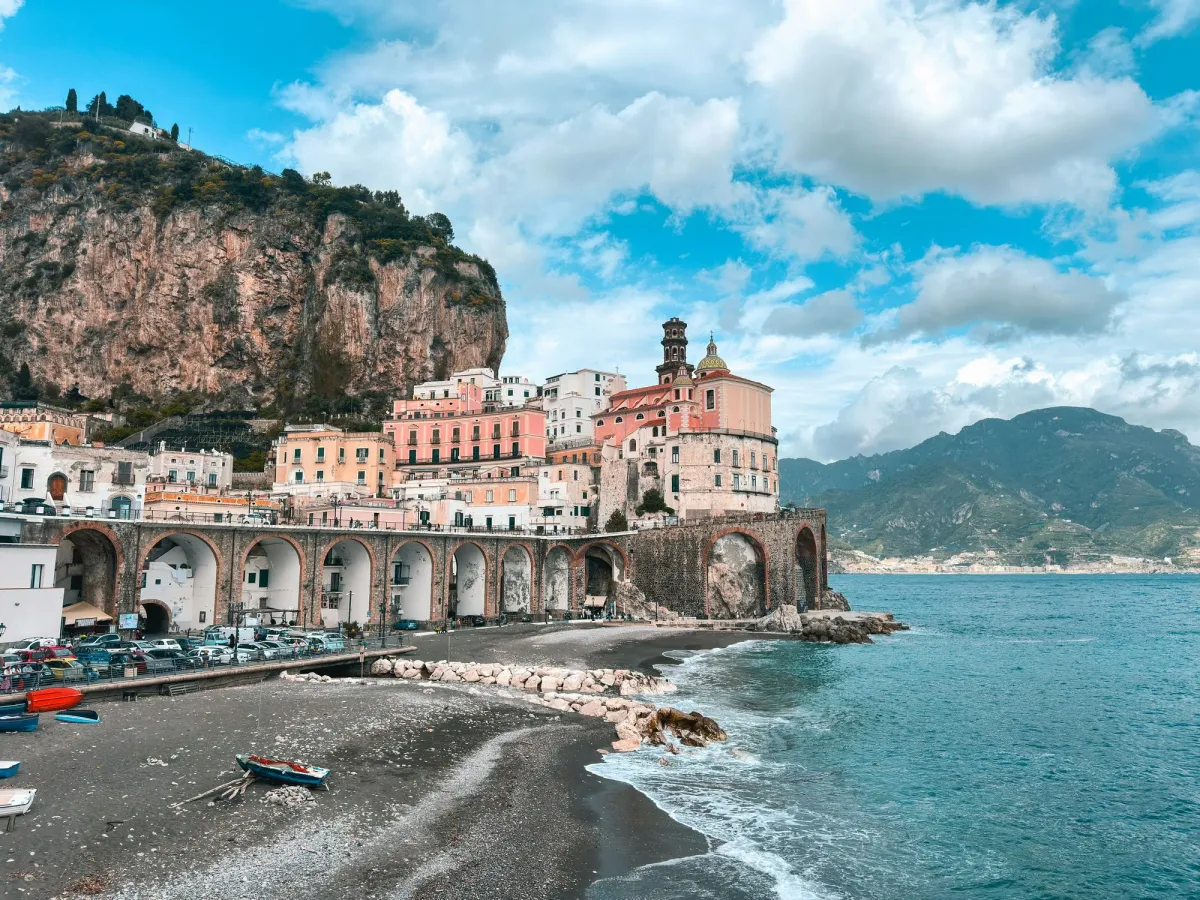
Just a ten-minute walk from bustling Amalfi, behind a rocky headland, lies Atrani. It is Italy's smallest municipality and a true time machine. The town is so tightly nestled between the cliffs that its houses form a single labyrinth of arches and passages. There are no boutiques or tourist crowds here, but there is an authentic atmosphere of old Italian cinema. Locals dry laundry directly above passersby's heads and engage in unhurried conversations in the tiny Piazza Umberto I.
What to see: Church of Santa Maria Maddalena, Masaniello's Grotto, Church of San Salvatore.
Ravello
Ravello stands apart, as it is located not by the sea, but high in the mountains. It is a town of gardens, villas, and classical music. People come here not for the beaches, but for the breathtaking panoramas. Villa Rufolo and Villa Cimbrone, with its famous “Terrace of Infinity,” offer dizzying views: standing by a marble bust at the edge of the cliff, it's hard to tell where the sea ends and the sky begins. Every summer, a prestigious music festival is held here, continuing the traditions of Richard Wagner, who loved this town.
What to see: Ravello Cathedral, Oscar Niemeyer Auditorium.
Cetara
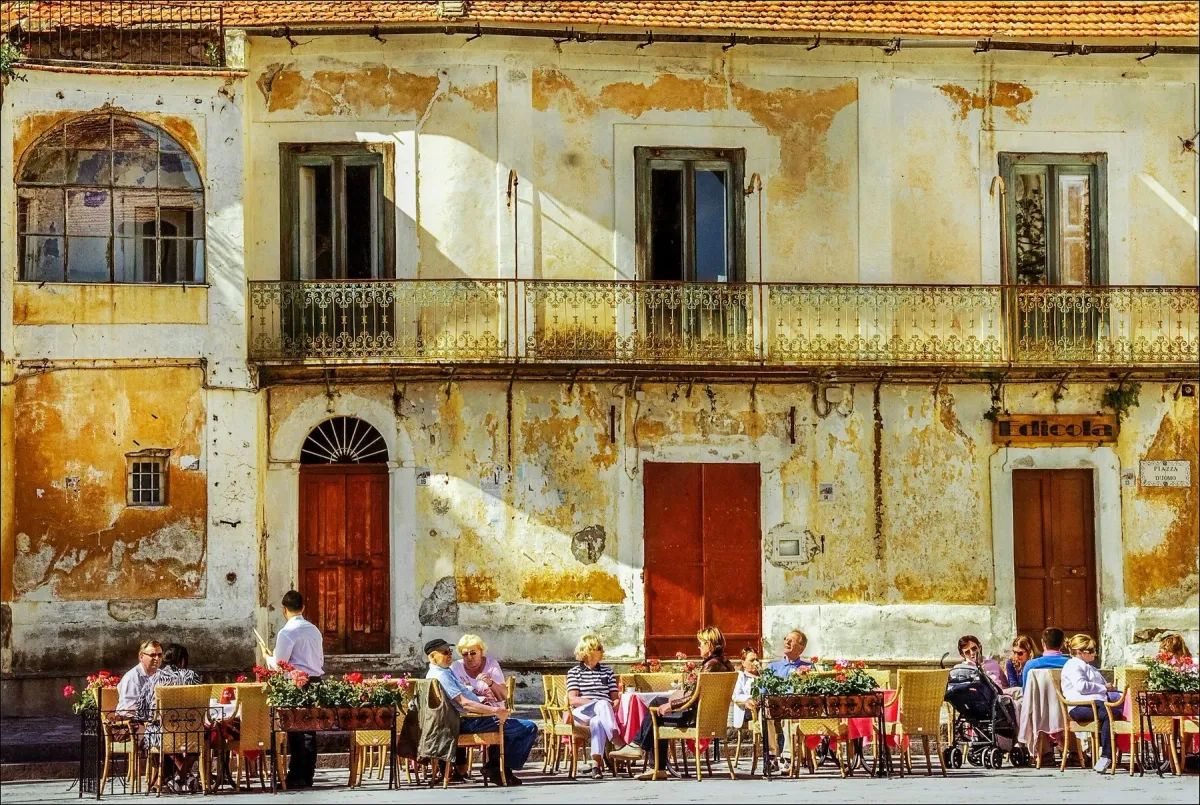
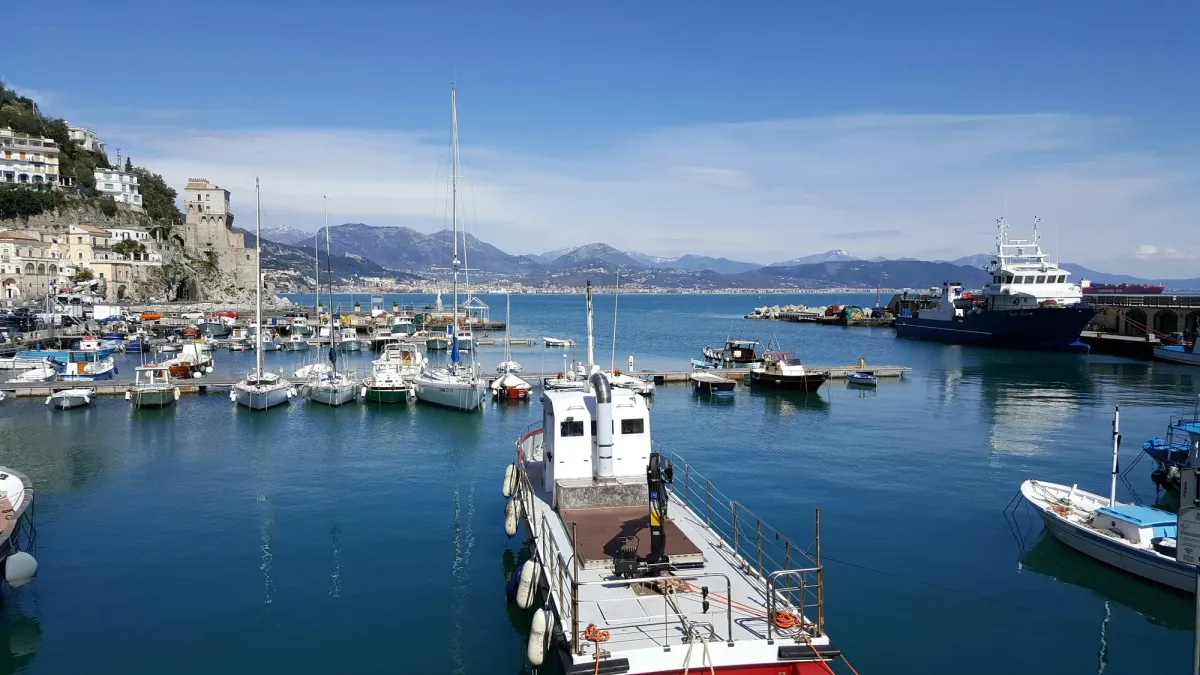
This fishing village is not yet spoiled by mass tourism. Cetara lives by the sea and what it provides. People come here not for architectural delights, but for gastronomic ecstasy. The town is world-renowned for its “liquid gold” – colatura di alici sauce, made from anchovies according to ancient Roman recipes. Here, it's worth visiting a simple trattoria and ordering spaghetti with this sauce or the freshest tuna caught this morning.
What to see: Viceregal Tower (Torre di Cetara), Church of Saint Peter the Apostle, town port with fishing boats, anchovy shops.
Salerno
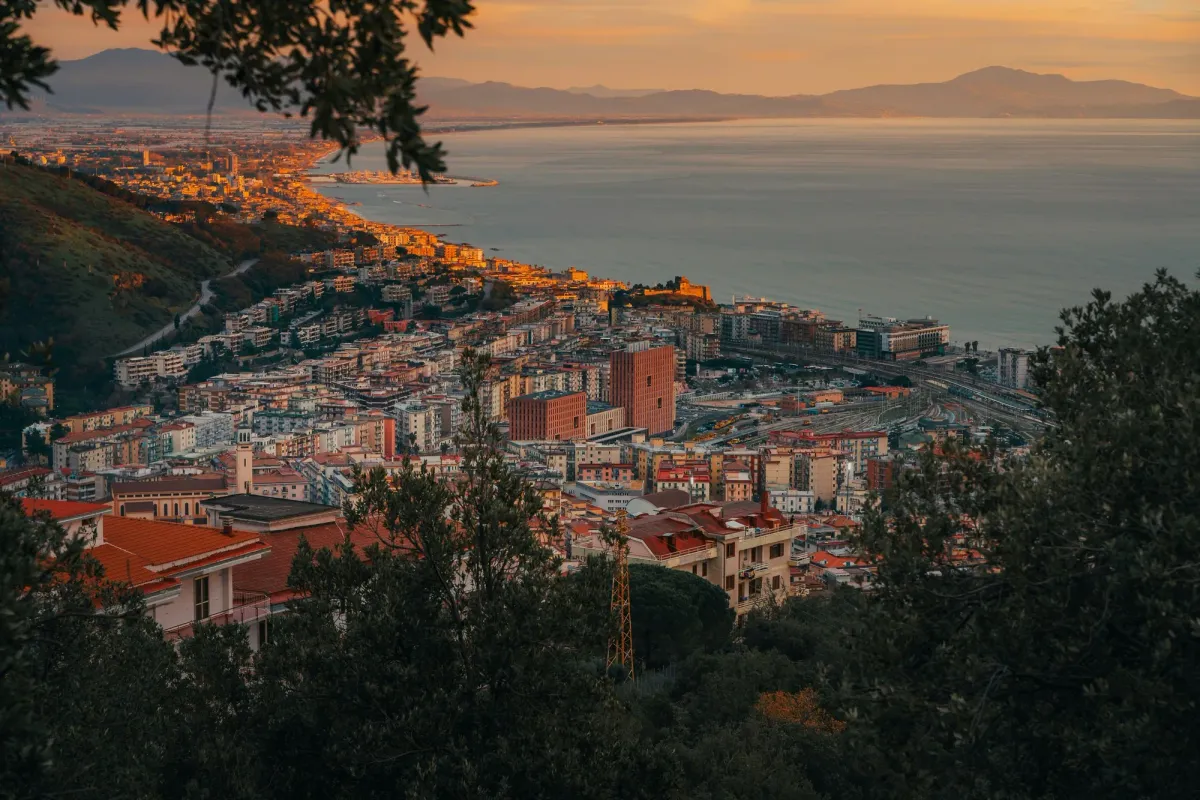
The coast ends to the east with the large city of Salerno. Tourists often undeservedly overlook it, using it only as a transport hub. And that's a shame. Salerno is a city with a magnificent Trieste promenade (one of the best in Italy), a truly vibrant medieval center, and a rich history: it was here that Europe's first medical school was founded. Prices here are lower than on the coast, and transport accessibility is ideal thanks to high-speed trains. It's an excellent alternative to Sorrento for those looking for a more budget-friendly base for exploring the region.
What to see: Salerno Cathedral (where the relics of Apostle Matthew are kept), Arechi Castle (Castello di Arechi), Minerva's Garden (Giardino della Minerva).
When planning your trip, remember that the best time to visit is May, June, or September. The Amalfi Coast is a kaleidoscope of experiences, where everyone will find their ideal town, whether it's glamorous Positano or quiet, sea-scented Cetara.