Support

English Camp Visitor Center

Nearby attractions

About

If you are looking for a place where history comes to life against a backdrop of scenic coastal views, the English Camp Visitor Center in Roche Harbor is an excellent stop on your USA itinerary. It is not just an information point, but a true portal to the past, housed in one of San Juan Island's oldest surviving buildings—the former British Commissary from the 1860s.
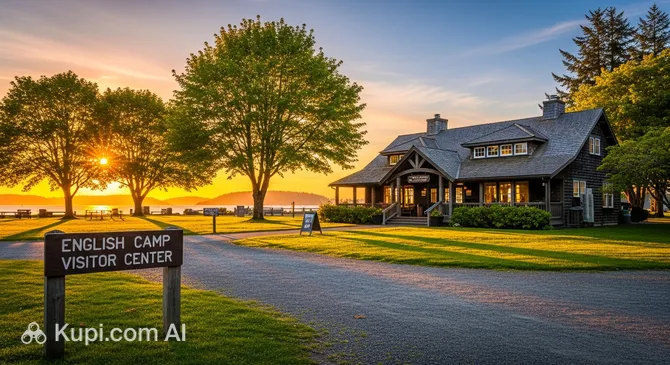
English Camp Visitor Center. Illustration.
Source: Kupi.com AI

Traveler photos:

The center is part of the San Juan Island National Historical Park. Here, visitors can learn about the unique period of the "Pig War," when Great Britain and the United States peacefully shared the island's territory. The commissary building, carefully restored in the 1970s, now serves as an exhibition space where park rangers share fascinating facts about the military camp and the subsequent life of the Crook farming family.

The area surrounding the center is impressively diverse: from the parade ground and a cozy formal garden to the old barracks and a blockhouse. Strolling along the shores of Garrison Bay, you can see traces of ancient Indigenous settlements and enjoy panoramic views that make this one of the most atmospheric spots in the area.

Contacts

To plan your visit to the English Camp Visitor Center, you can use the official information from the National Park Service. The center's staff are always ready to help with information about current events, visiting rules, and island routes.

Below is the essential contact information for reaching the attraction's administration:

How to contactContact
AddressФрайдей Харбор, Вашингтон 98250, США
Phone+1 360-378-2240
Websitewww.nps.gov

What to Do

Start your exploration of the English Camp Visitor Center by consulting with the park rangers, who will help you get your bearings and provide trail maps. From the commissary building, trails lead to key historical sites: you will see the parade ground, a neat formal garden at the foot of the hill, and the old officers' quarters, which retain the atmosphere of the mid-19th century.

If your trip to Roche Harbor falls during the summer months, be sure to attend the Saturday demonstrations. Costumed volunteers recreate the lives of the pioneers, and in July, large-scale reenactments of camp life take place. This is a unique opportunity to see tools forged in the blacksmith shop or watch the drilling of the Royal Marines.

For nature lovers and those seeking relaxation, the camp grounds offer picturesque views of Garrison Bay. You can enjoy a picnic under the old pear trees remaining from the Crook family's orchard or go in search of archaeological landmarks—the shell middens of the Coast Salish people. Don't forget to stop by the totem pole, which serves as a reminder of the deep cultural heritage of these lands.

Getting There

There are several ways to reach this historical site. If you are already on San Juan Island, the easiest way is by car: the drive from Roche Harbor takes only about 10–15 minutes (a distance of about 8 km), and from Friday Harbor, it’s about 20 minutes via San Juan Valley Road. Free visitor parking is provided near the park entrance.

During the summer months (from late May through September), the convenient San Juan Transit shuttles run across the island, making stops at major settlements and key attractions. You can also reach the island by ferry from Anacortes or by seaplane, which is an exciting adventure in itself with magnificent views of the archipelago.

For those who prefer traveling by water, it is possible to approach the shore of Garrison Bay by private boat. This allows you to see the camp's historical landscape from the same perspective that British sailors first saw it in the 19th century.

Nearest city: Roche Harbor

History & Facts

The history of this site began in 1859 during an unusual boundary dispute between Great Britain and the USA, known as the "Pig War." Lieutenant Richard Roche chose the shores of Garrison Bay to establish a Royal Marines camp, appreciating the sheltered harbor and the presence of an old Indigenous settlement site. A British military village grew here, becoming a symbol of peaceful coexistence between the two nations on a single island.

The camp reached its peak in 1867 under Captain William Delacombe. He not only strengthened the position but also introduced elements of comfort, building new officers' quarters and planting an elegant formal garden. However, in 1872, an international arbitration ruled in favor of the American side, and British troops left San Juan Island, leaving behind substantial buildings and well-tended lands.

After the military departed, the area was transformed into a prosperous farm by the family of William Crook, who owned these lands for nearly ninety years. The Crook family carefully preserved the historical heritage, using the old buildings for their needs and maintaining the gardens. It is thanks to their efforts that many structures have survived to this day, before the National Historical Park was officially established here in 1966.

Today, the commissary building, restored in the 1970s, is recognized as one of the oldest British military structures in the region. The site holds immense archaeological potential, preserving cultural layers ranging from the ancient settlements of the Coast Salish peoples to the era of the first European settlers.

Time Needed

For a leisurely tour of the English Camp Visitor Center exhibits and a walk through the main camp area, 1–2 hours is sufficient for most tourists. This is enough time to step inside the old commissary, explore the blockhouse, and take beautiful photos by the bay.

If you plan to walk all the nature trails, hike up to the Royal Marine Cemetery on the hill, or catch the summer historical reenactments, you should set aside up to 3 hours for your visit. The park's peaceful atmosphere invites thoughtful exploration of history and a pleasant break in nature.

Working Hours

The English Camp Visitor Center is typically open to visitors from 10:00 AM to 3:00 PM almost every day, except for Wednesdays, when the center is closed. It is important to remember that the visitor center's schedule may vary depending on the season, so it is recommended to check the official park website before your trip.

However, the grounds of the historical park itself are open for walking daily from sunrise to sunset. Even if the center building is closed, you can still view the historic buildings from the outside, visit the garden, and enjoy the bay views.

DayWorking hours
Monday10:00–15:00
Tuesday10:00–15:00
WednesdayЗакрыто
Thursday10:00–15:00
Friday10:00–15:00
Saturday10:00–15:00
Sunday10:00–15:00

Nearby

San Juan Island offers many interesting locations beyond the historical camp. Exploring the surroundings of Roche Harbor will allow you to better feel the atmosphere of this secluded corner of the Pacific Northwest, where the industrial past meets modern art and fine dining.

You can take a walk through the city's historic district, visit unique outdoor art installations, or enjoy lunch with a view of the marina. Below is a list of nearby points of interest:

NameDistance
Roche Harbor2.4 km
The Madrona Bar & Grill2.5 km
Lime Kiln Café2.5 km
San Juan Islands Sculpture Park & Nature Reserve2.6 km

Reached the end of the page?

That means the route is fully explored