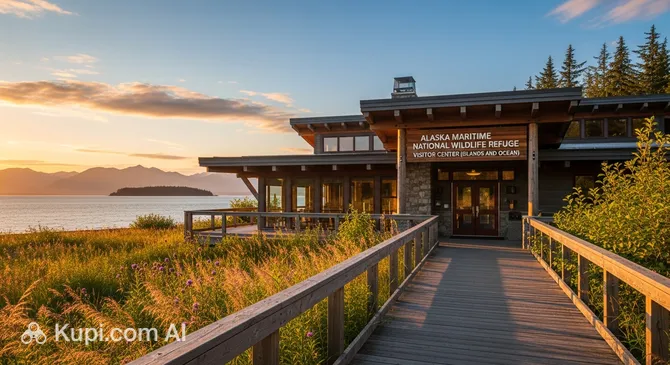
The Alaska Islands and Ocean Visitor Center is a unique window into the world of wildlife, located in the picturesque city of Homer. The center serves as the headquarters for one of the largest wildlife refuges in the USA, covering over 2,500 islands along the coast. It is a place where Alaska’s rugged nature becomes closer and clearer to every visitor.
Alaska Maritime National Wildlife Refuge Visitor Center – Islands and Ocean. Illustration.
Source: Kupi.com AI
Traveller photos:
Inside the modern building, guests find interactive exhibits dedicated to the lives of millions of seabirds and deep-sea inhabitants. Here, you can see impressive tide visualizations, learn about the habits of sea lions and whales, and discover marine research findings. The center is recognized as the world's largest information hub focused on northern island ecosystems.
Outside the center lies an extensive 60-acre area with maintained trails leading to Kachemak Bay and wetlands. It is an ideal starting point for ecotourism, offering the chance to see rare birds and animals in their natural habitat without leaving the city limits.
Contacts
To contact the staff or find the latest information about the visitor center's programs, use the details below. The staff are always ready to help tourists find their way around the refuge's event schedule.
Start your visit by exploring the interactive exhibits, which literally allow you to touch the nature of Alaska. Visitors are invited to watch captivating films about life on remote islands and scientists' efforts to conserve rare species. For families with children, there are special play areas where learning turns into an exciting adventure.
During the summer season, be sure to attend programs led by professional rangers and naturalists. These may include educational lectures or guided tours of the surrounding area. Don't forget to stop by the gift shop, where you can find unique handmade items and books about national parks.
Outdoor enthusiasts should take a stroll along the trails to Bishops Beach. Be sure to bring binoculars for birdwatching: you might spot eagles, cranes, and many species of seabirds. Also, look out for the demonstration tide pole, which vividly shows the power of the ocean cycles in Kachemak Bay.
Getting There
Finding the visitor center is easy—it is located at 95 Sterling Highway, right at the entrance to the city's central area. If you are traveling by car from Anchorage, the drive along the Sterling Highway through the Kenai Peninsula offers unforgettable views of mountains and glaciers.
For those who prefer air travel, the city is served by Homer Airport, which accepts flights from the state's major cities. From the airport, you can reach the center by taxi in just a few minutes. Since public transport is limited in this part of Alaska, renting a car or calling a taxi remains the most convenient way to get around.
The facility is within walking distance of many Homer hotels and the popular Bishops Beach. There is free parking for visitors on-site, making it an excellent starting point for your exploration of the region.
Nearest city: Homer
History & Facts
The history of this unique place began in 1980 when President Jimmy Carter established the Alaska Maritime National Wildlife Refuge. This decision combined eleven existing reserves into one of the world's most extensive conservation areas, created to protect millions of seabirds and coastal ecosystems.
Interestingly, some territories within the refuge received recognition much earlier. For example, Simeonof Island was designated a National Natural Landmark as far back as 1968. Since then, Homer has become the central hub for coordinating scientific programs, marine operations, and biological research across thousands of miles of coastline.
The Islands and Ocean Visitor Center also places great importance on cultural heritage. Within its halls, you can find information about Alaska Native peoples, whose lives have been inextricably linked to the gifts of the sea for centuries. Today, the center symbolizes a modern approach to nature conservation, where scientific achievements are combined with deep respect for the region's history.
Time Needed
For a standard look at the main exhibits and to watch the educational film, you will need about 1–2 hours. This is enough time to explore the interactive displays and learn about the refuge's key inhabitants.
If you plan to walk the scenic trails to the beach or linger at the Beluga Slough for birdwatching, you should set aside an additional 40–60 minutes. For those who wish to join a full ranger-led tour or study all the scientific exhibits in detail, the visit can last up to 3 hours.
Working Hours
The visitor center's operating hours depend on the time of year. During the winter, the doors are typically open from Tuesday to Saturday, from 12:00 PM to 4:00 PM, with Sunday and Monday being closed.
In the summer months, the center often switches to an expanded schedule—daily from 9:00 AM to 6:00 PM. Since the schedule can change depending on the season and holidays, tourists are recommended to check the current hours on the official website before visiting.
Day
Opening hours
Monday
Закрыто
Tuesday
12:00–16:00
Wednesday
12:00–16:00
Thursday
12:00–16:00
Friday
12:00–16:00
Saturday
12:00–16:00
Sunday
Закрыто
Nearby
Exploring the area around the visitor center will allow you to immerse yourself deeper in the atmosphere of Homer and get to know its vibrant community. Just a few minutes' walk away, you'll find cozy spots, galleries, and scientific organizations that will round out your trip.
Below are some interesting places located in the immediate vicinity of the center: