Support

Blue Ridge Parkway

About

Stretching for 469 miles, this unique scenic drive is considered one of the most picturesque in the world. Passing through the city of Asheville, the Blue Ridge Parkway connects two great national parks: Shenandoah and the Great Smoky Mountains. It is not just a transit route, but a national park in its own right, designed as a cohesive whole to offer travelers unforgettable views of the Appalachian ridges in the USA.
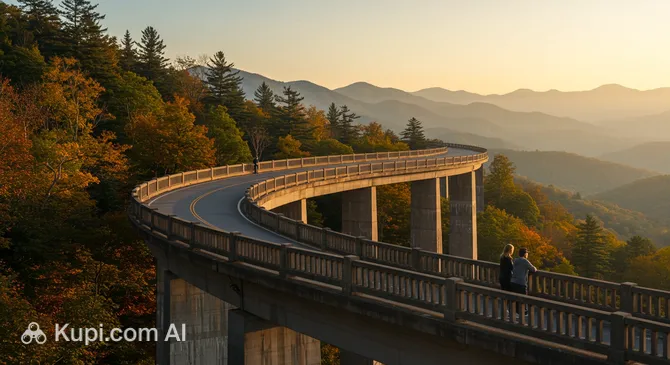
Blue Ridge Parkway. Illustration.
Source: Kupi.com AI

Traveler photos:

As the longest road of its kind in the country, the parkway is famous for its "slow travel" concept. There are no billboards or commercial developments here, and the narrow ribbon of land where the road winds allows for maximum proximity to the wilderness. Due to its incredible scenery, the route earned the honorary nickname "America's Favorite Drive."

For tourists, the site is primarily of interest for its scenic overlooks, historic viaducts, and access to unique natural landmarks. It is a place where human engineering genius is harmoniously interwoven with the majesty of ancient mountains, creating ideal conditions for scenic drives and eco-tourism.

Contacts

To check current road conditions and visitor center hours, you can use the official communication channels. Although this is an extensive route, the main visitor center is located directly in Asheville.

How to contactContact
Address3884 Blue Ridge Pkwy, Asheville, NC 28803, США
Phone+1 865-436-1200
Websitewww.blueridgeparkway.org

What to Do

For those seeking vivid impressions, this route offers endless leisure options. The main activity here is contemplation: dozens of overlooks are equipped along the road, offering breathtaking panoramas of ridges shrouded in a blue haze. Photographers will find inexhaustible inspiration here, especially at sunrise or sunset.

Outdoor enthusiasts can leave their car at a parking area and head out on hiking trails. Trails range from easy walking paths to challenging routes leading to hidden waterfalls and rocky summits. Along the way, be sure to stop by historic parks such as the Moses H. Cone Memorial Park, where you can learn about the culture of the Appalachian region and explore historic manor houses.

A journey along the parkway is transformed by the seasons. In the fall, the mountain slopes are painted in fiery shades of red and gold, turning the trip into a true kaleidoscope of colors. In spring, tourists are greeted by the lush blooming of wild rhododendrons and azaleas. Numerous picnic areas allow for a stop in the silence of the forest to enjoy lunch in the fresh air, surrounded by untouched nature.

Getting There

The best way to reach this legendary route is by car, as there is virtually no public transportation on the road itself. The main office and a popular entrance are located at: 3884 Blue Rdg Pkwy, Asheville, NC 28803. If you are arriving from afar, the nearest air hub is Asheville Regional Airport, which is just a 20-minute drive from the main entrance.

Travelers can enter the route from the north via Shenandoah National Park or from the south through the Great Smoky Mountains. The road is excellently marked, and finding the correct turnoff is easy. For those who prefer a taxi, a trip from the city center to the nearest overlook will take no more than 15–20 minutes; however, it is wise to arrange your return trip in advance, as mobile service in the mountains can be unstable.

It is important to remember that during the winter, some high-altitude sections may be closed due to ice or snow, so check the current road reports on the official website before traveling during the colder months.

Nearest city: Asheville

History & Facts

The history of this grand road began in 1933, when President Franklin D. Roosevelt visited Civilian Conservation Corps camps. Inspired by the work in Shenandoah Park, he supported an ambitious plan to create a unified scenic highway connecting the two largest national parks in the eastern United States. Construction officially started in September 1935 and became one of the key projects of the Great Depression era, providing jobs for thousands of people in the Appalachians.

The project was implemented over decades: the first finished section opened to the public in 1939, but World War II and financial difficulties significantly slowed progress in the 50s and 60s. The Blue Ridge Parkway was built as a work of art, where every curve and every retaining wall was designed to blend harmoniously into the natural landscape without disturbing the beauty of the mountains.

The final touch on this long-term construction was only reached in 1987, 52 years after the first stone was laid. The concluding element was the famous Linn Cove Viaduct—a sophisticated engineering structure 1,200 feet long that literally "floats" over the slopes of Grandfather Mountain. This section is recognized as a masterpiece of engineering, allowing the fragile ecosystem of the slope to be preserved.

Time Needed

When planning your visit, you should decide on the scale of your journey. To drive the entire distance of 469 miles with stops, travelers typically set aside 2 to 3 days. This allows you to enjoy all the key spots and short hikes without rushing.

If you are in Asheville and only want a taste of the mountain magic, 4–6 hours is quite enough. This time is sufficient to visit the main visitor center, stop at several scenic overlooks, and take a short walk on one of the forest trails near the city.

Working Hours

The Blue Ridge Parkway road itself is officially accessible 24 hours a day, 7 days a week. This allows tourists to plan night drives or catch the sunrise at high-altitude overlooks any time of year.

However, keep in mind that associated facilities—visitor centers, museums, and gift shops—have their own operating schedules, which often change depending on the tourist season. Before visiting specific attractions along the route, it is recommended to check the information on the National Park Service official website.

Open 24 hours

Nearby

Exploring the surroundings of Asheville and the areas adjacent to the route can significantly enrich your travel experience. The region is famous not only for its natural beauty but also for its outstanding architectural landmarks and rich cultural history.

Near the road, you will find both luxurious estates and cozy historical museums that offer a deeper understanding of North Carolina's heritage.

NameDistance
Willow Winds Cabins1.6 km
Biltmore Park Town Square4.8 km
Lake Julian Park4.8 km
Biltmore Estate4.9 km
Hillman Beer4.9 km
Blue Ridge Parkway Visitor Center6 km
French Broad River Park6.4 km

Reached the end of the page?

That means the route is fully explored