Support

Roker Park

About

Roker Park is not just a name, but an entire era in football history, captured in the Roker district of Sunderland in the United Kingdom. For nearly a hundred years, from 1897 to 1997, this historic football stadium served as the home arena for the famous Sunderland AFC, witnessing countless triumphs and dramatic moments.
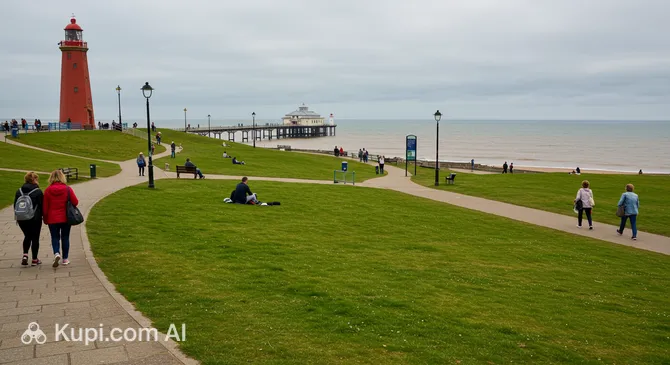
Roker Park. Illustration.
Source: Kupi.com AI

Traveller photos:

Designed by the renowned Scottish architect Archibald Leitch, Roker Park originally had a much larger capacity than its later limit of 22,500. The stadium's record attendance of 75,118 fans for a single match speaks to its incredible popularity and significance for locals and football fans across the country.

A special chapter in the history of Roker Park was written in 1966, when the stadium became one of the eight venues to host matches of the FIFA World Cup. This event forever cemented its status as a legendary place, leaving an indelible mark on the hearts of football fans and in the sporting history of the United Kingdom. Although the stadium no longer exists in its original form, the memory of Roker Park lives on.

Contacts

Roker Park is a well-known location in Sunderland, attracting both locals and tourists. As it is a public space, specific contact details such as a phone number or email address may not be available or centralized.

To find out how to get to Roker Park, you can use city maps or navigation services. For information on potential events or special visiting conditions, it is recommended to check official Sunderland tourism websites or local tourist information centers.

How to contactContact
AddressRoker Park Rd, Roker, Sunderland SR6 9NB, UK
Phone+44 191 520 5550

What to Do

For nearly a century, Roker Park in Sunderland was the heart of the city's football life. The main activity for visitors here, of course, was attending football matches. Fans came here to support their beloved club, Sunderland AFC, during home games, creating an unforgettable atmosphere in the stands. It was a place where you could witness thrilling sporting battles and share emotions with thousands of other fans.

In addition to club competitions, Roker Park hosted international matches, making it a significant arena not only for local football but for the entire United Kingdom. One of the brightest moments in the stadium's history was hosting matches for the 1966 FIFA World Cup. Three group stage matches involving the USSR, Italy, and Chile took place on its pitch, as well as a thrilling quarter-final match where the USSR defeated Hungary.

It is important to note that today Roker Park exists only in memory and history. The stadium ceased to exist in 1997 when Sunderland AFC moved to a new, more modern arena—the Stadium of Light. Currently, a residential development occupies the site where football passions once boiled. Thus, while it is no longer possible to physically visit the stadium and see a match, its legacy as an important sporting venue remains significant to the history of the city and football.

Getting There

It is important to understand that Roker Park can refer to two different things in the context of Sunderland. The historic Roker Park stadium, former home of Sunderland AFC, was demolished in 1997. A residential complex now stands in its place. For football history fans, this location still carries symbolic meaning.

If your goal is to visit the site where the legendary Roker Park stadium once stood, you should head to the residential area built on its former grounds. You can reach this part of Sunderland by local buses that pass through the area or by taxi. Keep in mind that no visible structures of the stadium remain, but you can see where it was located and feel the spirit of history.

However, there is another active site in Sunderland with the same name – the public Roker Park. It is crucial not to confuse it with the site of the former football stadium. This scenic park is located in the coastal zone, near Roker Beach and the Seaburn seafront, and is a popular spot for relaxation and walks.

To reach the public Roker Park (the recreation park), you can use city buses heading towards Roker Seafront. Many routes pass near the park or have stops within walking distance. A taxi from the center of Sunderland is also a convenient option. If you are already in the Roker seafront area, the park is easily accessible on foot while enjoying the sea air.

Nearest city: Sunderland

History & Facts

The history of Roker Park in Sunderland dates back to the 1890s. At that time, the chairman of Sunderland AFC, along with his brother, decided to build a larger stadium to replace the previous arena on Newcastle Road. To this end, the club purchased farmland belonging to a Mr. Tennant. An interesting detail of the deal was a condition requiring Sunderland to not only build the stadium but also to erect a residential house on the site. Until the house was completed, the club continued to pay ground rent.

Construction of the stadium itself progressed rapidly, taking only a year, with the wooden stands being built in an impressive three months. One of the stands, known as the "Clock Stand," had 32 steps and no seats, but a safety barrier was installed for spectators. The turf for the football pitch was specially brought from Ireland and, remarkably, lasted for 38 years. The pitch itself was designed with a slight slope, approximately one foot from the center to each corner, which helped with drainage.

The first event held at the partially completed stadium was the "Olympic Games and Band Contest" on August 12, 1898. The official opening of Roker Park took place on September 10, 1898. The ceremony was conducted by Charles Vane-Tempest-Stewart, the 6th Marquess of Londonderry. The first football match at the new arena was a friendly against Liverpool, which Sunderland won 1-0. Jim Leslie scored the stadium's first goal. Roker Park served as the home ground for Sunderland for 99 years, until 1997, when the club moved to its new home, the Stadium of Light.

Time Needed

When planning a visit to the public Roker Park in Sunderland, which is a popular spot for walking and relaxation, you should allow 1-3 hours for a full experience. This time is usually enough to take a leisurely stroll through the picturesque alleys, appreciate the landscape design, and enjoy the peaceful atmosphere of this green corner of the United Kingdom.

However, if you want to explore the park more thoroughly—for example, spend time by the lake, visit the play areas with children, or simply relax on one of the many benches and soak in the charm of the place—feel free to set aside up to half a day. The duration of your visit to Roker Park will depend on your interests and how deeply you want to immerse yourself in its tranquil atmosphere.

Working Hours

Roker Park in Sunderland is a popular spot for relaxation; however, exact information regarding its opening hours may vary. Typically, city parks are open to the public during daylight hours, but specific hours may change depending on the season, weather conditions, or special events.

Since precise data on opening hours and the need for pre-booking is unavailable, it is highly recommended to check current information on the park's official website or Sunderland tourism portals before your visit. This will help you plan your visit, avoid potential inconveniences, and find out if advance booking or ticket purchases are required for any activities within the park.

Open 24/7

Nearby

Visiting Roker Park is undoubtedly a highlight, but you shouldn't stop there. Exploring the surrounding area will allow you to dive deeper into the atmosphere of Sunderland and discover new interesting places that will make your trip even richer and more memorable. Often, it is these spontaneous discoveries that provide the most vivid impressions.

There are several attractions near Roker Park that might interest you. They are located at varying distances, allowing you to choose a route based on your preferences and the time you have available. Below is a list of some of them, including their distances.

NameDistance
Roker Beach0.4 km
Roker Cliff Park0.6 km
Roker Pier1.1 km
The Salt House Kitchen1.1 km
Seaburn Beach1.5 km
Fans Museum1.7 km
Miller & Carter Steakhouse Sunderland1.8 km

Reached the bottom of the page?

Looks like you know this route inside out