Support

Richmond Park

About

Richmond Park is more than just a green space; it is a true island of wildlife within the metropolis and the largest of London's Royal Parks. Located in the Richmond district in the southwest of the capital of Great Britain, it is a unique landscape park and a national nature reserve. Its territory exceeds 900 hectares, which is almost three times the size of Central Park in New York. Founded by King Charles I in the 17th century as hunting grounds, the park is open to everyone today.
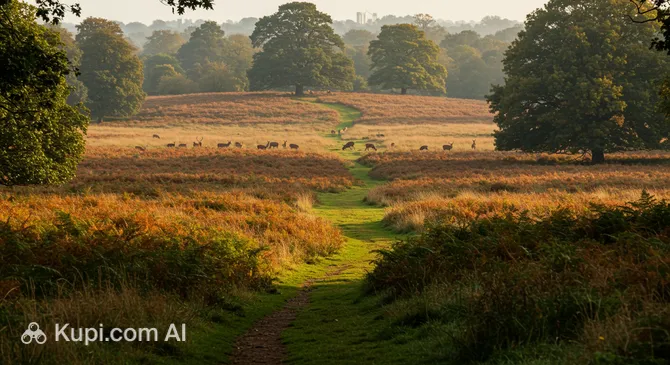
Richmond Park. Illustration.
Source: Kupi.com AI

Traveller photos:

The main pride and symbol of Richmond Park are its herds of red and fallow deer, numbering over 600 individuals. The animals roam freely throughout the territory, paying no mind to visitors, which creates a unique atmosphere of unity with nature. In addition to deer, the park has become home to many species of birds, including ring-necked parakeets, as well as squirrels, rabbits, and rare insects.

The park's landscape is strikingly diverse: there are hills, woodlands, meadows, lakes, and streams. The ancient trees deserve special attention, with some oaks reaching 750 years in age. Numerous trails for walking, cycling, and horseback riding have been laid out for visitors. One of the most picturesque spots is the Isabella Plantation—a woodland garden famous for its collection of azaleas, which bloom magnificently in spring.

Contacts

Since Richmond Park is a vast public space, the best way to get information is to visit in person. For up-to-date details, maps, and advice, you can visit the Holly Lodge information center located within the park. To visit the park, it is most convenient to take the Tube to "Richmond" station and then transfer to bus No. 65 or No. 371, which stops at the park gates.

How to contactContact
AddressRichmond, UK
Phone+44 300 061 2200
Websitewww.royalparks.org.uk

What to Do

In Richmond Park, visitors will find many activities to suit every taste. The main highlight is, of course, walking along the scenic trails and observing the famous deer, of which there are over 600. Special attention should be given to the Isabella Plantation—a unique woodland garden that impresses with its burst of colors, especially in spring and summer during the azalea bloom.

For active recreation enthusiasts, the park offers convenient bike paths and golf courses. Additionally, there are about 30 ponds on the territory where you can relax by the water, watch waterfowl, or even go fishing if you have a permit. Be sure to climb King Henry's Mound, which offers one of the best panoramic views of London. On a clear day, you can even spot the distant dome of St. Paul's Cathedral and other iconic landmarks of the capital.

In addition to natural beauty, the park is interesting for its historic buildings. Here you'll find Pembroke Lodge, which now houses a cozy restaurant, and White Lodge, which formerly served as the building for the Royal Ballet School. And if you need additional information or a map, you can contact the Holly Lodge information center located within the park.

Getting There

Getting to Richmond Park is quite simple using London's extensive public transport network. The most convenient way is to take the Tube (District line) or a train to Richmond station. From there, you can walk to the nearest park entrance in 15–25 minutes while enjoying views of the picturesque neighborhood, or take one of the buses that stop at the park gates. Additionally, North Sheen and Mortlake railway stations, which serve suburban trains, are nearby, making them good alternatives for travelers from other areas.

For those who prefer to travel by car, parking is available at several main park entrances, including Richmond Gate, Roehampton Gate, and Kingston Gate. However, please note that vehicle access to the park is only permitted during certain hours, which change depending on the season. To avoid any unpleasant surprises, it is highly recommended to check the current rules and gate opening times on the official Royal Parks website in advance.

Nearest city: Richmond

History & Facts

The history of Richmond Park is inextricably linked with the royalty of Great Britain and dates back to the 17th century. In 1625, escaping the plague epidemic in London, King Charles I moved his court to Richmond Palace. As a passionate hunter, he decided to turn the surrounding lands into his private hunting reserve. In 1637, by his order, the area was enclosed by an eight-mile brick wall to contain herds of red and fallow deer, specially brought in for royal sport. This decision caused dissatisfaction among local residents, and as a compromise, the king allowed pedestrian access through the park, establishing the tradition of its public accessibility.

Although the park was founded by Charles I, the history of these lands is even older. In the 16th century, King Henry VII built the majestic Richmond Palace here, which gave its name to the entire Richmond district. For centuries, the park remained a favorite place for monarchs to relax and hunt. Today, historical buildings scattered across its territory serve as reminders of this glorious past. Among them are White Lodge, a former royal residence, and Pembroke Lodge, which once belonged to Prime Minister Lord John Russell. Deer hunting was finally banned only in 1904, after which all corners of the park became fully open to visitors.

Today, Richmond Park is not just a place for walks, but a site of national and international importance, protected as a unique natural and historical landscape. It has the status of a National Nature Reserve and a Site of Special Scientific Interest. Despite its proximity to the metropolis, the park has managed to preserve its original charm and still serves as home to hundreds of deer whose ancestors were brought here almost four centuries ago. This is a living heritage that allows visitors to touch the centuries-old history of England.

Time Needed

When planning a visit to Richmond Park, it is worth noting that its vast territory offers different durations of stay. For a first introduction to the park—to take a leisurely walk, see the famous deer, and enjoy the main landscapes—it is recommended to set aside at least 3–4 hours. This will be enough time to get a general impression and visit several key spots.

However, if you are a true nature lover, a photographer, or simply want to escape the city bustle, you can easily spend a whole day in Richmond Park. Lovers of long walks or cycling can explore the numerous trails, including the 11-kilometer Tamsin Trail, which circles the entire park. A visit to the Isabella Plantation garden with its collection of azaleas, a picnic by one of the ponds, or just relaxing on a lawn with a book—all this will turn your trip into a full-scale countryside adventure without leaving London.

Working Hours

Richmond Park is open to visitors year-round, but opening hours change depending on the season. Vehicle gates usually open at 7:00 AM in summer and 7:30 AM in winter, and close at dusk. Pedestrian gates are accessible 24 hours a day, except during the deer culling seasons (usually in November-December and February-March), when night access may be restricted. Since closing times change daily, it is highly recommended to check the current schedule on the official Royal Parks website before your visit.

For a regular walk in the park, no prior booking or ticket purchase is required—entry is free. It is a public space open to anyone wishing to enjoy nature and relaxation. Special permits may only be needed for certain activities, such as fishing or participating in organized events.

7:30 – 20:00

Nearby

A visit to Richmond Park is an adventure in itself, but exploring its surroundings can offer even more vivid experiences. Stepping outside the park, you will discover the charming Richmond district, which combines the coziness of an English village with the refinement of a prestigious London suburb. A stroll through nearby areas will allow you to dive deeper into the local atmosphere and see new facets of this picturesque corner of Great Britain.

There are many interesting sites near the park: from historical buildings and other nature reserves to cozy pubs and restaurants where you can relax after a long walk. To help you plan your route, we have compiled a list of nearby attractions, indicating their distance from the park.

NameDistance
Isabella Plantation0.9 km
Pembroke Lodge1.4 km
King Henry's Mound1.5 km
The Grey Horse3.5 km
London Wetland Centre4.8 km
Chiswick House and Gardens4.9 km
The Bell & Crown5.1 km

Reached the bottom of the page?

Looks like you know this route inside out