Support

ARSLANTEPE ÖREN YERİ AÇIK HAVA MÜZESİ

About

Located just 7 kilometers from the center of Malatya, the Arslantepe Open-Air Museum is a unique archaeological site inscribed on the UNESCO World Heritage List. In this part of Turkey, on the western bank of the legendary Euphrates, travelers encounter a majestic mound (höyük) that conceals over 6,000 years of human history.
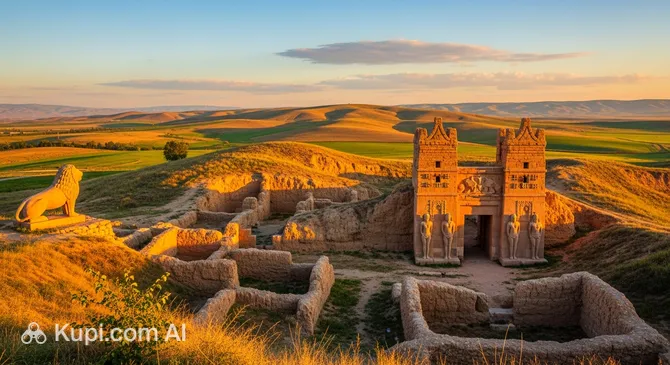
Arslantepe Mound Open-Air Museum. Illustration.
Source: Kupi.com AI

Traveler photos:

Arslantepe, which translates to "Lion Hill," is considered the birthplace of the world's first state structures, aristocracy, and bureaucracy. Remains of the oldest clay palace complex in Anatolia, unique temples, and thousands of seals witnessing a sophisticated administrative system were discovered here. The settlement on this hill existed continuously from the Late Chalcolithic period until the 11th century AD, absorbing the cultural heritage of Anatolian, Mesopotamian, and Caucasian civilizations.

Today, the open-air museum invites guests to walk among the carefully preserved ruins. Special attention is drawn to the exact replicas of the famous sculptures — King Tarhunza and the majestic lions, the originals of which are kept in Ankara. This place captivates with its ancient atmosphere and offers a rare opportunity to literally touch the origins of modern civilization.

Contacts

For your convenience in planning a trip to the Arslantepe Open-Air Museum, below are the current contact details for this historical site.

How to contactContact
AddressOrduzu Mah.Vaiz Pınarı Cad.No:1 Battagazi, Orduzu, 44170 Malatya Merkez/Malatya, Турция
Phone+90 422 337 24 82
Websiteturkishmuseums.com

What to Do

The main highlight of visiting the museum is a walk through the ruins of the palace complex, dating back to 3300–3000 BC. Thanks to special protective structures, you can walk through ancient corridors, viewing the remains of walls decorated with reliefs and paintings. Be sure to notice the temple excavation site — it is considered one of the oldest examples of cult architecture in the region.

At the very entrance to the museum, you will be greeted by impressive replicas of Hittite sculptures: two stone lions and the figure of King Tarhunza. These monumental statues from the Neo-Hittite period allow you to feel the power and grandeur of the rulers who lived here thousands of years ago. Multilingual information panels are installed throughout the site to help you understand the structure of the excavations and the purpose of various buildings.

For archaeology buffs, the area where thousands of administrative seals were found is of particular interest — evidence of how goods were accounted for in ancient times. Additionally, the top of the hill offers a serene view of the Euphrates River valley and the gardens of Malatya. It is an excellent spot to take panoramic photos and appreciate the strategic location of the city, which has attracted people for millennia.

Getting There

Reaching this iconic landmark is easy, as it is located just 6–7 kilometers northeast of Malatya city center. The museum is situated in the Orduzu district (Battalgazi municipality). If you prefer public transport, municipal buses run regularly from the city center towards the museum, dropping you off almost at the entrance.

For those who value comfort, taxis are always available — the ride from Malatya's central squares takes about 10–15 minutes. If you are traveling by rental car, use the coordinates 38.3614522, 38.3810795. The road to the mound follows a well-maintained highway near the Euphrates River, and convenient parking is provided next to the archaeological site.

For tourists arriving from other regions, it is most convenient to first fly into Malatya Airport (from Istanbul or Ankara) and then use city transport or a transfer to the Orduzu district.

Nearest city: Malatya

History & Facts

The history of Arslantepe is a chronicle of continuous human settlement spanning five millennia. From the 6th millennium BC through the Byzantine and early Islamic periods, this hill was a vital cultural and economic hub. It is here that archaeologists discovered undeniable evidence of the birth of the world's first state institutions, aristocracy, and a complex bureaucratic system long before the invention of writing.

One of the most remarkable periods in the settlement's life was the 4th millennium BC, when a monumental mud-brick palace was constructed. During excavations, more than 2,000 clay seals were found, used by ancient officials to account for goods in storehouses. These finds confirm that Arslantepe had a centralized economy and a developed power hierarchy.

During the Hittite era, the city was known as Melid. The famous stone lions and royal statues, which have now become symbols of the museum, date back to this period. Due to its exceptional historical significance, the site was officially inscribed on the UNESCO World Heritage List in 2021 as a testimony to an early stage of human civilization.

Interestingly, while many original artifacts, including unique metalwork and relief slabs, were moved to the Museum of Anatolian Civilizations in Ankara, high-precision replicas have been installed at Arslantepe itself. This allows visitors to see these ancient masterpieces in the very environment where they were created thousands of years ago.

Time Needed

To fully appreciate the scale and historical depth of this site, a typical visitor will need 1 to 2 hours. During this time, you can leisurely explore the ruins of the ancient palace, study the system of corridors and temple buildings, and examine the replicas of Neo-Hittite sculptures.

If you are a history enthusiast who enjoys reading information panels in detail, your walk may take longer. Given that the area is equipped with special protective canopies, the tour is comfortable, but it's worth allowing extra time for photo sessions against the backdrop of the panoramic views of the surrounding fertile lands visible from the hill.

Working Hours

The operating hours of the Arslantepe Open-Air Museum may vary depending on the season and ongoing restoration work. Generally, the museum is open longer during the summer period than in winter.

To ensure your visit goes as planned, we strongly recommend checking the official website of Turkish museums or confirming the latest information at a local tourist information center immediately before your trip.

Nearby

Exploring the surroundings of the ancient mound will allow you to immerse yourself deeper into the atmosphere of the region and see how history intertwines with modern life in Malatya. The Orduzu district is famous not only for its archaeology but also for its picturesque parks and old mosques.

Below is a list of interesting places located in the immediate vicinity of the museum:

NameDistance
Aslantepe Mound0 km
Kebap 50 Nc3.2 km
Freedom Park4.7 km
Beydağı Nature Park5 km
Yeni Mosque (Hacı Yusuf Taş Mosque)5.1 km
Besler Grill & Butcher5.3 km
Esfahan Kebab5.3 km

Reached the end of the page?

That means the route is fully explored