Support

Phra Buddha Chinnarat National Museum

About

The Phra Buddha Chinnarat National Museum is an important cultural institution located within the famous Wat Phra Si Rattana Mahathat temple complex, also known as Wat Yai, in Phitsanulok, Thailand. The museum is situated in close proximity to one of the country's most sacred shrines—the Phra Buddha Chinnarat statue, which is rightfully considered one of the most beautiful and revered Buddha statues in Thailand.
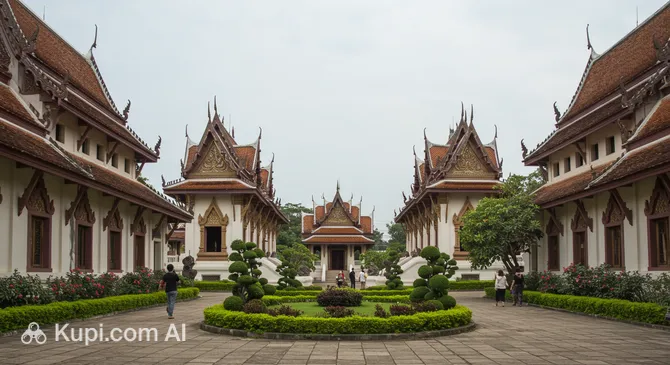
Phra Buddha Chinnarat National Museum. Illustration.
Source: Kupi.com AI

Traveller photos:

Although small in size, the museum itself is a significant repository of history and culture. Its exhibits feature artifacts that tell the story of the ancient temple, the development of Buddhism in the region, and the rich past of Phitsanulok province. Visitors can see unique works of art, ancient manuscripts, and other relics that provide a deeper understanding of the cultural heritage of this part of Thailand.

The Phra Buddha Chinnarat National Museum is managed by Thailand's national cultural authorities and is an integral part of the comprehensive historical and cultural ensemble that forms the heart of Phitsanulok. Visiting the museum offers a wonderful opportunity to complement your visit to Wat Yai and learn more about the history and spiritual traditions of this remarkable place.

Contacts

To check current information regarding opening hours, ticket prices, and available tours at the Phra Buddha Chinnarat National Museum, it is recommended to visit the museum's official website or contact local tourist information centers in the city of Phitsanulok. There, you can find the most up-to-date details to help plan your visit.

How to contactContact
Addressวัดพระศรีมหาธาตุวรมหาวิหาร Phutthabucha Alley, Tambon Nai Mueang, เมือง Chang Wat Phitsanulok 65000, Thailand
Phone+66 55 241 717
Websitewww.virtualmuseum.finearts.go.th

What to Do

Visiting the Phra Buddha Chinnarat National Museum in Phitsanulok is a unique opportunity to immerse yourself in the rich history and culture of Northern Thailand. The main activity for visitors is exploring the impressive collection of ancient artifacts, Buddhist relics, and various exhibits closely linked to the region's history and the famous temple where the museum is located. You will see intricately crafted statues, religious ritual items, and valuable historical documents that tell the story of the birth and development of Buddhism and art in this part of the country.

The museum's exhibits are carefully curated to give guests a comprehensive view of the spiritual heritage. Here, you can spend time studying the details of ancient manuscripts, admiring the craftsmanship of ritual objects, and contemplating the deep symbolism of Buddhist art. Each display case and artifact is intended to tell its own story, allowing visitors to gain a better understanding of Thailand's cultural traditions.

One of the key features of a visit to the museum is the opportunity to combine a tour of its collections with a visit to the main vihara (prayer hall) of Wat Phra Si Rattana Mahathat, which houses one of Thailand's most revered and beautiful Buddha statues—Phra Buddha Chinnarat. This way, you not only see museum exhibits but also touch upon a living spiritual tradition, observing the rituals and atmosphere of an active temple. This makes the museum visit particularly valuable for history and art enthusiasts, as well as for pilgrims and tourists seeking a deeper understanding of Thai culture.

Getting There

Getting to the Phra Buddha Chinnarat National Museum is quite simple, as it is located in the heart of Phitsanulok. This makes it one of the most accessible attractions for tourists staying in the city or arriving for a day trip.

Phitsanulok itself has good transport links with other regions of Thailand. You can get here by train or bus from Bangkok and other major Thai cities. Traveling by rental car is also a popular option. The Phitsanulok railway station is located near the central part of the city, which is very convenient for further travel.

From the station, you can walk to the museum if you prefer, or take a local taxi—the trip will take very little time. Additionally, local buses run through Phitsanulok and can drop you off near the Wat Phra Si Rattana Mahathat (Wat Yai) temple complex, where the museum is located. For independent travelers, taxis or local shared taxis (songthaews) are the fastest and most comfortable ways to reach this iconic landmark.

If you prefer organized trips, excursion tours are often arranged from nearby provinces and popular tourist centers, which include a visit to Wat Yai and, consequently, the Phra Buddha Chinnarat National Museum. This is a convenient option for those who want to get the most information without worrying about logistics.

Nearest city: Phitsanulok

History & Facts

The Phra Buddha Chinnarat National Museum in Phitsanulok has a rich history closely intertwined with one of Thailand's most revered temples—Wat Phra Si Rattana Mahathat, also known as Wat Yai. Initially, the museum was conceived and created as part of this majestic temple complex. The temple's foundation dates back to the 14th century, specifically 1357, which coincides with the peak of the ancient Sukhothai Kingdom. From its inception, this site played an important role not only as a spiritual center but also as a treasury of the region's cultural heritage.

Over its centuries-old history, the Wat Phra Si Rattana Mahathat temple complex has undergone numerous renovations and expansions. As a result, its architecture harmoniously combines elements characteristic of various historical eras and styles. Visitors can see columns typical of the Sukhothai period, majestic Khmer chedis, and impressive prang towers that reflect the influence of Mahayana traditions. This blend of styles makes the complex a unique testament to rich history and cultural interactions.

Wat Yai, along with its main shrine—the magnificent Phra Buddha Chinnarat statue, recognized as one of the most beautiful in Thailand—has survived many historical events, including destructive fires and subsequent reconstructions. Despite all challenges, the temple and statue have not only been preserved but continue to be a vital center of attraction for pilgrims from all over the country and numerous tourists. They stand as a symbol of resilience and spiritual continuity.

The exhibits at the Phra Buddha Chinnarat National Museum play a key role in preserving and promoting this rich heritage. Through carefully selected artifacts and informational displays, museum visitors have a unique opportunity to trace the history of the Phitsanulok region and its cultural development over more than six centuries. It is not just a collection of antiquities, but a living narrative of the past that helps provide a deeper understanding of the present in this wonderful corner of Thailand.

Time Needed

When planning a visit to the Phra Buddha Chinnarat National Museum in Phitsanulok, you should expect that a thorough tour will take some time. On average, 1 to 2 hours is usually sufficient for visitors to see the main exhibits and walk through the grounds of the adjacent temple complex. This time is enough to get a general idea of the displayed artifacts and the beauty of the site itself.

However, if you wish to delve deeper into the temple's history, carefully examine all the details of the exhibits, or perhaps witness or participate in religious ceremonies that may be held here, you should set aside more time. In such cases, a visit to the Phra Buddha Chinnarat National Museum can take up to 3 hours. This will allow you to enjoy the atmosphere of this significant cultural landmark in Thailand without rushing.

Working Hours

Exact information regarding the opening hours of the Phra Buddha Chinnarat National Museum in Phitsanulok is not always available in general sources. Typically, museums at temple complexes in Thailand are open to visitors daily, approximately from 8:00–9:00 AM to 5:00–6:00 PM. However, to ensure a smooth visit, it is strongly recommended to verify the current schedule just before your visit. You can search for this information on Thailand's official tourism portals, at local tourist information centers, or, if possible, by contacting the museum administration directly.

Usually, advance ticket booking is not required for visiting such museums in Thailand, unless it is for special exhibitions or group tours. The museum is expected to be open year-round, but it is always best to double-check this, especially if your trip coincides with national holidays. Confirming this information in advance will help you plan your visit effectively and avoid any potential disappointment.

DayOpening hours
MondayClosed
TuesdayClosed
Wednesday8:30 – 16:00
Thursday8:30 – 16:00
Friday8:30 – 16:00
Saturday8:30 – 16:00
Sunday8:30 – 16:00

Nearby

A visit to the Phra Buddha Chinnarat National Museum is certainly a highlight of any trip to Phitsanulok. However, to truly complete your experience in this fascinating Thai city, it is worth exploring other interesting sites nearby. Discovering the surroundings will allow you to immerse yourself deeper into the local culture and history while enjoying a variety of experiences.

Around the museum, you will find many other attractions to enrich your itinerary. From ancient temples to cozy cafes and scenic parks, there is something for everyone. Below is a list of some interesting places located near the Phra Buddha Chinnarat National Museum, along with the distance to each.

NameDistance
Wat Nang Phaya0.2 km
Kopihub Dimsum Cafe0.3 km
Chan Palace Historical Center0.4 km
Chom Nan Chaloem Phra Kiat Park0.4 km
Chan Palace0.6 km
Nannum Restaurant1.5 km
Pattara Resort & Spa2 km

Reached the bottom of the page?

Looks like you know this route inside out