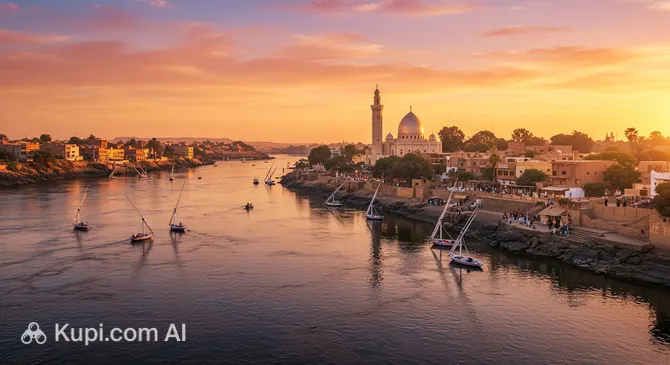
Located on the western bank of the majestic Nile, Omdurman is rightfully considered the cultural and spiritual capital of Sudan. This vast metropolis, part of the capital's metropolitan area, has preserved the spirit of authentic Africa much better than its neighbor—modern Khartoum. Here, amidst the labyrinths of old streets and mud-brick houses, the centuries-old history of the region comes to life, inextricably linked with the struggle for independence and Sufi traditions.
Omdurman. Illustration.
Source: Kupi.com AI
Geographically, the city occupies a strategic position at the confluence of the White and Blue Nile, which historically made it a vital trade hub. Today, the population of Omdurman is approximately 2.8 million people, making it one of the most populous and dynamic cities on the continent. Despite its status as a metropolis, life here flows at the measured pace of a traditional society, where hospitality is a core value.
Tourists are drawn to Omdurman primarily by its authentic atmosphere. Key points of interest include the majestic Mahdi's Tomb and the famous Omdurman Souq, where traditional crafts flourish just as they did centuries ago. Visiting this city is an invitation to immerse yourself in a world of vibrant colors, the aromas of oriental spices, and the sounds of traditional music, discovering the true face of Sudanese culture.
Weather Overview
Omdurman is characterized by a typical tropical desert climate, which dictates the city's rhythm of life. For most of the year, hot and dry weather with very low humidity prevails here. Summer in the region is extremely hot: from May to June, daytime temperatures often exceed +40°C, and nights bring only relative coolness with temperatures around +27°C.
The most favorable time for a visit is during the winter months, from November to February. During this period, the daytime air temperature becomes comfortable and stays around +29°C, while nights can even be cool (down to +15°C). Precipitation in the city is a rare phenomenon; most of it falls in August, when short but intense rains are possible. At other times, the sky almost always remains clear and sunny.
When planning a trip, it is worth considering high solar activity and possible dust storms during the transitional seasons. To better prepare for your journey, we recommend studying the current city's climate in advance. The dry and windy air, combined with high temperatures, requires constant hydration and the use of sun protection.
Average monthly temperature
Average monthly precipitation
Interesting Facts
Giant Market: The Omdurman Souq is so large that its total area and intricate alleyways stretch for several kilometers, forming a real "city within a city."
Spiritual Center: The city is the unofficial capital of Sufism in Sudan; it is here that the largest and most colorful religious festivals in the country take place.
Craft Traditions: Omdurman is famous for its metal and leather craftsmen, who still make traditional Sudanese nimcha swords and shields using the techniques of their ancestors.
Record-breaking Agglomeration: Together with Khartoum and Khartoum North, Omdurman forms one of the largest urban conglomerates in Africa with a population of over 10 million people.
Geographical Point: The city is located on the western bank of the White Nile, directly across from where it merges with the Blue Nile, forming Egypt's main artery.
How to Get There
Omdurman's transport accessibility is closely linked to the country's capital, as the cities are separated only by the Nile, connected by several bridges. Travelers most often arrive here via the region's main air gateway, then use land transport to cross to the western bank.
The main hub for international flights is Khartoum International Airport (IATA: KRT). It is located approximately 20–30 kilometers from the center of Omdurman. The most convenient way to reach the city from the airport is by taxi; the trip takes from 30 to 60 minutes depending on traffic. There are also regular bus routes connecting the terminals with the main transport hubs of the metropolitan area.
For those who prefer rail travel, the nearest stations are also in Khartoum. Trains arrive from various regions of the country, including northern directions. From the railway station, Omdurman is easily accessible by local public transport or rickshaws. To plan your route in advance, you can check information on how to get to this historical center.
Main Attractions
One of the city's most recognizable and revered landmarks is Mahdi's Tomb. This majestic architectural complex with snow-white domes, built in honor of the leader of the 19th-century national liberation movement, serves as an important pilgrimage site. Inside, precious historical relics are kept, and the surrounding gardens create an oasis of tranquility in the middle of a bustling metropolis.
An equally impressive site is the Hamad al-Nil Mosque, located in the quarter where members of Sufi orders reside. It is famous not only for its unique architecture in the traditional Sudanese style but also for its weekly ceremonies that gather hundreds of believers and curious travelers. This is a place where you can witness the deep spiritual connection of the locals to their traditions firsthand.
For those who want to feel the rhythm of local life, a visit to the Omdurman Souq (Souq Omdurman) is a must. It is one of the largest bazaars in Africa, representing an endless labyrinth of shops. Here you can find everything: from rare spices and medicinal herbs to skillfully crafted leather goods and silver jewelry. A walk through the market is not just shopping, but a true immersion into the ethnography of the region.
To round off your introduction to the architectural heritage, take a stroll through the old quarters where traditional clay houses have been preserved. These buildings, reflecting colonial and pre-colonial eras, combined with the picturesque Nile embankment, create a unique visual image of Omdurman that remains in memory for a long time.
Local Cuisine
A gastronomic journey through Omdurman is impossible without experiencing traditional Sudanese cuisine, which is based on legumes, grains, and meat. The main dish here is asida—a thick, hearty sorghum porridge usually served with tulyunbiya meat stew or vegetable sauces. This dish is the staple of the local diet and a symbol of home comfort.
For a quick snack at the markets, ful medames—stewed beans seasoned with garlic, oil, and spices—is ideal. Meat lovers should try kibda (fried liver or kebabs), which is often served with thin kisra flatbreads. The street food culture around the Omdurman Souq allows you not only to eat well but also to watch the process of cooking over an open fire.
Among drinks, gargad—a traditional sour milk that perfectly quenches thirst in the heat—holds a special place. Also, the coffee ceremony is very popular in Omdurman: jabana coffee is prepared with cardamom and ginger and served in small cups. You can complete your meal with freshly squeezed mango or guava juice, which are incredibly sweet and flavorful here.
Travel Tips
A trip to Omdurman promises to be one of your most vivid experiences if you prepare in advance for the specifics of the local lifestyle and climate. These tips will help you feel confident and comfortable in this colorful African metropolis.
Clothing and Dress Code: Choose light clothing made of natural fabrics (cotton, linen), but remember modesty: shoulders and knees should be covered. Women are recommended to carry a light scarf. Be sure to bring a hat and sunglasses for protection from the intense sun.
Transport: To move between the cities of the agglomeration, use taxis or microbuses. Always agree on the trip cost with the driver in advance, as there are often no fixed fares.
Finances: The main currency is the Sudanese pound. International payment system cards are rarely accepted, so rely on cash. It is better to change money at official exchange offices in Khartoum or major banks.
Health: Drink only bottled water and avoid ice in drinks. It is recommended to carry repellents and a basic first-aid kit. Before the trip, it is advisable to consult a doctor regarding standard vaccinations for the region.
Communication: The main language is Arabic, but in tourist areas and hotels, many people speak English. Learn a few basic phrases (for example, "Shukran" — thank you), as this greatly endears you to the locals.
Local Etiquette: Greet people with your right hand. If you are invited for coffee, do not refuse—it is an important gesture of hospitality. Always remove your shoes before entering mosques or private homes.
What to Avoid: Do not photograph government buildings, bridges, or military sites. Also, try not to plan active walks during the midday heat (from 12:00 to 16:00).
Electricity: In Sudan, type C and G sockets are used, so purchase a universal adapter in advance.
Following these simple rules will allow you to fully immerse yourself in the unique atmosphere of the city and enjoy its hospitality to the fullest. Have a pleasant trip to the heart of Sudan!
Entertainment & Nightlife
Entertainment in Omdurman is predominantly cultural and traditional, making it truly unique. The main evening event in the city is the ritual dervish dances, which take place near the walls of Mahdi's Tomb. These Sufi dhikrs, accompanied by hypnotic chants and rhythmic music, are a breathtaking spectacle that spectators can often join.
Classic nightlife in the Western sense—with loud clubs and bars—is practically non-existent here due to local traditions. Instead, the center of evening leisure is the numerous open-air tea houses and cafes. Here, locals gather until late in the evening to discuss news over a cup of aromatic coffee or play board games. The atmosphere in such establishments is very calm and friendly.
For daytime relaxation, walks along the Nile embankment are excellent, where you can take a short boat trip. The city also has several theaters and cultural centers where folklore groups periodically perform. Safety in Omdurman is at a fairly high level, but for moving around at night, it is recommended to use official taxis, which can be easily called through the hotel reception.
Parks & Museums
The historical heritage of Omdurman is most fully represented in its museums, among which the Khalifa House Museum (or Mahdi Museum) stands out. Located in the former residence of Mahdi's successor, this museum houses unique artifacts from the end of the 19th century: from captured weapons and banners to personal belongings of the rebellion leaders and old photographs. This place allows you to literally touch the era that shaped the modern appearance of the region.
In the central markets area, you will find the Sudanese Ethnographic Museum. Its exhibitions are dedicated to the diversity of peoples inhabiting the Nile Valley. Here you can see traditional costumes of Nubians and Arabs, ancient musical instruments, household items, and handicrafts. Visiting the museum helps to understand the complex ethnic mosaic of the country and the significance of Omdurman as a cultural melting pot.
There are few park zones in the classic sense in the city; however, their role is played by the green areas around religious complexes and the picturesque Nile embankment. Locals often choose the riverbank for evening relaxation and family picnics. The combination of historical monuments and the natural beauty of the great river creates an atmosphere of peace, perfect for leisurely walks after visiting museums.
Getting Around
The public transport system in Omdurman is primarily represented by microbuses, which locals call "arbayat." These nimble minibuses are the cheapest and fastest way to move around the city and between metropolitan districts. The routes cover all key points, including the bridges over the Nile leading to Khartoum. Payment is made in cash to the conductor or driver, and the cost of the trip is extremely affordable.
A more comfortable alternative is taxis—ordinary passenger cars that can be found everywhere. It is important to remember that most cars do not have meters, so the cost of the trip must be agreed upon in advance. The average price for travel within the city varies from 50 to 200 Sudanese pounds. Also, for short trips at markets, rickshaws and motorized three-wheeled carts are popular.
For tourists, walking is only suitable within the central historical quarters, such as the Mahdi's Tomb area or the Omdurman Souq. Otherwise, due to high temperatures and long distances, it is better to rely on transport. Bicycle rentals are not common here due to climate characteristics, and the modern transit card system is still in the development stage, so always carry small amounts of cash with you.
Accommodation
The choice of accommodation in Omdurman is primarily geared toward travelers seeking an authentic experience. In the heart of the city and near the markets, there are many small guesthouses and budget hotels offering basic services. One of the reliable mid-range options is the Acropol Hotel, known for its hospitality and air conditioning, which is critical in the local climate.
Many tourists prefer to stay in hotels located along the Nile embankment or in close proximity to the bridges leading to Khartoum. This provides easy access to the attractions of both parts of the metropolis. The price range varies from $20 to $50 per night in the budget segment, while more comfortable options with river views will cost more.
It is recommended to book accommodation in advance, especially if your trip coincides with major religious holidays when the flow of pilgrims to the city increases. Most local hotels only accept cash, so it is worth taking care of local currency in advance or checking the possibility of paying through international booking systems.
Nearby Cities
Omdurman is an excellent starting point for exploring the central part of the country, offering travelers convenient routes to historical and cultural centers. Due to its location, the city makes it easy to organize interesting day trips.
Just a few kilometers across the river is Khartoum, the nation's capital. Here, it is worth visiting the National Museum, the Presidential Palace, and strolling along the modern embankments. For those interested in ancient history, an excellent option would be a trip to the city of Shendi, located to the north. This region is known for its archaeological sites and proximity to the Meroe pyramids.
You can also head to Wad Madani, which is famous for its picturesque views of the Blue Nile and agricultural landscapes. Exploring the surroundings of Omdurman will help you form a more complete picture of the diversity of cultures and landscapes in this region, making your trip truly rewarding.
Shopping & Souvenirs
The main center of attraction for shopping enthusiasts in Omdurman is the legendary Omdurman Souq. This is a place where trade never stops for a minute, and the range of goods is staggering. The city is famous for its handicrafts, and it is here that you should look for authentic treasures: from skillfully crafted leather and traditional Sudanese sandals to woven baskets and handmade carpets.
The jewelry rows of the market offer unique silver and gold ornaments made in a characteristic African style. Omdurman is also known for its spices, oils, and incense, whose aromas fill the shopping arcades. For those looking for unusual souvenirs, it is worth paying attention to traditional musical instruments (tambourines) and decorative swords, which local craftsmen make with special skill.
Shops in the city usually operate from early morning until late evening, with a break during the hottest time of the day. Cash remains the main method of payment, as card terminals are rare, found mostly in large shopping centers. Bargaining in the markets is not only welcomed but is also part of the local culture—polite communication with the seller will help you significantly reduce the price and enjoy the buying process.