Support

Royal Site of San Lorenzo de El Escorial

About

The Royal Monastery of San Lorenzo de El Escorial is not just an attraction, but an entire world embodied in stone. Located in the picturesque town of San Lorenzo de El Escorial, just 45 kilometers from Madrid, this grand complex is one of the most significant monuments in Spain. It is rightfully considered a symbol of the Spanish Golden Age and is included in the UNESCO World Heritage list, attracting history and architecture enthusiasts from all over the world.

El Escorial is striking in its scale — its area exceeds 33,000 square meters. Within this vast territory, a royal palace, a majestic basilica, an active monastery, a famous library with priceless manuscripts, and a pantheon where Spanish monarchs are buried coexist harmoniously. In essence, it is a city within a city, with each part telling its own unique story.
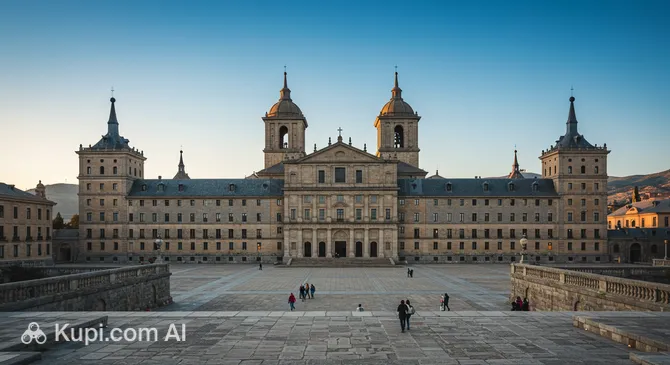
Royal Site of San Lorenzo de El Escorial. Illustration.
Source: Kupi.com AI

Traveller photos:

The complex is a brilliant example of the austere and monumental Herreresco architectural style, named after its chief architect, Juan de Herrera. Its clean forms and grand proportions leave a lasting impression. Visiting El Escorial is a unique opportunity to touch the greatness of Spanish history and see one of the most ambitious architectural projects of its time.

Contacts

To plan your visit and check up-to-date information, such as opening hours or ticket prices, we recommend consulting official sources. All necessary information about the complex is generally available through the resources of the Patrimonio Nacional organization, which manages the site. Below are the main contact details available.

How to contactContact
AddressAv Juan de Borbón y Battemberg, s/n, 28200 San Lorenzo de El Escorial, Madrid, Spain
Phone+34 918 90 59 02
Websitewww.patrimonionacional.es

What to Do

A visit to El Escorial is a true immersion into history and art. Tourists can explore the magnificent interiors of the monastery and walk through the spacious halls of the former royal palace. The Pantheon of Kings, where the remains of Spanish monarchs rest in dark marble tombs, makes a particularly deep impression. Equally interesting is the famous Library, which is second only to the Vatican's in its richness. Here, you can admire rare ancient manuscripts and books, as well as the unique frescoes decorating the ceiling.

The central element of the complex is the majestic basilica, striking for its luxurious altar and magnificent works of art. Beyond the interior spaces, the grounds of El Escorial feature well-kept gardens where you can enjoy a pleasant stroll in the quiet and take beautiful photographs against the backdrop of the monumental architecture. For lovers of the performing arts, it is interesting to note that the Royal Coliseum of Carlos III is located nearby, where various cultural events and productions take place periodically, rounding out the impressions from a visit to this unique historical complex.

Getting There

Getting to the Royal Monastery of San Lorenzo de El Escorial from Madrid is quite easy, thanks to convenient transport links. The main options are traveling by train, bus, or car. Public transport offers regular and reliable routes, making the monastery easily accessible for a day trip from the capital.

One of the most popular options is the train. Cercanías RENFE commuter trains depart from major Madrid stations such as Atocha (Madrid-Atocha) and Chamartín (Madrid-Chamartín). The journey takes approximately one hour. From the El Escorial railway station, you can take a pleasant walk to the monastery, which takes about 15–20 minutes, or use a local bus that will quickly take you to your destination. Another convenient method is the bus, which departs from the Moncloa transport hub in Madrid. This option is also very convenient, as the bus station in San Lorenzo de El Escorial is located very close to the monastery.

If you plan to travel by car, the journey from Madrid will take approximately 40–50 minutes, depending on traffic. The main route follows the A-6 highway, from which you will need to exit onto the M-600 road leading directly to the town. Traveling by car provides extra flexibility and allows you to enjoy scenic views of the Sierra de Guadarrama foothills along the way.

Nearest city: San Lorenzo de El Escorial

History & Facts

The history of the Royal Monastery of San Lorenzo de El Escorial is inextricably linked to the will of one of the most powerful monarchs, King Philip II. The construction of this grand complex began in 1563 by his personal order. The King's vision was truly ambitious: he wanted to create more than just a monastery, but a multifunctional center that would unite a royal residence and a pantheon for Spanish monarchs under one roof. This site was intended to become a symbol of the power of the Spanish Crown and the spiritual center of the country.

The realization of such a large-scale project was entrusted to the outstanding architects of their time. The first chief architect was Juan Bautista de Toledo, a talented student of the great Michelangelo. After his death, the work was continued by his brilliant successor, Juan de Herrera, who brought the construction to completion in 1584, giving the complex its recognizable austere and monumental appearance. The entire monastery was built from durable gray granite quarried in the surrounding area, giving it a rugged and majestic beauty.

From the moment of its foundation, El Escorial was more than just a religious building. It quickly turned into the most important political and cultural center of Spain, where decisions fateful for the country were made. The architectural structure of the complex is also full of symbolism: it is divided into three main vertical zones, and its heart is the Courtyard of the Kings. The architectural solutions applied by Juan de Herrera had a colossal influence on the entire subsequent development of Spanish architecture, giving rise to an entire style known as "Herreresco."

Time Needed

To fully appreciate the grandeur of the Royal Monastery of San Lorenzo de El Escorial, visitors should set aside plenty of time. For a thorough and leisurely tour of the entire vast complex, including the palace, basilica, pantheon, and library, it is recommended to allocate at least 3–4 hours. This is the time needed to immerse yourself in the atmosphere of the Spanish Golden Age and get acquainted with the key treasures of this unique site without rushing.

If your time is limited, a brief overview of the main highlights can fit into 2 hours, though such a visit would be fairly superficial. For a more thoughtful and complete immersion into the history and art of this unique location in the town of San Lorenzo de El Escorial, it is better to plan for a half-day. This will allow you not only to study all the interior halls in detail but also to enjoy a walk through the adjacent gardens, which offer magnificent views of one of the greatest monuments in Spain.

Working Hours

The Royal Monastery of San Lorenzo de El Escorial is open to visitors year-round, except for certain holidays such as January 1st and 6th, May 1st, and December 24th, 25th, and 31st. Opening hours depend on the season: in winter (October to March), the complex is open from 10:00 to 18:00, and in summer (April to September) from 10:00 to 19:00. The site is closed on Mondays. It is important to note that the ticket offices and entrance to the monastery close one hour before the official closing time.

Given the immense popularity of El Escorial, it is recommended to plan your visit in advance, especially during the peak tourist season. To avoid long lines, tickets should be purchased online through the official website of the Patrimonio Nacional organization or from authorized partners. Various visiting options are also available, including guided tours that provide a deeper dive into the rich history and symbolism of this unique site. Before your trip, we strongly advise checking the current schedule and potential changes on the official website, as there may be additional closures related to official events.

DayOpening hours
MondayClosed
Tuesday10:00 – 17:00
Wednesday10:00 – 17:00
Thursday10:00 – 17:00
Friday10:00 – 17:00
Saturday10:00 – 17:00
Sunday10:00 – 17:00

Nearby

Visiting the majestic Royal Monastery of San Lorenzo de El Escorial is undoubtedly the highlight of any trip. However, to get a full impression of this unique corner of Spain, it is worth spending time in its picturesque surroundings. The town of San Lorenzo de El Escorial itself charms with its peaceful atmosphere, historic streets, and beautiful views of the Sierra de Guadarrama mountains.

A walk through the surrounding area will allow you to discover many interesting places, from cozy parks and gardens to other architectural monuments closely linked to the history of the monastery. Below is a list of nearby attractions that are within walking distance and will perfectly complement your visit.

NameDistance
Frailes Garden0.1 km
Parrilla Príncipe0.3 km
Montia Restaurant0.4 km
Felipe II Park0.5 km
La Herrería Forest0.8 km
Casita del Infante1 km
Casita del Príncipe1.1 km

Reached the bottom of the page?

Looks like you know this route inside out