Support

León Cathedral

About

The Leon Cathedral, also known as the Cathedral of Santa María de León, is an outstanding monument of Gothic architecture and one of the main symbols of the city of Leon in Spain. This Catholic church, built in the 13th-14th centuries, is considered one of the country's most important historical and cultural assets and a striking example of Spanish Gothic, attracting art and history lovers from all over the world.
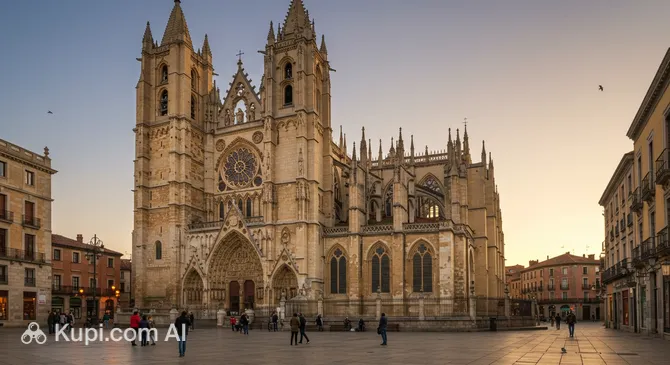
León Cathedral. Illustration.
Source: Kupi.com AI

Traveller photos:

The main jewel of the cathedral is its unique stained-glass windows, covering a total area of about 1,800 square meters, making them one of the largest and most important collections of medieval stained-glass art in Europe. Most of these artworks date back to the 13th–14th centuries. Thanks to them, the interior of the temple, nicknamed the "House of Light," is filled with an incredible play of light and color.

In addition to its Gothic beauty, the cathedral hides even more ancient secrets. It was built on the site where Roman baths were located in the 2nd century. Beneath its foundation, the remains of Roman hypocausts—ancient heating systems—are still preserved, making a visit to the cathedral a true journey through the centuries, from antiquity to the High Middle Ages.

Contacts

To plan your visit to the Cathedral of Leon and obtain the most up-to-date information, you can use the following contact details. It is highly recommended to visit the official website to check opening hours, ticket prices, and any potential schedule changes before your trip.

How to contactContact
AddressPl. de Regla, s/n, 24003 León, Spain
Phone+34 987 87 57 70
Websitewww.catedraldeleon.org

What to Do

A visit to the Leon Cathedral is primarily an opportunity to immerse yourself in the unique atmosphere created by the grandeur of Gothic architecture and the light streaming through the famous stained-glass windows. Walking through its halls allows you to fully understand why the cathedral earned the nickname "House of Light," as it houses one of Europe's largest collections of medieval stained-glass art, spanning about 1,800 square meters. This play of light and color creates an unforgettable impression and is the main reason visitors are drawn here from all over the world.

Inside the cathedral, you can examine its many treasures in detail: from the majestic main altar and skillfully carved choir stalls to secluded chapels and expressive sculptural compositions. Don't miss the chance to climb to the cathedral's observation decks, which offer a magnificent panoramic view of the historical center of Leon. This will be an excellent addition to the tour of the temple itself and will allow you to see the city from a new, exciting perspective.

For a deeper understanding of the region's history and art, it's worth visiting the Diocesan Cathedral Museum, located on the cathedral grounds. Its halls house one of the most complete collections of religious art in Spain, including ancient manuscripts, sculptures, paintings, and church utensils. Furthermore, after visiting the cathedral, it is recommended to check out the nearby Royal Collegiate Church of San Isidoro, which is also an outstanding architectural and historical monument.

Getting There

The Leon Cathedral rises majestically in the heart of the city of Leon, making it easily accessible for all visitors. The city's historical center is very compact and perfect for leisurely strolls, so most tourists prefer to reach the cathedral on foot. This route allows you not only to enjoy the atmosphere of the ancient streets but also to see other iconic landmarks along the way.

If you are arriving in the city by public transport, the way to the cathedral will not take much time. From the train and bus stations, you can reach the main attraction in just 10–15 minutes. For those who value comfort or are coming from more distant areas of Leon, taxi services or city public transport are always available. However, a walk will allow you to fully experience the charm of this ancient Spanish city.

Nearest city: Leon

History & Facts

The history of the Cathedral in Leon is a centuries-old chronicle dating back to the times of the Roman Empire. Initially, as early as the second century, Roman baths were located on this very site. Centuries later, in the early 10th century, King Ordoño II of Galicia and Leon, having defeated the Moors, decided to build his palace here, which was later transformed into the first Romanesque-style cathedral. It was in this church that the monarch found his final resting place.

The development of this sacred site continued, and in 1073, a second, more majestic Romanesque cathedral was consecrated. This building witnessed one of the most important events in the history of Spain: in 1135, Alfonso VII was crowned here as Emperor of all Spain, emphasizing Leon's importance as a political and spiritual center. However, the Romanesque era was coming to an end, and under King Alfonso IX, it was decided to build a new, even more grand temple. Construction of the modern Gothic cathedral began in 1205 and continued until 1301.

The subsequent fate of the cathedral was difficult. In the 18th century, it went through a period of decline and even partial destruction, which threatened its existence. Fortunately, in the 19th century, large-scale and painstaking restoration work began, which allowed for the saving and restoration of the unique appearance of this Gothic masterpiece. The restoration of the interior and the famous stained-glass windows took about 50 years, and only at the beginning of the 20th century was the cathedral finally opened to believers and visitors, revealing its reborn splendor to the world.

Time Needed

When planning a visit to the Leon Cathedral, it's worth noting that the time needed for exploration can vary. For a general introduction to the cathedral, including its main halls and famous stained-glass windows, as well as a quick visit to the adjacent museum, it is recommended to set aside from 1 to 2 hours. This amount of time will be enough to feel the grandeur of this architectural monument without a deep dive into the details.

If you want to get a more complete picture and not miss anything important, plan to spend more time here. A detailed study of the cathedral museum's rich collection or climbing to the observation decks, which offer breathtaking views of Leon, may require additional time, increasing the total duration of the visit to 2.5–3 hours. Such a leisurely tour will allow you to fully appreciate all the treasures of the "House of Light".

Working Hours

The Leon Cathedral is open to visitors year-round, but opening hours may change depending on the season and religious holidays. Generally, the cathedral operates with a morning and evening visiting schedule: usually from 9:30 to 13:30 and from 16:00 to 19:00, while in the summer months, evening hours may be extended until 20:00. It is important to remember that there is a break in the middle of the day. The ticket office usually closes 30 minutes before the end of visiting hours.

Please note that the museum and observation decks may have separate schedules. Before your visit, it is highly recommended to check current information on the cathedral's official website to avoid surprises related to public holidays or services during which tourist access may be limited. Although advance booking is not usually required for individual visits, group excursions or special tours may need to be organized beforehand.

Nearby

A visit to the Cathedral is undoubtedly the centerpiece of any trip to Leon, but you shouldn't stop there. The city boasts a rich historical heritage, and many of its gems are located within walking distance of the cathedral. A stroll through the surrounding streets will allow you to immerse yourself deeper in the atmosphere of old Spain and make your trip even more fulfilling and memorable.

Since the cathedral is located in the very heart of the historical center, it serves as an ideal starting point for exploring other iconic sites. Just a few minutes' walk away, you will find majestic palaces, ancient churches, and cozy squares, each holding its own unique story. Below is a list of nearby attractions to help you plan an interesting walking route.

NameDistance
El Romántico0.2 km
Casa Botines0.3 km
Palace of the Count of Luna0.3 km
Museum of San Isidoro0.3 km
Basilica of San Isidoro0.3 km
Palace of the Guzmanes0.3 km
Cid Park0.3 km

Reached the bottom of the page?

Looks like you know this route inside out