Support

Roman Theatre of Cartagena

About

The Roman Theatre in Cartagena is an outstanding monument of ancient architecture and one of the true gems of Spain. Located in the heart of the city, it is not just a set of ruins, but a real window into the region's rich history, allowing visitors to experience the grandeur of the Roman Empire. It is one of the largest and best-preserved Roman theatres on the Iberian Peninsula.
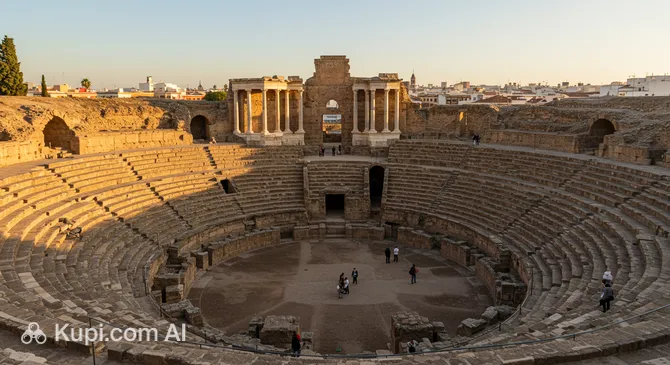
Roman Theatre of Cartagena. Illustration.
Source: Kupi.com AI

Traveller photos:

The theatre was built between 5 and 1 BC and was dedicated to Emperor Augustus's grandsons, Gaius and Lucius Caesar. The structure is impressive in scale: its stands, built into the natural slope of the hill, reached 14 meters in height and could accommodate up to 7,000 spectators. The diameter of the amphitheater is about 87 meters, testifying to the importance of the city of Carthago Nova, as Cartagena was known in the Roman era.

Interestingly, for centuries, the theatre was completely hidden beneath later buildings, including a market and even part of the old cathedral. It was only discovered in 1988, after which massive archaeological and restoration efforts began to restore the site to its historical appearance. Today, the Roman Theatre is not only an important archaeological site but also a popular tourist attraction hosting tours and cultural events.

Contacts

To obtain the most up-to-date information on opening hours, ticket prices, and special events, it is recommended to consult the official sources of the Roman Theatre Museum. Below are the key details to help you plan your visit.

How to contactContact
AddressPalacio Pascual del Riquelme, Pl. Ayuntamiento, 9, 30202 Cartagena, Murcia, Spain
Phone+34 968 50 48 02
Websitewww.teatroromanocartagena.org

What to Do

A visit to the Roman Theatre is more than just viewing ancient ruins; it is a journey through time that starts in the modern Roman Theatre Museum. Your path to the arena will take you through halls displaying numerous artifacts found during archaeological excavations. The exhibits and information boards provide detailed insights into the site's history, from its construction to centuries of oblivion and its subsequent grand restoration. This allows for a deeper understanding of the theatre's significance to the ancient city and an appreciation for the scale of the restoration work.

After visiting the museum section, you will emerge directly onto the grounds of the theatre itself. Here, you can walk freely among the ancient stones, soaking up the atmosphere of antiquity. Be sure to climb to the upper tiers of the spectator stands, which are partially carved directly into the rock. From there, a magnificent panoramic view of the historic center of Cartagena and the harbor opens up. It is the perfect spot to take impressive photos and imagine thousands of spectators watching performances on stage over two thousand years ago.

During your walk, pay attention to the details that preserve the memory of former glory. Look for the ancient inscriptions carved into the stones dedicated to Emperor Augustus's grandsons, Gaius and Lucius Caesar. Near the theatre, you can also see remnants of other historical eras, such as the ruins of a Byzantine bastion, highlighting the multi-layered history of this unique corner of Spain. Visiting the theatre is an opportunity not just to see an impressive monument, but to literally touch history.

Getting There

Getting to the Roman Theatre in Cartagena is very straightforward, as it is conveniently located in the heart of the city's historic center. Thanks to its proximity to the port and major tourist routes, it is easily reachable on foot during a stroll. Entrance to the ancient site is through the modern Roman Theatre Museum building, located at Plaza del Ayuntamiento, making the start of your tour very convenient.

If you are traveling through Spain by public transport, Cartagena is easily accessible from major cities in the region, such as Murcia and Alicante, via regular bus or train services. Both the bus and train stations are within walking distance of the historic center, allowing you to begin exploring the city immediately without needing additional transport.

For those traveling by car, there are several parking options in the city. For instance, a convenient underground parking lot is located at the seaport, in close proximity to the theatre. However, keep in mind that the center of Cartagena is partially a pedestrian zone. The best solution is to leave your car in one of the city's parking lots and continue on foot, enjoying the atmosphere of the ancient streets on your way to one of the city's main attractions.

Nearest city: Cartagena

History & Facts

The history of the Roman Theatre in Cartagena is a remarkable tale of greatness, oblivion, and revival. The construction of this grand structure began during the reign of Emperor Augustus and was completed between 5 and 1 BC. The theatre was dedicated to the emperor's grandsons and heirs, Gaius and Lucius Caesar, as evidenced by inscriptions that have survived to this day. In its heyday, it was the center of the city's social and cultural life, accommodating up to 7,000 spectators in its stands.

However, with the decline of the Roman Empire, the theatre's fate changed dramatically. By the 3rd–4th centuries AD, its arena and surrounding area had been turned into a bustling market. In the following centuries, the history of the site became even more dramatic: stone blocks and decorative elements of the theatre were repurposed for the construction of other buildings. Notably, some of its materials were used in the construction of the old Santa María la Vieja Cathedral, the ruins of which can still be seen nearby today.

For many centuries, the theatre was completely buried under layers of later urban buildings and seemed to have vanished from the city map forever. Its accidental discovery only occurred in the late 20th century, in 1988, during archaeological excavations, which became a true sensation for historians and locals alike. Since then, extensive and painstaking restoration work has been carried out, returning this unique monument to its historical appearance. Today, the ruins are carefully preserved, offering visitors a chance to touch history that survived centuries of neglect.

Time Needed

To fully enjoy your visit to the Roman Theatre in Cartagena, it is recommended to set aside approximately 1.5–2 hours. This is generally enough time for a leisurely and comprehensive tour of the entire complex, which includes not only the ancient theatre itself but also the adjacent modern museum. The journey into the past begins at the museum, so it is important to give it proper attention.

Your visit is structurally divided into two parts. The first is an introduction to the Roman Theatre Museum's exhibition, which features artifacts found during excavations. You can spend 45 minutes to an hour here studying the history of the site. The second part is a walk through the theatre itself. You can climb its stands, appreciate the scale of the structure, and enjoy views of the city. This will also take about 30–45 minutes. Thus, the total recommended duration is an hour and a half to two hours.

Of course, this is just a general recommendation. If you are short on time, you can take a quicker look, focusing on the theatre itself, and finish in about an hour. However, for history buffs, archaeology enthusiasts, or those who simply enjoy taking beautiful photos without rushing, the visit may take more than two hours. The complex offers enough information and impressive viewpoints to justify a longer stay.

Working Hours

The Roman Theatre in Cartagena is open to visitors year-round, though its operating hours vary by season. During the summer period, from May 1 to September 30, as well as during Holy Week, the museum and theatre stay open longer — from 10:00 to 20:00, Tuesday through Saturday. During the rest of the year, from October 1 to April 30, the complex is open from 10:00 to 18:00. On Sundays, the theatre operates on a reduced schedule, typically from 10:00 to 14:00, and Monday is the official closing day.

To avoid any inconvenience, it is highly recommended to check the current schedule on the official museum website before planning your visit, as changes may occur. While advance ticket booking is not always mandatory, it can be a good idea during the peak tourist season to guarantee entry and avoid queues. Last entry is usually allowed one hour before closing.

DayOpening hours
MondayClosed
Tuesday10:00 – 20:00
Wednesday10:00 – 20:00
Thursday10:00 – 20:00
Friday10:00 – 20:00
Saturday10:00 – 20:00
Sunday10:00 – 14:00

Nearby

Exploring the Roman Theatre is just the beginning of an exciting journey through the historic center of Cartagena. Thanks to the compact layout of key sites, you can easily continue discovering the city's heritage on foot. A walk through the surrounding area will allow you to dive deeper into the multi-layered history of this amazing corner of Spain and see how different eras have left their mark on its architecture.

Just a few minutes' walk from the theatre, other iconic spots await you: from ancient castles and churches to modern museums and a lively waterfront. Exploring these attractions will enrich your experience and help you form a more complete picture of Cartagena's cultural wealth.

NameDistance
La Catedral Nightclub0 km
El Cantón0.1 km
Port of Cartagena0.2 km
Castle of the Conception0.2 km
Cartagena City Hall0.2 km
Church of Santa María de Gracia0.2 km
Roman Forum Museum (Cartagena)0.3 km

Reached the bottom of the page?

Looks like you know this route inside out